
Why Suzuki Excels in Asia

Suzuki has become a household name across Asia by understanding local driving conditions, offering affordable and durable vehicles, and building a strong service network. From bustling cities to rural villages, Suzuki’s practical designs, fuel efficiency, and customer-first approach make it a top choice for millions.
When you think of cars in Asia, one brand consistently stands out—Suzuki. Whether it’s the iconic Alto zipping through narrow alleys in Delhi, the Swift cruising down highways in Jakarta, or the Jimny tackling mountain roads in Nepal, Suzuki vehicles are everywhere. But why? What makes this Japanese automaker so dominant across such a vast and diverse continent?
It’s not just luck or marketing. Suzuki’s success in Asia is the result of decades of strategic adaptation, deep cultural understanding, and a relentless focus on practicality. Unlike some global brands that try to sell the same car everywhere, Suzuki listens. It observes how people drive, what they value, and what challenges they face—then builds cars that fit like a glove. From fuel prices to road quality, from family size to climate extremes, Suzuki designs with real-life Asian conditions in mind.
And it shows. In countries like India, Suzuki holds over 40% of the passenger car market. In Pakistan, it’s the top-selling brand. Even in Southeast Asia, where competition is fierce, Suzuki maintains a strong foothold. But this isn’t just about selling cars—it’s about building trust. People buy Suzuki not just because it’s affordable, but because they know it will last, it will be cheap to run, and when something goes wrong, help is never far away.
Key Takeaways
- Localized Vehicle Design: Suzuki engineers cars specifically for Asian roads, climates, and driving habits, ensuring reliability and comfort.
- Fuel Efficiency and Affordability: With rising fuel costs, Suzuki’s compact engines and lightweight designs deliver excellent mileage at budget-friendly prices.
- Strong After-Sales Network: Extensive service centers and spare parts availability across Asia make maintenance easy and affordable.
- Proven Durability in Tough Conditions: Suzuki vehicles are built to handle everything from monsoon rains to rough rural roads without breaking down.
- Cultural Relevance and Brand Trust: Decades of presence in countries like India, Pakistan, and Indonesia have built deep consumer loyalty.
- Innovation Meets Practicality: Suzuki blends modern tech like hybrid systems and safety features with no-nonsense functionality.
- Government and Fleet Partnerships: Collaborations with taxi services, ride-hailing apps, and public transport boost visibility and credibility.
📑 Table of Contents
- Understanding Local Needs: The Heart of Suzuki’s Strategy
- Fuel Efficiency: A Game-Changer in Cost-Conscious Markets
- Reliability and Durability: Built to Last
- Strong After-Sales Support: The Backbone of Trust
- Brand Loyalty and Cultural Integration
- Innovation with Purpose: Technology That Matters
- Conclusion: Why Suzuki Wins in Asia
Understanding Local Needs: The Heart of Suzuki’s Strategy
One of the biggest reasons Suzuki excels in Asia is its commitment to localization. This isn’t just about translating manuals or changing paint colors—it’s about reengineering vehicles from the ground up to suit regional demands.
Tailored for Tight Streets and Heavy Traffic
In cities like Manila, Bangkok, or Dhaka, traffic jams are a daily reality. Roads are narrow, parking is scarce, and maneuverability is key. Suzuki responds with compact, nimble cars like the Alto, Celerio, and Swift. These vehicles are small enough to weave through traffic yet spacious enough for families. Their tight turning radius makes U-turns on crowded streets a breeze.
For example, the Suzuki Alto is a favorite in India and Japan for its ultra-compact size and low running costs. It’s perfect for young drivers, students, and urban commuters who need something simple, reliable, and easy to park. In fact, in India, the Alto has been the best-selling car for over a decade—proof that size and simplicity still matter.
Built for Varied Terrains and Climates
Asia isn’t just cities. It’s also rural villages, mountain passes, and coastal regions. Roads can be unpaved, muddy, or flooded during monsoon season. Suzuki vehicles are engineered to handle these extremes.
Take the Suzuki Jimny. This little off-roader is a legend in countries like Nepal, Bhutan, and the Philippines. Its rugged body-on-frame construction, high ground clearance, and part-time 4WD system let it climb steep hills and cross streams with ease. Farmers, tourists, and even government workers rely on it to reach remote areas where other cars simply can’t go.
Even Suzuki’s city cars are built tough. The Baleno and Swift use reinforced chassis and weather-resistant materials to withstand humidity, salt air, and temperature swings. This durability means fewer breakdowns and longer vehicle life—critical in regions where repair costs can be a burden.
Cultural Sensitivity in Design
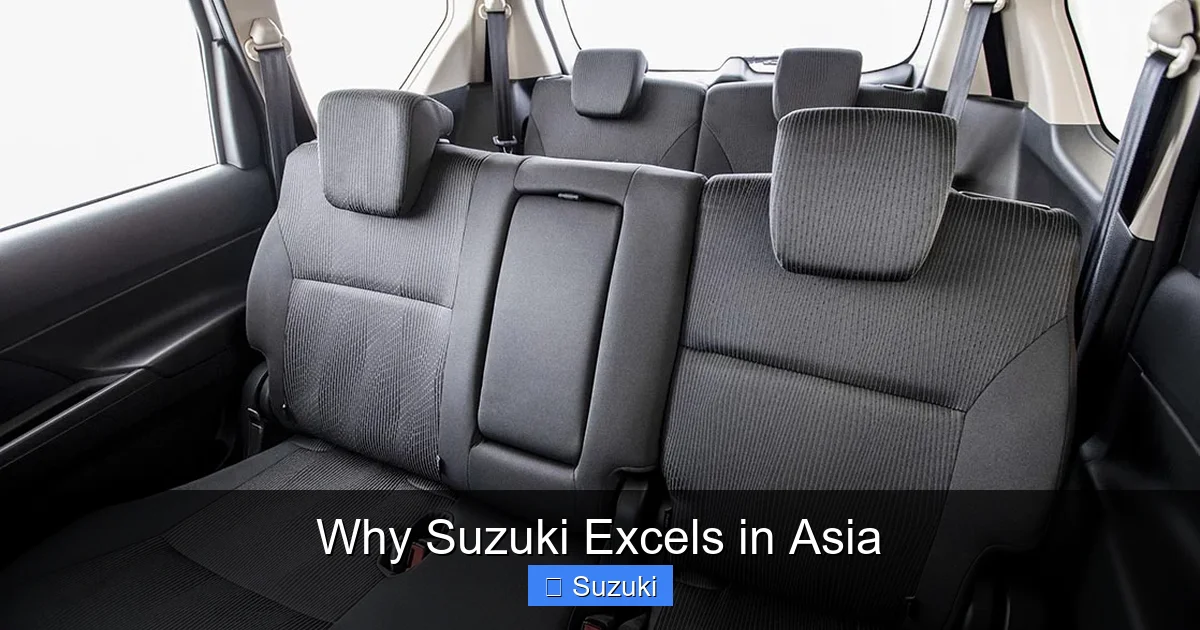
Suzuki also pays attention to cultural preferences. In many Asian households, cars are shared among multiple family members. So, Suzuki designs interiors with practical storage, easy-clean surfaces, and flexible seating. The Ertiga, for instance, is a seven-seater MPV popular in India and Indonesia. It’s not flashy, but it’s perfect for large families, school runs, or even small businesses needing transport.
In Muslim-majority countries like Indonesia and Malaysia, Suzuki offers models with features like prayer time reminders and hijab-friendly sun visors. These small touches show respect and build emotional connection—something no ad campaign can replicate.
Fuel Efficiency: A Game-Changer in Cost-Conscious Markets

Visual guide about Why Suzuki Excels in Asia
Image source: blog.suzukimarine.co.za
Fuel prices in Asia can be volatile and expensive. In countries like Sri Lanka or the Philippines, a liter of petrol can cost over $1.50—and that’s before taxes. For average families, fuel is one of the biggest ongoing expenses. Suzuki understands this and makes fuel efficiency a top priority.
Lightweight Engineering and Efficient Engines
Suzuki uses advanced lightweight materials like high-tensile steel and aluminum to reduce vehicle weight without sacrificing safety. Lighter cars need less energy to move, which means better mileage.
The company’s K-series and Boosterjet engines are prime examples. These small-displacement engines deliver strong performance while sipping fuel. The Suzuki Swift, for instance, averages around 20–22 km/l in city driving—impressive for a hatchback. The Celerio, with its 1.0L engine, can hit over 25 km/l under ideal conditions.
In India, where fuel efficiency is a top buying factor, Suzuki’s cars dominate the top spots in mileage charts. The Alto 800 and S-Presso both offer over 22 km/l, making them favorites among budget-conscious buyers.
Hybrid and Electric Innovations
Suzuki isn’t just sticking to petrol. It’s also investing in greener tech. In Japan and India, the company offers mild-hybrid versions of the Swift and Baleno. These use a small electric motor to assist the engine during acceleration, reducing fuel use and emissions.
While full electric vehicles (EVs) are still emerging in Asia, Suzuki is preparing. It has partnered with Toyota to develop affordable EVs for emerging markets. The upcoming Suzuki EVX concept, for example, is designed specifically for Indian roads and charging infrastructure. It shows that Suzuki isn’t just keeping up with trends—it’s shaping them.
Real-World Savings for Drivers
Let’s put this into perspective. Imagine a driver in Jakarta who commutes 50 km daily. With a Suzuki Celerio averaging 24 km/l and fuel at $1.40 per liter, their monthly fuel cost is around $44. Compare that to a larger SUV averaging 12 km/l—same distance, same fuel price—and the cost jumps to $88. That’s $528 saved in a year. For many families, that’s a significant amount.
And it’s not just fuel. Suzuki’s engines are designed for low maintenance. Fewer moving parts, reliable timing chains (no belts to replace), and long service intervals mean lower ownership costs. In a region where every rupee, peso, or baht counts, this practicality is priceless.
Reliability and Durability: Built to Last
Visual guide about Why Suzuki Excels in Asia
Image source: media.citizen.co.za
In Asia, a car isn’t just a vehicle—it’s an investment. Many families buy one car and keep it for 10, 15, even 20 years. So reliability isn’t a nice-to-have; it’s essential. Suzuki delivers on this front with a reputation for bulletproof durability.
Proven Track Record in Harsh Conditions
Suzuki vehicles are tested in extreme environments. From the deserts of Rajasthan to the jungles of Borneo, they’re put through rigorous trials. The company’s R&D centers in India, Thailand, and Japan simulate everything from dust storms to floodwaters.
The result? Cars that don’t quit. The Suzuki Dzire, for example, is known for its ability to run for years with minimal issues. Mechanics in rural India often say, “If it’s a Suzuki, it’ll start.” That kind of trust doesn’t come from ads—it comes from experience.
Simple, Serviceable Design
Suzuki keeps its engineering straightforward. No overly complex electronics or fragile components. This makes repairs easier and cheaper. In remote areas where specialized tools or technicians are scarce, a simple engine or transmission is a lifesaver.
For instance, the Suzuki Alto’s 800cc engine has been in use for over a decade. It’s so well understood that even small-town mechanics can fix it with basic tools. This accessibility is a huge advantage over brands that rely on proprietary software or hard-to-find parts.
Long-Term Ownership Value
Because Suzuki cars last so long, they hold their value well. In India, a 5-year-old Swift can still fetch 50–60% of its original price. This resale value is a major selling point for buyers who plan to upgrade later.
And when it’s time to sell, Suzuki’s widespread presence means there’s always a market. Dealerships, online platforms, and local traders all know Suzuki models—making transactions smooth and fair.
Strong After-Sales Support: The Backbone of Trust

Visual guide about Why Suzuki Excels in Asia
Image source: static.asianetnews.com
Buying a car is one thing. Owning it is another. In Asia, where service quality can vary wildly, Suzuki stands out with its reliable after-sales network.
Extensive Service Network
Suzuki has service centers in nearly every major city and many smaller towns across Asia. In India alone, it operates over 2,000 service outlets. In Indonesia, it has more than 300. This reach means help is never far away.
Even in rural areas, Suzuki partners with local garages and trains them to handle basic repairs. This “Suzuki Genuine Service” program ensures consistent quality, even in remote locations.
Affordable Spare Parts and Maintenance
One of the biggest frustrations for car owners is the cost of parts. Suzuki keeps spare parts prices low and widely available. Because many components are shared across models, economies of scale kick in.
For example, the brake pads for a Swift are the same as those for a Baleno. This standardization reduces costs and ensures parts are always in stock. In countries like Pakistan and Bangladesh, Suzuki even offers “value parts”—high-quality, lower-cost alternatives for budget repairs.
Customer-Centric Policies
Suzuki offers generous warranties—often 3–5 years or 100,000 km, whichever comes first. Some models even come with free first services or roadside assistance.
In Thailand, Suzuki runs a “Mobile Service Van” program that brings maintenance to customers’ homes or workplaces. In the Philippines, it offers free health checks during monsoon season to prevent flood-related damage.
These initiatives show that Suzuki doesn’t just sell cars—it supports owners for the long haul.
Brand Loyalty and Cultural Integration
Suzuki’s success isn’t just mechanical—it’s emotional. Over decades, the brand has become part of daily life in many Asian countries.
Generational Trust
In India, it’s common for a father to buy his first car—a Suzuki—then pass it down to his son. The Alto, Zen, and Esteem were childhood memories for millions. That emotional connection creates lifelong loyalty.
Even younger buyers who grew up with smartphones and social media still trust Suzuki because their parents did. It’s a brand that feels familiar, safe, and dependable.
Partnerships with Local Icons
Suzuki strengthens its image by partnering with local celebrities, athletes, and influencers. In Indonesia, it sponsors football stars and TV shows. In India, it’s linked with Bollywood and cricket.
But it’s not just about fame. Suzuki also supports community initiatives—building schools, sponsoring rural health camps, and promoting road safety. These efforts build goodwill and reinforce its role as a responsible corporate citizen.
Adapting to Digital Trends
While Suzuki is known for practicality, it’s not stuck in the past. The brand has embraced digital tools to enhance the customer experience.
Online booking for test drives, service appointments, and even vehicle customization are now available in countries like Malaysia and Thailand. Suzuki’s mobile app lets owners track service history, find nearby dealers, and get maintenance reminders.
In India, Suzuki launched “Suzuki Connect,” a telematics system that offers GPS tracking, emergency alerts, and driving behavior analysis. It’s a smart blend of tradition and technology.
Innovation with Purpose: Technology That Matters
Some automakers chase trends for the sake of innovation. Suzuki takes a different approach—it innovates to solve real problems.
Safety Without the Premium Price
Safety is a growing concern in Asia, where traffic accidents are a leading cause of death. Suzuki responds with features like dual airbags, ABS, EBD, and reinforced cabins—even in entry-level models.
The Suzuki Swift, for example, earned a 4-star Global NCAP rating in India. That’s impressive for a car under $10,000. In Indonesia, the XL7 comes with hill-start assist and rear parking sensors—features usually found in pricier SUVs.
Smart Features for Everyday Use
Suzuki integrates tech that drivers actually use. Touchscreen infotainment systems, Bluetooth connectivity, and smartphone mirroring (Apple CarPlay and Android Auto) are standard in many models.
But it’s not just about screens. Suzuki focuses on usability. Buttons are large and intuitive. Voice commands work in local languages. The goal is to enhance the drive, not distract from it.
Sustainability and Future-Readiness
Suzuki is also thinking long-term. It’s reducing emissions, improving recyclability, and exploring alternative fuels. In Japan, it offers compressed natural gas (CNG) versions of the Alto and Wagon R—ideal for eco-conscious urban drivers.
The company’s “Suzuki Environment Charter” outlines goals for carbon neutrality by 2050. While the road is long, the commitment is clear: Suzuki wants to lead, not just follow.
Conclusion: Why Suzuki Wins in Asia
So, why does Suzuki excel in Asia? It’s not one thing—it’s everything. From understanding local roads to building cars that last, from keeping costs low to supporting owners for life, Suzuki gets it right.
It’s a brand that listens. It adapts. It delivers. And in a continent as diverse and dynamic as Asia, that’s the ultimate advantage.
Whether you’re a student in Hanoi, a farmer in Punjab, or a business owner in Manila, Suzuki offers a vehicle that fits your life—not the other way around. It’s practical, it’s reliable, and it’s built for real people with real needs.
And that’s why, decade after decade, Suzuki remains a trusted name across Asia.
Frequently Asked Questions
Why is Suzuki so popular in India?
Suzuki dominates India due to its fuel-efficient, affordable cars like the Alto and Swift, strong service network, and deep understanding of local driving conditions. It holds over 40% of the passenger car market.
Are Suzuki cars reliable in tropical climates?
Yes. Suzuki vehicles are engineered to withstand high humidity, heavy rain, and temperature extremes. Their corrosion-resistant materials and durable engines make them ideal for tropical regions.
Do Suzuki cars have good resale value in Asia?
Absolutely. Due to their reliability and widespread demand, Suzuki models like the Swift and Dzire retain strong resale value, often fetching 50–60% of their original price after 5 years.
Can Suzuki cars handle off-road conditions?
Yes, especially models like the Jimny. With high ground clearance, 4WD, and rugged construction, it’s a favorite for mountain and rural driving in countries like Nepal and the Philippines.
Does Suzuki offer hybrid or electric cars in Asia?
Yes. Suzuki offers mild-hybrid versions of the Swift and Baleno in India and Japan, and is developing affordable EVs for emerging markets in partnership with Toyota.
How does Suzuki support customers after purchase?
Suzuki provides extensive service networks, affordable spare parts, free maintenance programs, and digital tools like mobile apps and roadside assistance to ensure long-term customer satisfaction.
