
Does Car Insurance Cover Mechanic Negligence?

Car insurance typically does not cover mechanic negligence, as standard policies are designed for accidents, theft, and damage—not faulty repairs. However, you may have options through the mechanic’s liability insurance, your own policy’s optional coverage, or legal action if negligence caused further damage.
Key Takeaways
- Standard car insurance does not cover mechanic negligence: Most auto policies exclude damage caused by poor workmanship or errors during repairs.
- Mechanic’s liability insurance may step in: Reputable repair shops carry insurance to cover mistakes made during service or maintenance.
- Optional coverage like mechanical breakdown insurance (MBI) can help: MBI often covers repair-related failures and is available from some insurers.
- Document everything if a repair goes wrong: Photos, receipts, and repair records are crucial if you need to file a claim or pursue legal action.
- You may need to take legal action for serious cases: If negligence leads to injury or major damage, a lawsuit might be necessary to recover costs.
- Choose certified and insured mechanics: Always verify a shop’s credentials and insurance before authorizing major repairs.
- Extended warranties may offer protection: Some third-party warranties cover repair errors or defective parts.
📑 Table of Contents
- Does Car Insurance Cover Mechanic Negligence?
- Understanding What Car Insurance Covers
- What Is Mechanic Negligence?
- Why Standard Car Insurance Doesn’t Cover Mechanic Negligence
- When Might Your Insurance Help?
- Your Best Options: Mechanic’s Insurance and Legal Action
- How to Protect Yourself from Mechanic Negligence
- Real-Life Example: When Negligence Led to a Lawsuit
- Conclusion
Does Car Insurance Cover Mechanic Negligence?
You drop your car off at the repair shop with a simple issue—maybe a strange noise or a warning light. A few days later, you pick it up, only to discover the problem is worse, or worse yet, a new problem has appeared. You’re frustrated, confused, and wondering: “Does my car insurance cover this?” The short answer? Probably not—at least not under a standard auto insurance policy.
Most drivers assume their car insurance will protect them from any kind of vehicle damage, but mechanic negligence is a gray area that often falls outside typical coverage. While insurance is great for accidents, theft, and weather-related damage, it’s not designed to handle mistakes made by repair professionals. That doesn’t mean you’re out of luck, though. Understanding your options—and knowing how to protect yourself—can save you time, money, and stress when a repair goes sideways.
Understanding What Car Insurance Covers
Before diving into mechanic negligence, it’s important to understand what your car insurance actually covers. Most standard auto insurance policies include several types of coverage, each serving a different purpose.
Visual guide about Does Car Insurance Cover Mechanic Negligence?
Image source: thedailyautomotive.com
Liability Coverage
Liability insurance is mandatory in most states and covers damage or injuries you cause to others in an accident. It doesn’t protect your own vehicle, so it won’t help if a mechanic damages your car during repairs.
Collision and Comprehensive Coverage
These are the two main types of coverage that protect your own vehicle. Collision covers damage from accidents, like hitting another car or a tree. Comprehensive covers non-collision events, such as theft, vandalism, fire, or falling objects. Neither is designed to cover damage caused by a mechanic’s error.
Uninsured/Underinsured Motorist Coverage
This protects you if you’re hit by a driver who doesn’t have insurance or enough coverage. Again, it’s not relevant to repair shop mistakes.
Personal Injury Protection (PIP) and Medical Payments
These cover medical expenses after an accident. They don’t apply to injuries caused by faulty repairs unless they occur in a subsequent crash directly linked to the mechanic’s error.
In short, standard car insurance is built to respond to external events—things that happen on the road or due to natural causes. It’s not a safety net for poor workmanship. That’s why you need to look beyond your policy when dealing with mechanic negligence.
What Is Mechanic Negligence?
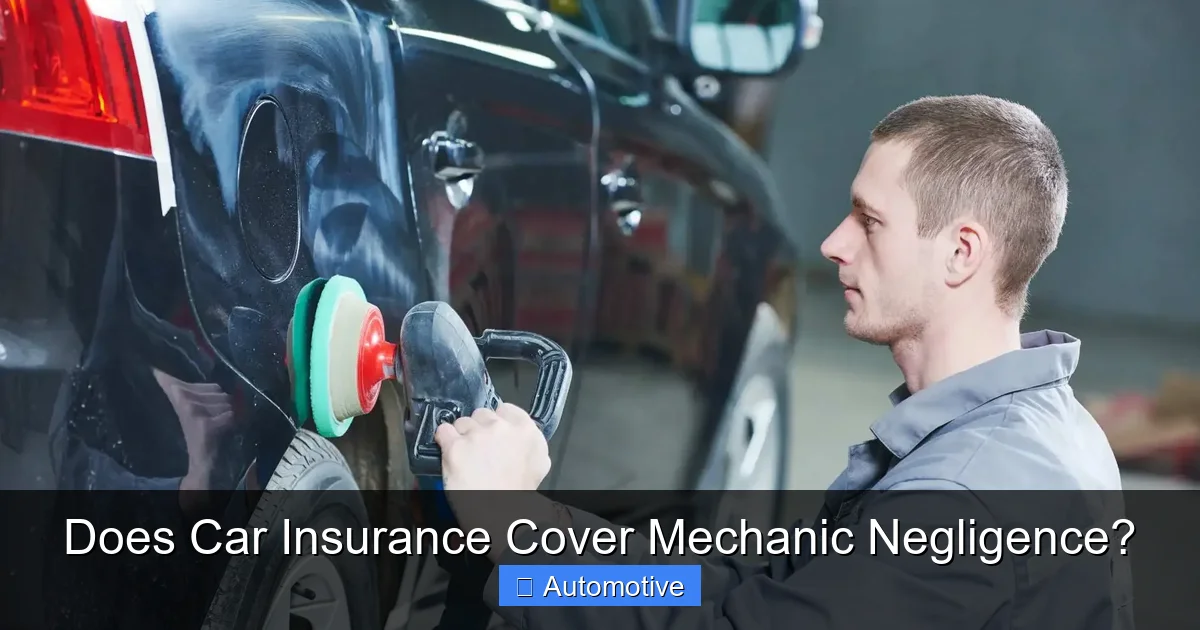
Mechanic negligence occurs when a repair professional fails to perform their duties to the standard expected of a reasonably skilled technician. This could include installing the wrong part, failing to tighten bolts, using substandard components, or even causing damage during routine maintenance.
Visual guide about Does Car Insurance Cover Mechanic Negligence?
Image source: trybeem.com
Examples of Mechanic Negligence
- A brake line is improperly connected, leading to brake failure weeks later.
- A mechanic over-tightens an engine component, causing a crack that leads to oil leaks.
- A transmission is reassembled incorrectly, resulting in sudden failure on the highway.
- A technician fails to reset the airbag system after repairs, leaving it disabled.
- A body shop uses low-quality paint that fades or peels within months.
These situations aren’t just inconvenient—they can be dangerous. If negligence leads to an accident, injuries, or further vehicle damage, you may have grounds for a claim, but not necessarily through your auto insurer.
Intentional vs. Negligent Acts
It’s also important to distinguish between negligence and intentional wrongdoing. If a mechanic deliberately damages your car or steals parts, that’s criminal behavior and may be covered under comprehensive insurance as vandalism or theft. But if they simply made a mistake—even a costly one—it’s considered negligence, and your auto policy likely won’t respond.
Why Standard Car Insurance Doesn’t Cover Mechanic Negligence
Auto insurance is designed to protect against unforeseen events, not predictable risks like poor workmanship. Insurers argue that repair shops have a duty to perform their jobs correctly, and they should bear responsibility for their mistakes—not the customer’s insurance company.
Visual guide about Does Car Insurance Cover Mechanic Negligence?
Image source: moneymink.com
Policy Exclusions
Most auto insurance policies include explicit exclusions for damage caused by “mechanical breakdown,” “wear and tear,” or “faulty repairs.” These clauses are there to prevent insurers from being on the hook for every repair gone wrong.
No-Fault and Tort Systems
In no-fault states, your own insurance covers your injuries regardless of who caused the accident. But even in these states, property damage from mechanic errors isn’t typically covered unless it leads to a separate, insurable event like a collision.
The Role of Risk Management
Insurance companies assess risk based on statistical data. They expect accidents, weather events, and theft—but not widespread repair shop errors. Covering mechanic negligence would require higher premiums for all drivers, which isn’t practical or fair.
That said, there are exceptions and alternative paths to compensation, which we’ll explore next.
When Might Your Insurance Help?
While standard policies don’t cover mechanic negligence directly, there are a few scenarios where your insurance might step in—either partially or indirectly.
Mechanical Breakdown Insurance (MBI)
Some insurers offer Mechanical Breakdown Insurance (MBI), also known as extended auto warranty insurance. Unlike standard coverage, MBI is specifically designed to cover repair failures, defective parts, and even labor errors—provided the issue isn’t due to normal wear and tear.
For example, if a mechanic installs a new alternator that fails within weeks due to improper installation, MBI might cover the cost of fixing it. However, MBI is usually an add-on and not included in basic policies. It’s more common with newer vehicles or through specialty insurers.
Comprehensive Coverage and Subsequent Damage
In rare cases, if mechanic negligence leads to an insurable event—like a fire caused by a short circuit from faulty wiring—your comprehensive coverage might apply. But you’d need to prove the fire was a direct result of the repair error, which can be difficult.
Collision Coverage After an Accident
If a mechanic’s mistake causes an accident—say, loose lug nuts lead to a wheel coming off and hitting another car—your collision coverage might pay for your vehicle’s damage. However, the other driver’s insurance or the mechanic’s liability policy would likely be pursued for their damages.
Still, relying on your own insurance should be a last resort. It could raise your premiums or lead to a claim denial if the insurer determines the root cause was negligence.
Your Best Options: Mechanic’s Insurance and Legal Action
If your car is damaged due to mechanic negligence, your best bet is to go after the repair shop—not your insurer. Here’s how.
Mechanic’s Liability Insurance
Reputable repair shops carry garage liability insurance or garage keepers legal liability insurance. These policies are designed to cover damage to customer vehicles while in the shop’s care, custody, or control.
If a mechanic drops a tool and cracks your windshield, or overfills your engine with oil, their insurance should cover the cost of repairs. You’ll need to file a claim with the shop, and they’ll handle it through their insurer.
Tip: Always ask if a shop has liability insurance before leaving your car. If they don’t, consider going elsewhere.
Service Warranties and Guarantees
Many repair shops offer a warranty on their work—typically 12 months or 12,000 miles. If a repair fails within that period, they’re obligated to fix it at no cost. This is your first line of defense against negligence.
For example, if you pay $800 for a new transmission and it fails after 3,000 miles due to improper installation, the shop should cover the repair under their warranty—even if it costs them more than the original job.
Small Claims Court
If the shop refuses to cooperate and the damage is significant, you may need to take legal action. Small claims court allows you to sue for damages without hiring a lawyer, typically up to $5,000–$10,000 depending on your state.
To win, you’ll need evidence: repair receipts, photos of the damage, expert opinions, and any communication with the shop. A mechanic’s report from an independent technician can be especially powerful.
State Licensing Boards and Consumer Protection Agencies
Most states have a Bureau of Automotive Repair or similar agency that regulates repair shops. You can file a complaint if a shop refuses to honor a warranty or denies responsibility for clear negligence. These agencies can investigate, mediate, or even revoke a shop’s license.
In some cases, they may help facilitate a resolution without going to court.
How to Protect Yourself from Mechanic Negligence
Prevention is always better than dealing with the aftermath. Here are practical steps to reduce your risk and protect your rights.
Choose Certified and Reputable Shops
Look for shops certified by organizations like the National Institute for Automotive Service Excellence (ASE) or those affiliated with manufacturers (e.g., Honda Certified, Ford Pro). These shops are more likely to follow strict standards and carry proper insurance.
Check online reviews, ask for recommendations, and visit the shop in person. A clean, organized facility with clear pricing is a good sign.
Get a Written Estimate and Agreement
Always get a detailed written estimate before any work begins. It should list the parts, labor, and total cost. Make sure the shop agrees to notify you before exceeding the estimate by a certain amount (e.g., 10%).
This protects you from surprise charges and gives you documentation if something goes wrong.
Ask About Warranties
Before authorizing repairs, ask: “What’s your warranty on this work?” Get it in writing. A good shop will stand behind their repairs.
Document Everything
Take photos of your car before dropping it off. Keep all receipts, work orders, and communication. If a problem arises, this evidence is critical for claims or legal action.
Use Independent Inspections for Major Repairs
For expensive jobs like engine or transmission work, consider getting a second opinion from an independent mechanic. They can verify the diagnosis and estimate, reducing the risk of unnecessary or poorly done repairs.
Consider Extended Warranties
If you drive a newer car or frequently use repair services, an extended warranty from a reputable provider (not the dealer) may cover repair errors. Read the fine print to ensure it includes labor and parts.
Real-Life Example: When Negligence Led to a Lawsuit
Sarah took her 2018 SUV to a local repair shop to fix a transmission issue. The mechanic replaced the torque converter and charged $1,200. Two weeks later, the transmission failed completely, leaving her stranded on the highway.
An independent inspection revealed the mechanic had used a refurbished part not rated for her vehicle and failed to properly flush the transmission fluid. The shop refused to cover the $3,500 repair, claiming “normal wear and tear.”
Sarah filed a complaint with her state’s Bureau of Automotive Repair and provided photos, receipts, and the inspection report. The agency mediated, and the shop was forced to pay for the full repair under their liability insurance. Sarah also received compensation for rental car costs.
This case highlights the importance of documentation, independent verification, and knowing your rights.
Conclusion
So, does car insurance cover mechanic negligence? The straightforward answer is no—not under a standard policy. Auto insurance is designed for accidents and external damage, not mistakes made during repairs. However, that doesn’t mean you’re powerless.
Your best protection comes from choosing reputable, insured mechanics, understanding warranties, and documenting every step. If negligence occurs, pursue the repair shop through their liability insurance, service warranties, or legal channels. In some cases, optional coverage like Mechanical Breakdown Insurance can offer a safety net.
By being proactive and informed, you can avoid costly disputes and ensure your vehicle is in good hands—both on the road and in the shop.
Frequently Asked Questions
Does my car insurance cover damage from a bad repair job?
No, standard car insurance policies typically exclude damage caused by mechanic negligence or faulty repairs. These are considered preventable errors, not insurable events.
What should I do if a mechanic damages my car?
Contact the repair shop immediately, document the damage with photos, and request a written explanation. File a claim under their liability insurance or service warranty. If they refuse, consider filing a complaint with your state’s automotive repair board.
Can I sue a mechanic for negligence?
Yes, if the mechanic’s error caused damage, injury, or financial loss, you may have grounds for a lawsuit. Small claims court is often the best option for damages under $10,000.
Does mechanical breakdown insurance cover mechanic mistakes?
Yes, MBI often covers repair failures due to faulty workmanship or defective parts, provided the issue isn’t due to normal wear and tear. Check your policy details.
How can I find a trustworthy mechanic?
Look for ASE certification, manufacturer affiliations, positive online reviews, and transparent pricing. Ask about warranties and insurance before authorizing repairs.
What if the repair shop denies responsibility?
Gather all documentation—receipts, photos, expert reports—and file a complaint with your state’s consumer protection agency. You may also consider small claims court if the damage is significant.
