
Are Two 6 Volt Batteries Better for Rv

Using two 6 volt batteries in series is often better for RVs than a single 12 volt battery. This setup provides deeper capacity, longer lifespan, and more efficient power delivery for off-grid adventures. Learn why many RV owners make the switch and how to do it right.
Key Takeaways
- Higher Amp-Hour Capacity: Two 6V batteries wired in series typically offer more amp-hours than a single 12V battery, meaning longer runtime for lights, appliances, and electronics.
- Longer Lifespan: Deep-cycle 6V batteries are designed for regular discharging and recharging, lasting significantly longer than standard 12V automotive or marine batteries.
- Better Performance in Series: When connected properly, two 6V batteries create a stable 12V system with improved efficiency and reduced voltage drop over time.
- Cost-Effective Long-Term: Though the upfront cost may be higher, the extended life and performance of 6V batteries save money over time compared to frequent 12V replacements.
- Ideal for Off-Grid Camping: For boondockers and full-time RVers, the increased capacity supports solar setups, inverters, and high-draw devices without constant recharging.
- Proper Wiring Is Crucial: Incorrect connections can damage batteries or reduce performance—always use identical batteries and follow safe wiring practices.
- Maintenance Matters: Regular checks on water levels, terminals, and charge cycles help maximize the benefits of your 6V battery bank.
📑 Table of Contents
- Are Two 6 Volt Batteries Better for RV? A Complete Guide
- Understanding RV Battery Basics
- Why Two 6 Volt Batteries Are Better for RVs
- Common Misconceptions About 6V Batteries
- How to Install Two 6 Volt Batteries in Your RV
- Maintenance Tips for 6V Battery Banks
- Alternatives to 6V Batteries
- Final Thoughts: Is the Switch Worth It?
Are Two 6 Volt Batteries Better for RV? A Complete Guide
If you’re an RV enthusiast, you’ve probably asked yourself: “What’s the best way to power my rig when I’m off the grid?” Whether you’re boondocking in the desert, parked at a remote campsite, or just trying to reduce your reliance on campground hookups, your battery system is the heart of your electrical independence. And one of the most common debates among RV owners is whether two 6 volt batteries are better than a single 12 volt battery.
The short answer? Yes—in most cases, two 6 volt batteries wired in series are better for RVs. But why? And how do you make the switch safely and effectively? In this guide, we’ll break down everything you need to know about using two 6 volt batteries in your RV, from the science behind the setup to real-world benefits and installation tips.
You’ll learn why many full-time RVers and weekend warriors alike prefer this configuration, how it compares to other battery options, and what to watch out for to get the most out of your investment. Whether you’re upgrading your current system or building a new one from scratch, this article will help you make an informed decision.
Understanding RV Battery Basics
Visual guide about Are Two 6 Volt Batteries Better for Rv
Image source: energy-x.org
Before diving into whether two 6 volt batteries are better, it’s important to understand how RV battery systems work. Most RVs run on a 12-volt DC electrical system. This powers everything from your interior lights and water pump to your refrigerator (in absorption mode) and entertainment systems. When you’re connected to shore power, your RV’s converter charges the battery and runs the 12V system. But when you’re boondocking—camping without hookups—your batteries are the only source of power.
There are three main types of batteries used in RVs:
– Starting batteries: Designed to deliver a quick burst of power to start an engine. Not ideal for RVs because they aren’t built for deep discharges.
– Marine batteries: A middle ground between starting and deep-cycle batteries. They can handle some deep discharges but aren’t as durable as true deep-cycle batteries.
– Deep-cycle batteries: Built to be discharged and recharged repeatedly. These are the best choice for RV house batteries because they provide steady power over long periods.
Now, within the deep-cycle category, you’ll find both 6 volt and 12 volt options. So why choose two 6 volt batteries over one 12 volt?
Voltage vs. Amp-Hours: What Really Matters
When evaluating batteries, it’s easy to focus only on voltage. But for RV use, amp-hours (Ah) are just as—if not more—important. Amp-hours measure how much energy a battery can store. The higher the Ah rating, the longer your battery can power your devices before needing a recharge.
Here’s where 6 volt batteries shine: they typically have much higher amp-hour ratings than 12 volt batteries of similar size. For example, a common 6 volt golf cart battery (like the Trojan T-105) offers around 225 Ah. When you wire two of these in series, you still get 12 volts—but you keep that full 225 Ah capacity. In contrast, a typical 12 volt deep-cycle battery might only offer 100–120 Ah.
That means two 6 volt batteries can store more than double the energy of a single 12 volt battery. For RVers who rely on their batteries for days at a time, that extra capacity is a game-changer.
Series vs. Parallel: How to Wire Your Batteries
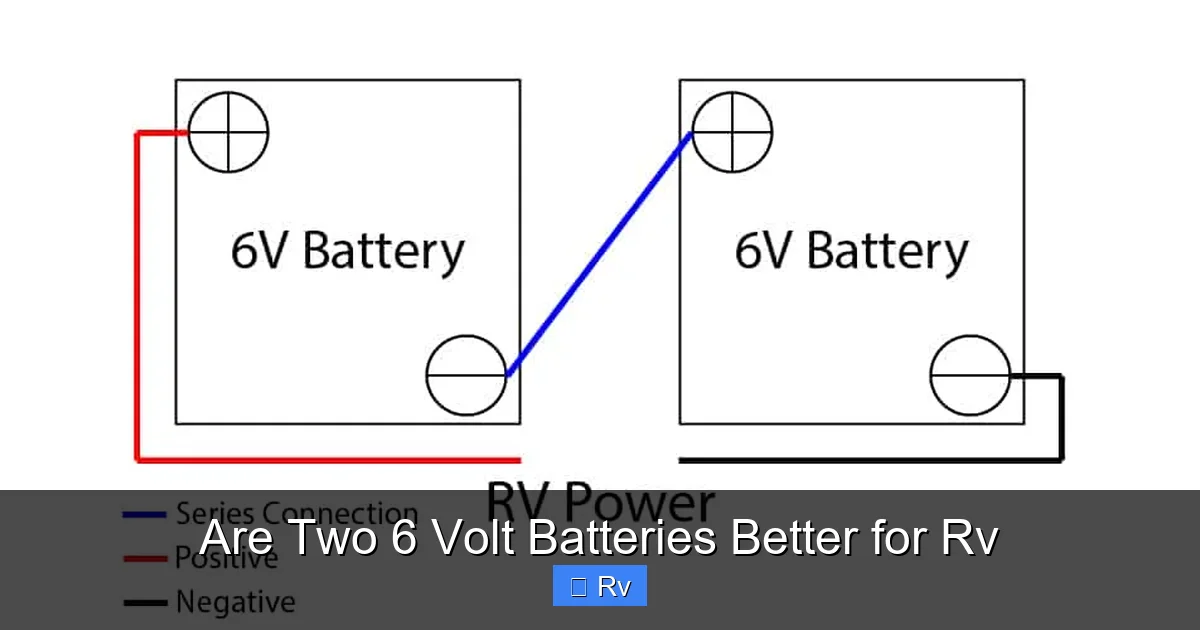
To get 12 volts from two 6 volt batteries, you must wire them in series. This means connecting the positive terminal of the first battery to the negative terminal of the second. The remaining positive and negative terminals become your system’s 12V output.
Wiring in series increases voltage while keeping the amp-hour capacity the same. So two 6V 225Ah batteries in series give you 12V 225Ah—perfect for your RV.
In contrast, wiring batteries in parallel (positive to positive, negative to negative) keeps the voltage the same but adds the amp-hour capacity. For example, two 12V 100Ah batteries in parallel give you 12V 200Ah.
While parallel setups can work, they’re more common when expanding an existing 12V system. For new installations or upgrades, the series configuration with 6V batteries is often preferred due to the higher individual capacity of 6V deep-cycle batteries.
Why Two 6 Volt Batteries Are Better for RVs
Visual guide about Are Two 6 Volt Batteries Better for Rv
Image source: bucarsrv.com
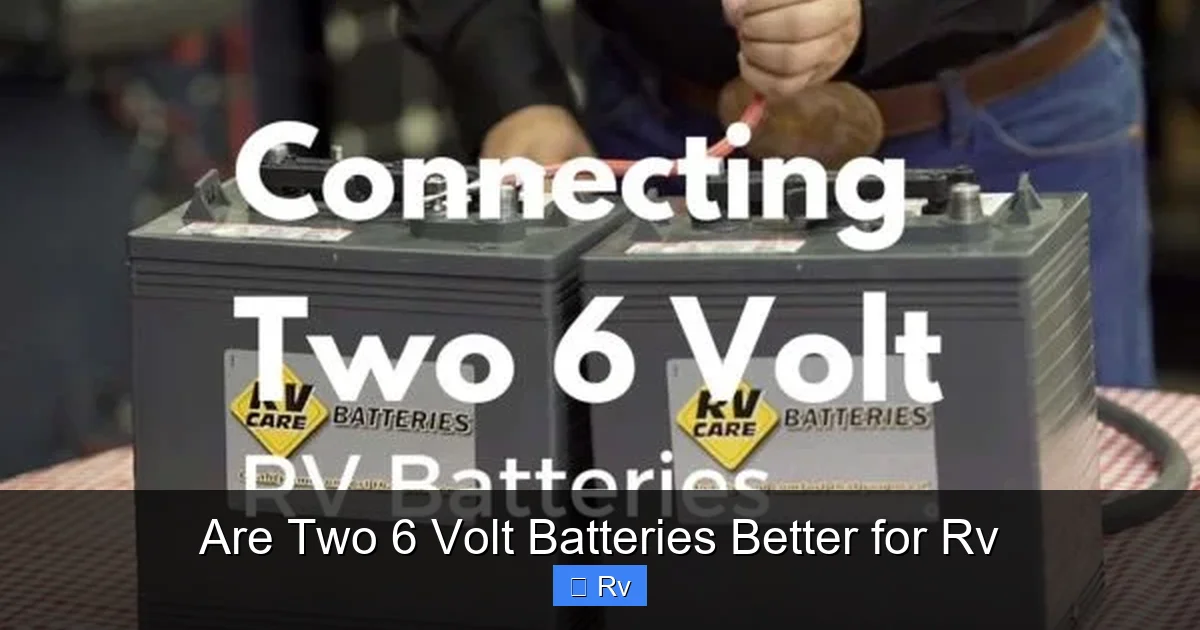
Now that we’ve covered the basics, let’s explore the specific advantages of using two 6 volt batteries in your RV.
1. Greater Energy Storage
As mentioned earlier, 6 volt deep-cycle batteries—especially golf cart-style batteries—are built for high capacity. They’re designed to be discharged deeply (up to 50–80% of their capacity) and recharged hundreds of times. This makes them ideal for RV use, where you might run lights, a fan, a water pump, and a fridge for several days without recharging.
With two 6V batteries, you can easily achieve 200+ amp-hours of storage. That’s enough to run a 12V refrigerator for 2–3 days, power LED lights overnight, and keep your phone and laptop charged—all without draining the batteries too deeply.
Compare that to a single 12V battery with 100Ah: you’d be hitting 50% discharge after just one day of moderate use. And deep discharges shorten battery life, so you’d be replacing that battery much sooner.
2. Longer Battery Lifespan
One of the biggest reasons RVers switch to 6V batteries is longevity. Because they’re built for deep cycling, 6V batteries can last 5–7 years or more with proper care. In contrast, a typical 12V marine or RV battery might only last 2–3 years under similar conditions.
Why? It comes down to design. 6V golf cart batteries use thicker lead plates and a more robust internal structure. This allows them to withstand repeated charge and discharge cycles without degrading as quickly.
Additionally, because you’re not draining them as deeply (thanks to the higher capacity), they experience less stress. For example, using 100Ah out of a 225Ah bank is only a 44% discharge—well within the safe range for deep-cycle batteries. But using 100Ah out of a 100Ah battery is a 100% discharge, which can damage the battery over time.
3. Better Performance in Cold Weather
Cold weather can be tough on batteries. As temperatures drop, chemical reactions inside the battery slow down, reducing its ability to deliver power. This is especially problematic for RVers who travel in winter or camp in colder climates.
6V deep-cycle batteries tend to perform better in cold weather than standard 12V batteries. Their thicker plates and higher-quality materials help maintain efficiency even when the mercury dips. Plus, because they have more reserve capacity, you’re less likely to be caught short when your battery output drops in the cold.
4. Ideal for Solar Power Systems
If you’ve installed solar panels on your RV—or are planning to—two 6V batteries are a perfect match. Solar systems work best when paired with high-capacity, deep-cycle batteries that can store large amounts of energy during the day and release it slowly at night.
With a 200+ Ah battery bank, you can run more appliances, charge devices overnight, and even power small inverters for AC devices like laptops or coffee makers. And because solar charging is gradual, the deep-cycle design of 6V batteries ensures they charge efficiently and evenly.
Many solar-ready RVs come pre-wired for 6V batteries, and solar charge controllers are optimized for this setup. So if you’re going solar, starting with two 6V batteries makes the transition smoother and more effective.
5. Cost-Effective Over Time
Yes, two 6V batteries cost more upfront than a single 12V battery. A pair of quality golf cart batteries might run you $300–$500, while a decent 12V deep-cycle battery could be $150–$200. But when you factor in lifespan and performance, the 6V setup is often more economical in the long run.
Let’s do the math: if a 12V battery lasts 2 years and costs $180, you’ll spend $90 per year. A pair of 6V batteries costing $400 and lasting 6 years comes out to about $67 per year—plus you get double the capacity. Over a decade, that’s a significant savings, not to mention the convenience of fewer replacements and better performance.
Common Misconceptions About 6V Batteries
Visual guide about Are Two 6 Volt Batteries Better for Rv
Image source: thecampingnerd.com
Despite their advantages, some RVers are hesitant to switch to 6V batteries due to common myths and misunderstandings. Let’s clear those up.
“6V Batteries Are Harder to Find”
It’s true that 6V batteries aren’t as common as 12V ones at big-box stores. But they’re widely available online and at specialty retailers like battery shops, RV supply stores, and golf cart dealers. Brands like Trojan, Duracell, and UPG offer reliable 6V deep-cycle batteries with strong warranties.
And because they’re built to last, you won’t need to replace them often—so availability becomes less of an issue over time.
“They’re Too Heavy for My RV”
6V batteries are indeed heavier than most 12V batteries. A single 6V golf cart battery can weigh 60–70 pounds, so two can add 120+ pounds to your rig. That’s something to consider if you’re already near your weight limit.
However, many RVs are designed with this in mind. The battery compartment is often located low and centered for better weight distribution. And the extra weight is usually offset by the reduced need for frequent replacements and the improved performance.
If weight is a major concern, you might consider lithium iron phosphate (LiFePO4) batteries, which are lighter and more efficient—but also significantly more expensive. For most RVers, the weight of 6V lead-acid batteries is a reasonable trade-off for the benefits.
“I Need Special Equipment to Use 6V Batteries”
Not true. Your RV’s existing 12V system will work perfectly with two 6V batteries wired in series. No special converters, inverters, or chargers are needed—as long as your current equipment is compatible with 12V DC power (which it should be).
Just make sure your converter/charger is designed for deep-cycle batteries and can handle the higher capacity. Some older or low-end converters may not charge 6V batteries efficiently, so it’s worth checking your model or upgrading if necessary.
How to Install Two 6 Volt Batteries in Your RV
Ready to make the switch? Here’s a step-by-step guide to safely installing two 6V batteries in your RV.
Step 1: Choose the Right Batteries
Not all 6V batteries are created equal. Look for deep-cycle, flooded lead-acid batteries designed for golf carts or renewable energy systems. Avoid automotive or starting batteries—they won’t last.
Popular models include:
– Trojan T-105 (225Ah)
– Duracell GC2 (210Ah)
– UPG UB62600 (260Ah)
Always buy two identical batteries from the same batch to ensure balanced performance and lifespan.
Step 2: Prepare the Battery Compartment
Make sure your battery box is clean, dry, and well-ventilated. 6V batteries produce hydrogen gas during charging, so proper ventilation is essential to prevent buildup.
Use battery trays or hold-downs to secure the batteries and prevent movement while driving. Loose batteries can tip over, spill acid, or short-circuit—dangerous and damaging.
Step 3: Wire in Series
Here’s how to connect your batteries:
1. Place the two batteries side by side in the compartment.
2. Connect the positive terminal of Battery A to the negative terminal of Battery B using a heavy-duty battery cable.
3. Connect your RV’s positive cable to the positive terminal of Battery B.
4. Connect your RV’s negative cable to the negative terminal of Battery A.
This creates a 12V circuit with the full amp-hour capacity of both batteries.
Step 4: Connect to Your RV’s System
Once wired, connect the battery bank to your RV’s distribution panel. Double-check all connections to ensure they’re tight and secure. Loose connections can cause voltage drops, overheating, or even fires.
If you have a battery monitor or shunt, install it on the negative cable to track voltage, current, and state of charge.
Step 5: Charge and Test
Before relying on your new setup, fully charge the batteries using your RV’s converter or an external charger. Let them sit for a few hours, then test the voltage with a multimeter. You should see around 12.6–12.8 volts when fully charged.
Run a few lights or appliances to ensure everything works as expected. Monitor the voltage over the next few days to confirm the batteries are holding a charge.
Maintenance Tips for 6V Battery Banks
To get the most out of your 6V batteries, regular maintenance is key.
Check Water Levels Monthly
Flooded lead-acid batteries require distilled water to function. Check the water level in each cell every month, especially during hot weather or heavy use. Add distilled water only—never tap water or acid.
Clean Terminals Regularly
Corrosion on battery terminals can reduce efficiency and cause connection issues. Clean terminals with a mixture of baking soda and water, then apply a thin layer of petroleum jelly or terminal protector to prevent future buildup.
Equalize Charging (If Supported)
Some chargers offer an “equalization” mode that applies a controlled overcharge to balance the cells. This helps prevent sulfation and extends battery life. Check your charger’s manual to see if this feature is available and recommended for your batteries.
Avoid Deep Discharges
While 6V batteries are built for deep cycling, it’s still best to avoid discharging below 50% whenever possible. Use a battery monitor to track your usage and recharge before hitting critical levels.
Store Properly in Off-Season
If you store your RV for months at a time, disconnect the batteries and store them in a cool, dry place. Charge them fully before storage and check the voltage every few months. A trickle charger or maintainer can help keep them topped off.
Alternatives to 6V Batteries
While two 6V batteries are a great choice, they’re not the only option. Here are a few alternatives to consider:
Lithium Batteries
Lithium iron phosphate (LiFePO4) batteries are lightweight, long-lasting, and can be discharged up to 80–100% without damage. They charge faster and perform better in cold weather. However, they cost 3–5 times more than lead-acid batteries and may require a battery management system (BMS).
Four 6V Batteries in Series-Parallel
For larger RVs or full-time living, some owners use four 6V batteries: two pairs wired in series, then connected in parallel. This gives you 12V with double the amp-hour capacity (e.g., 450Ah). It’s more complex and expensive, but ideal for high-energy lifestyles.
Single High-Capacity 12V Battery
If space or weight is a major concern, a single high-quality 12V deep-cycle battery (like the Optima BlueTop) can be a good compromise. It won’t match the capacity of two 6V batteries, but it’s simpler to install and maintain.
Final Thoughts: Is the Switch Worth It?
So, are two 6 volt batteries better for your RV? For most owners—especially those who boondock, use solar power, or want longer battery life—the answer is a resounding yes.
The increased capacity, longer lifespan, and better performance make them a smart investment. While the upfront cost and weight are considerations, the long-term benefits far outweigh the drawbacks for many RVers.
If you’re ready to upgrade, take the time to choose quality batteries, wire them correctly, and maintain them properly. Your RV’s electrical system—and your peace of mind—will thank you.
Whether you’re exploring national parks, living full-time on the road, or just enjoying a quiet weekend off the grid, reliable power makes all the difference. And with two 6 volt batteries, you’ll have more of it than ever before.
Frequently Asked Questions
Can I mix 6V and 12V batteries in my RV?
No, you should never mix 6V and 12V batteries in the same system. Doing so can cause uneven charging, reduced performance, and potential damage to the batteries. Always use identical batteries wired correctly for your voltage needs.
How long do two 6V batteries last in an RV?
With proper care, two 6V deep-cycle batteries can last 5–7 years. Lifespan depends on usage, charging habits, maintenance, and climate. Regular watering, avoiding deep discharges, and proper storage extend their life.
Do I need a special charger for 6V batteries?
Not necessarily. Most RV converters and external chargers work with 6V batteries as long as they’re designed for deep-cycle lead-acid batteries. Check your charger’s specifications to ensure compatibility and optimal charging.
Can I use car batteries instead of 6V batteries?
No, car batteries are starting batteries, not deep-cycle. They’re not designed for repeated discharging and will fail quickly in an RV house battery role. Always use deep-cycle batteries for reliable, long-term power.
What’s the best way to monitor my 6V battery bank?
Install a battery monitor like the Victron BMV-712 or a shunt-based system. These devices track voltage, current, amp-hours used, and state of charge, helping you manage usage and avoid over-discharging.
Are lithium batteries better than 6V lead-acid batteries?
Lithium batteries offer longer life, lighter weight, and deeper discharges, but they’re much more expensive. For many RVers, 6V lead-acid batteries provide the best balance of performance, cost, and reliability.
