
What Does 103y Mean on a Tire

The “103Y” on a tire indicates a load index of 1,929 pounds and a speed rating of up to 186 mph (300 km/h). This code helps drivers choose the right tire for their vehicle’s weight and performance needs, ensuring safety and optimal handling.
Key Takeaways
- 103 is the load index: It means the tire can safely support up to 1,929 pounds per tire when properly inflated.
- Y is the speed rating: It indicates the tire is designed to handle speeds up to 186 mph (300 km/h), ideal for high-performance vehicles.
- Matching OEM specs is crucial: Always replace tires with the same or higher load and speed ratings as recommended by your vehicle manufacturer.
- Higher speed ratings don’t always mean better: Choose a speed rating that matches your driving style and vehicle capabilities to avoid unnecessary costs.
- Underinflation risks safety: Even high-rated tires like 103Y can fail if not inflated to the correct pressure, especially under heavy loads or high speeds.
- Performance tires often use Y rating: Sports cars and luxury vehicles commonly use Y-rated tires for superior grip and stability at high speeds.
- Check sidewall markings regularly: Tire codes like 103Y provide essential info—inspect them during maintenance to ensure proper tire selection.
📑 Table of Contents
- What Does 103Y Mean on a Tire? A Complete Guide
- Breaking Down the 103Y Code: Load Index and Speed Rating
- How to Read Tire Sidewall Markings
- Why Load Index Matters for Your Vehicle
- Understanding Speed Ratings and Performance
- Common Mistakes When Replacing Tires
- Choosing the Right Tire for Your Vehicle
- Conclusion: Why 103Y Matters More Than You Think
What Does 103Y Mean on a Tire? A Complete Guide
If you’ve ever looked at the side of a tire, you’ve probably seen a string of numbers and letters like “225/45R17 103Y.” At first glance, it might look like a random code, but each part has a specific meaning—especially the “103Y” portion. Understanding what 103Y means on a tire is essential for safety, performance, and making smart tire-buying decisions.
Tires are more than just rubber circles that keep your car rolling. They’re engineered systems designed to handle weight, speed, heat, and road conditions. The numbers and letters on the sidewall are like a tire’s ID card, telling you exactly what it’s capable of. The “103Y” code breaks down into two critical components: the load index (103) and the speed rating (Y). Together, they tell you how much weight the tire can carry and how fast it can safely go.
Whether you’re replacing worn tires, upgrading for better performance, or just curious about what’s on your wheels, knowing how to read these codes helps you avoid mistakes. Using the wrong tire—even if it looks similar—can lead to poor handling, reduced fuel efficiency, or even dangerous blowouts. So let’s dive into what 103Y really means and why it matters for your vehicle.
Breaking Down the 103Y Code: Load Index and Speed Rating

Visual guide about What Does 103y Mean on a Tire
Image source: tirespick.com
The “103Y” marking on a tire is a combination of two standardized codes set by organizations like the Tire and Rim Association (TRA) and the European Tyre and Rim Technical Organisation (ETRTO). These codes help drivers and technicians quickly identify a tire’s capabilities without needing to consult a manual.
What Does the “103” Mean?
The number “103” is known as the load index. It doesn’t represent the actual weight in pounds or kilograms directly—instead, it corresponds to a specific weight capacity listed in a standardized load index chart. In this case, a load index of 103 means the tire can safely support up to 1,929 pounds (875 kilograms) when inflated to the correct pressure.
This is per tire, so a four-wheel vehicle with 103-rated tires has a total load capacity of 7,716 pounds (3,500 kg). That’s important because your vehicle’s gross vehicle weight rating (GVWR) must not exceed the combined load capacity of all four tires. For example, if your car weighs 3,800 pounds fully loaded, 103-rated tires are more than sufficient. But if you frequently carry heavy loads—like tools, equipment, or passengers—you’ll want to ensure your tires can handle it.
What Does the “Y” Mean?
The letter “Y” is the speed rating. It tells you the maximum speed the tire can safely sustain under optimal conditions. A Y-rated tire is designed to handle speeds up to 186 miles per hour (300 kilometers per hour). This makes it one of the highest speed ratings available, typically used on high-performance sports cars, luxury sedans, and supercars.
Speed ratings are determined through rigorous testing on specialized drums in controlled environments. The tire must maintain structural integrity, tread wear, and heat resistance at sustained high speeds. While you may never drive 186 mph on public roads, the Y rating ensures the tire can handle sudden bursts of speed, aggressive cornering, and high-speed stability.
Why Both Numbers Matter Together
The 103Y code is a package deal—it tells you the tire is built for both high load capacity and high-speed performance. This combination is common on vehicles that are both heavy and fast, such as performance sedans like the BMW M5, Audi RS6, or Mercedes-AMG E63. These cars need tires that can support their weight while delivering precise handling at highway speeds.
Using a tire with a lower load index or speed rating than recommended can compromise safety. For instance, putting a 91V tire (load index 91 = 1,356 lbs, speed rating V = 149 mph) on a car designed for 103Y tires could lead to overheating, tread separation, or blowouts under stress. Always match or exceed the OEM (original equipment manufacturer) specifications.
How to Read Tire Sidewall Markings
Visual guide about What Does 103y Mean on a Tire
Image source: prioritytire.com
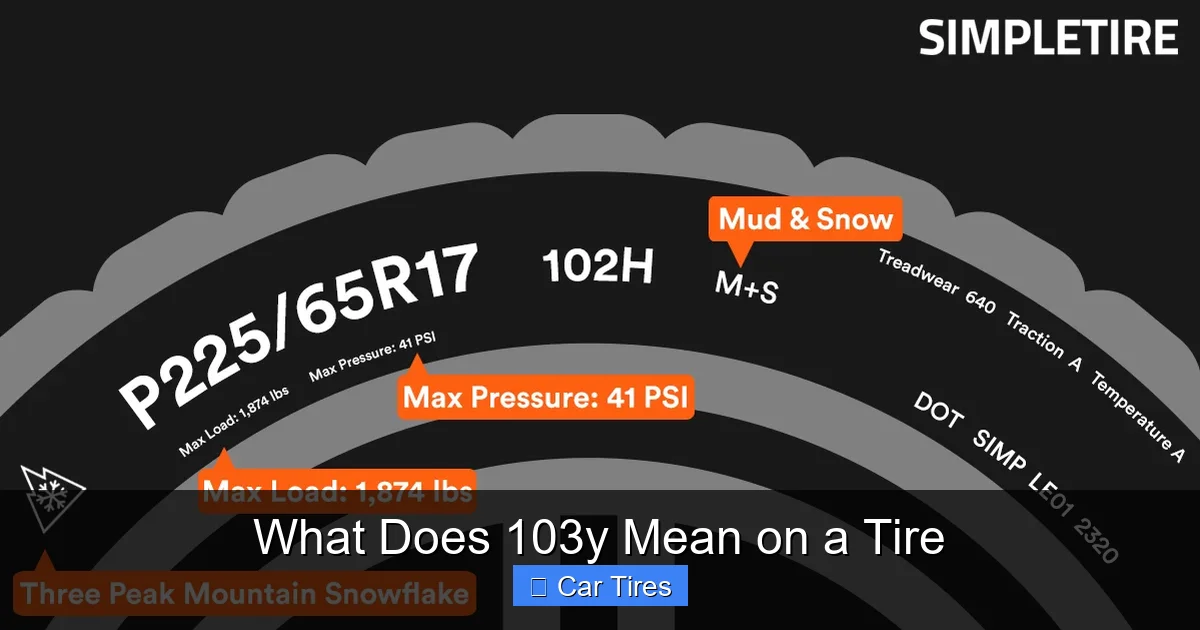
Tire sidewalls are packed with information, but it’s not always easy to decipher. Let’s walk through a typical tire code like “225/45R17 103Y” so you can read any tire like a pro.
Breaking Down the Full Code
– 225: This is the tire’s width in millimeters from sidewall to sidewall. A wider tire generally offers better grip but may reduce fuel efficiency.
– 45: This is the aspect ratio—the height of the sidewall as a percentage of the width. Here, the sidewall is 45% of 225mm, or about 101mm tall.
– R: This stands for radial construction, the most common type of tire today. It means the layers (plies) run radially across the tire.
– 17: This is the diameter of the wheel (rim) in inches. Your tire must match this exactly.
– 103Y: As we’ve discussed, this is the load index and speed rating.
Other markings you might see include:
– M+S: Mud and snow rating, indicating all-season capability.
– DOT code: Shows the tire’s manufacturing date and compliance with U.S. safety standards.
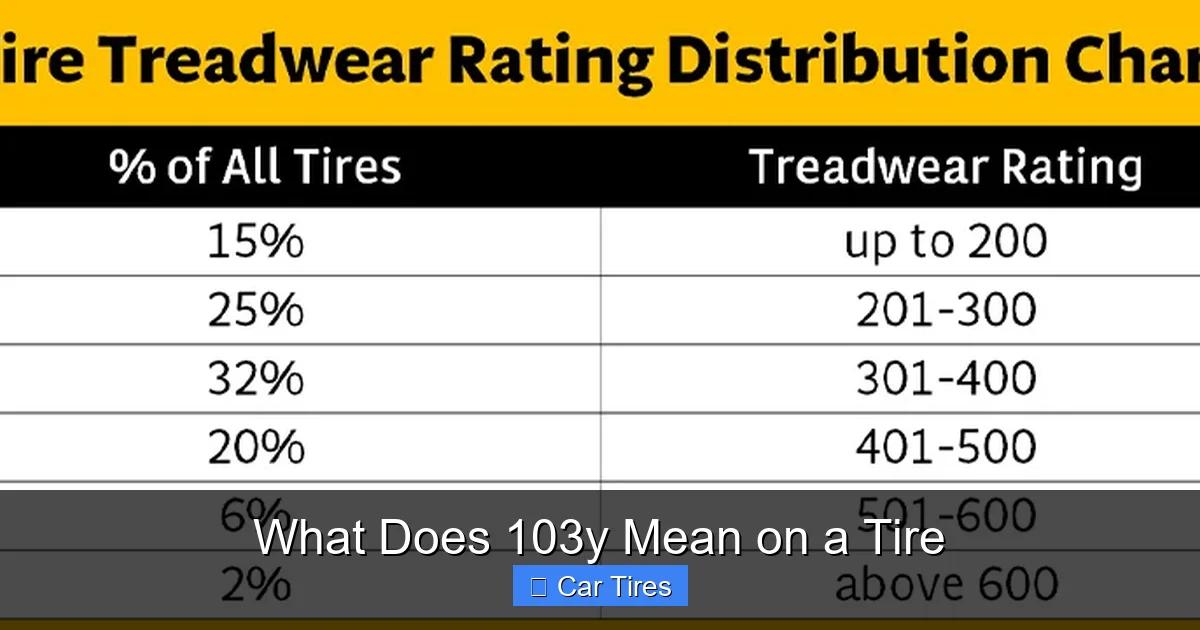
– Treadwear, Traction, Temperature grades: Part of the Uniform Tire Quality Grading (UTQG) system.
Practical Example: Comparing Two Tires
Let’s say you’re choosing between two tires for your sports sedan:
– Tire A: 245/40R18 97Y
– Tire B: 245/40R18 103Y
Both have the same size and speed rating (Y), but Tire B has a higher load index (103 vs. 97). That means Tire B can carry more weight—about 154 pounds more per tire. If your car is heavier or you often carry passengers and luggage, Tire B is the safer choice. Even though both are Y-rated for high speed, the extra load capacity gives you more margin for safety.
Tips for Reading Tire Codes
– Always check your vehicle’s owner’s manual or the tire information placard (usually on the driver’s door jamb) for the recommended tire specs.
– Use online tire size calculators to compare different sizes and their effects on speedometer accuracy and handling.
– When in doubt, consult a tire professional—especially if you’re upgrading to performance or winter tires.
Why Load Index Matters for Your Vehicle
Visual guide about What Does 103y Mean on a Tire
Image source: images.ctfassets.net
The load index isn’t just a number—it’s a critical safety factor. Every vehicle has a maximum weight it’s designed to carry, including passengers, cargo, fuel, and the vehicle itself. The tires must be able to support that weight without overheating or failing.
How Load Index Affects Safety
If your tires can’t handle the load, several problems can occur:
– Overheating: Underinflated or overloaded tires generate excess heat, which can weaken the rubber and lead to blowouts.
– Tread separation: The layers of the tire can delaminate under stress, especially at high speeds.
– Poor handling: Overloaded tires have reduced grip, longer braking distances, and increased risk of hydroplaning.
For example, a compact SUV like the Honda CR-V has a GVWR of around 4,500 pounds. With four 103-rated tires (1,929 lbs each), the total capacity is 7,716 pounds—well above the vehicle’s limit. But if you downgrade to 95-rated tires (1,521 lbs each), the total drops to 6,084 pounds. While still above the GVWR, you’re reducing your safety margin, especially if you carry heavy loads.
Matching Load Index to Your Driving Needs
Different vehicles require different load capacities:
– Compact cars: Often use 88–94 load indexes (1,235–1,477 lbs per tire).
– SUVs and crossovers: Typically need 95–105 (1,521–1,984 lbs).
– Trucks and vans: May require 110+ (3,086+ lbs) for heavy-duty use.
If you frequently tow, haul, or drive in mountainous areas, consider tires with a higher load index. Some manufacturers offer “XL” (extra load) or “RF” (reinforced) tires with higher pressure limits and stronger sidewalls. These are ideal for vehicles that operate near their weight limits.
Real-World Example: Family Road Trip
Imagine you’re taking a family of five on a road trip with luggage, coolers, and camping gear. Your sedan’s curb weight is 3,200 pounds, and with passengers and cargo, you’re pushing 4,000 pounds. If your tires are rated 103 (1,929 lbs each), you’re well within the safe range. But if they’re only 91-rated (1,356 lbs), you’re exceeding the per-tire limit—risking tire failure on the highway.
Always check your tire pressure before long trips and adjust for load. Many vehicles have a “load inflation table” in the owner’s manual that tells you the correct PSI for different weights.
Understanding Speed Ratings and Performance
Speed ratings are often misunderstood. Many drivers think a higher speed rating means better performance in everyday driving—but that’s not always true. The rating is about safety at high speeds, not necessarily grip, comfort, or tread life.
Speed Rating Chart Overview
Here’s a quick reference for common speed ratings:
– L: 75 mph (120 km/h) – Light trailers
– S: 112 mph (180 km/h) – Older economy cars
– T: 118 mph (190 km/h) – Family sedans
– H: 130 mph (210 km/h) – Mid-size performance cars
– V: 149 mph (240 km/h) – Sports cars
– W: 168 mph (270 km/h) – High-performance vehicles
– Y: 186 mph (300 km/h) – Supercars and luxury performance models
– (Y): Above 186 mph – For ultra-high-speed applications
Note: Some Y-rated tires are marked with parentheses—(Y)—indicating they’re tested beyond 186 mph, often for exotic cars like Lamborghinis or Ferraris.
Why Y-Rated Tires Are Used
Y-rated tires are built with advanced materials and construction techniques:
– Reinforced belts: Steel belts are tightly woven to resist centrifugal force at high speeds.
– Heat-resistant compounds: Special rubber formulations prevent melting or degradation.
– Stiffer sidewalls: Improve responsiveness and reduce flex during hard cornering.
These features make Y-rated tires ideal for vehicles that combine speed and precision. However, they often come with trade-offs:
– Harsher ride: Stiffer construction can transmit more road noise and bumps.
– Shorter tread life: Performance-oriented tread compounds wear faster.
– Higher cost: Premium materials and engineering increase the price.
Do You Need a Y Rating?
Unless you drive a high-performance vehicle or frequently push your car to high speeds, a Y rating may be overkill. For most drivers, an H or V rating is sufficient. In fact, using a higher speed rating than necessary won’t improve everyday performance—and could cost more.
However, if your car came with Y-rated tires from the factory, it’s best to replace them with the same or higher rating. Lowering the speed rating can affect handling, braking, and warranty coverage.
Common Mistakes When Replacing Tires
Even experienced drivers can make errors when buying new tires. Here are some common pitfalls related to load index and speed rating.
Mistake #1: Ignoring the OEM Specifications
Many people choose tires based on price, brand, or appearance—without checking if they match the original equipment. Always refer to your vehicle’s manual or door placard for the correct size, load index, and speed rating.
Mistake #2: Mixing Tire Ratings
Putting different load or speed ratings on the same axle can cause handling imbalances. For example, a 103Y tire on the front and a 97Y on the rear can lead to unpredictable steering, especially in wet conditions. Always replace tires in pairs (both front or both rear) and match specs as closely as possible.
Mistake #3: Overlooking Inflation Pressure
Even the best 103Y tire can fail if underinflated. Check your tire pressure monthly and before long trips. Use the manufacturer’s recommended PSI, not the maximum listed on the sidewall.
Mistake #4: Assuming Bigger Is Better
Upsizing to a larger tire may look cool, but it can affect speedometer accuracy, ABS performance, and suspension geometry. If you do upgrade, use a tire size calculator and consult a professional.
Mistake #5: Ignoring Tire Age
Tires degrade over time, even if they look new. The DOT code on the sidewall shows the week and year of manufacture. Avoid tires older than six years, regardless of tread depth.
Choosing the Right Tire for Your Vehicle
Now that you understand what 103Y means, how do you pick the right tire? Here’s a step-by-step guide.
Step 1: Check Your Current Tires
Look at the sidewall of your existing tires. Note the size, load index, and speed rating. This is your baseline.
Step 2: Consult Your Owner’s Manual
The manual will list the recommended tire specifications, including optional sizes for different trim levels or driving conditions.
Step 3: Consider Your Driving Habits
– Do you drive mostly in the city or on highways?
– Do you carry heavy loads or tow?
– Do you live in a snowy or rainy climate?
– Do you enjoy spirited driving?
These factors will help you choose between all-season, performance, winter, or all-terrain tires.
Step 4: Compare Options
Use online retailers or tire shop tools to compare tires with the same 103Y rating. Look at:
– Treadwear rating
– Wet and dry traction scores
– Noise levels
– Warranty coverage
– User reviews
Step 5: Get Professional Installation
Proper mounting, balancing, and alignment are crucial for safety and performance. Choose a reputable shop with certified technicians.
Bonus Tip: Consider Run-Flat or All-Season Options
If you drive a high-performance car with 103Y tires, ask about run-flat versions (which allow limited driving after a puncture) or all-season performance tires for better year-round grip.
Conclusion: Why 103Y Matters More Than You Think
The “103Y” on a tire isn’t just a random code—it’s a vital piece of information that affects your safety, performance, and driving experience. The load index (103) ensures your tires can handle your vehicle’s weight, while the speed rating (Y) guarantees they can safely operate at high speeds. Together, they form the foundation of a tire’s capability.
Understanding these markings empowers you to make informed decisions when buying, maintaining, or upgrading your tires. Whether you drive a sports car, SUV, or family sedan, matching the right load and speed ratings to your vehicle and driving style is essential. Don’t overlook the sidewall—those numbers and letters are there for a reason.
Next time you’re shopping for tires, take a moment to decode the markings. Compare options, ask questions, and prioritize safety over savings. A few extra dollars for the right 103Y-rated tire could prevent a costly—or dangerous—mistake down the road.
Your tires are the only part of your car that touches the road. Treat them with respect, and they’ll keep you safe, smooth, and steady—no matter where your journey takes you.
Frequently Asked Questions
What does 103Y mean on a tire?
The 103Y on a tire indicates a load index of 103, meaning it can support up to 1,929 pounds per tire, and a speed rating of Y, meaning it’s safe for speeds up to 186 mph (300 km/h).
Can I use a tire with a lower speed rating than 103Y?
No, using a lower speed rating than recommended can compromise safety and handling, especially in high-performance vehicles. Always match or exceed the OEM speed rating.
Is a higher load index always better?
Not necessarily. A higher load index provides more capacity, which is good for heavy loads, but may result in a harsher ride. Choose based on your vehicle’s needs.
Do I need Y-rated tires if I never drive fast?
If your car came with Y-rated tires, it’s best to replace them with the same rating for optimal performance and safety, even if you don’t drive at high speeds.
Can I mix 103Y tires with different load or speed ratings?
Avoid mixing different load or speed ratings on the same axle, as it can cause handling issues. Always replace tires in matching pairs.
How often should I check tire pressure on 103Y tires?
Check tire pressure at least once a month and before long trips. Proper inflation is critical for safety, especially with high-load, high-speed tires.
