
Lt275/65r18 Tire Size

The LT275/65R18 tire size is a popular choice for light trucks, SUVs, and off-road vehicles, offering a balance of durability, load capacity, and all-terrain performance. With a width of 275mm, a 65% aspect ratio, and an 18-inch rim diameter, this tire delivers excellent traction, stability, and ride comfort for both daily driving and rugged adventures.
[FEATURED_IMAGE_PLACEHODEL]
Key Takeaways
- LT275/65R18 is a Light Truck tire size: Designed for vehicles like Ford F-150, Chevrolet Silverado, and Toyota Tacoma, offering higher load ratings than passenger tires.
- Dimensions and specs matter: This tire is 275mm wide, has a sidewall height of 178.75mm (65% of width), and fits 18-inch wheels, resulting in an overall diameter of about 32.1 inches.
- Great for off-road and highway use: The robust construction and aggressive tread patterns make it ideal for gravel, mud, snow, and long highway drives.
- Higher load and pressure capacity: LT tires like this one can handle heavier loads and higher inflation pressures, making them safer for towing and hauling.
- Fuel efficiency and ride comfort vary: While durable, some LT275/65R18 tires may reduce fuel economy and increase road noise compared to standard passenger tires.
- Choose the right tread pattern: All-terrain, mud-terrain, and highway-terrain options are available—pick based on your driving needs.
- Proper maintenance extends life: Regular rotation, alignment, and pressure checks ensure optimal performance and longevity.
📑 Table of Contents
- Understanding the LT275/65R18 Tire Size
- Why Choose LT275/65R18 Tires?
- Breaking Down the Numbers: What Does LT275/65R18 Really Mean?
- LT275/65R18 Tire Dimensions and Specifications
- Best Vehicles for LT275/65R18 Tires
- Types of LT275/65R18 Tires: All-Terrain, Mud-Terrain, and Highway
- Pros and Cons of LT275/65R18 Tires
- Maintenance Tips for LT275/65R18 Tires
- Conclusion
Understanding the LT275/65R18 Tire Size
If you drive a pickup truck or a large SUV, chances are you’ve come across the LT275/65R18 tire size. It’s one of the most common tire sizes for light-duty trucks and off-road vehicles, and for good reason. This tire strikes a sweet spot between size, strength, and versatility. But what exactly does “LT275/65R18” mean? And why should you care?
Let’s break it down. The “LT” stands for Light Truck, which tells you this tire is built for heavier vehicles that need extra durability and load-carrying capacity. Unlike standard passenger tires (marked with “P”), LT tires are designed to handle more weight, higher pressures, and rougher conditions. The “275” refers to the tire’s width in millimeters—so it’s 275mm wide from sidewall to sidewall. The “65” is the aspect ratio, meaning the sidewall height is 65% of the tire’s width. Finally, the “R18” means it’s a radial tire that fits an 18-inch wheel.
This combination results in a tire that’s about 32.1 inches in diameter—big enough to give you ground clearance and a commanding view of the road, but not so large that it sacrifices fuel efficiency or handling. Whether you’re hauling gear, towing a trailer, or exploring backcountry trails, the LT275/65R18 is built to keep up.
Why Choose LT275/65R18 Tires?

Visual guide about Lt275/65r18 Tire Size
Image source: tiresizecompare.com
So, why do so many truck and SUV owners go with the LT275/65R18 size? It comes down to performance, durability, and versatility. These tires are engineered for real-world demands—whether that’s carrying heavy loads, driving on rough terrain, or simply surviving the daily grind.
One of the biggest advantages is load capacity. Because they’re LT tires, they’re rated to carry more weight than standard passenger tires. For example, a typical LT275/65R18 tire might have a load index of 123, which translates to a maximum load of 3,417 pounds per tire. That’s crucial if you’re towing a boat, hauling construction materials, or driving a fully loaded SUV.
Another benefit is durability. LT tires are built with stronger sidewalls and thicker rubber compounds. This makes them more resistant to punctures, cuts, and impacts—especially important if you drive on gravel roads, construction sites, or off-road trails. The reinforced construction also helps maintain stability under heavy loads, reducing the risk of blowouts.
But it’s not just about strength. The LT275/65R18 size also offers a great balance of ride comfort and handling. The 65 aspect ratio provides a decent sidewall flex, which absorbs bumps and improves comfort on long drives. At the same time, the wide tread footprint gives you solid grip on both dry and wet pavement.
And let’s not forget about off-road performance. Many LT275/65R18 tires come with aggressive tread patterns designed for mud, snow, and loose terrain. Whether you’re navigating a snowy mountain pass or a muddy trail, these tires can give you the confidence to keep going.
Breaking Down the Numbers: What Does LT275/65R18 Really Mean?

Visual guide about Lt275/65r18 Tire Size
Image source: blackhawktireusa.com
Let’s take a closer look at what each part of the LT275/65R18 designation means—because understanding the numbers can help you make smarter decisions when buying tires.
Tire Width: 275mm
The first number, 275, is the tire’s width in millimeters. This is the measurement from one sidewall to the other when the tire is mounted and inflated. A wider tire generally provides better traction and stability, especially on loose or slippery surfaces. However, it can also increase rolling resistance, which may slightly reduce fuel economy.
In the case of the LT275/65R18, the 275mm width is ideal for trucks and SUVs. It’s wide enough to offer solid grip and load distribution, but not so wide that it becomes unwieldy or inefficient. For comparison, a typical passenger car tire might be 205mm or 225mm wide—so the LT275 is significantly broader, which is part of what gives it that rugged, capable look.
Aspect Ratio: 65%
The second number, 65, is the aspect ratio. This tells you the height of the tire’s sidewall as a percentage of its width. So, 65% of 275mm is 178.75mm. That’s the sidewall height from the wheel rim to the tread.
A 65 aspect ratio is considered a moderate sidewall height. It’s not as tall as a 70 or 75 series tire (which would offer more cushioning), but it’s not as low as a 50 or 45 series tire (which would prioritize handling and responsiveness). This balance makes the LT275/65R18 a great all-around choice—comfortable enough for daily driving, yet responsive enough for towing and off-roading.
Radial Construction: R
The “R” stands for radial, which refers to the internal construction of the tire. Radial tires have layers of fabric (plies) that run radially across the tire, perpendicular to the direction of travel. This design allows the tread and sidewall to function more independently, improving ride comfort, fuel efficiency, and tread life.
Nearly all modern tires—including the LT275/65R18—are radial. It’s the standard for a reason: it offers the best combination of performance, durability, and efficiency.
Rim Diameter: 18 Inches
The final number, 18, is the diameter of the wheel (rim) that the tire is designed to fit, measured in inches. So, this tire is made for 18-inch wheels.
Eighteen-inch wheels are common on mid-size and full-size trucks and SUVs. They offer a good compromise between style, performance, and ride quality. Larger wheels (like 20 or 22 inches) can look sharp, but they often come with lower-profile tires that sacrifice comfort and durability. The 18-inch size, paired with the 65 aspect ratio, keeps the sidewall tall enough to absorb shocks and protect the rim from damage.
LT275/65R18 Tire Dimensions and Specifications
Visual guide about Lt275/65r18 Tire Size
Image source: tireblogger.com
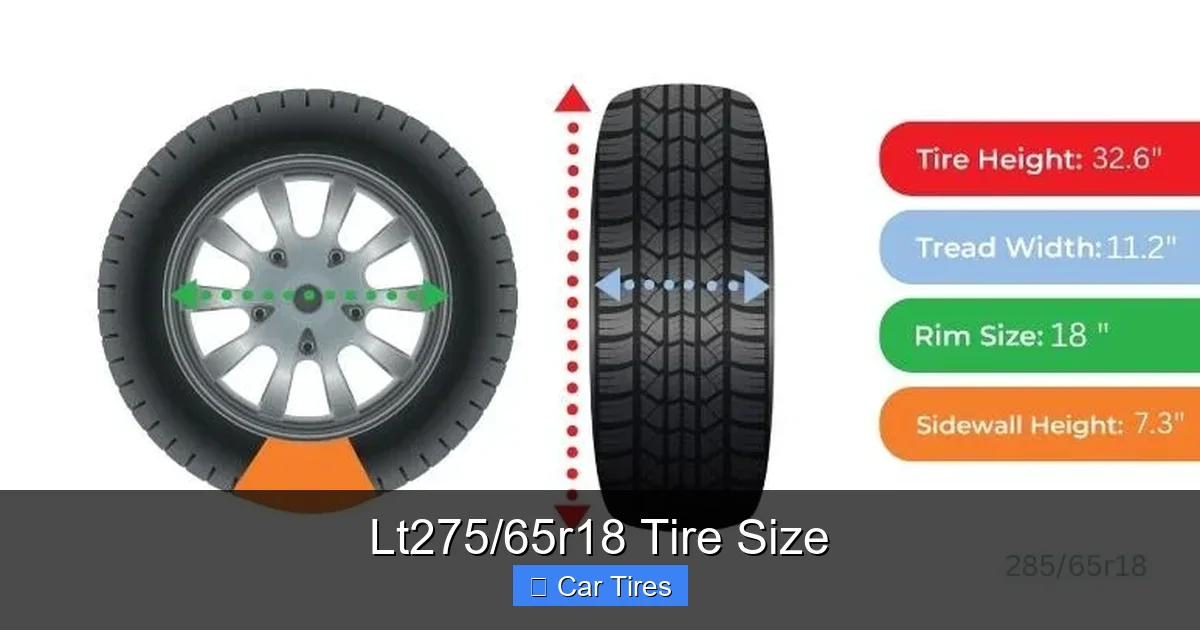
Now that we’ve decoded the name, let’s look at the actual dimensions and specs of the LT275/65R18 tire. Knowing these numbers can help you understand how it will perform and whether it’s right for your vehicle.
Overall Diameter
The overall diameter of a LT275/65R18 tire is approximately 32.1 inches. This is calculated by adding the wheel diameter (18 inches) to twice the sidewall height (2 × 178.75mm = 357.5mm, or about 14.1 inches). So, 18 + 14.1 = 32.1 inches.
This diameter is important because it affects your speedometer accuracy, ground clearance, and gearing. If you change tire sizes without adjusting your vehicle’s computer, your speedometer might read incorrectly. For example, a larger tire covers more ground per revolution, so your speedometer might show a lower speed than you’re actually traveling.
Section Width
As mentioned, the section width is 275mm, or about 10.8 inches. This is the widest part of the tire when mounted and inflated. A wider tire generally provides better traction and stability, especially when cornering or driving on loose surfaces.
However, a wider tire also has a larger contact patch, which can increase rolling resistance and reduce fuel economy. It may also cause rubbing issues if your wheel wells aren’t wide enough. So, while the LT275/65R18 is a great size, it’s important to make sure your vehicle can accommodate it.
Sidewall Height
The sidewall height is 178.75mm, or about 7 inches. This is the distance from the rim to the tread. A taller sidewall (like on a 70-series tire) offers more cushioning and better impact resistance. A shorter sidewall (like on a 50-series tire) improves handling and responsiveness.
The 65 aspect ratio strikes a balance—enough sidewall to absorb bumps and protect the rim, but not so much that it sacrifices steering feel.
Circumference and Revolutions per Mile
The circumference of a LT275/65R18 tire is about 100.9 inches. This means it travels roughly 100.9 inches with each full rotation.
In terms of revolutions per mile, this tire turns about 633 times per mile. This number is useful if you’re comparing different tire sizes or recalibrating your speedometer after a tire change.
Load Index and Speed Rating
Most LT275/65R18 tires have a load index of 123, which means each tire can carry up to 3,417 pounds. That’s a total of 13,668 pounds for all four tires—more than enough for most trucks and SUVs, even when fully loaded.
The speed rating is typically “S” (112 mph) or “T” (118 mph). These are conservative ratings, but they’re more than sufficient for normal driving. LT tires are built for durability and load, not high-speed performance, so don’t expect sports car handling.
Best Vehicles for LT275/65R18 Tires
The LT275/65R18 tire size is a favorite among truck and SUV owners, and it fits a wide range of popular models. If you’re driving one of these vehicles, this tire size could be a perfect match.
Ford F-150
The Ford F-150 is one of the most popular pickup trucks in America, and many trims—especially the higher-end ones like the Lariat, King Ranch, and Platinum—come with 18-inch wheels. The LT275/65R18 is a common factory option or a popular upgrade for off-road packages like the FX4.
With its strong frame and powerful engines, the F-150 benefits from the durability and load capacity of LT tires. Whether you’re towing a trailer or hauling gear, the LT275/65R18 gives you the confidence to handle the job.
Chevrolet Silverado 1500
The Chevy Silverado 1500 is another full-size pickup that often uses the LT275/65R18 size, especially on LTZ and High Country trims. These trucks are known for their smooth ride and strong towing capacity, and the LT275/65R18 tire complements those strengths.
Many Silverado owners choose this tire size for its balance of comfort and capability. It’s great for highway driving, but also tough enough for weekend adventures.
Ram 1500
The Ram 1500, particularly the Rebel and Laramie trims, often comes with 18-inch wheels and LT275/65R18 tires. Ram trucks are praised for their luxurious interiors and smooth ride, and this tire size helps maintain that comfort while adding ruggedness.
The LT275/65R18 is also a popular choice for Ram owners who want to upgrade to all-terrain or mud-terrain tires for better off-road performance.
Toyota Tacoma
While the Tacoma is a mid-size truck, some trims—like the TRD Off-Road and TRD Pro—come with 18-inch wheels and can accommodate the LT275/65R18 size. These trucks are built for adventure, and the LT tire adds extra durability for rocky trails and muddy paths.
Keep in mind that the Tacoma’s suspension and wheel wells may require slight modifications to fit this larger tire, so it’s best to consult a professional before making the switch.
Nissan Frontier
The Nissan Frontier, especially the Pro-4X model, is another vehicle that can benefit from the LT275/65R18 tire. This rugged mid-size truck is designed for off-road use, and the LT tire’s strong sidewalls and aggressive tread patterns make it a natural fit.
SUVs Like the Ford Explorer and Chevrolet Tahoe
While less common, some full-size SUVs—like the Ford Explorer, Chevrolet Tahoe, and GMC Yukon—can also use the LT275/65R18 size, especially if they’re equipped with heavy-duty packages or towing options. These vehicles often carry heavy loads and benefit from the extra strength of LT tires.
Types of LT275/65R18 Tires: All-Terrain, Mud-Terrain, and Highway
Not all LT275/65R18 tires are created equal. Depending on your driving needs, you’ll want to choose the right type of tire. Here are the three main categories:
All-Terrain Tires
All-terrain (A/T) tires are the most popular choice for LT275/65R18. They’re designed to handle a mix of on-road and off-road conditions, making them ideal for daily drivers who also like to explore.
These tires have aggressive tread patterns with deep grooves and siping for traction in mud, snow, and gravel. But they’re also quieter and more comfortable than mud-terrain tires on highways.
Examples include the BFGoodrich All-Terrain T/A KO2, Goodyear Wrangler DuraTrac, and Cooper Discoverer AT3. These tires offer excellent durability, long tread life, and reliable performance in most conditions.
Mud-Terrain Tires
If you’re serious about off-roading, mud-terrain (M/T) tires might be the way to go. These tires have even more aggressive tread with large, chunky lugs that dig into soft terrain like mud, sand, and rocks.
The downside? They’re louder on the highway and tend to wear faster. They also provide a stiffer ride, which can reduce comfort on long drives.
Popular mud-terrain options for LT275/65R18 include the Nitto Trail Grappler, Mickey Thompson Baja Boss, and Toyo Open Country M/T. These are best for weekend warriors or overlanding enthusiasts.
Highway-Terrain Tires
For drivers who spend most of their time on paved roads, highway-terrain (H/T) tires are a great option. These tires are quieter, more fuel-efficient, and offer a smoother ride than A/T or M/T tires.
They have less aggressive tread patterns, which reduces road noise and improves fuel economy. However, they’re not ideal for serious off-roading or heavy towing.
Examples include the Michelin LTX A/T2 and the Goodyear Wrangler SR-A. These are perfect for commuters who want the look and strength of an LT tire without the trade-offs in comfort and efficiency.
Pros and Cons of LT275/65R18 Tires
Like any tire size, the LT275/65R18 has its advantages and disadvantages. Here’s a balanced look at what to expect.
Pros
- High load capacity: Can handle heavy loads and towing with ease.
- Durable construction: Strong sidewalls resist cuts, punctures, and impacts.
- Great off-road performance: Aggressive tread patterns provide excellent traction in mud, snow, and gravel.
- Improved ground clearance: The 32.1-inch diameter gives you more space between the ground and your vehicle.
- Versatile options: Available in all-terrain, mud-terrain, and highway-terrain designs.
Cons
- Reduced fuel economy: Wider tires and heavier construction can increase rolling resistance.
- Louder ride: Especially with all-terrain and mud-terrain tires, road noise can be noticeable.
- Stiffer ride: LT tires are built for durability, not comfort, so the ride may feel harsher.
- Higher cost: LT tires are generally more expensive than passenger tires.
- Speedometer inaccuracy: Changing tire size can affect speedometer readings if not recalibrated.
Maintenance Tips for LT275/65R18 Tires
To get the most out of your LT275/65R18 tires, regular maintenance is key. Here are some tips to keep them performing at their best.
Check Tire Pressure Monthly
LT tires are designed to run at higher pressures than passenger tires—often between 40 and 50 PSI. Underinflated tires can overheat, wear unevenly, and reduce fuel economy. Overinflated tires can reduce traction and cause a harsh ride.
Use a reliable tire pressure gauge and check pressure when the tires are cold (before driving). Refer to your vehicle’s door jamb or owner’s manual for the recommended pressure.
Rotate Tires Every 5,000 to 7,000 Miles
Tire rotation helps ensure even wear across all four tires. Front tires tend to wear faster due to steering and braking forces, so rotating them to the rear can extend tread life.
Follow the rotation pattern recommended by your tire manufacturer—usually front-to-rear or cross-rotation for rear-wheel-drive vehicles.
Inspect for Damage Regularly
Look for cuts, bulges, punctures, or uneven wear. LT tires are tough, but they’re not invincible. A small nail or rock can cause a slow leak or sidewall damage.
If you notice any issues, have them checked by a professional. Ignoring damage can lead to blowouts or unsafe driving conditions.
Align and Balance Wheels
Proper alignment ensures your tires wear evenly and your vehicle drives straight. Misaligned wheels can cause rapid or uneven tread wear, especially on the edges.
Wheel balancing prevents vibrations at high speeds. If your steering wheel shakes or your ride feels rough, it might be time for a balance.
Replace Tires When Needed
Most LT275/65R18 tires last between 40,000 and 60,000 miles, depending on driving conditions and maintenance. Use the tread wear indicators (small bars in the grooves) to check if it’s time for new tires.
Don’t wait until the tread is completely worn—replace tires when they reach 4/32” of tread depth for safety, especially in wet or snowy conditions.
Conclusion
The LT275/65R18 tire size is a powerhouse for light trucks and SUVs. It combines width, strength, and versatility in a package that’s built for real-world demands. Whether you’re towing, hauling, or exploring off the beaten path, this tire size delivers the performance and durability you need.
From understanding the numbers behind the name to choosing the right tread pattern and maintaining your tires properly, there’s a lot to consider. But with the right knowledge, you can make an informed decision that enhances your vehicle’s capabilities and keeps you safe on the road.
So, if you’re driving a Ford F-150, Chevy Silverado, Ram 1500, or similar vehicle, the LT275/65R18 might just be the perfect fit. It’s not just a tire—it’s a statement of strength, capability, and readiness for whatever comes your way.
Frequently Asked Questions
What does LT275/65R18 mean?
The LT275/65R18 tire size means it’s a Light Truck tire that is 275mm wide, has a sidewall height that’s 65% of the width, and fits an 18-inch wheel. The “R” indicates radial construction.
What vehicles use LT275/65R18 tires?
This tire size is commonly used on full-size trucks like the Ford F-150, Chevrolet Silverado 1500, Ram 1500, and some SUVs like the Tahoe and Yukon, especially with off-road or towing packages.
Can I put LT275/65R18 tires on my passenger car?
No, LT tires are designed for light trucks and SUVs. Passenger cars aren’t built to handle the higher load ratings and pressures of LT tires, which could compromise safety.
Are LT275/65R18 tires good for off-roading?
Yes, especially all-terrain and mud-terrain versions. These tires offer excellent traction in mud, snow, and gravel, making them ideal for off-road adventures.
Do LT275/65R18 tires reduce fuel economy?
They can, due to their wider footprint and heavier construction. However, choosing a highway-terrain or fuel-efficient all-terrain model can help minimize the impact.
How often should I rotate LT275/65R18 tires?
Rotate them every 5,000 to 7,000 miles to ensure even wear and extend tread life. Follow the rotation pattern recommended by your tire manufacturer.
