
How Much Is Too Much Psi in a Tire

Overinflating your tires can be just as dangerous as underinflating them. While proper tire pressure ensures safety and efficiency, too much psi can lead to reduced traction, uneven wear, and even blowouts. This guide explains the risks, how to check your ideal pressure, and why staying within the recommended range is crucial for every driver.
Key Takeaways
- Too much psi reduces tire contact with the road: Overinflated tires have a smaller footprint, leading to less grip and longer braking distances.
- Overinflation causes uneven tread wear: The center of the tire wears faster than the edges, shortening tire life and increasing replacement costs.
- Excessive pressure increases risk of blowouts: High psi makes tires more rigid and prone to damage from potholes or debris.
- Recommended psi varies by vehicle and load: Always check your owner’s manual or door jamb sticker—not the max psi on the tire sidewall.
- Seasonal temperature changes affect pressure: Cold weather lowers psi; hot weather raises it—check pressure monthly.
- Use a reliable gauge and check when tires are cold: For accurate readings, measure pressure before driving or after the car has sat for 3+ hours.
- Modern TPMS helps but isn’t foolproof: Tire Pressure Monitoring Systems alert you to low pressure but may not detect overinflation.
📑 Table of Contents
- Understanding Tire Pressure: Why PSI Matters
- What Is the Ideal Tire Pressure for Your Vehicle?
- The Dangers of Too Much PSI in a Tire
- How Temperature Affects Tire Pressure
- Signs You’re Running Too Much PSI
- How to Check and Adjust Tire Pressure Correctly
- Common Myths About Tire Pressure
- Conclusion: Stay Safe by Staying in the Right Range
Understanding Tire Pressure: Why PSI Matters
When it comes to car maintenance, few things are as simple—and as important—as checking your tire pressure. Yet, many drivers overlook this routine task, either assuming their tires are fine or not understanding the real impact of incorrect psi (pounds per square inch). While most people know that underinflated tires are dangerous, fewer realize that too much psi in a tire can be just as harmful.
Tire pressure affects everything from fuel efficiency and handling to safety and tire lifespan. The right amount of air ensures your tires make optimal contact with the road, providing the grip needed for braking, cornering, and stability. But when you overinflate, you’re essentially making your tires too stiff. This reduces the tire’s ability to absorb shocks, increases wear in the center of the tread, and can even lead to sudden failures like blowouts—especially on rough roads or at high speeds.
Think of your tires like balloons. A properly inflated balloon is firm but flexible. Overinflate it, and it becomes taut and fragile, ready to pop at the slightest poke. The same principle applies to your car’s tires. Pushing them beyond the recommended psi might seem like a way to improve performance or reduce rolling resistance, but the trade-offs in safety and comfort are rarely worth it.
What Is the Ideal Tire Pressure for Your Vehicle?
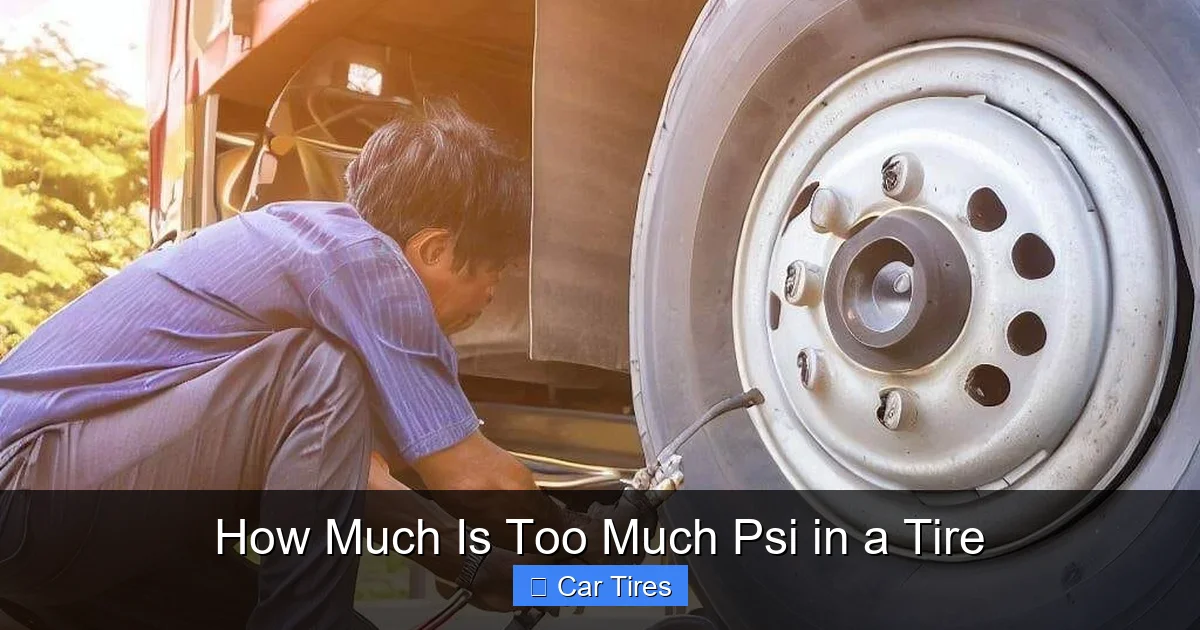
Visual guide about How Much Is Too Much Psi in a Tire
Image source: tirehubz.com
So, how do you know what the right psi is for your car? The answer isn’t found on the tire itself—despite what many drivers assume. The number printed on the tire sidewall (like “Max Pressure: 50 psi”) is the absolute maximum the tire can safely hold under ideal conditions. But that doesn’t mean your car should run at that level.
The correct tire pressure is determined by your vehicle manufacturer, not the tire maker. It’s based on the weight of your car, its suspension design, and how it’s intended to perform. You’ll find the recommended psi in two key places: your owner’s manual and the tire information placard usually located on the driver’s side door jamb.
For example, a typical sedan might recommend 32 psi in the front and 30 psi in the rear. A heavier SUV or truck could require 35–40 psi, especially when carrying passengers or cargo. Some vehicles even have different pressures for front and rear tires, so it’s important to check both.
Let’s say you drive a Honda Civic. The door jamb sticker might list 32 psi for all four tires when the car is lightly loaded. But if you’re taking a road trip with three passengers and luggage, the manual might suggest increasing rear tire pressure to 35 psi to handle the extra weight. This adjustment helps maintain stability and prevents overloading the rear tires.
Always use the manufacturer’s recommendation—not the tire’s max rating—as your guide. Overinflating to match the tire’s maximum psi might seem like a way to “be safe,” but it actually puts your tires at risk.
The Dangers of Too Much PSI in a Tire
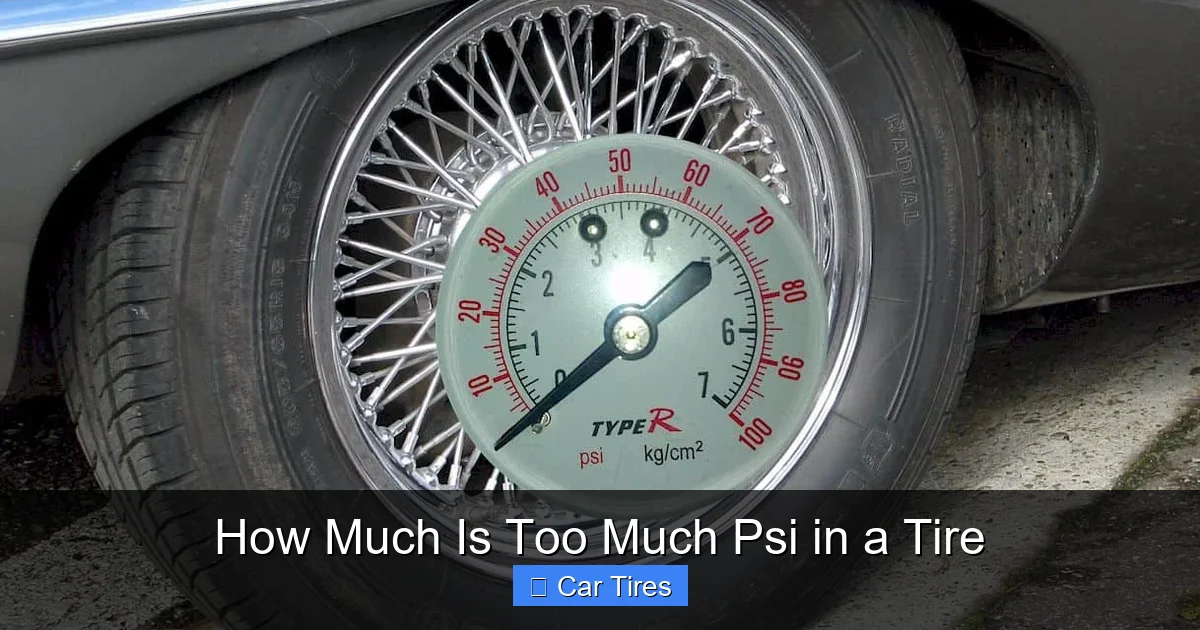
Visual guide about How Much Is Too Much Psi in a Tire
Image source: curateview.com
Now that we know what the correct pressure should be, let’s talk about what happens when you go over that number. Too much psi in a tire might not seem like a big deal at first, but the consequences can be serious—and sometimes dangerous.
One of the most immediate effects of overinflation is reduced traction. When a tire is overinflated, it becomes more rounded on top. This means less of the tread touches the road surface. Imagine trying to walk on ice wearing shoes with tiny contact points—your grip would be minimal. The same thing happens with your tires. Less contact equals less grip, especially in wet or slippery conditions. This can lead to longer stopping distances and a higher risk of skidding or hydroplaning.
Another major issue is uneven tread wear. Overinflated tires wear down faster in the center of the tread because that’s the part that’s pressing hardest against the road. Over time, this creates a “bald spot” down the middle while the outer edges remain relatively untouched. Not only does this reduce tire life, but it also compromises handling. A tire that’s worn in the center may feel unstable during turns or sudden maneuvers.
Then there’s the risk of blowouts. Overinflated tires are under constant stress. They’re less able to absorb impacts from potholes, curbs, or road debris. When a stiff, overinflated tire hits a sharp object or a deep pothole, the internal pressure can spike, causing the tire to rupture. This is especially dangerous at highway speeds, where a blowout can lead to loss of control, rollovers, or multi-car accidents.
Even comfort takes a hit. Overinflated tires transmit more road vibrations into the cabin, making your ride feel harsh and bumpy. You might notice more noise, especially on rough pavement. Over time, this can also stress your suspension components, leading to premature wear on shocks, struts, and other parts.
How Temperature Affects Tire Pressure

Visual guide about How Much Is Too Much Psi in a Tire
Image source: curateview.com
One of the most overlooked factors in tire pressure is temperature. Air expands when it’s hot and contracts when it’s cold. This means your tire pressure can fluctuate significantly with the seasons—or even from morning to afternoon.
For every 10°F change in temperature, tire pressure changes by about 1 psi. So if it’s 70°F in the morning and you check your tires at 32 psi, they could drop to 30 psi by evening if the temperature falls to 50°F. Conversely, on a hot summer day, the same tires might climb to 34 psi or higher.
This is why it’s so important to check your tire pressure when the tires are “cold”—meaning the car hasn’t been driven for at least three hours, or driven less than a mile at low speed. Checking pressure when tires are warm gives a false reading because the air inside has expanded from heat generated by driving.
Let’s say you live in a place with cold winters. In January, you might find your tires are consistently 3–4 psi below the recommended level. If you don’t adjust them, you’re driving underinflated—which brings its own set of problems. But if you overcompensate by inflating them too much in the summer, you could end up with too much psi in a tire when the weather heats up.
Some drivers try to “set it and forget it” by inflating tires to a middle-ground pressure year-round. But this isn’t ideal. The best practice is to check your tires monthly and adjust as needed based on the current temperature and load.
Modern vehicles with Tire Pressure Monitoring Systems (TPMS) can help by alerting you when pressure drops below a certain threshold. However, most TPMS systems are designed to warn about underinflation, not overinflation. So even if your dashboard light isn’t on, your tires could still be overinflated—especially after a hot day or a long drive.
Signs You’re Running Too Much PSI
How can you tell if your tires are overinflated? While a tire pressure gauge is the most reliable tool, there are also some physical and performance clues to watch for.
One of the easiest signs is how your car feels on the road. If your ride has suddenly become bumpy or harsh—especially over small bumps or cracks in the pavement—your tires might be too stiff. You might also notice increased road noise, as overinflated tires transmit more vibrations.
Another red flag is uneven tread wear. If you inspect your tires and notice that the center of the tread is significantly more worn than the edges, overinflation is likely the cause. This pattern is a classic symptom of too much psi. In contrast, underinflated tires tend to wear more on the outer edges.
Handling changes can also be a clue. Overinflated tires may feel “twitchy” or overly responsive, especially during cornering. The reduced contact patch makes the car less stable, and you might feel like it’s floating or slipping slightly when turning. This is particularly dangerous in wet conditions.
You might also notice that your car bounces more over bumps or dips. Instead of absorbing the impact, the stiff tires transfer it directly to the suspension and cabin. Over time, this can lead to discomfort and even damage to your vehicle’s undercarriage.
If you’ve recently filled your tires and noticed these changes, it’s worth double-checking the pressure with a reliable gauge. Digital gauges are more accurate than the old pencil-style ones, and many gas stations have digital air pumps with built-in gauges.
How to Check and Adjust Tire Pressure Correctly
Checking your tire pressure isn’t complicated, but doing it right makes all the difference. Here’s a simple step-by-step guide to help you stay on top of it.
First, make sure your tires are cold. Park your car overnight or wait at least three hours after driving before checking. This ensures the air inside hasn’t expanded from heat.
Next, locate the recommended psi for your vehicle. Check the door jamb sticker or owner’s manual. Write it down so you don’t forget—front and rear pressures may differ.
Remove the valve cap from one tire and press the tire pressure gauge firmly onto the valve stem. You’ll hear a quick hiss of air—that’s normal. Read the pressure on the gauge. If it’s too high, press the gauge’s release button (or use a small tool) to let out a little air. Recheck until you reach the correct psi.
Repeat for all four tires, and don’t forget the spare if you have one. Replace the valve caps when you’re done.
It’s best to check your tires once a month and before long trips. Keep a tire pressure gauge in your glove compartment or garage—don’t rely solely on gas station pumps, which can be inaccurate.
If you find that your tires are consistently overinflated, ask yourself why. Did you inflate them to the tire’s max rating? Are you compensating for temperature changes incorrectly? Or could there be a problem with your air compressor?
Also, consider investing in a quality digital gauge. They’re affordable, easy to read, and more precise than analog models. Some even have backlit displays for nighttime use.
Common Myths About Tire Pressure
There are a lot of misconceptions about tire pressure, and some of them can lead to dangerous habits. Let’s clear up a few of the most common myths.
Myth #1: The number on the tire sidewall is the ideal pressure.
This is false. The sidewall shows the maximum pressure the tire can safely hold—not what your car needs. Using this number can easily result in overinflation.
Myth #2: Overinflating tires improves fuel economy.
While slightly higher pressure can reduce rolling resistance, the gains are minimal and not worth the safety trade-offs. Overinflated tires wear out faster and reduce traction, which can actually increase fuel use in real-world driving.
Myth #3: TPMS means you don’t need to check pressure manually.
Most TPMS systems only warn about low pressure, not high. Also, they can malfunction or have delayed alerts. Regular manual checks are still essential.
Myth #4: All four tires should have the same pressure.
Not necessarily. Many vehicles recommend different pressures for front and rear tires, especially when loaded. Always follow the manufacturer’s guide.
Myth #5: You only need to check pressure in winter.
Temperature changes happen year-round. Summer heat can cause overinflation just as winter cold causes underinflation. Monthly checks are recommended regardless of season.
Conclusion: Stay Safe by Staying in the Right Range
So, how much is too much psi in a tire? The answer is simple: any amount above your vehicle manufacturer’s recommended level. While it might seem harmless to add a few extra pounds of pressure, the risks—reduced traction, uneven wear, blowouts, and a harsher ride—are real and potentially dangerous.
Proper tire pressure isn’t just about performance or fuel economy. It’s about safety. Your tires are the only part of your car that touches the road. Keeping them in the right condition ensures you have the grip, stability, and responsiveness needed to drive confidently in any condition.
Make it a habit to check your tire pressure monthly, especially when the seasons change. Use a reliable gauge, follow the numbers on your door jamb sticker, and never inflate to the max psi listed on the tire. And remember: if your ride feels off, your tires look unevenly worn, or you’ve recently added air, it’s time for a quick check.
Taking five minutes to check your tires could save you hundreds in replacements—or even prevent an accident. So next time you’re near a gas station air pump, don’t just assume everything’s fine. Take a moment. Check the psi. Your safety—and your tires—will thank you.
Frequently Asked Questions
What happens if I put too much psi in my tire?
Overinflating your tires reduces the contact patch with the road, leading to less traction, longer braking distances, and increased risk of blowouts. It also causes uneven tread wear in the center and makes your ride harsher.
Can overinflated tires cause a blowout?
Yes. Overinflated tires are more rigid and less able to absorb impacts from potholes or debris. This increases the chance of a sudden rupture, especially at high speeds or in hot weather.
How do I know if my tires are overinflated?
Signs include a bumpy or harsh ride, excessive center tread wear, twitchy handling, and increased road noise. The best way to confirm is by using a tire pressure gauge when the tires are cold.
Should I use the psi number on the tire sidewall?
No. The sidewall shows the maximum safe pressure for the tire, not the recommended pressure for your vehicle. Always follow the psi listed in your owner’s manual or on the door jamb sticker.
Does temperature really affect tire pressure that much?
Yes. For every 10°F change in temperature, tire pressure changes by about 1 psi. Cold weather lowers pressure; hot weather raises it. Check your tires monthly and adjust as needed.
Can I rely on my car’s TPMS to detect overinflation?
Most TPMS systems only warn about underinflation, not overinflation. They’re helpful but not a substitute for regular manual checks with a reliable gauge.
