
How Long to Charge Car Battery at 10 Amps

Charging your car battery at 10 amps typically takes 4 to 12 hours, depending on battery size and charge level. This method balances speed and safety, making it ideal for most drivers. Always monitor voltage and temperature to avoid overcharging.
Key Takeaways
- Charging Time Varies: A 10-amp charger usually takes 4–12 hours to fully charge a standard car battery, depending on its capacity and current state of charge.
- Battery Capacity Matters: Larger batteries (e.g., 60Ah) take longer to charge than smaller ones (e.g., 40Ah) at the same amperage.
- State of Charge Is Key: A deeply discharged battery (below 50%) will require significantly more time than one that’s only partially drained.
- Safety First: Always charge in a well-ventilated area, wear safety gear, and avoid sparks near the battery to prevent gas ignition.
- Use a Smart Charger When Possible: Modern smart chargers adjust amperage automatically and prevent overcharging, improving battery lifespan.
- Monitor Voltage and Temperature: Check battery voltage regularly and stop charging if it gets too hot (above 125°F or 52°C).
- Avoid Overcharging: Leaving a battery on a 10-amp charger too long can damage it—set a timer or use an automatic shut-off feature.
📑 Table of Contents
How Long to Charge Car Battery at 10 Amps: A Complete Guide
So your car won’t start, and you’re staring at a dead battery. You’ve got a charger, and it’s set to 10 amps—now what? How long should you leave it plugged in? The answer isn’t one-size-fits-all, but understanding the basics can save you time, money, and potential damage to your battery.
Charging a car battery at 10 amps is a popular choice because it strikes a good balance between speed and safety. It’s fast enough to get you back on the road without being so aggressive that it risks overheating or damaging the battery. But how long does it actually take? That depends on several factors: the battery’s capacity (measured in amp-hours), how dead it is, the type of charger you’re using, and even the temperature of your environment.
In this guide, we’ll walk you through everything you need to know about charging your car battery at 10 amps. From calculating charge time to avoiding common mistakes, we’ve got you covered. Whether you’re a weekend mechanic or just trying to get your daily driver running again, this article will help you charge safely and efficiently.
Understanding Car Batteries and Charging Basics
Before we dive into timing, let’s get familiar with how car batteries work and what happens during charging. Most cars use a 12-volt lead-acid battery, which stores electrical energy in chemical form. When you turn the key, the battery sends a burst of power to the starter motor, which cranks the engine. Over time, especially if the car sits unused, the battery loses its charge.
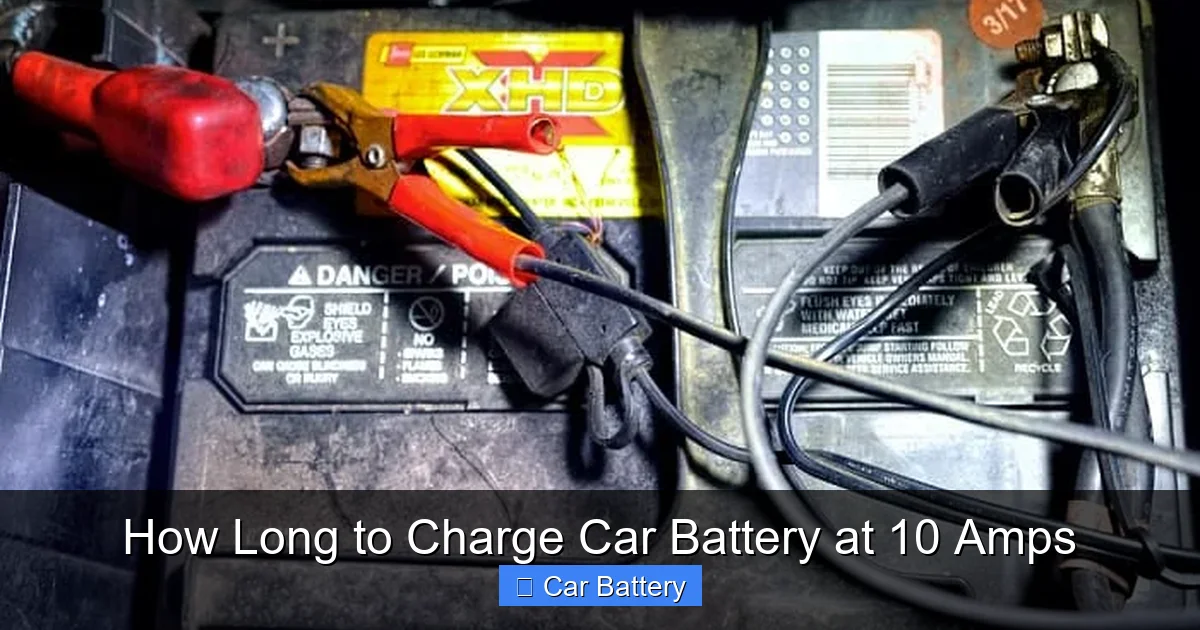
Visual guide about How Long to Charge Car Battery at 10 Amps
Image source: galvinpower.org
What Is an Amp-Hour (Ah)?
Battery capacity is measured in amp-hours (Ah). This tells you how much current a battery can deliver over time. For example, a 50Ah battery can theoretically deliver 5 amps for 10 hours, or 10 amps for 5 hours. Most standard car batteries range from 40Ah to 70Ah, with 60Ah being common for sedans and smaller SUVs.
How Charging Works
When you connect a charger, it sends electrical current into the battery, reversing the chemical reaction that occurred during discharge. The charger’s amperage (amps) determines how fast this process happens. A 10-amp charger delivers 10 amps of current per hour. So, in theory, it would take about 6 hours to fully charge a 60Ah battery—if it were completely dead and 100% efficient.
But here’s the catch: charging isn’t 100% efficient. Some energy is lost as heat, and as the battery fills up, it becomes harder to push more charge into it. This means the last 20% of charging takes much longer than the first 80%. That’s why you can’t just divide battery capacity by charger amperage and get an exact time.
Types of Chargers
Not all chargers are created equal. There are three main types:
- Trickle Chargers: Deliver 1–3 amps. Great for maintaining a battery over long periods but too slow for a quick recharge.
- Standard Chargers: Typically 5–15 amps. The 10-amp setting falls here—ideal for most home charging needs.
- Fast Chargers: 20+ amps. Can charge a battery quickly but risk overheating or damaging it if not monitored.
For most people, a 10-amp charger is the sweet spot. It’s fast enough to be practical but gentle enough to avoid damage—especially if you’re using a smart charger with automatic shut-off.
Calculating Charge Time at 10 Amps
Now for the big question: how long will it take to charge your battery at 10 amps? Let’s break it down with some simple math and real-world examples.
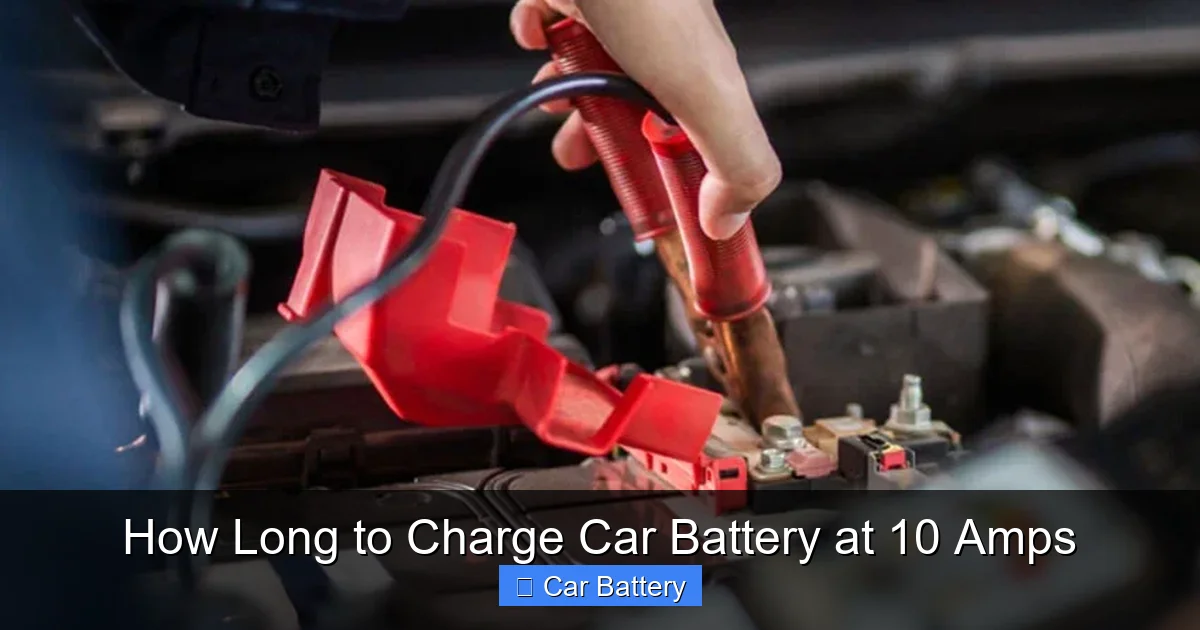
Visual guide about How Long to Charge Car Battery at 10 Amps
Image source: autoowa.com
The Basic Formula
The general rule of thumb is:
Charge Time (hours) = (Battery Capacity in Ah × Depth of Discharge) ÷ Charger Amperage
Let’s say you have a 60Ah battery that’s 50% discharged. That means it needs 30Ah to be fully charged (60 × 0.5 = 30). At 10 amps, it would take about 3 hours (30 ÷ 10 = 3). But remember, this is a rough estimate.
Real-World Adjustments
In practice, you’ll need to add 20–30% more time due to inefficiencies. So that 3-hour estimate becomes closer to 3.5–4 hours. If the battery is deeply discharged (say, 80% dead), it could take 6–7 hours. And if it’s completely dead (100% discharged), you’re looking at 8–10 hours or more.
Example Scenarios
Let’s look at a few common situations:
- Scenario 1: 40Ah battery, 50% discharged → Needs 20Ah → ~2.5 hours at 10 amps (plus buffer = ~3 hours).
- Scenario 2: 60Ah battery, 75% discharged → Needs 45Ah → ~5.5 hours (plus buffer = ~6.5–7 hours).
- Scenario 3: 70Ah battery, fully dead → Needs 70Ah → ~8.5 hours (plus buffer = ~10–11 hours).
Keep in mind that these are estimates. Actual time can vary based on battery age, temperature, and charger quality.
Using Voltage to Gauge Charge Level
Instead of guessing, you can use a multimeter to check the battery’s voltage. Here’s a quick reference:
- 12.6V or higher = Fully charged
- 12.4V = About 75% charged
- 12.2V = About 50% charged
- 12.0V = About 25% charged
- Below 11.9V = Deeply discharged or possibly damaged
Check the voltage before and during charging to monitor progress. Once it reaches 12.6V, the battery is likely full—even if the charger hasn’t shut off yet.
Factors That Affect Charging Time
While the formula gives you a starting point, several real-world factors can speed up or slow down the process.
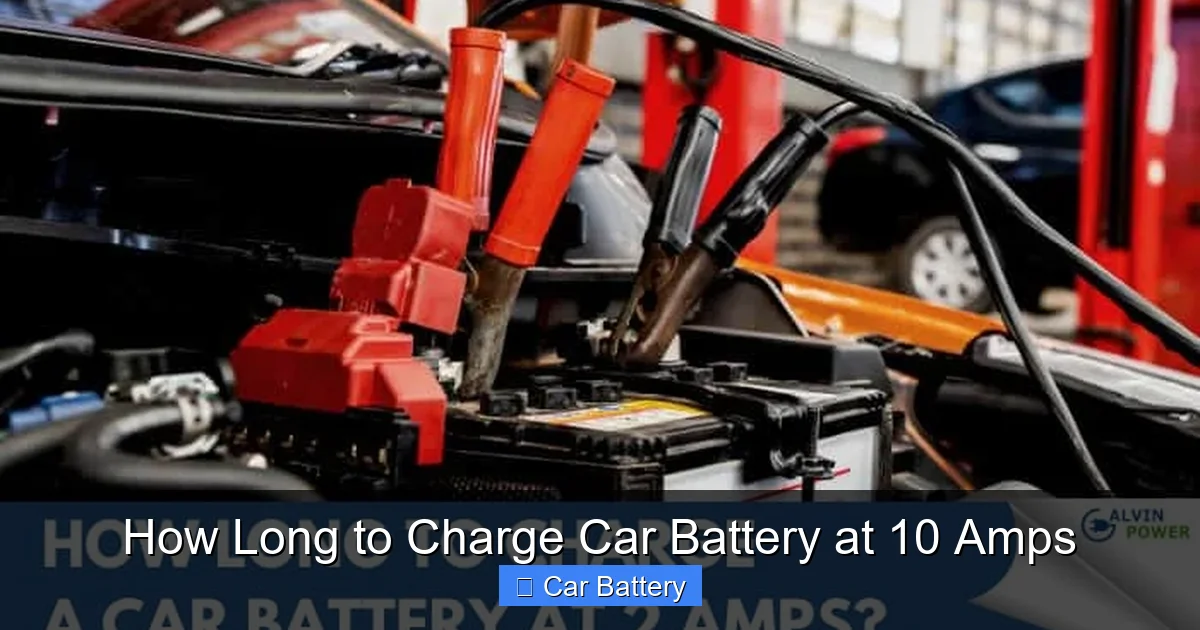
Visual guide about How Long to Charge Car Battery at 10 Amps
Image source: galvinpower.org
Battery Age and Condition
Older batteries lose their ability to hold a charge. A 5-year-old battery might only hold 70–80% of its original capacity. This means it will charge faster but also discharge quicker. If your battery is more than 4–5 years old, consider testing it or replacing it instead of repeatedly charging.
Temperature
Cold weather slows chemical reactions, making charging less efficient. In freezing temperatures, a battery might take 20–30% longer to charge. Conversely, hot weather can speed up charging but increases the risk of overheating. Ideal charging temperature is between 50°F and 85°F (10°C to 30°C).
Charger Type and Features
A basic 10-amp charger will charge at a constant rate until you unplug it. But a smart charger is much better. These devices monitor voltage, temperature, and charge level, then adjust the amperage accordingly. Many will switch to a trickle charge once the battery is nearly full, preventing overcharging.
Smart chargers often include features like:
- Automatic shut-off when full
- Desulfation mode (to revive old batteries)
- Float mode (to maintain charge without overcharging)
- Reverse polarity protection
If you charge batteries regularly, investing in a smart charger is worth every penny.
Parasitic Drain
Even when the car is off, small amounts of power are used by the clock, alarm system, or onboard computers. This is called parasitic drain. If your battery keeps dying, it might not be the battery—it could be something draining it overnight. Use a multimeter to check for excessive draw (more than 50 milliamps is usually a problem).
Battery Type
Most cars use flooded lead-acid batteries, but some newer vehicles have AGM (Absorbent Glass Mat) or EFB (Enhanced Flooded Battery) types. These require different charging profiles. AGM batteries, for example, are more sensitive to overcharging and often need a specific charging mode. Always check your owner’s manual or battery label to confirm the type.
Safety Tips for Charging at 10 Amps
Charging a car battery isn’t dangerous if you follow basic safety rules—but it can be risky if you don’t. Here’s how to stay safe.
Work in a Well-Ventilated Area
Car batteries release hydrogen gas during charging, especially when nearly full. Hydrogen is highly flammable and can ignite with a spark. Always charge in a garage with the door open, or outside. Never charge in a sealed space.
Wear Safety Gear
Wear safety glasses and gloves. Battery acid is corrosive and can cause burns. If you spill acid on your skin, rinse immediately with water.
Disconnect the Battery (Optional but Recommended)
You can charge the battery while it’s still in the car, but it’s safer to remove it. This reduces the risk of damaging the car’s electronics and makes it easier to monitor. If you leave it in, disconnect the negative terminal first to avoid short circuits.
Avoid Sparks and Open Flames
Don’t smoke, use lighters, or create sparks near the battery. Even a small spark from a tool can ignite hydrogen gas.
Check for Damage
Before charging, inspect the battery for cracks, leaks, or bulging. A damaged battery can explode during charging. If you see any of these signs, replace the battery instead of charging it.
Don’t Overcharge
A 10-amp charger can overcharge a battery if left connected too long. Overcharging causes excessive heat, water loss, and can warp the internal plates. Use a timer or a smart charger with auto shut-off. As a rule, don’t leave a battery on a 10-amp charger for more than 12 hours unless it’s a smart charger in maintenance mode.
Monitor Temperature
Feel the battery occasionally. If it’s too hot to touch (above 125°F or 52°C), stop charging immediately. Let it cool down before resuming.
Best Practices for Efficient Charging
Charging your battery the right way not only saves time but also extends its life. Here are some pro tips.
Use a Smart Charger
As mentioned earlier, smart chargers are the best choice. They adapt to the battery’s needs and prevent common mistakes. Look for models with multi-stage charging: bulk, absorption, and float.
Charge at the Right Time
If possible, charge the battery when it’s warm. A battery at 70°F will charge faster and more efficiently than one at 40°F. Avoid charging in extreme cold unless absolutely necessary.
Don’t Rush It
While 10 amps is safe for most batteries, going faster (like 20+ amps) can cause overheating and damage. Unless you’re in a real emergency, stick to 10 amps or lower.
Maintain Regularly
Keep the battery terminals clean and tight. Corrosion increases resistance and reduces charging efficiency. Use a wire brush and baking soda solution to clean terminals.
Test the Battery
After charging, test the battery with a load tester or have it checked at an auto parts store. This tells you if the battery can hold a charge under load—something a voltage reading alone can’t show.
Consider a Battery Maintainer
If you don’t drive often, use a trickle charger or battery maintainer (also called a float charger). These keep the battery topped up without overcharging, ideal for seasonal vehicles like motorcycles or classic cars.
When to Replace Instead of Recharge
Sometimes, no amount of charging will fix a battery. Here’s how to know when it’s time to replace it.
Signs of a Failing Battery
- Takes longer to charge than usual
- Dies quickly after being fully charged
- Swollen or bulging case
- Leaking acid
- Won’t hold a charge under load
- More than 5 years old
If you’ve charged the battery multiple times and it keeps dying, it’s likely time for a new one. Replacing a battery is cheaper than being stranded or damaging your alternator.
Testing the Alternator
A dead battery isn’t always the battery’s fault. If the alternator isn’t charging the battery while the engine runs, the battery will keep dying. Use a multimeter to check voltage at the battery with the engine running—it should be 13.8V to 14.4V. If it’s lower, the alternator may be faulty.
Conclusion
Charging your car battery at 10 amps is a reliable and safe method for most situations. Depending on the battery’s size and charge level, it typically takes between 4 and 12 hours. Use the formula, monitor voltage, and follow safety guidelines to get the best results.
Remember, a 10-amp charger is a great tool, but it’s not a miracle worker. If your battery is old or damaged, no amount of charging will save it. Invest in a smart charger, maintain your battery regularly, and know when it’s time to replace it. With these tips, you’ll keep your car starting reliably for years to come.
Frequently Asked Questions
How long does it take to charge a dead car battery at 10 amps?
It typically takes 8 to 12 hours to charge a completely dead 60Ah battery at 10 amps, depending on efficiency and temperature. Always monitor voltage and stop when it reaches 12.6V.
Can I leave a car battery on a 10-amp charger overnight?
Yes, but only if the charger has an automatic shut-off or float mode. Leaving it on too long can overcharge and damage the battery.
Is 10 amps too much for a car battery?
No, 10 amps is safe for most standard car batteries. It’s fast enough to be practical but not so high that it causes overheating or damage.
Should I disconnect the battery before charging?
It’s safer to disconnect the negative terminal, especially if you’re not using a smart charger. This protects your car’s electronics from voltage spikes.
Can I charge a car battery while it’s still in the car?
Yes, but make sure the charger is compatible and you disconnect the negative terminal first. Charging in the car increases the risk of damaging onboard systems.
What happens if I overcharge a car battery?
Overcharging causes excessive heat, water loss, and can warp internal plates. In severe cases, it can lead to battery failure or even explosion.
