
What Is Cca on a Car Battery

CCA stands for Cold Cranking Amps, a key rating that measures a car battery’s ability to start an engine in cold temperatures. Understanding CCA helps you pick the right battery for your climate and driving needs, ensuring reliable starts all year round.
Key Takeaways
- CCA stands for Cold Cranking Amps: It measures how much power a battery can deliver at 0°F for 30 seconds while maintaining voltage above 7.2V.
- Higher CCA isn’t always better: Choose a CCA rating that matches your vehicle’s requirements and local climate—excess CCA won’t improve performance.
- Climate plays a big role: Drivers in colder regions need higher CCA batteries, while those in warmer areas may get by with lower ratings.
- Battery age affects CCA: As batteries wear out, their CCA output drops, which can lead to hard starts or failure in winter.
- Check your owner’s manual: Always refer to your vehicle’s recommended CCA range before buying a replacement battery.
- Parasitic drain can mimic low CCA: A faulty electrical component drawing power when the car is off can make a good battery seem weak.
- Professional testing is reliable: Auto shops can test your battery’s actual CCA to determine if it’s still performing well.
📑 Table of Contents
What Is CCA on a Car Battery?
If you’ve ever looked at a car battery label, you’ve probably seen the letters “CCA” followed by a number—like 600 CCA or 800 CCA. But what does that actually mean? And why should you care?
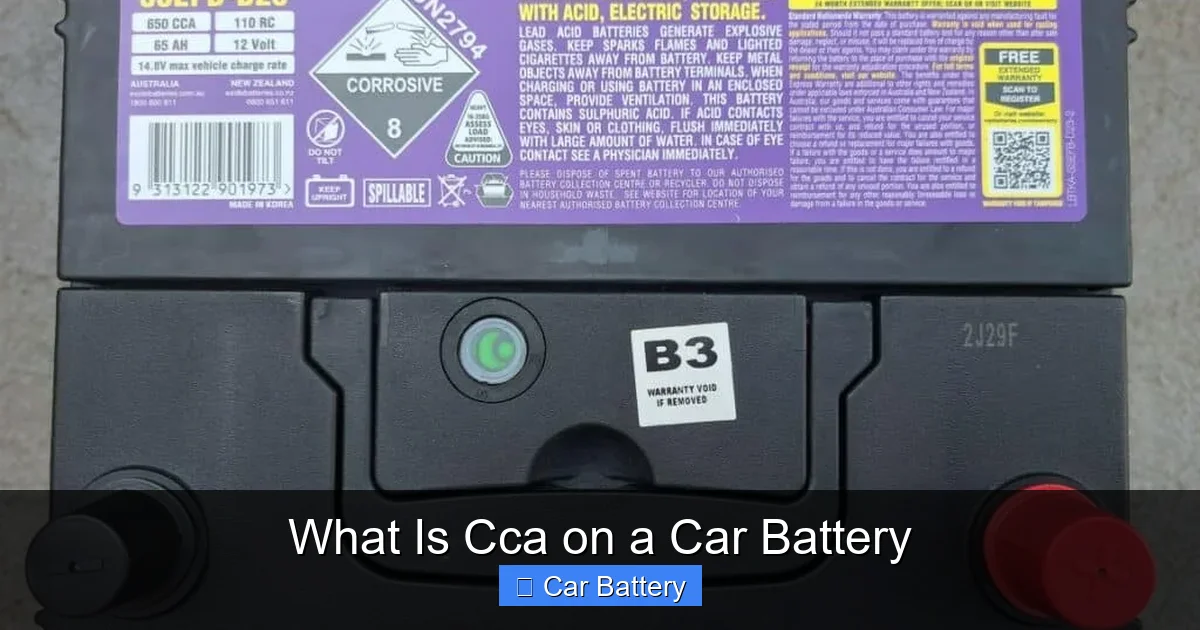
CCA stands for **Cold Cranking Amps**, and it’s one of the most important specifications when choosing a car battery. In simple terms, CCA tells you how well your battery can start your engine in cold weather. Think of it as the battery’s “muscle” when the temperature drops. The colder it gets, the harder it is for your engine to turn over—and that’s when a strong CCA rating becomes critical.
Imagine you’re heading out on a freezing winter morning. You turn the key, and instead of a smooth start, the engine cranks slowly or doesn’t start at all. That’s often a sign your battery doesn’t have enough CCA for the conditions. A battery with a high CCA rating can deliver more power in those tough moments, giving your starter motor the jolt it needs to fire up the engine.
But CCA isn’t just about cold weather. It’s also a general indicator of a battery’s overall health and capacity. Even in mild climates, understanding CCA helps you choose a battery that matches your vehicle’s demands. Whether you drive a compact sedan or a heavy-duty truck, the right CCA ensures reliable performance year-round.
How Is CCA Measured?
Visual guide about What Is Cca on a Car Battery
Image source: marshallbatteries.com.au
So how exactly do manufacturers determine a battery’s CCA rating? It’s not just a guess—it’s based on a standardized test designed to simulate real-world cold-start conditions.
The CCA test is conducted at **0 degrees Fahrenheit (-18°C)**, which is the temperature where most batteries struggle the most. During the test, a fully charged battery is connected to a load that draws a specific amount of current. The battery must maintain at least **7.2 volts** for **30 seconds** under that load. The amount of current (measured in amps) it can deliver while staying above that voltage threshold is its CCA rating.
For example, a battery rated at 600 CCA can supply 600 amps of current for 30 seconds at 0°F without dropping below 7.2 volts. If it dips below that voltage before the 30 seconds are up, it fails the test and doesn’t qualify for that rating.
This standardized method ensures consistency across brands and models. Whether you’re buying a battery from AutoZone, O’Reilly, or a dealership, the CCA number means the same thing. It’s a reliable way to compare batteries and make an informed choice.
Why 0°F? The Science Behind the Temperature
You might wonder why the test is done at such a cold temperature. After all, not everyone lives in a place that hits 0°F. But this extreme condition is used because it represents the worst-case scenario for battery performance.
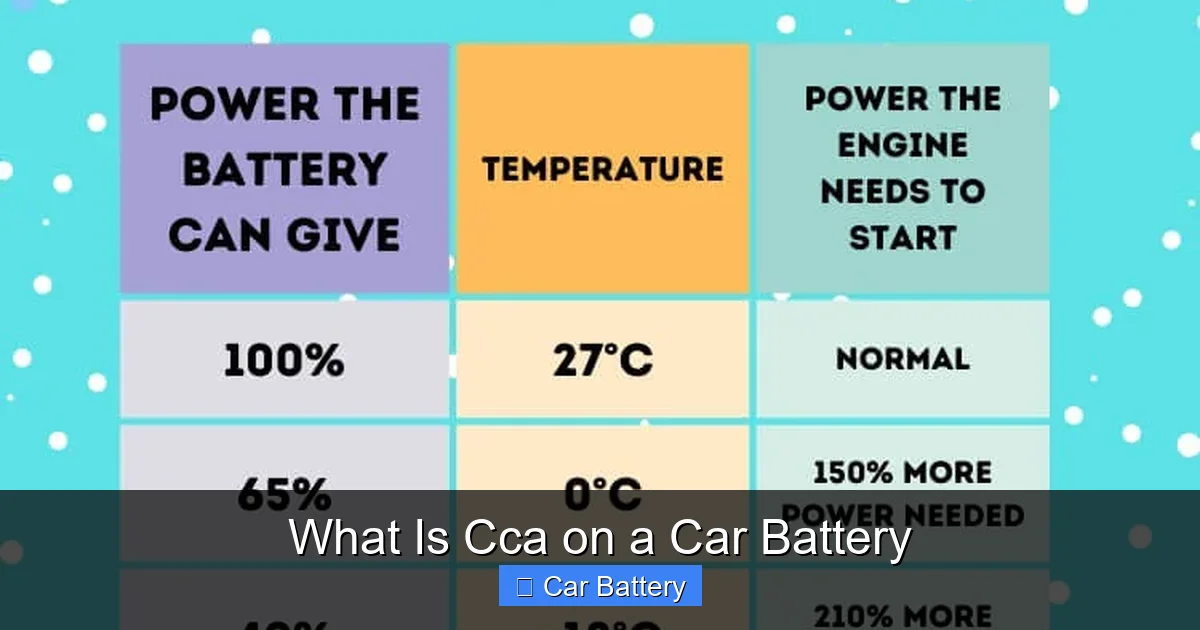
Chemical reactions inside a battery slow down as temperatures drop. Cold reduces the battery’s ability to convert stored energy into electrical power. At 0°F, a battery can lose up to **60% of its cranking power** compared to room temperature. That’s why a battery that works fine in summer might fail in winter.
By testing at 0°F, manufacturers ensure that the CCA rating reflects real-world challenges. Even if you live in a milder climate, this rating gives you a baseline to understand how the battery will perform under stress.
CCA vs. Other Battery Ratings
CCA isn’t the only rating you’ll see on a battery. You might also come across **Cranking Amps (CA)** and **Marine Cranking Amps (MCA)**. These are similar but tested under different conditions.
– **Cranking Amps (CA)** is measured at 32°F (0°C), which is warmer than the CCA test. Because of the higher temperature, CA ratings are usually about 20–25% higher than CCA. For example, a battery with 600 CCA might have 750 CA.
– **Marine Cranking Amps (MCA)** is the same test as CA but used for marine batteries. It’s not relevant for most cars, but you might see it on dual-purpose batteries.
There’s also **Reserve Capacity (RC)**, which measures how long a battery can run essential systems if the alternator fails. While important, RC doesn’t directly relate to starting power like CCA does.
So when comparing batteries, always look at the CCA first—it’s the best indicator of cold-weather starting performance.
Why Does CCA Matter for Your Car?
Visual guide about What Is Cca on a Car Battery
Image source: carbatterygeek.co.uk
Now that you know what CCA is and how it’s measured, let’s talk about why it matters for your daily driving.
Every time you start your car, the battery sends a surge of electricity to the starter motor. That motor turns the engine over until it fires up. In warm weather, this process is relatively easy. But in cold weather, engine oil thickens, internal friction increases, and the battery’s output drops. All of this makes starting the engine much harder.
A battery with sufficient CCA can overcome these challenges. It delivers the power needed to turn the engine quickly and reliably, even when it’s freezing outside. Without enough CCA, you might experience slow cranking, repeated failed starts, or even a completely dead battery.
But CCA isn’t just about winter. Even in mild climates, a battery with the right CCA ensures consistent performance. Modern cars have more electronics than ever—infotainment systems, sensors, safety features—and they all draw power from the battery when the engine is off. A strong CCA rating means your battery can handle those demands without draining too quickly.
Real-World Example: Choosing the Right CCA
Let’s say you drive a 2018 Honda Civic in Minnesota, where winter temperatures regularly drop below zero. Your owner’s manual recommends a battery with at least 500 CCA. You find two options: one with 500 CCA and another with 700 CCA.
The 500 CCA battery meets the minimum requirement, but the 700 CCA model gives you extra peace of mind. In extreme cold, that extra power could mean the difference between starting on the first try and being stranded.
On the other hand, if you live in Florida and drive the same car, the 500 CCA battery might be perfectly adequate. You’ll rarely face temperatures low enough to challenge the battery’s limits.
This example shows that CCA isn’t just about the number—it’s about matching the battery to your environment and vehicle needs.
What Happens If Your Battery Has Low CCA?
Using a battery with insufficient CCA can lead to several problems:
– **Hard starting:** The engine cranks slowly or takes multiple attempts to start.
– **No start:** The battery can’t deliver enough power, and the engine won’t turn over.
– **Electrical issues:** Dim headlights, flickering dashboard lights, or malfunctioning accessories.
– **Battery drain:** The alternator has to work harder to recharge a weak battery, which can shorten its lifespan.
In severe cases, a low-CCA battery can leave you stranded, especially in remote areas or during emergencies.
How to Choose the Right CCA for Your Vehicle
Visual guide about What Is Cca on a Car Battery
Image source: ultimatecarblog.com
Choosing the right CCA isn’t as simple as picking the highest number. You need to consider your vehicle, your climate, and your driving habits.
Check Your Owner’s Manual
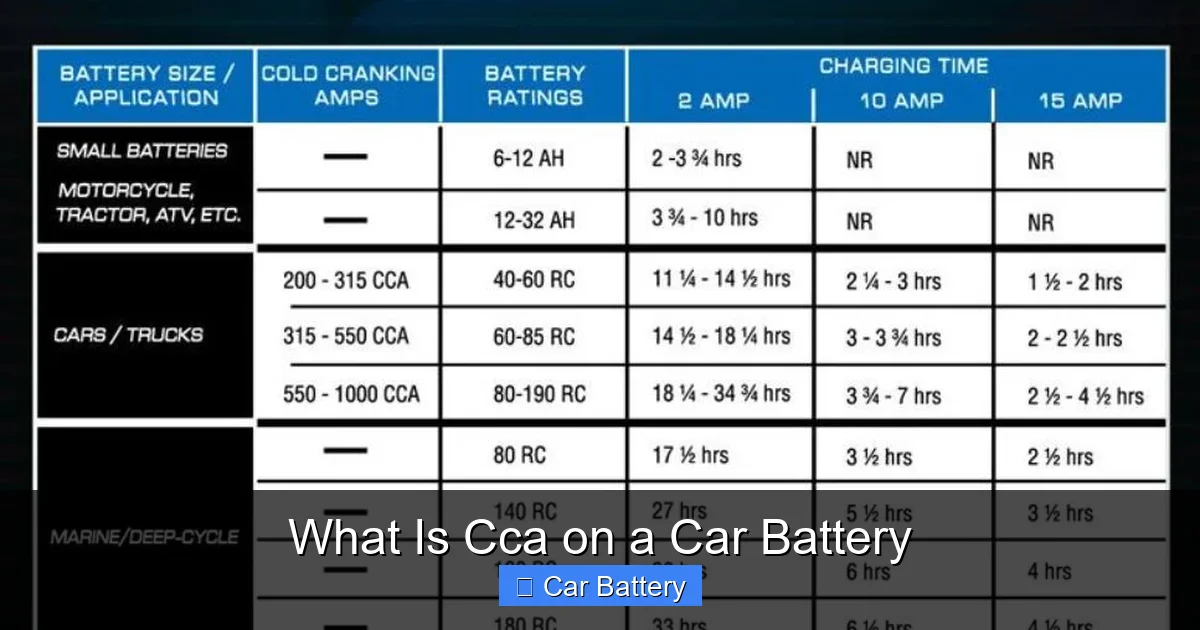
The best place to start is your vehicle’s owner’s manual. It will list the recommended CCA range for your specific make, model, and engine size. For example, a compact car might need 400–600 CCA, while a large SUV or truck could require 700–900 CCA or more.
Sticking to this range ensures compatibility and optimal performance. Going too low risks starting problems. Going too high usually doesn’t hurt, but it might cost more than necessary.
Consider Your Climate
Climate is a major factor in CCA selection. If you live in a region with long, harsh winters—like Alaska, North Dakota, or Maine—you’ll want a battery with a higher CCA rating. Experts often recommend adding 100–200 CCA above the minimum for extra reliability in cold weather.
In contrast, if you live in a warm climate like Arizona or Texas, you might get away with a battery at the lower end of the recommended range. However, extreme heat can also degrade batteries faster, so don’t ignore maintenance.
Think About Your Driving Habits
Your driving patterns also affect battery needs. If you take short trips frequently, your alternator doesn’t have much time to recharge the battery. This can lead to a gradual loss of charge, making CCA even more important.
Similarly, if you use a lot of electronics—like a sound system, dash cam, or phone charger—your battery works harder. A higher CCA battery can better handle these extra loads.
Upgrade for Performance or Modifications
If you’ve modified your vehicle—such as adding a high-performance engine, turbocharger, or aftermarket electronics—you may need a battery with a higher CCA rating. These upgrades increase the power demands on the battery, especially during startup.
Racing enthusiasts or off-road drivers often choose batteries with higher CCA to ensure reliable starts under extreme conditions.
Battery Type Matters Too
Not all batteries are created equal. There are three main types:
– **Flooded (wet) lead-acid batteries:** The most common and affordable. Good for everyday driving.
– **Absorbent Glass Mat (AGM) batteries:** More durable, better performance, and higher CCA. Ideal for vehicles with start-stop technology or high electrical demands.
– **Enhanced Flooded Batteries (EFB):** A step up from standard flooded batteries, often used in mild hybrid vehicles.
AGM batteries typically have higher CCA ratings and last longer, but they’re more expensive. If your car came with an AGM battery, it’s best to replace it with the same type.
How Battery Age Affects CCA
Even the best battery won’t last forever. Over time, all batteries lose their ability to hold a charge and deliver power. This includes a drop in CCA.
A new battery might have 600 CCA, but after three or four years, that number could drop to 400 or lower. This decline happens due to chemical degradation, sulfation (a buildup on the plates), and normal wear and tear.
As CCA decreases, you may notice:
– Longer cranking times
– Dimming lights when idling
– Warning lights on the dashboard
– Difficulty starting in cold weather
That’s why it’s important to test your battery regularly, especially before winter. Most auto parts stores offer free battery testing. They’ll check the voltage, load capacity, and actual CCA to see if your battery is still in good shape.
Signs Your Battery Is Losing CCA
Here are some common signs that your battery’s CCA is declining:
– The engine takes longer to start, especially in the morning.
– Headlights dim when you turn on the radio or AC.
– You hear a clicking sound when turning the key.
– The battery warning light appears on the dashboard.
– You’ve had the battery for more than 3–5 years.
If you notice any of these, it’s time to get your battery tested. Replacing it before it fails can save you from being stranded.
Extending Battery Life
While you can’t stop battery aging, you can slow it down:
– **Keep it clean:** Dirt and corrosion on the terminals can reduce conductivity. Clean them with a baking soda and water solution.
– **Secure the battery:** A loose battery can vibrate and damage internal components.
– **Avoid short trips:** Take longer drives occasionally to let the alternator fully recharge the battery.
– **Turn off electronics:** Don’t leave lights, radios, or chargers on when the engine is off.
– **Use a battery maintainer:** If you don’t drive often, a trickle charger can keep the battery charged.
These habits help preserve CCA and extend the life of your battery.
CCA Myths and Misconceptions
There are several myths about CCA that can lead to confusion. Let’s clear them up.
Myth 1: Higher CCA Always Means Better Performance
Not necessarily. While a higher CCA battery can deliver more power, it won’t improve your car’s performance if the original battery was already sufficient. Your starter motor only needs so much current to turn the engine. Extra CCA doesn’t make it spin faster—it just ensures it can do the job in tough conditions.
In most cases, sticking to the manufacturer’s recommended range is the best approach. Going too high might be overkill and cost more.
Myth 2: CCA Is the Only Thing That Matters
CCA is important, but it’s not the whole story. Reserve Capacity (RC), battery type, warranty, and brand quality also matter. A battery with high CCA but poor build quality might fail sooner than a well-made battery with slightly lower CCA.
Always consider the full picture when choosing a replacement.
Myth 3: You Can’t Test CCA at Home
While professional load testers are the most accurate, you can get a rough idea of your battery’s health at home. Use a multimeter to check the voltage:
– **12.6V or higher:** Fully charged
– **12.4V:** About 75% charged
– **12.2V:** About 50% charged
– **Below 12V:** Likely needs charging or replacement
However, voltage alone doesn’t tell you the CCA. For that, you need a load test, which most auto shops provide for free.
Myth 4: All Batteries with the Same CCA Are Equal
Even if two batteries have the same CCA rating, they might perform differently. Factors like internal design, plate material, and construction quality affect real-world performance. A premium brand might last longer and perform better than a budget option, even with the same CCA.
When to Replace Your Battery Based on CCA
Knowing when to replace your battery can prevent unexpected breakdowns. Here’s a simple guide:
– **Every 3–5 years:** Most car batteries last between three and five years. If yours is in this range, start planning for a replacement.
– **Before winter:** If you live in a cold climate, test your battery in the fall. Replace it if the CCA is below the recommended level.
– **After a no-start event:** If your car didn’t start and needed a jump, have the battery tested. It might be nearing the end of its life.
– **If you notice warning signs:** Slow cranking, dim lights, or electrical issues are red flags.
Replacing your battery proactively is much safer than waiting for a failure. It’s a small investment that can save you time, money, and stress.
How to Safely Replace Your Battery
Replacing a car battery is usually straightforward, but safety is important:
1. **Turn off the engine and remove the key.**
2. **Wear safety glasses and gloves.**
3. **Disconnect the negative terminal first, then the positive.**
4. **Remove the old battery and install the new one.**
5. **Connect the positive terminal first, then the negative.**
6. **Secure the battery and clean the terminals.**
Some modern cars require a battery reset or coding after replacement. Check your owner’s manual or consult a professional if you’re unsure.
Conclusion
Understanding what is CCA on a car battery is essential for every driver. CCA—Cold Cranking Amps—measures a battery’s ability to start your engine in cold weather. It’s a critical factor in choosing the right battery for your vehicle and climate.
While higher CCA isn’t always better, matching the right rating to your needs ensures reliable starts, especially in winter. Always check your owner’s manual, consider your local weather, and test your battery regularly.
A good battery is more than just a power source—it’s peace of mind. Whether you’re commuting to work or taking a road trip, the right CCA rating keeps you moving, no matter the temperature.
Invest in a quality battery, maintain it well, and you’ll enjoy smooth starts and fewer surprises for years to come.
Frequently Asked Questions
What does CCA stand for on a car battery?
CCA stands for Cold Cranking Amps. It measures how much current a battery can deliver at 0°F for 30 seconds while maintaining at least 7.2 volts. This rating helps determine a battery’s ability to start an engine in cold weather.
Is a higher CCA battery always better?
Not necessarily. A higher CCA battery provides more starting power, which is helpful in cold climates, but it won’t improve performance if your vehicle doesn’t need it. Always match the CCA to your car’s requirements and local weather conditions.
Can I use a battery with lower CCA than recommended?
It’s not recommended. Using a battery with lower CCA than specified can lead to hard starts, especially in cold weather, and may leave you stranded. Always choose a battery that meets or slightly exceeds your vehicle’s minimum CCA requirement.
How often should I test my battery’s CCA?
It’s a good idea to test your battery’s CCA once a year, preferably before winter. Most auto parts stores offer free testing. If your battery is more than three years old or shows signs of weakness, testing is especially important.
Does extreme heat affect CCA?
Extreme heat doesn’t directly reduce CCA, but it can accelerate battery degradation over time. Heat causes water loss and plate corrosion, which can indirectly lower a battery’s cranking power and overall lifespan.
Can I jump-start a car with low CCA?
Yes, you can jump-start a car with low CCA using jumper cables and another vehicle. However, this is a temporary fix. If your battery consistently struggles to start the engine, it’s time to replace it with one that has the proper CCA rating.
