
Can You Machine Wash a Car Cover? Safe Washing Guide
Quick Answer
Yes, you can machine wash a car cover if its manufacturer explicitly allows it. Use the approved washer type, water temperature, and detergent. A large front-loading washer without a center agitator is often recommended for machine-washable covers. However, some materials require hand washing or professional cleaning. See Covercraft’s fabric care guidance for an example of model-specific instructions.
Before using a washing machine
- Check the label: Confirm machine washing is permitted for your exact cover.
- Choose the washer: Avoid center agitators when the manufacturer requires an agitator-free machine.
- Use approved cleaner: Mild detergent is common, but follow fabric-specific directions.
- Choose gentle settings: Use the approved water temperature and delicate cycle.
- Rinse thoroughly: Remove cleaner residue before drying.
- Dry correctly: Air dry unless the manufacturer specifically allows tumble drying.
A dirty car cover can leave dust, grit, and grime against the very paint it’s supposed to protect. But putting the cover through the wrong wash cycle can create a different problem.
In this 2026 guide, I’ll explain which covers can go into a washing machine, which settings to choose, and when hand washing makes more sense. I’ll also cover common cleaning mistakes and what to do if you’ve already machine washed your cover.
In This Guide
- Can You Put Any Car Cover in a Washing Machine?
- Which Car Cover Materials Are Machine Washable?
- How Do You Machine Wash a Car Cover Safely?
- How Do You Clean a Cover That Cannot Be Machine Washed?
- Can You Put a Car Cover in the Dryer?
- What Washing Mistakes Can Damage a Car Cover?
- Frequently Asked Questions
Can You Put Any Car Cover in a Washing Machine?
No. A car cover’s machine-wash compatibility depends on its manufacturer, fabric construction, coatings, and care instructions.
A car cover is a protective fabric barrier designed to shield a parked vehicle from contaminants and environmental exposure. Some covers use a single woven layer, while others combine multiple layers or specialized finishes.
The distinction matters because not every construction tolerates the same movement, water temperature, or detergent.
Why the manufacturer’s instructions matter
Consider two major car-cover brands: Covercraft and Coverking. Their published recommendations demonstrate why universal washing advice can be misleading.
- Covercraft: Permits washing numerous models in suitable agitator-free machines, with fabric-specific cleaning and drying settings.
- Coverking: Its current washing support article recommends hand washing rather than machine washing.
- Individual products: Specialty stretch, lined, or treated covers may have additional requirements.
There is even a difference between Coverking’s current support article and some of its published installation instructions. The latter permit commercial-machine washing for certain materials.
For that reason, identify your exact model and follow the latest instructions confirmed for that product.
How to identify your cover’s care requirements
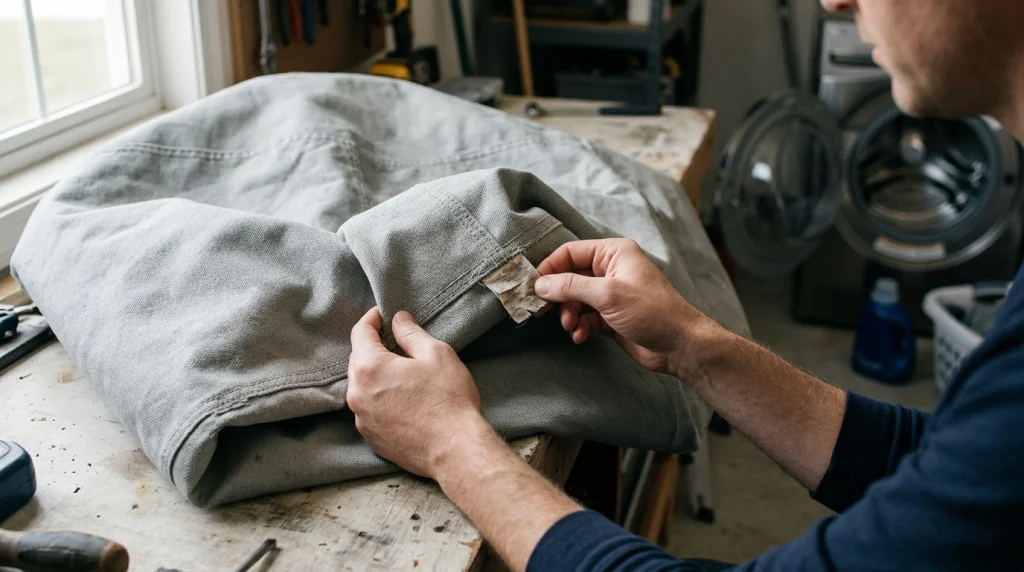
Start with the sewn care label, often located near a hem or storage tag. If it’s missing, look for the original packaging or product information.
- Find the manufacturer and exact model name.
- Check whether machine washing is permitted.
- Identify the approved washer type and cycle.
- Confirm the required water temperature and cleaning product.
- Look for special drying instructions.
- Check for warnings about bleach, softener, or agitation.
If you cannot identify the material or verify its washing instructions, don’t experiment with a machine cycle. Contact the manufacturer or choose a gentle hand-cleaning method once you’ve confirmed it’s appropriate.
Section Takeaway: Machine washability is a product-specific feature, not something you can determine from appearance alone.
Which Car Cover Materials Are Machine Washable?
Many polyester, polycotton, and specialty outdoor-fabric covers can tolerate machine washing. However, material names alone cannot establish whether a particular cover is safe to wash.
The examples below show how much cleaning requirements can vary, even within one manufacturer’s product range.
Car cover fabric washing comparison
| Covercraft fabric | Approved machine | Water | Drying |
|---|---|---|---|
| Gray Polycotton | Large home or commercial, no agitator | Warm | Low machine heat |
| 5-Layer Indoor | Commercial or large front-load, no agitator | Cold | Air dry |
| Form-Fit | Large home or commercial, no agitator | Cold | Air dry |
| 3-Layer Moderate Climate | Commercial or large front-load, no agitator | Cold | Air dry |
| WeatherShield HP | Large home or commercial, no agitator | Cold | Medium machine heat |
| Sunbrella | Commercial or large front-load, no agitator | Cold | Air dry |
These settings are examples from Covercraft’s published fabric-specific care instructions, not recommendations for every cover made from similar materials. Check the latest directions for your exact product.
What about waterproof and water-resistant covers?
A water-resistant car cover uses fabric construction or treatment to limit water penetration. Waterproof designs may also incorporate coatings or other barriers.
These features don’t automatically make a cover unsuitable for machine washing. Certain treated fabrics have manufacturer-approved wash instructions.
However, improper detergent, excessive heat, or harsh agitation may damage the fabric or its protective finish.
After washing, check whether the cover still repels water as expected. If its performance has changed, see whether the manufacturer permits an appropriate reproofing treatment.
Are soft-lined indoor covers different?
Yes. Indoor covers often emphasize softness and dust protection rather than resistance to heavy weather.
Some soft-lined materials can be machine washed, but the lining and fabric structure may require special handling. Avoid assuming a plush or stretchy cover can be treated like an ordinary blanket.
Covercraft’s Form-Fit guidance, for example, allows washing in a sufficiently large agitator-free machine and recommends air drying. The instructions also warn against high heat.
Section Takeaway: Always match the washing method to the exact fabric and product instructions. Neither waterproof construction nor soft lining automatically determines machine washability.
How Do You Machine Wash a Car Cover Safely?
If your cover is confirmed machine washable, begin by inspecting it and choosing a suitable washer. The cleaning process should remove contaminants without putting unnecessary stress on seams and fabric.
Step 1: Remove loose dirt and inspect the cover
Take the cover off the vehicle carefully. Keep the vehicle-facing side away from dirty pavement.
- Shake away loose leaves, dust, and debris.
- Remove small stones or sand from folded sections.
- Check mirror pockets, seams, and elastic hems.
- Inspect the fabric for tears or coating damage.
- Detach removable accessories if the instructions require it.
Look especially closely at areas that touch the hood, roof, and trunk. These sections can collect dirt over time.
A small tear may spread during laundering, so repair or address damage before washing when the manufacturer allows it.
Step 2: Choose the correct washing machine
A large front-loading washer is often the preferred option for approved machine-washable covers. Many manufacturers specifically advise against center-agitator machines.
A center agitator is the tall post found in many traditional top-loading washers. Its movement can put extra mechanical stress on bulky fabric.
Make sure the cover fits loosely enough to move during washing. Do not compress an SUV or truck cover into an undersized drum.
For larger covers, a commercial washer may be the practical choice. Covercraft specifically directs owners of extra-large covers toward large commercial front-loading machines.
Step 3: Select the approved cleaner and temperature
Use the cleaning product identified in your cover’s care instructions. Not every manufacturer recommends the same detergent formula.
- Water temperature: Use cold or warm water only when specified.
- Detergent: Follow the recommended mild cleaner and quantity.
- Bleach: Avoid unless explicitly approved.
- Fabric softener: Do not use where the manufacturer prohibits it.
- Additional chemicals: Avoid unapproved stain removers and laundry additives.
For example, Covercraft’s cleaning chart specifies mild powder detergent for several fabrics. It also states that fabric softener should not be used.
Don’t automatically substitute ordinary liquid laundry detergent if the manufacturer requires a different cleaning product.
Step 4: Run a gentle wash cycle
Load the cover without forcing it into the drum. Spread the material evenly enough to avoid one tightly packed bundle.
- Select the approved gentle or delicate cycle.
- Set the specified water temperature.
- Add only the approved cleaner.
- Run the wash without unrelated clothing or towels.
- Stop the cycle if the washer becomes severely unbalanced.
A cover can become heavy when saturated. If the washer cannot handle the load, move to an appropriate commercial machine rather than forcing it through the cycle.
Step 5: Rinse thoroughly
Detergent residue can remain in folds, seams, and thick fabric. A complete rinse helps prevent that buildup.
Covercraft recommends two water-only rinses in its general car-cover cleaning instructions. Follow your own manufacturer’s directions if they differ.
When the rinse is complete, check for visible suds. Extra rinsing may be appropriate if cleaner remains.
Step 6: Remove and dry the cover correctly
Take the cover out of the washer without dragging it across the floor. Support heavy wet sections instead of pulling on the elastic hems.
Then dry it using the manufacturer’s approved method. For many car covers, that means air drying completely.
Section Takeaway: The safest machine-washing routine combines a confirmed washable cover, enough drum space, approved detergent, gentle agitation, and thorough rinsing.
How Do You Clean a Cover That Cannot Be Machine Washed?
Hand washing is often the better choice when a manufacturer prohibits machine washing. It can also be useful when only a small section needs cleaning.
However, hand washing is not automatically approved for every specialty material. Certain fabrics require professional care.
Hand wash a car cover step by step
First, check whether the manufacturer recommends cleaning the cover in a basin or while installed on the vehicle. These are different procedures.
For a cover approved for basin washing, follow this general routine:
- Choose a large, clean basin or suitable washing area.
- Shake away loose debris before wetting the fabric.
- Fill the basin with the approved water temperature.
- Add the manufacturer’s recommended mild cleaner.
- Gently move the cover through the water.
- Use a soft cloth to loosen stubborn contamination.
- Rinse thoroughly with clean water.
- Air dry completely before storage or reuse.
Coverking’s current support instructions recommend lukewarm water with mild detergent for hand washing. They also recommend a cool-water rinse and air drying.
See the company’s car-cover washing recommendations for its published hand-cleaning advice.
Can you clean a car cover while it’s on the vehicle?
Some manufacturers provide an on-vehicle cleaning method. This usually involves rinsing or gently washing the installed cover.
However, it should only be done when the product instructions permit it. Dirt trapped beneath the cover can rub against the vehicle’s paint.
- Make sure the vehicle is clean before fitting the cover.
- Choose a shaded washing location if directed.
- Use a soft sponge or cloth and the approved cleaner.
- Avoid forceful scrubbing or unnecessary pressure.
- Rinse until cleaner residue disappears.
- Allow the cover to dry completely.
Never use the vehicle as a support for washing an abrasive, grit-filled cover. Remove contamination safely before it can rub against the finish.
How should you remove bird droppings and stubborn stains?
Dried bird droppings can cling to fabric and resist ordinary rinsing. Don’t scrape them aggressively with a hard tool.
Instead, soften the affected area using the approved water and cleaning solution. Gently lift the contamination with a soft cloth.
For grease or oily stains, check the manufacturer before using a stronger cleaner. Solvents and aggressive stain treatments may damage protective finishes.
If mildew is present, clean the cover according to the label and inspect for remaining odor or deterioration. Persistent contamination may justify replacing the cover.
Section Takeaway: Hand washing gives you more control over cleaning pressure, but the approved method still depends on the specific cover.
Can You Put a Car Cover in the Dryer?
Only if its manufacturer permits machine drying. Many covers must be air dried, although certain Covercraft materials have approved tumble-drying settings.
Do not assume the low-heat setting is harmless to every cover.
Why heat can be a problem
Some car covers contain elastic, specialized coatings, synthetic fibers, or bonded layers. Excessive heat can affect their fit and material performance.
Possible problems include:
- Distorted fabric or altered fit.
- Weakened elastic sections.
- Damage to coatings or bonded materials.
- Reduced flexibility in affected areas.
- Premature wear from excessive tumbling.
These outcomes are not inevitable with every dryer cycle. The risk depends on the cover’s construction and the heat used.
How to air dry a car cover properly
Air drying works well for many covers and avoids the need for machine heat. Use a clean, ventilated location that keeps the fabric away from dirt.
- Gently remove the wet cover from the washer or basin.
- Spread it over a suitable clean drying support.
- Allow air to reach folded and layered sections.
- Reposition the fabric as needed for even drying.
- Check seams, pockets, and inner lining for moisture.
- Fold the cover only after every section is dry.
Follow any manufacturer-specific restrictions on sunlight or hanging. Some materials should not be exposed to unnecessary heat or prolonged direct sun.
When can you put the cover back on your car?
Wait until the cover is dry and the vehicle is clean and dry. Moisture trapped between the cover and paint can create avoidable problems.
Coverking specifically warns against installing a cover on a wet vehicle because moisture and dirt can remain underneath.
Before reinstalling, inspect the inner lining for dirt. Even a freshly washed cover can collect debris if it was dried on an unclean surface.
Section Takeaway: Air drying is the safer default when drying instructions are uncertain. Use a tumble dryer only with explicit manufacturer approval.
What Washing Mistakes Can Damage a Car Cover?
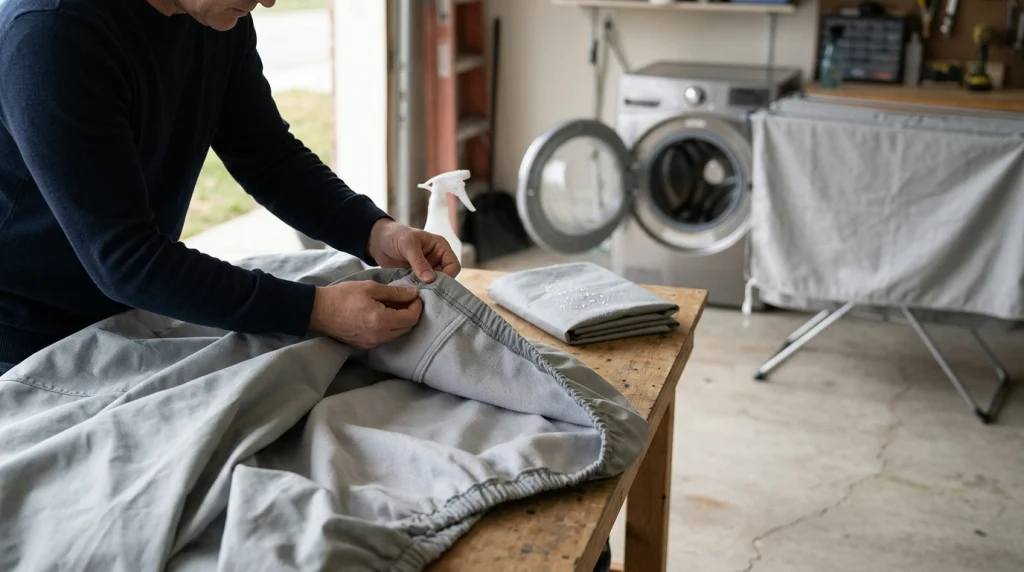
The most common avoidable problems involve incorrect washer selection, excessive heat, unsuitable cleaners, and poor drying. Fortunately, you can check for damage before placing the cover back on your vehicle.
Common washing mistakes and what to do
| Mistake | Possible result | Better approach |
|---|---|---|
| Using a center agitator | Excess fabric stress | Use an approved agitator-free washer |
| Overloading the drum | Poor cleaning and unbalanced loads | Choose a larger washer |
| Using unapproved detergent | Residue or material damage | Follow the care label |
| Applying excessive heat | Fabric, coating, or elastic damage | Use approved drying settings |
| Skipping proper rinsing | Cleaner left in the fabric | Rinse thoroughly |
| Storing while damp | Musty odor and mildew risk | Dry completely first |
What if you already washed the cover incorrectly?
Don’t assume the cover is ruined. Inspect its condition before using it again.
- Check the seams: Look for loose stitching or separated sections.
- Inspect the lining: Make sure it remains soft and free of damage.
- Check the fit: Look for shrinking, distortion, or stretched elastic.
- Examine the coating: Watch for peeling, flaking, or unusual stiffness.
- Test water behavior: For an outdoor cover, check whether water still beads as expected.
- Check for residue: Rinse again only if the manufacturer’s instructions permit it.
A cover that still fits properly and shows no visible deterioration may remain usable. But appearance alone cannot guarantee that every protective property is unchanged.
If a coating is peeling or the fabric is severely damaged, contact the manufacturer before using it again. Replacing a compromised cover may be safer for the vehicle’s finish.
Does washing remove a car cover’s water resistance?
Not necessarily. Proper cleaning may help remove contamination that interferes with the fabric’s normal water-repellent behavior.
However, harsh cleaning products and unapproved washing settings can damage certain finishes. A cover may also lose water repellency through normal wear and aging.
After the cover dries, sprinkle a little water over a clean section and observe how it behaves. Compare the result with the manufacturer’s expected performance.
If water resistance appears reduced, consult the manufacturer about compatible treatments. Don’t apply a generic waterproofing spray without checking whether it suits the material.
How often should you wash a car cover?
There’s no universal washing interval. Cleaning frequency depends on how the cover is used, where the vehicle is parked, and how quickly contamination builds up.
An indoor dust cover may need less frequent cleaning than an outdoor cover exposed to pollen, bird droppings, and road dirt.
Watch for these signs:
- Visible dirt on the inner or outer surface.
- Accumulated pollen, dust, or gritty residue.
- Bird droppings or stubborn organic contamination.
- Unusual odors after storage.
- Residue that transfers onto the vehicle.
- A manufacturer-recommended maintenance interval.
Light surface dust may only require gentle shaking or spot cleaning. Frequent full washing isn’t always necessary.
Clean the cover when needed rather than following an arbitrary weekly schedule. Between washes, keep it off dirty floors and store it properly.
Section Takeaway: Correct handling before, during, and after washing matters as much as the cleaning cycle itself.
Frequently Asked Questions
Can I wash a car cover in a regular home washing machine?
Yes, if the cover manufacturer permits home-machine washing and the drum is large enough. Some fabrics require a commercial washer or an agitator-free front-loading machine. A regular household washer with a center agitator may be unsuitable even when the cover fits inside.
Can I wash a waterproof car cover in a washing machine?
Some waterproof or water-resistant car covers are machine washable, while others aren’t. The deciding factor is the manufacturer’s instructions for the exact cover. Follow approved detergent, temperature, and drying requirements to reduce the risk of damaging protective coatings or fabric construction.
What detergent should I use to wash my car cover?
Use the cleaner specified by the manufacturer. Many instructions call for a mild detergent, but certain products require a specific cleaner or detergent type. Avoid bleach, fabric softener, and unapproved additives because they can affect some fabrics and finishes.
Can I use hot water to wash a car cover?
Only if the manufacturer explicitly approves it. Many car-cover instructions specify cold or warm water instead. Hot water can be unsuitable for synthetic fabrics, protective coatings, and elastic parts, so don’t use it simply to remove stubborn stains faster.
Can I tumble dry a car cover on low heat?
Only when the care instructions permit tumble drying. Some Covercraft fabrics allow low or medium machine heat, while others require air drying. Never assume that a low-temperature dryer cycle is suitable for an unidentified or specialty car cover.
What happens if I put a non-machine-washable cover in the washer?
The cover may experience damaged seams, changes in fit, coating deterioration, or excessive fabric wear. Damage isn’t guaranteed, but the risk increases when washing instructions are ignored. Inspect the cover thoroughly before reinstalling it, and contact the manufacturer if its condition has changed.
How do I clean a car cover without a washing machine?
If hand washing is approved, use a large clean basin, the recommended mild cleaner, and the specified water temperature. Gently work the fabric to loosen dirt, rinse thoroughly, and air dry completely. Some manufacturers also allow on-vehicle cleaning, but that method isn’t universal.
Final Takeaway: Should You Machine Wash Your Car Cover?
You can machine wash a car cover when the manufacturer specifically approves it. The important details are the correct washer, cleaning product, temperature, and drying method.
If those details aren’t available, don’t gamble with an aggressive wash cycle. Identify the exact cover and confirm its care instructions first.
A properly cleaned cover should protect your vehicle without introducing grit, moisture, or damaged material against its finish. Treat car-cover maintenance as part of keeping your vehicle clean, not just another laundry chore.
