
How to Stop Hail Damage With a Car Cover: Complete Guide

Quick Answer
To stop or reduce hail damage with a car cover, choose a purpose-built padded hail cover, install it over a clean vehicle, and secure every strap before the storm arrives. Ordinary waterproof covers offer little protection against dent-producing impacts. Even thick padding cannot guarantee protection from large hail, so sturdy covered parking remains the safest choice. Follow the National Weather Service safety guidance whenever severe storms threaten.
Six Steps to Protect Your Car
- Check the forecast: Identify hail threats early enough to prepare safely.
- Choose padded protection: Use a hail-specific cover with impact-absorbing construction.
- Clean contact surfaces: Remove loose grit that could scratch the paint.
- Cover exposed panels: Position the padding correctly over the hood, roof, and trunk.
- Secure every fastener: Tighten the provided straps according to the manufacturer’s instructions.
- Prioritize safe shelter: Never remain outside installing a cover when lightning or severe hail is approaching.
Important Limitation
- No guaranteed protection: Large or wind-driven hail may damage body panels and glass despite a correctly installed cover.
A hailstorm can leave dents across your hood and roof in minutes. If your car stays outdoors, a suitable cover may reduce that risk.
I’ve always preferred practical protection over products promising impossible results. This guide explains which covers help, how to install them correctly, and when you need a stronger plan.
In This Guide
- Can a Car Cover Really Stop Hail Damage?
- Which Type of Car Cover Protects Best Against Hail?
- How Do You Install a Hail Protection Car Cover?
- How Much Hail Can a Car Cover Withstand?
- How Can You Improve Hail Protection Without a Garage?
- What Mistakes Make Hail Covers Less Effective?
- What Should You Do After a Hailstorm?
- Frequently Asked Questions
Can a Car Cover Really Stop Hail Damage?
A car cover can reduce some hail damage, but effectiveness depends on its padding, fit, and construction. A basic weather cover cannot reliably prevent dents.
The difference comes down to impact absorption. Falling ice transfers energy into the surface it strikes.
How a padded hail cover works
A padded hail cover is a protective vehicle covering with cushioning designed to absorb and distribute some hail impact energy. It creates a buffer between the hailstone and the painted panel.
Three parts influence its protective performance:
- Outer shell: Helps resist weather exposure, tearing, and some surface abrasion.
- Cushioning layer: Absorbs and spreads part of the impact energy.
- Inner lining: Helps reduce direct rubbing against clean painted surfaces.
Some products combine these layers into one assembly. Others use inflatable chambers to create greater separation from the vehicle.
Once padding compresses significantly, more force reaches the metal underneath. That’s why no soft cover should be considered hail-proof.
Why regular waterproof covers are different
A waterproof car cover is primarily designed to limit moisture exposure. That doesn’t mean it can absorb the force of falling ice.
Many ordinary covers emphasize features unrelated to hail impact:
- Water resistance and rain protection.
- Ultraviolet protection for outdoor parking.
- Dust and bird-dropping protection.
- Lightweight fabric for convenient storage.
- Soft linings intended to reduce paint abrasion.
These features are useful for everyday parking. However, thin material provides limited cushioning when hailstones strike the roof.
Can hail still damage a covered car?
Yes. Even specialized hail covers have limits, particularly during storms producing large, hard, or wind-driven hailstones.
Horizontal surfaces face direct impacts, while strong winds can expose side panels and glass. A shifting cover may also leave sections vulnerable.
Vehicle design makes a difference. Panel thickness, material, reinforcement, curvature, and impact location can affect dent formation.
Section Takeaway: A cover can reduce hail impact, but a regular waterproof cover is not a substitute for dedicated cushioning. Solid overhead shelter provides more dependable protection.
Which Type of Car Cover Protects Best Against Hail?
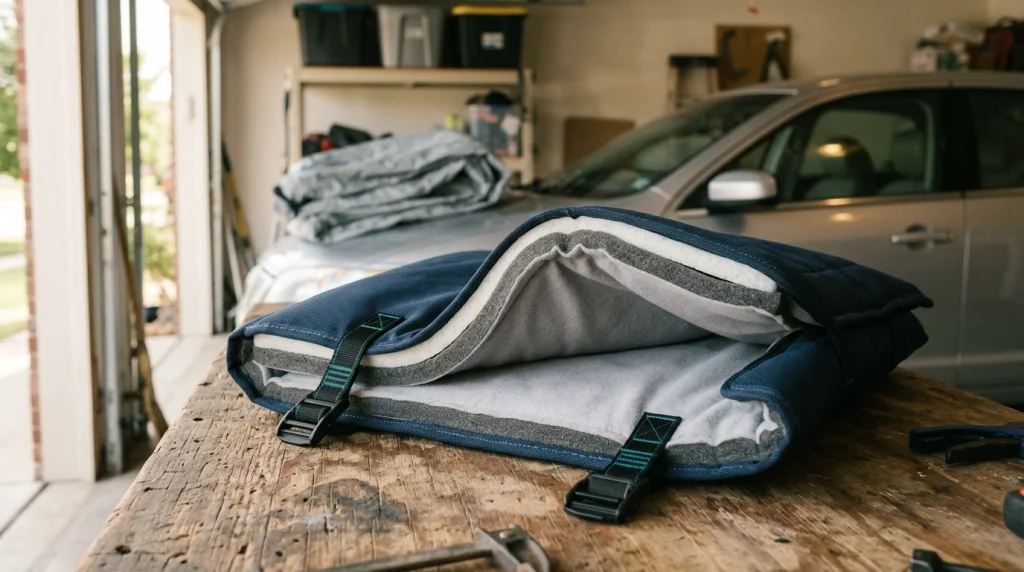
A purpose-built padded hail cover generally provides better impact cushioning than a standard outdoor cover. Inflatable systems offer another protective approach but require more preparation.
Choose based on the construction, manufacturer’s claims, fit, and setup requirements. Avoid judging protection by fabric thickness or product names alone.
Standard outdoor car covers
These are suitable for general weather protection, not substantial hail impact. Their advantages include low weight and easy everyday handling.
A standard cover may offer a small barrier against minor impacts. However, it should not be your primary defense when damaging hail is forecast.
Multilayer padded hail covers
These covers use cushioning materials such as foam between protective fabric layers. The foam helps distribute impacts across a broader surface.
When comparing products, check whether padding protects the entire vehicle or only selected areas.
- Roof coverage: Confirm that padding reaches across the roof and its edges.
- Hood coverage: Look for continuous cushioning over exposed hood surfaces.
- Trunk protection: Check coverage over the rear deck or hatch.
- Glass coverage: Confirm whether the design offers protection over the windshield and windows.
- Secure fastening: Prefer properly positioned straps and reinforced attachment points.
For daily drivers parked outdoors, padded designs offer a practical balance between convenience and additional protection.
Inflatable hail protection systems
Inflatable systems surround portions of the vehicle with air-filled cushioning. This buffer can reduce direct transfer of some impacts.
However, their performance depends on inflation, anchoring, material strength, and the manufacturer’s design.
They can also require electrical power, inflation equipment, and advance setup time. They aren’t suitable for hurried installation during an active thunderstorm.
Hail protection cover comparison
| Protection Method | Impact Cushioning | Best Application | Main Limitation |
|---|---|---|---|
| Regular outdoor cover | Minimal | Routine weather exposure | Little impact absorption |
| Multilayer weather cover | Varies by construction | General outdoor storage | Layers may lack cushioning |
| Padded hail cover | Higher than ordinary fabric | Forecast hail exposure | Severe hail may overwhelm padding |
| Inflatable hail system | Depends on air-buffer design | Planned outdoor protection | Needs inflation and secure setup |
| Sturdy garage or carport | Physical overhead barrier | Primary hail protection | Depends on shelter strength and availability |
The table compares general protection methods, not tested performance ratings. Individual products can vary significantly.
What should you check before buying?
For hail protection, I would prioritize documented construction details over marketing promises. A cover advertised as all-weather may have no meaningful impact cushioning.
- Vehicle-specific fit or accurate size measurements.
- Continuous padding over vulnerable body panels.
- Material and cushioning specifications.
- Secure straps suitable for the intended installation.
- Manufacturer instructions for expected weather conditions.
- Independent impact testing, when available.
- Warranty terms and replacement-part availability.
- Reasonable setup and removal time.
Check whether any advertised hail-size rating comes from documented testing. A claim without a clear method should not be treated as a guarantee.
Section Takeaway: For uncovered parking, dedicated padding is preferable to ordinary weather fabric. Choose secure fit and documented protection features rather than unverified hail-proof claims.
How Do You Install a Hail Protection Car Cover?
Install your hail cover before hazardous weather arrives, following its specific instructions. Correct positioning and fastening reduce the chance of shifting or exposed panels.
Never risk injury to finish installing a cover. If lightning, large hail, or dangerous winds are approaching, move indoors.
Step 1: Check the forecast early
Review your local forecast and severe thunderstorm alerts before deciding whether to install the cover.
Use a reliable forecast source, such as the National Weather Service, rather than relying on an isolated weather-app icon.
When possible, make arrangements before a warning becomes urgent. Hailstorms can develop quickly.
Step 2: Park in a safe location
Choose stable, level parking away from obvious falling-object hazards. Avoid parking beneath weakened tree limbs or near unstable structures.
If a sturdy garage is available, use it instead of setting up outdoor protection.
Do not block roads, sidewalks, emergency access, or designated fire lanes. Avoid enclosed or poorly ventilated spaces where running the engine could create an exhaust hazard.
Step 3: Prepare the vehicle surface
Remove loose dirt, grit, leaves, and abrasive debris from areas touching the cover. These particles can scratch the finish when fabric moves.
A gentle wash is useful if time and conditions permit. Drying the vehicle may also help with handling and storage requirements.
Don’t delay seeking shelter to perform a complete wash. Safety takes priority over paint preparation.
Step 4: Unfold and position the cover
Lay out the cover according to its front and rear markings. Check its orientation before pulling material across the roof.
For most fitted covers, careful installation works best in this order:
- Identify the front and rear ends.
- Position the main padded section over the roof.
- Extend the cover over the hood and trunk or hatch.
- Adjust the sides around the doors and mirrors.
- Check the windshield and rear-window coverage.
- Align the cover before securing its fasteners.
Large covers may require two people to prevent dragging or twisting. Install only when weather conditions are safe.
Step 5: Secure straps and attachment points
Use every fastening point specified by the manufacturer. A loose cover can lift, slide, or flap in strong winds.
Pay particular attention to:
- Front and rear retention straps.
- Underbody fastening locations.
- Elastic hems and corner fit.
- Mirror pockets or integrated mirror coverage.
- Any approved anchors for inflatable systems.
Avoid routing straps against hot exhaust parts, sharp edges, brake components, or moving equipment.
Don’t modify attachment hardware unless the manufacturer permits it. Improvised fasteners can cause damage or create hazards.
Step 6: Inspect the installation
Walk around the car before the storm arrives. Look for exposed areas and incorrectly positioned padding.
Check that straps are snug without excessive tension. They should not deform trim or rub aggressively against painted surfaces.
If the cover cannot be secured according to its instructions, don’t assume it will remain in place during severe winds.
Step 7: Leave the vehicle and seek shelter
Once installation is complete, move indoors. Don’t remain beside the car to hold or adjust its covering during dangerous weather.
The National Weather Service advises taking shelter inside a sturdy building during severe thunderstorms.
Section Takeaway: Good installation requires preparation, clean surfaces, correct positioning, and secure fastening. Complete the work before hazardous weather, never during it.
How Much Hail Can a Car Cover Withstand?
There is no universal hail size that every padded cover can withstand. Protection depends on the product’s construction, hailstone characteristics, wind, and vehicle design.
Bigger hailstones generally pose greater damage risks. But hail diameter alone cannot predict whether a particular vehicle will dent.
Understanding common hail sizes
The National Weather Service uses familiar objects to describe hailstone diameters. These comparisons help communicate storm severity.
| Hail Description | Approximate Diameter | Protection Consideration |
|---|---|---|
| Pea | 0.25 inch | Lower relative impact energy; damage still depends on conditions. |
| Dime or penny | 0.75 inch | Padded protection may help; ordinary fabric remains limited. |
| Quarter | 1 inch | Meaningful hail threat; avoid relying on thin covers. |
| Golf ball | 1.75 inches | Substantial impact risk; sturdy shelter is strongly preferred. |
| Tennis ball | 2.5 inches | Severe body-panel and glass damage is possible. |
| Baseball | 2.75 inches | Do not depend on a soft cover as primary protection. |
These figures describe hail sizes, not tested cover ratings. An individual cover’s capabilities must be evaluated separately.
For more information about how hail develops and varies, see the NOAA hail basics guide.
Why hailstone size is only part of the problem
Two storms with similarly sized hailstones may cause different damage. Impact conditions matter.
- Falling speed: Higher impact speeds increase the energy involved.
- Wind direction: Strong winds can drive hail sideways into exposed surfaces.
- Stone density: Hailstones vary in their ice structure and mass.
- Impact angle: Direct strikes load panels differently from glancing impacts.
- Repeated impacts: Multiple strikes may damage areas already hit.
- Vehicle construction: Different panels and materials respond differently.
These variables prevent a simple promise like “protects against all one-inch hail” from applying universally.
Which vehicle parts face the greatest risk?
The roof, hood, and rear deck often face the most direct falling hail. Sloped glass also remains vulnerable to hard impacts.
When strong winds accompany hail, side panels can suffer damage too.
- Roof and panoramic glass panels.
- Hood and front fenders.
- Trunk lid or rear hatch.
- Windshield and rear window.
- Side glass and door panels.
- Side mirrors, trim, and exterior lighting.
Don’t assume a cover protects every area equally. Inspect the actual padded zones before relying on it.
Section Takeaway: Hail size helps you recognize risk, but no diameter guarantees safety. Use sturdy shelter whenever dangerous hail is expected.
How Can You Improve Hail Protection Without a Garage?
If garage parking isn’t available, plan around weather warnings and use the strongest practical protection you can access safely. A padded cover works best as part of that plan.
The goal is to reduce exposure before the storm starts. Last-minute improvisation is far less dependable.
Find covered parking ahead of time
Check nearby options before severe weather develops. A structurally sound covered location is preferable to an exposed parking lot.
Possible choices include:
- Residential garages with available space.
- Authorized public parking garages.
- Workplace covered parking.
- Suitable permanent carports.
- Other approved covered parking with adequate clearance.
Choose shelter designed to withstand local weather conditions. A weak temporary canopy may collapse in strong winds or hail.
Follow posted parking rules, and never enter a restricted structure.
Keep a padded cover ready during hail season
A useful cover won’t help if you cannot locate or install it before the storm.
Store it clean, dry, and folded according to the manufacturer’s instructions. Keep straps and accessories together.
I would also practice the installation on a calm day. That reveals confusing fasteners or fit problems before bad weather.
Can you use blankets under a car cover?
Thick, soft blankets may provide some extra cushioning in an emergency, but their protection is untested and unpredictable.
Blankets can become waterlogged, shift under pressure, or create bulky areas that prevent a fitted cover from fastening properly.
If you consider this approach, keep these limitations in mind:
- Do not assume any blanket provides a specific hail-impact rating.
- Avoid rough, dirty, or abrasive fabrics against paint.
- Never obstruct secure attachment of the outer cover.
- Do not use loose materials that could blow into traffic.
- Do not attempt installation while lightning or severe weather threatens.
Blankets are not an equal replacement for purpose-built padding. A secured, tested product is the more dependable choice.
Are tarps useful against hail?
A normal tarp offers little impact cushioning. Its main purpose is generally weather or material coverage.
Placing a tarp directly over the vehicle doesn’t create much separation from falling hail. An unsecured tarp can also whip against the paint.
If you already own a tarp, don’t mistake its thickness or waterproof coating for an impact-protection rating.
Can parking beneath a tree prevent hail damage?
Parking beneath a tree is not a dependable hail protection strategy. Storm winds may break branches or bring down the entire tree.
The National Weather Service storm safety guidance warns about hazards from trees and large signs during severe weather.
Choose a sturdy structure instead. Tree cover may introduce a more serious hazard than hail dents.
What if you’re driving when hail begins?
Prioritize personal safety and visibility. Do not race toward distant shelter through dangerous conditions.
- Reduce speed smoothly as conditions require.
- Increase following distance.
- Avoid sudden steering and braking.
- Find a safe location away from moving traffic if visibility becomes dangerous.
- Never stop beneath trees or unstable structures.
- Remain protected and follow official severe-weather guidance.
Do not stop in a live traffic lane or beneath a highway overpass. Overpasses are not reliable storm shelters and stopping beneath them can create traffic hazards.
If visibility or glass damage makes driving unsafe, stop where it is safe and seek a sturdy building when possible.
Section Takeaway: A strong protection plan starts with an early forecast check. Covered parking and safe preparation matter more than attempting last-minute fixes.
What Mistakes Make Hail Covers Less Effective?
The most common problems are inadequate padding, poor fit, loose fasteners, and late installation. Even an expensive cover can perform poorly when used incorrectly.
Choosing a cover labeled only as weatherproof
Weatherproof doesn’t automatically mean impact-resistant. Check the product’s actual padding design before buying.
Look for meaningful technical details rather than relying on words such as heavy-duty or premium.
Using an oversized cover
Loose fabric can flap during high winds. Movement may expose panels and trap abrasive dirt against the paint.
A close-fitting model reduces unnecessary slack. Always follow the manufacturer’s sizing measurements rather than guessing from vehicle category alone.
Leaving straps unsecured
A partially secured cover may lift or shift when wind conditions change. That can reduce protection and create additional hazards.
Check for broken clips, damaged straps, and stretched elastic before storm season.
Ignoring the cover’s condition
Foam padding can wear or compress over time. Tears, weak seams, and degraded fastening points can also affect performance.
Inspect the cover before each forecast hail event. Replace damaged components according to the manufacturer’s guidance.
Covering a dirty vehicle
Grit between the cover and paint can cause abrasion when wind moves the fabric. Clean contact surfaces whenever conditions permit.
If a clean installation isn’t possible, avoid dragging the material across dirty panels.
Trying to install protection during a storm
This is the mistake with the greatest personal safety consequences. Hail, lightning, and high winds can injure someone working beside a vehicle.
If severe weather has already arrived, abandon the installation and seek shelter. Protecting yourself is always more important than avoiding cosmetic repairs.
Section Takeaway: A suitable cover needs correct fit, intact padding, and reliable fastening. Never sacrifice personal safety to correct an installation problem during severe weather.
What Should You Do After a Hailstorm?
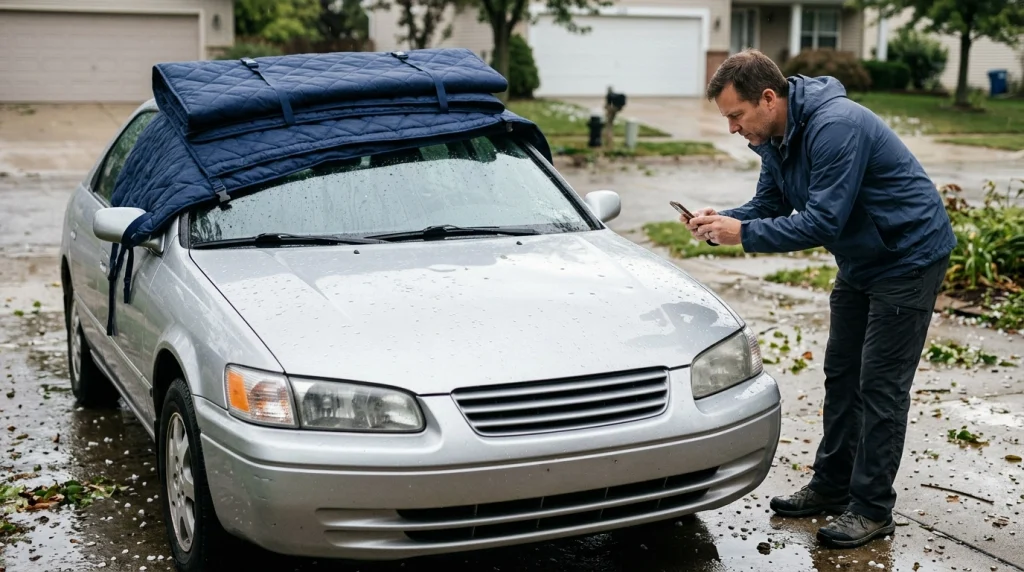
Wait for safe conditions, document the covered vehicle, and remove the cover carefully. Then inspect the body panels, glass, and exterior trim.
Remove the cover without scratching the car
Don’t drag wet or dirty fabric over painted surfaces. Lift the material carefully, especially where debris has collected.
Allow the cover to dry before storage according to its care instructions. Inspect it for punctures, damaged straps, and compressed padding.
Check for hidden hail damage
Small dents may be difficult to see in flat lighting. Look across painted panels under bright, angled light.
Follow this inspection sequence:
- Photograph the vehicle before removing its cover.
- Inspect the roof, hood, and trunk for dents.
- Look for chips, cracks, or other windshield damage.
- Check the rear window and any roof glass.
- Examine side panels, mirrors, and exterior lighting.
- Record visible paint damage and damaged trim.
- Keep photographs of the cover and surrounding storm debris.
Do not operate a vehicle with damaged glass or other defects that make it unsafe to drive.
Should you repair hail dents yourself?
Minor hail dents may qualify for paintless dent repair, often called PDR. This professional technique can reshape suitable dents without repainting.
Whether PDR works depends on dent location, paint condition, panel material, and access. Cracked paint or severe deformation may require conventional body repair.
Mechanic Alert: Avoid drilling, heating, pulling, or dismantling vehicle panels without proper training. Consult a qualified paintless dent repair technician or body shop, especially around airbags, wiring, sensors, and vehicle glass.
Does insurance cover hail damage?
Hail damage is commonly covered under optional comprehensive auto insurance. Liability-only coverage generally does not pay for hail damage to your own vehicle.
Policy wording, deductibles, exclusions, and claim requirements vary. Review your specific coverage before deciding whether to file a claim.
For general vehicle ownership and insurance information, consult Kelley Blue Book and your own insurer.
Obtain a professional repair estimate where needed. Compare the estimated cost with your deductible before making a claim decision.
How should you prepare for the next storm?
Use the inspection findings to improve your protection plan. Pay attention to exposed areas, shifting, and any damage beneath the padding.
- Repair or replace damaged fastening components.
- Review the cover’s sizing and fit.
- Inspect foam for permanent compression.
- Check whether the padded areas match your vehicle.
- Identify safe covered parking alternatives.
- Keep weather alerts enabled during hail season.
As of 2026, I would still treat a padded hail cover as supplemental protection rather than a guarantee. Severe weather is unpredictable, and reducing exposure is the stronger strategy.
Section Takeaway: Document damage before repair decisions. Maintain your cover, review insurance coverage, and improve your shelter plan before the next hail warning.
Frequently Asked Questions
Will a normal car cover stop hail damage?
No normal fabric cover can reliably stop hail damage. Standard outdoor covers mainly protect against moisture, dust, sunlight, and light debris.
A dedicated padded hail cover offers better cushioning, although damaging hail can still dent panels beneath it. Sturdy covered parking provides stronger protection.
What is the best material for a hail protection car cover?
Purpose-built covers with impact-absorbing foam or suitable inflatable cushioning are generally more appropriate than thin fabric. The entire construction matters, including padding coverage, attachment strength, and fit.
Look for documented impact testing instead of assuming a particular fabric or foam guarantees protection.
Can a hail cover prevent windshield damage?
A hail-specific cover may reduce impacts on covered glass, but it cannot guarantee the windshield will remain intact. Larger hailstones can still crack or chip automotive glass through protective layers.
Choose a design with suitable windshield coverage, and prioritize sturdy shelter during severe hail threats.
How thick should a car cover be for hail?
There is no universally accepted foam thickness that guarantees protection against a particular hail size. Performance depends on material density, cushioning design, compression behavior, stone characteristics, and the vehicle underneath.
Compare manufacturer specifications and documented testing rather than choosing by thickness alone.
Can you put a blanket under a car cover for hail?
A soft blanket may provide some additional cushioning, but the protection is unpredictable. It can also shift, absorb water, or interfere with the cover’s fit and fastening.
A correctly fitted, dedicated hail cover is a more dependable choice. Never install loose layers during dangerous weather.
Should you leave a hail cover on after the storm?
Follow the manufacturer’s care instructions. Once weather conditions are safe, inspect the cover and vehicle for trapped moisture, grit, damage, or shifting.
Remove and dry a wet cover before storage when required. Avoid dragging contaminated material across the vehicle’s paint.
Is a hail protection car cover worth buying?
A padded hail cover can be worthwhile when your vehicle regularly parks outdoors in hail-prone areas. It may reduce damage compared with leaving the vehicle completely exposed.
However, value depends on its construction, fit, ease of installation, and actual protection limits. Covered parking remains the preferred option.
Final Takeaway: To reduce hail damage with a car cover, use dedicated padding, install it properly, secure every strap, and prepare before the storm. Never rely on thin waterproof fabric as your only defense against damaging hail.
If your area regularly experiences severe hail, make covered parking your first priority. Keep a well-fitting padded cover as backup protection, and follow local weather warnings before each storm.
