
How to Clean Bird Droppings Off a Car Cover Safely

Quick Answer
To clean bird droppings off a car cover, remove the cover carefully, soften the mess with water, lift it with a soft microfiber cloth, rinse away residue, and let the cover dry completely before reinstalling it. Always check your cover’s care label first, and use reputable car-maintenance guidance alongside the manufacturer’s instructions when caring for the vehicle underneath.
Quick cleaning steps
- Remove carefully: Keep the contaminated exterior away from the clean inner lining and vehicle paint.
- Soften first: Wet fresh or dried droppings with cool or lukewarm water before rubbing.
- Lift gently: Blot or wipe with a clean microfiber cloth instead of scraping the fabric.
- Clean correctly: Use only detergent and washing methods approved for your particular cover.
- Rinse well: Remove loosened contamination and any cleaning-product residue.
- Dry completely: Never reinstall or store a damp car cover.
Before putting it back on
- Inspect the cover’s inner surface and your vehicle for moisture, grit, or remaining contamination.
Bird droppings on a car cover are annoying, but the cover has done its job by intercepting contamination before it landed directly on your vehicle. The next step is removing that mess without damaging the fabric or transferring it underneath.
I’ve cleaned covers after everything from overnight parking to several days under bird-heavy trees. As of 2026, my basic approach remains simple: soften first, avoid aggressive rubbing, follow the fabric’s care instructions, and reinstall only when everything is clean and dry.
In This Guide
- What should you do first when bird droppings land on a car cover?
- How do you clean fresh bird droppings off a car cover?
- How do you remove dried bird droppings without damaging the fabric?
- Should you spot-clean or wash the entire car cover?
- What cleaners and tools are safe for a car cover?
- How do you dry, inspect, and reinstall the cover safely?
- Frequently asked questions
What Should You Do First When Bird Droppings Land on a Car Cover?
Remove the contamination reasonably soon, but don’t attack it with a dry towel. Your first goal is preventing the dirty exterior from touching the cover’s clean inner surface.
Definition: Bird droppings on a car cover are organic contamination deposited on the cover’s exterior while the vehicle is parked. The cover acts as a removable protective barrier, but that barrier still needs proper cleaning before reuse.
Take the cover off without dragging it
I prefer to remove the cover before doing any real cleaning. Working directly over the vehicle makes it easier to push wet residue toward the paint or transfer dirt underneath.
- Start at a clean area: Release the cover from an uncontaminated end.
- Keep the exterior outward: Don’t fold the dirty spot against the paint-facing lining.
- Lift instead of dragging: Pulling fabric across panels can move trapped grit.
- Check underneath: Inspect the vehicle and inner cover surface for contamination.
- Wash your hands: Use disposable gloves when convenient and wash up after handling the mess.
If the droppings are still wet, don’t smear them across a larger area. Lift loose material carefully before starting the wet-cleaning process.
General vehicle-care resources from Edmunds also emphasize following appropriate maintenance procedures instead of treating every surface or material the same way.
How Do You Clean Fresh Bird Droppings Off a Car Cover?
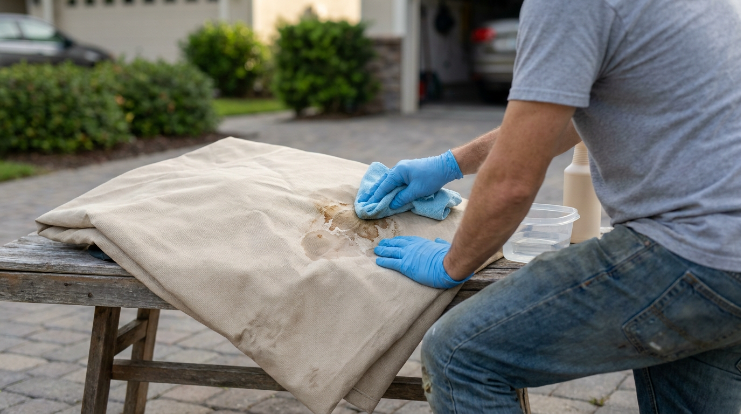
Fresh droppings are usually easier to remove because they haven’t hardened into the cover’s texture. Water and gentle contact are the safest starting points.
Step-by-step method for fresh contamination
- Move the cover: Put it on a clean surface where the affected section can be reached easily.
- Remove loose material: Lift any excess without pressing it deeper into the fabric.
- Wet the spot: Apply cool or lukewarm water until the affected material loosens.
- Blot gently: Use a clean microfiber cloth with light pressure.
- Add approved cleaner: Use only a product allowed by the cover manufacturer.
- Rinse thoroughly: Flush away contamination and cleaner residue.
- Inspect the area: Repeat the gentle process if visible residue remains.
Don’t scrub immediately just because the stain looks unpleasant. The goal is lifting contamination out, not grinding it through the outer layer.
When I’ve dealt with a fresh spot after an overnight parking session, a good water soak often does most of the work. I only reach for detergent when water and gentle blotting aren’t enough.
For general exterior-cleaning practices, Car and Driver’s car-cleaning resources are also useful when you need to inspect and clean the vehicle after removing the cover.
How Do You Remove Dried Bird Droppings Without Damaging the Fabric?
Dried droppings should be softened before you try to remove them. Scraping a hardened deposit risks stressing fibers, coatings, or surface treatments.
Use moisture and patience
Wet the area until the dried contamination becomes noticeably softer. I usually give a stubborn spot about five to ten minutes of repeated wetting before touching it.
- Use a wet compress: Rest a damp microfiber cloth over the affected area.
- Re-wet as needed: Don’t let the deposit dry again during cleaning.
- Lift from the edges: Work inward with light pressure rather than scraping underneath it.
- Rinse between attempts: Carry loosened particles away before wiping again.
- Stop if fabric changes: Fraying, color transfer, or coating damage means you should check the manufacturer’s instructions.
Avoid metal tools, stiff scrapers, abrasive pads, and aggressive brushes. A stain is inconvenient, but damaging the cover’s protective construction can create a bigger problem.
What if a shadow or stain remains?
A visible mark after the solid contamination is gone doesn’t automatically mean more scrubbing is needed. Some fabrics can retain discoloration even after the surface is clean.
At that point, check the label before applying any stain remover. Manufacturer instructions matter because car-cover materials range from lightweight woven fabrics to multilayer and soft-lined designs.
Should You Spot-Clean or Wash the Entire Car Cover?
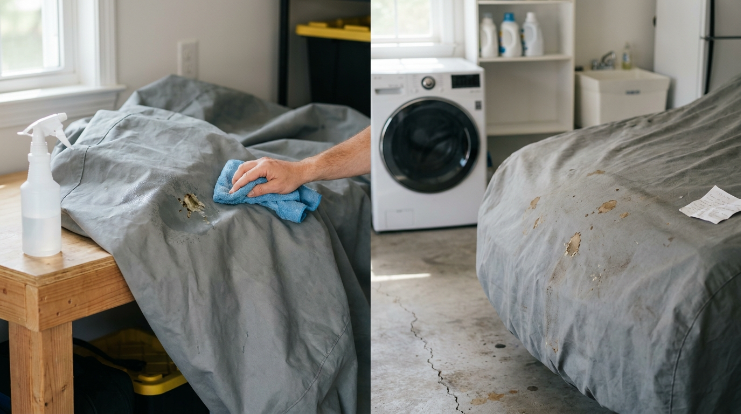
Spot-cleaning makes sense for one small exterior mess when the rest of the cover is clean. A full wash is better when contamination is widespread, reaches the inner surface, or accompanies general dirt buildup.
| Situation | Best starting method | Why | Next check |
|---|---|---|---|
| One fresh exterior spot | Spot-clean | Limits unnecessary washing | Inspect inner lining |
| Several dried spots | Pre-soak spots, then consider full wash | Multiple areas need thorough rinsing | Check care label |
| Dirty inner surface | Full approved cleaning | Inside contamination can contact paint | Inspect vehicle before reinstalling |
| Cover also dusty or muddy | Full wash if manufacturer permits | Spot treatment won’t remove general grime | Confirm washer and drying rules |
| Unknown fabric or missing label | Gentle spot-cleaning first | Avoids assuming machine washing is safe | Contact manufacturer |
Machine-washing rules vary considerably. Some covers can use large front-loading machines, while others have stricter requirements concerning agitators, detergent, temperature, and drying.
That’s why I don’t recommend one universal washer setting. Follow the tag or current manufacturer documentation for the exact fabric you own.
What Cleaners and Tools Are Safe for a Car Cover?
The safest cleaner is the one specifically approved for your cover material. Don’t assume a product is safe just because you already use it elsewhere on your vehicle.
Useful cleaning supplies
- Clean water: Start here for softening and rinsing.
- Microfiber cloths: Use clean, soft towels for gentle lifting and blotting.
- Approved detergent: Follow the cover label for detergent type and quantity.
- Clean wash area: Keep the paint-facing side away from garage-floor grit.
- Disposable gloves: Helpful when handling biological contamination.
Products and methods to avoid unless specifically approved
- Abrasive cleaning pads
- Metal or hard-edged scrapers
- Strong household stain removers
- Bleach without manufacturer approval
- Fabric softener without manufacturer approval
- High washing or drying heat without manufacturer approval
- Harsh solvents or degreasers
Cover manufacturers can specify surprisingly different care routines. That’s another reason I treat the label as the final authority rather than assuming every polyester-looking cover is identical.
For broader vehicle-cleaning principles, Consumer Reports’ automotive resources offer another independent reference for keeping automotive surfaces clean without unnecessarily aggressive methods.
How Do You Dry, Inspect, and Reinstall the Cover Safely?
A clean cover isn’t ready to use until it is completely dry. Trapping moisture between fabric and vehicle surfaces defeats the point of cleaning it carefully.
Follow the manufacturer’s drying method
Air drying is common for many car-cover materials, but you shouldn’t assume it is mandatory for every product. Some manufacturers allow machine drying under specific settings.
- Check the care tag: Confirm whether air or machine drying is allowed.
- Give it space: Spread the material so folded sections aren’t staying wet.
- Inspect seams: Thick seams and elastic areas can remain damp longer.
- Check both surfaces: The exterior and paint-facing interior should feel dry.
- Keep it clean: Don’t dry the cover where its inner side can collect grit.
Before reinstalling, inspect the hood, roof, trunk, mirrors, glass, and other exposed areas. If droppings or loose dirt reached the car, clean them before placing the cover back on.
Car and Driver’s 2026 car-cover testing also highlights clean installation surfaces, fit, weather protection, and proper storage as practical parts of successful cover use.
Reinstall without dragging
- Confirm the vehicle is clean and dry.
- Check the cover’s inner surface for grit.
- Position the cover from a known clean section.
- Unfold it over the vehicle instead of dragging it across panels.
- Secure the intended hems, straps, or fasteners.
- Check that excessive loose material isn’t flapping in the wind.
I also inspect the storage bag before putting a freshly cleaned cover away. A clean cover stuffed into a dusty or damp bag can undo your work before the next use.
Frequently Asked Questions About Cleaning Bird Droppings Off Car Covers
Can bird droppings permanently stain a car cover?
Yes, some covers can retain discoloration after contamination sits for a long time. The outcome depends on the material and finish, so remove the deposit gently and follow the manufacturer’s stain-cleaning instructions instead of increasing scrubbing pressure.
Should I clean bird poop off a car cover immediately?
Prompt cleaning is best because fresh contamination is generally easier to remove than hardened material. You don’t need to panic, but you should avoid leaving the droppings to dry and repeatedly bake into the cover.
Can I wash the bird droppings off while the cover is still on the car?
I recommend removing the cover first whenever practical. Taking it off makes it easier to control contaminated water and prevents you from unknowingly pressing dirt or moisture against the paint-facing side.
Can I put my car cover in a washing machine?
Only if your cover manufacturer permits machine washing. Cover size, fabric, coatings, lining, washer style, cycle, detergent, and temperature can all affect the correct procedure, so check the current care instructions for your exact product.
Can I use bleach on bird droppings?
Don’t use bleach unless the manufacturer specifically approves it for your cover material. Bleach can affect some fabrics, dyes, coatings, or protective treatments, making an unapproved cleaning shortcut more expensive than the original stain.
What if bird droppings got through the cover and onto the car?
Remove the cover and clean the vehicle separately using paint-safe car-care methods. Don’t reinstall the cover until both the vehicle and the cover’s inner surface are clean and completely dry.
How can I stop bird droppings from becoming a recurring problem?
Parking away from regular bird perches, branches, wires, and nesting areas can reduce exposure when you have another practical parking option. Inspect the cover regularly so individual deposits don’t turn into widespread contamination.
Final takeaway: The safest way to clean bird droppings off a car cover is to soften the contamination before touching it, remove it with gentle materials, follow the exact cover-care instructions, and dry everything completely before reuse.
A few extra minutes spent cleaning the cover correctly can help it remain the protective barrier it was designed to be. If the material stays stained, rough, damaged, or contaminated after approved cleaning, contact the manufacturer before putting it back against your vehicle.
“`