
How to Stop Rust Under a Car Cover: Complete 2026 Guide

Quick Answer
To stop rust under a car cover, remove trapped moisture first. Keep the car and cover completely dry, wash away road salt, repair exposed paint, improve airflow, and use a breathable cover suited to your storage location. This is especially important after winter driving because road salt can accelerate vehicle corrosion.
Quick steps to stop rust
- Remove the cover: Let trapped moisture escape instead of leaving the vehicle damp.
- Dry everything: Dry the car, seams, wheel arches, trim, and the inside of the cover.
- Remove salt: Wash winter residue from the body, wheel wells, and accessible underbody areas.
- Inspect exposed metal: Look for paint chips, bubbling paint, rusty fasteners, and damaged coatings.
- Improve airflow: Avoid sealing a damp vehicle beneath plastic or poorly ventilated material.
- Check it regularly: Lift the cover after prolonged rain, high humidity, or major temperature swings.
One rule I never ignore
- If either the vehicle or the inside of the cover feels damp, I let both dry before covering the car again.
Finding rust beneath a car cover feels backwards. You covered the vehicle to protect it, yet moisture, orange spots, or bubbling paint appeared anyway.
I treat this as a moisture-control problem first. In this guide, I’ll show you how to stop rust under a car cover, prevent it from returning, and recognize corrosion that needs professional attention.
In This Guide
Why Does Rust Form Under a Car Cover?
Rust forms under a car cover when metal stays exposed to moisture and oxygen long enough for corrosion to develop. Salt, damaged paint, humid air, and poor drying can make the problem worse.
Rust is corrosion of iron or steel caused by chemical reactions involving oxygen and moisture. A car cover does not create rust by itself, but it can slow evaporation when moisture becomes trapped underneath.
Was the car wet when you covered it?
This is the first thing I check. A car can look dry while still holding water in places you cannot easily see.
- Mirror housings: Water can drain slowly after washing.
- Door and trunk seams: Weatherstripping and channels can retain moisture.
- Wheel arches: Dirt and road grime can hold water against metal.
- Badges and trim: Small gaps can release water after the visible paint dries.
- Lower body seams: Rocker areas often stay wet longer than upper panels.
I run a clean microfiber towel around those areas before covering a freshly washed vehicle. If the towel comes away wet, the cover stays off.
Is condensation forming underneath?
Condensation can wet a covered car even when rain never passes through the fabric. Humid air can form droplets when it contacts cooler body panels.
That is why moisture may appear overnight. A cover with poor vapor release can keep those droplets around much longer.
- Widespread fine droplets: Often point toward condensation.
- Wetness after a temperature drop: Humidity may be condensing on cooler metal.
- Damp cover lining: The cover itself may be storing moisture.
- Repeated morning moisture: The storage environment may have a humidity problem.
Is road salt still on the vehicle?
Salt is one contaminant I take seriously. Consumer Reports warns that road salt accelerates corrosion and can affect braking, steering, suspension, and fuel-system components.
Do not store a salty vehicle under a cover for weeks. Wash the body and undercarriage first when conditions allow.
Is exposed metal already present?
A small stone chip can break the protective paint system and expose steel. Repeated moisture then gets direct access to that metal.
- Paint chips exposing metal
- Deep scratches
- Bubbling paint
- Damaged undercoating
- Rusty fasteners or seams
Dry storage helps, but it cannot restore a damaged coating. Existing chips and corrosion still need attention.
Section Takeaway: Rust beneath a cover usually starts with moisture that cannot escape, then becomes more serious when salt or exposed metal is present. Fix the moisture source before blaming the cover alone.
How Do You Stop Rust Under a Car Cover Right Now?
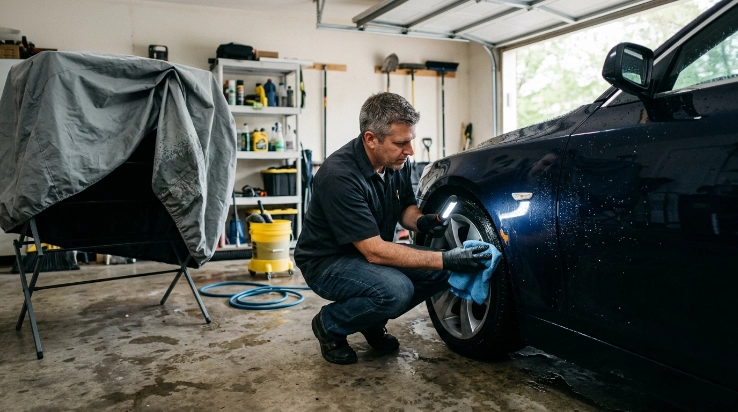
Start by uncovering the vehicle and drying everything completely. Then determine whether the moisture came from washing, condensation, rain intrusion, a damp cover, or the storage environment.
- Remove the entire cover. Do not uncover only the rusty section.
- Let the vehicle dry. Give seams and hidden areas time to drain.
- Dry the cover separately. Do not reinstall fabric that feels damp inside.
- Wash away contamination. Remove salt, dirt, mud, and other residue.
- Inspect the rust. Identify whether it is cosmetic, underbody, brake-related, or structural.
- Find the moisture source. Check the cover, parking surface, garage, and recent weather.
- Correct the setup. Improve airflow or change the cover type when necessary.
Should you put the cover back on after drying the paint?
Only when the car and the cover are dry. A dry vehicle under a wet liner simply recreates the moisture problem.
Pay special attention to thick seams, elastic hems, and folded sections of the cover. Those areas can remain damp after the rest feels dry.
What should you do with a small paint-chip rust spot?
Do not ignore it. Clean the area and follow the vehicle manufacturer’s recommended paint-repair process before corrosion expands beneath surrounding paint.
Bubbling paint needs more caution because corrosion may extend beyond the visible spot. A body professional can determine how far it has spread.
Should you remove surface rust from the underbody yourself?
Only tackle areas you can inspect safely without raising the vehicle or working near safety-critical components. Underbody corrosion can involve brakes, suspension mounts, structural sections, fuel lines, and other important parts.
Mechanic Alert: If inspecting or repairing the rust requires lifting the vehicle, working underneath it, or touching brake, suspension, structural, fuel, or electrical components, have a qualified mechanic inspect it instead.
The National Highway Traffic Safety Administration is also a useful starting point for vehicle-safety information when corrosion involves safety-related components.
Section Takeaway: Drying the car stops the immediate moisture exposure, but long-term prevention requires identifying why the moisture was trapped in the first place.
Which Car Cover Setup Helps Prevent Rust?
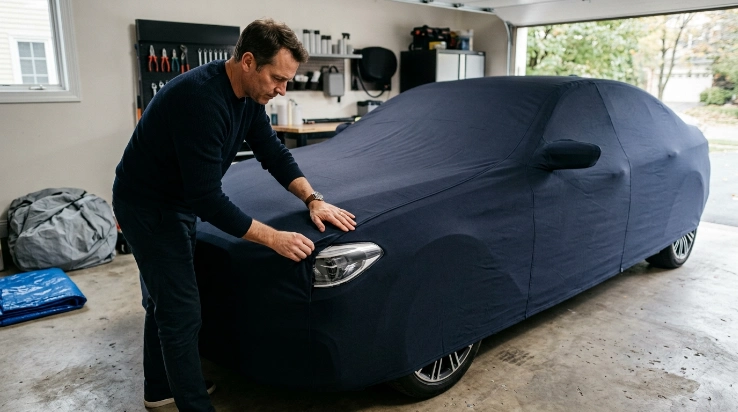
A breathable, properly fitted cover designed for your actual storage environment is usually the better approach. You want outside protection without trapping moisture that is already around the car.
Current Car and Driver car-cover testing also shows substantial differences in fit, waterproofing, construction, and moisture protection among current products.
| Cover Setup | Moisture Behavior | Best Use | Main Rust Concern |
|---|---|---|---|
| Breathable indoor cover | Allows moisture vapor to escape more readily | Clean, dry garage | Garage humidity or damp floor |
| Weather-resistant outdoor cover | Balances rain protection with vapor release | Outdoor parking | Condensation, rain intrusion, or prolonged saturation |
| Loose universal cover | Airflow varies with fit and weather | Shorter-term use when securely fitted | Wind movement and moisture entering at edges |
| Plastic tarp or sealed sheet | Restricts evaporation significantly | Not my choice for direct long-term vehicle covering | Moisture trapped against the vehicle |
Breathable versus waterproof: which matters more?
They solve different problems. Water resistance limits liquid water entering from outside, while breathability helps trapped water vapor escape.
I do not choose a cover using the word “waterproof” alone. A storage cover also needs appropriate fit, drying ability, and ventilation for the environment.
Why does fit matter?
A loose cover can move repeatedly in wind. If dirt becomes trapped beneath it, that movement can rub against the finish.
Paint damage creates another path for moisture to reach metal. Use the correct size and the securing method recommended by the cover manufacturer.
Section Takeaway: The best rust-prevention cover is not simply the most waterproof one. Look for suitable weather protection, breathability, proper fit, a clean inner surface, and a storage environment that can dry.
Does Your Storage Location Increase Rust Risk?
Yes. Even an excellent cover can struggle when the vehicle sits over wet ground or inside a persistently damp garage.
Is parking on grass or soil a problem?
Damp grass and soil continually release moisture into the surrounding air. That can keep humidity higher around the lower body and undercarriage.
I prefer a clean, well-drained paved surface for regular outdoor covered parking. Standing water near the tires is a clear sign that I should choose another location.
Can a garage still cause condensation?
Absolutely. A garage can have damp concrete, roof leaks, poor ventilation, or major temperature swings.
- Condensation on windows
- Frequently damp concrete
- Musty smells
- Rust developing on tools
- Water entering beneath doors
- Visible mold or mildew on stored items
If several of those signs are present, the cover may not be the main problem. The garage itself needs better moisture control.
What about long-term storage?
A vehicle sitting for weeks or months needs periodic attention. Consumer Reports notes that cars parked for long periods can develop issues including rusted brakes and other maintenance problems.
Its 2026 guidance for cars that are not driven much recommends regular checks rather than abandoning a stored vehicle until the day you need it.
- Check beneath the cover: Look for droplets, damp fabric, or musty smells.
- Inspect the parking surface: Correct leaks or standing water.
- Watch changing seasons: Humidity and overnight temperatures can change quickly.
- Inspect visible metal: Catch small rust spots before they become larger repairs.
Section Takeaway: A car cover cannot overcome a consistently wet storage environment. Control the moisture around the vehicle as carefully as the cover itself.
How Should You Protect the Car Before Covering It?
The best rust-prevention routine starts before the cover touches the vehicle. Clean, dry, protected surfaces give corrosion fewer opportunities to start.
Wash away salt and grime first
Road salt deserves priority because it can speed corrosion. During salty winter conditions, make sure your cleaning routine reaches the lower body and undercarriage where residue collects.
- Wheel wells
- Rocker panels
- Lower door areas
- Accessible suspension surroundings
- Underbody surfaces reached by an appropriate car wash
Do not cover the car immediately after washing it. Hidden water needs time to drain and evaporate.
Repair damaged paint before storage
Inspect the finish under good lighting. Stone chips, scratches, peeling paint, and bubbling areas deserve attention before long-term storage.
A sound paint system helps isolate steel from moisture. Once bare metal becomes exposed, covering the car does not restore that protection.
Use paint protection as a backup layer
Wax or another manufacturer-compatible paint protectant can add a sacrificial barrier against contamination. It does not make moisture management optional.
I still follow the same rule after waxing. Clean and dry comes before covered.
Prepare the entire vehicle for long storage
Rust prevention should be part of a wider storage routine. Tires, battery condition, fluids, brakes, rodents, fuel, and seals can also become concerns.
The Edmunds long-term car storage guide provides a broader checklist for vehicles that will remain parked for extended periods.
Inspect rust before assuming it is cosmetic
A tiny orange spot at a paint chip is different from scaling on a frame section or brake component. The location and depth matter more than the color alone.
| What You See | Possible Situation | Best Next Step |
|---|---|---|
| Small orange spot at paint chip | Early surface corrosion | Dry, clean, and repair promptly |
| Bubbling paint | Corrosion may extend beneath coating | Have the extent inspected |
| Light film on brake rotor after storage | Surface oxidation can occur while parked | Check brake operation before normal driving |
| Heavy scaling, flaking, or holes | Advanced corrosion | Professional inspection |
| Rust on brake lines or structural mounts | Potential safety concern | Qualified mechanic inspection |
Mechanic Alert: Heavy corrosion, perforation, brake-line rust, suspension-mount corrosion, or weakened structural metal should be inspected professionally before the vehicle is relied on for normal driving.
Section Takeaway: Rust prevention is much easier when you cover a clean, dry vehicle with intact protective coatings. Deal with salt, chips, and existing corrosion before long-term storage begins.
Frequently Asked Questions
Can a car cover cause rust?
A car cover does not directly create rust. It can contribute to corrosion when it traps moisture around exposed metal or slows drying after rain, washing, or condensation.
Should I cover a car immediately after washing it?
No. Dry the paint first, then check mirrors, seals, trim, wheel arches, badges, door openings, and other places that can hold hidden water.
Is a waterproof car cover best for preventing rust?
Not automatically. Outdoor protection needs to limit rain while still allowing trapped moisture to escape, so breathability, fit, drying performance, and intended use all matter.
Why is my car wet underneath the cover when it did not rain?
Condensation is a common explanation. Humid air can become liquid droplets when it reaches cooler vehicle surfaces, especially after overnight temperature changes.
Does parking a covered car on grass cause rust?
Damp grass or soil can increase moisture around the lower vehicle. A dry, well-drained paved surface usually gives you better control over moisture during regular or long-term storage.
How often should I check a car stored under a cover?
There is no single interval that fits every climate. I check more often after heavy rain, humid weather, large temperature swings, or whenever the storage area feels damp.
Is rust on brake rotors after storage normal?
A light surface film can appear after a vehicle sits in humid conditions. If the brakes grind heavily, stick, feel abnormal, or do not perform normally, have them inspected instead of assuming the corrosion is harmless.
Final Takeaway
If you want to stop rust under a car cover, do not focus on the cover alone. Control moisture on the vehicle, inside the fabric, and throughout the storage environment.
My routine is simple: clean the car, remove salt, dry every hidden area, repair exposed metal, install a suitable breathable cover, and inspect underneath it during wet or humid conditions.
A cover should be the final protective layer. It should never become a place where existing moisture stays trapped.
If you already see deep scaling, structural corrosion, damaged brake components, or spreading rust beneath paint, get the affected area inspected. Catching a serious corrosion problem early is far better than hiding it beneath the cover.
“`