
How to Clean Mold Off a Car Cover: Step-by-Step Guide

Quick Answer
To clean mold off a car cover, take the cover off the vehicle, brush away loose contamination outdoors, then wash it using the cleaner and method approved by its manufacturer. Rinse thoroughly and dry the cover completely before putting it back on the car; general EPA mold guidance also stresses cleaning the growth and eliminating the moisture that allowed it to develop.
Quick cleaning steps
- Check the label: Confirm whether your cover allows machine washing, spot cleaning, specific detergents, or tumble drying.
- Work outdoors: Remove the cover and handle visible mold where spores are less likely to spread through your garage or home.
- Remove loose debris: Gently brush or shake off dry dirt and surface contamination without grinding it deeper into the fabric.
- Wash gently: Use mild detergent or the exact cleaner specified by the cover manufacturer.
- Rinse thoroughly: Remove detergent and loosened residue from both sides of the cover.
- Dry completely: Never fold, store, or reinstall a damp car cover.
Important cleaner rule
- Do not assume household bleach is safe for car-cover fabric. Some manufacturers specifically prohibit it because it can damage fabric, coatings, stitching, or elastic.
Mold on a car cover usually means moisture stayed trapped long enough for fungal growth to develop. Cleaning the visible spots matters, but finding the moisture source matters just as much.
I treat a moldy cover as two separate problems: clean the fabric without ruining it, then correct the damp conditions that caused the growth. That approach is especially important with modern coated and multi-layer covers.
In This Guide
How Do You Clean Mold Off a Car Cover Step by Step?
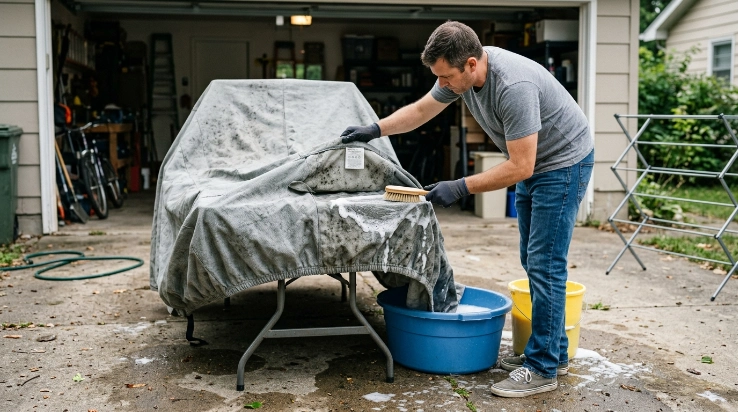
The safest method starts with the cover’s care instructions. Remove loose contamination first, wash with an approved cleaner, rinse well, and make sure the entire cover is dry before reuse.
Mold on a car cover is fungal growth supported by moisture and organic debris trapped on or within the fabric. Dark spots and a musty odor can indicate a moisture problem even when the growth looks minor.
1. Remove the cover from the vehicle
Don’t try to scrub a badly moldy cover while it’s sitting over your paint. Movement can drag dirt, spores, and grit across the finish.
Move the cover into an open, well-ventilated area. If visible mold is substantial, gloves and eye protection are sensible precautions.
2. Check the manufacturer’s care label
This step can save an expensive cover. Car covers use different woven fabrics, coatings, membranes, soft linings, seams, and elastic materials.
- Look for machine-wash instructions: Some covers tolerate gentle machine washing, while others require spot or hand cleaning.
- Check water temperature: Cold or warm water may be specified.
- Check detergent restrictions: Mild detergent is common, but formulas vary.
- Look for bleach warnings: Never use bleach when the manufacturer prohibits it.
- Check drying directions: Air drying is often safest unless machine drying is specifically allowed.
3. Shake or brush away loose material
Let the cover dry enough to handle safely if it’s soaking wet. Then gently shake it outdoors to remove loose dirt, leaves, dust, and debris.
Use a soft brush for stubborn dry debris. Avoid aggressive scrubbing that can roughen a soft inner lining.
4. Pre-treat the moldy areas
For a washable cover, start with mild detergent and water unless its manufacturer specifies another product. Apply the solution to the affected area and let it loosen the residue.
Don’t immediately reach for concentrated household chemicals. A product that works on tile or concrete may damage a water-resistant coating or fabric treatment.
5. Wash the cover
Follow the cover-specific washing method. Large covers often need a commercial-size machine because packing them tightly into a small washer prevents proper cleaning and rinsing.
- Load the cover by itself.
- Add the manufacturer-approved amount of cleaner.
- Select the recommended gentle or normal cycle.
- Allow the cycle to finish completely.
- Run an extra rinse when the instructions call for it.
If machine washing isn’t allowed, lay the cover on a clean surface or clean it while supported according to the manufacturer’s directions. Work in manageable sections.
6. Inspect before drying
Check the previously affected areas while the cover is still wet. Repeat the manufacturer-approved cleaning process if visible residue remains.
A permanent stain doesn’t always mean active growth remains. Persistent musty odor, however, deserves another inspection after the cover has dried.
Section Takeaway: Clean the cover according to its fabric-specific care instructions rather than treating it like an ordinary household cloth. Complete rinsing and complete drying are just as important as the washing step.
What Should You Use to Clean Mold From a Car Cover?
For most car covers, the safest starting point is the mild cleaner specifically approved by the manufacturer. Don’t use bleach, fabric softener, stain remover, solvents, or strong disinfectants unless the care instructions explicitly permit them.
The distinction matters because government mold-cleaning recommendations often address hard household surfaces. A car cover is flexible, porous, and may contain coatings or finishes that need different care.
Is mild detergent enough?
It often is for washable fabric covers with light contamination. Covercraft, for example, advises mild detergent and water for spot cleaning many indoor covers, with machine washing only when that specific fabric allows it.
Covercraft also tells owners to dry the cover completely before storage. You can review the company’s confirmed car-cover care guidance before cleaning one of its products.
Can you use bleach on a moldy car cover?
Only when your specific cover manufacturer says it’s safe. Don’t apply a general household mold recipe to an automotive cover without checking compatibility.
For example, Covercraft’s Hero Covers care instructions state that bleach should not be used. Strong chemicals can also affect color, elastic components, stitching, and protective treatments.
What about vinegar or baking soda?
I wouldn’t treat either as automatically safe. Their suitability depends on the cover material and the manufacturer’s chemical restrictions.
If your care label only approves mild detergent, stay within those instructions. Protecting the cover’s coating is more useful than experimenting with a stronger home remedy.
What do government mold guides recommend?
The CDC’s mold guidance explains that controlling moisture and removing mold are the key goals. It also warns against mixing bleach with ammonia or other cleaners.
EPA guidance similarly recommends detergent and water for mold on hard surfaces and emphasizes complete drying. Porous materials can be harder to restore because growth may penetrate beyond the visible surface.
Does the Car Cover Material Change How You Clean It?
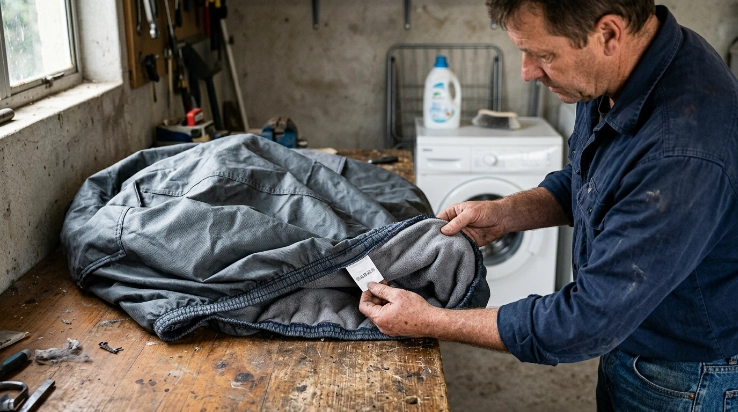
Yes. Material construction can change the acceptable cleaner, washing machine, water temperature, and drying method.
Check your exact model rather than relying only on broad labels such as “polyester” or “indoor cover.” Two polyester covers can have different coatings and care requirements.
| Cover type or example | Typical cleaning approach | Drying approach | Key caution |
|---|---|---|---|
| Covercraft indoor fabric | Mild detergent and water for spot cleaning; gentle machine wash if that fabric permits it | Dry completely; air drying is commonly recommended | Check the exact fabric instructions first |
| Covercraft Hero Covers | Cold water with little or no mild, non-harsh detergent | Follow the product’s permitted drying settings | Manufacturer states no bleach |
| WeatherTech outdoor custom-fit cover | Manufacturer specifies Simple Green solution and thorough rinsing | Air dry under its outdoor-cover instructions | Do not use a washer with a center agitator |
| Unknown or unlabeled cover | Start conservatively and identify the manufacturer before using stronger chemicals | Air dry fully | Avoid assuming bleach, heat, or machine washing is safe |
WeatherTech’s confirmed outdoor car-cover cleaning instructions, for example, specify a particular cleaner and warn against center-agitator washers. That is much more precise than generic fabric-cleaning advice.
That’s why I always look for the sewn-in tag or product model before washing. A few minutes of checking can prevent delamination, shrinking, damaged elastic, or lost water resistance.
How Should You Dry a Car Cover After Cleaning Mold?
Dry the car cover completely before folding, storing, or reinstalling it. Any retained moisture can recreate the same conditions that supported the original mold.
Air drying is the conservative choice when you’re uncertain. Spread or hang the cover where air can reach both sides without letting it drag across dirty ground.
Can you put a car cover in a dryer?
Only if the manufacturer permits it. Some covers tolerate specified dryer settings, while others rely on air drying to protect coatings, fit, seams, or elastic.
High heat is not a universal shortcut. Excess heat can change fit or damage materials that weren’t designed for tumble drying.
How do you know when the cover is fully dry?
- Check seams: Thick stitched areas often stay damp longer than open fabric.
- Feel the inner lining: Soft inner layers can retain moisture after the outside feels dry.
- Inspect elastic hems: Folded material around the edges can hide damp areas.
- Smell the cover: A remaining musty odor can indicate that more cleaning or drying is needed.
I usually give the seams and hem another check before folding. Those are the places where hidden moisture is easiest to miss.
How Do You Stop Mold From Coming Back?
Preventing another outbreak comes down to moisture control. Store only a clean, dry cover on a clean, dry vehicle, and correct repeated condensation or water entry around the storage area.
A cover can be clean today and moldy again later if the same damp conditions remain. The cleaning job isn’t finished until you’ve identified where the moisture came from.
Never cover a wet vehicle
Rainwater, wash water, and condensation can remain in mirrors, trim gaps, wheel areas, and body seams. Let the vehicle dry before installing the cover.
Do the same with the cover itself. Putting a slightly damp cover onto a dry car can still trap moisture.
Improve airflow around stored vehicles
Breathable cover materials allow moisture vapor to escape more easily than poorly ventilated materials. Covercraft notes that breathable fabrics can help reduce moisture buildup associated with mold and mildew.
Indoor storage conditions matter too. Damp garage floors, roof leaks, poor ventilation, and high humidity can keep the cover wet for long periods.
Keep the cover clean
Dirt buildup doesn’t only make a cover look bad. Contamination can hold moisture and interfere with some fabrics’ intended performance.
WeatherTech specifically notes that dirt buildup can affect its outdoor cover’s fabric performance. Regular cleaning is easier than trying to rescue a heavily contaminated cover.
Store it only when completely dry
Don’t stuff a damp cover into a sealed storage bag or trunk. Let it dry, fold it cleanly, and store it in a dry location.
As of 2026, this remains the simplest prevention rule across the manufacturer and mold-control guidance I reviewed: remove the moisture, not just the stain.
- Before installation: Make sure the car and cover are dry.
- After rain: Check for trapped moisture or condensation.
- Before storage: Dry the cover completely.
- During long-term storage: Periodically inspect the cover and vehicle.
- After repeat mold: Investigate leaks, humidity, ventilation, and cover suitability.
If growth returns quickly after proper washing and drying, the cover may be too contaminated or damaged to keep using. Replacement can make more sense than repeatedly exposing the vehicle and storage area to a moldy cover.
Section Takeaway: Mold prevention is mainly moisture management. Keep the vehicle, cover, and storage environment dry, and choose a breathable cover suited to where the car is parked.
Frequently Asked Questions
Can I wash a moldy car cover in a washing machine?
Yes, if the cover manufacturer permits machine washing. Use the required machine type, cycle, water temperature, and cleaner because oversized covers and coated fabrics can be damaged by the wrong washer or settings.
Can I use bleach to remove mold from a car cover?
Don’t use bleach unless your specific car-cover instructions say it is compatible. Some cover manufacturers explicitly prohibit bleach, even though diluted bleach appears in general guidance for certain hard household surfaces.
Will vinegar remove mold from a car cover?
Vinegar may be suggested in general household cleaning advice, but it isn’t automatically safe for automotive cover fabrics. Check the cover’s care instructions before applying vinegar, acids, disinfectants, or homemade cleaning mixtures.
Can I put the car cover back on while it’s slightly damp?
No. Allow both the car and cover to dry completely first. Reinstalling a damp cover can trap moisture against the vehicle and create conditions that encourage musty odors, mildew, and renewed mold growth.
Why does my car cover keep getting moldy?
Repeated mold usually points to recurring moisture. Common sources include covering a wet vehicle, storing a damp cover, garage humidity, condensation, leaks, poor ventilation, or using a cover that isn’t suitable for the storage environment.
Should I throw away a badly moldy car cover?
Replacement may be the better option when contamination remains after approved cleaning, odor keeps returning, the fabric is deteriorating, or the cover cannot be cleaned without violating its care instructions. Porous materials can be difficult to restore once contamination penetrates deeply.
How often should I clean a car cover?
There isn’t one safe interval for every cover. Clean it when dirt, stains, contamination, or manufacturer guidance calls for it, and inspect it regularly if the vehicle stays outdoors or in a humid storage space.
Cleaning mold off a car cover isn’t complicated when you start with the right rule: protect the cover’s fabric while removing the moisture problem. Use the manufacturer’s approved washing method, rinse thoroughly, and never reinstall the cover until everything is completely dry.
If mold keeps returning, stop focusing only on cleaner strength. Check the garage, condensation, cover breathability, drying habits, and the condition of the cover itself.