
Why Car Covers Fail: Common Causes and How to Prevent Them

Quick Answer
Car covers usually fail because they are dirty, poorly fitted, used in the wrong environment, allowed to flap in wind, or left over a damp vehicle. A good cover can protect paint, but only when the car and cover are clean, dry, breathable, and properly secured. Independent car cover testing from Car and Driver also highlights fit, moisture protection, durability, and correct indoor-versus-outdoor use as important considerations.
The most common reasons car covers fail
- Dirty surfaces: Dust or grit trapped between the cover and paint can contribute to scratches when the fabric moves.
- Loose fit: Wind can repeatedly move a loose cover against paint, trim, mirrors, and body edges.
- Trapped moisture: Covering a wet car or using poor ventilation can keep condensation against the vehicle.
- Wrong material: Lightweight indoor covers are not designed for the same weather exposure as outdoor covers.
- Weak attachment: An unsecured cover can lift, shift, stretch, or blow off in strong wind.
- Poor maintenance: A dirty, damaged, or improperly stored cover can become part of the problem.
Best first check
- Remove the cover and check whether the vehicle, inner cover surface, and storage area are clean and completely dry before using it again.
Why car covers fail usually comes down to something simple: the cover, the car, or the conditions are wrong for each other. I’ve found that owners often blame the fabric first, even when dirt, moisture, or movement is the real culprit.
A car cover should act as a protective barrier between your vehicle and dust, weather, bird droppings, tree debris, and other contaminants. This guide explains where that protection breaks down and what you can do about it.
In This Guide
What Does It Mean When a Car Cover Fails?
A car cover has failed when it no longer provides the protection you expected or starts creating a new problem. Failure can mean scratches, trapped moisture, torn fabric, poor weather resistance, or a cover that repeatedly moves off the vehicle.
Definition: A car cover is a fitted or semi-fitted protective layer designed to separate a parked vehicle from dust, environmental contamination, sunlight, moisture, or minor physical contact, depending on its construction and intended use.
The important point is that no single car cover protects equally well against every threat. An indoor dust cover and an outdoor weather cover solve different problems.
- Paint failure: You notice new scuffs, hazing, or fine marks after cover use.
- Moisture failure: The vehicle stays damp or develops condensation beneath the cover.
- Fit failure: Fabric shifts, balloons, or repeatedly pulls away from body panels.
- Material failure: Seams split, coatings deteriorate, or the fabric tears.
- Protection failure: Dust, rain, debris, or contamination reaches the vehicle despite the cover.
I start troubleshooting by separating the symptom from the assumed cause. A scratch does not automatically mean the fabric itself is abrasive.
Often, movement plus contamination creates the damage. That distinction matters because replacing the cover without changing the underlying habit may produce the same result again.
Why Do Car Covers Scratch Paint?
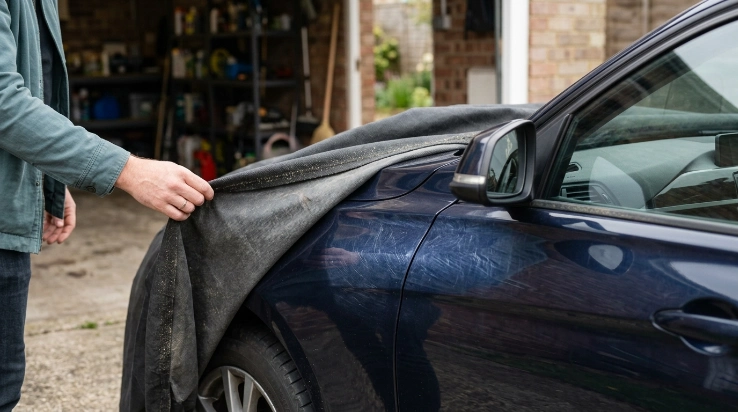
Car covers can contribute to paint scratches when dirt becomes trapped underneath and the cover moves across the surface. The risk rises when the vehicle is dusty, the inner fabric is contaminated, or wind keeps moving a loose cover.
Think about grit like extremely fine sandpaper. It may look harmless while sitting still, but repeated movement across clear coat can leave visible marks.
Dirty paint creates the first problem
Covering a visibly dusty car is one of the easiest mistakes to make. The cover presses loose contamination against the painted surface.
Edmunds’ vehicle washing guidance recommends removing loose dirt before contacting the paint because dragged contamination can contribute to scratches and swirls. The same principle applies before installing a cover.
- Rinse or wash significant dirt from the vehicle.
- Let the paint dry before covering it.
- Check lower doors and bumpers for road grit.
- Keep the cover’s inner surface off the ground.
A loose cover adds movement
A clean cover can still become a problem if it repeatedly rubs the same painted edge. Mirrors, fender peaks, spoilers, and sharp body lines often receive the most contact.
The fit should be snug without stretching the cover beyond its design. Excess loose material gives wind more fabric to move.
The inside of the cover also matters
One habit I watch for is placing the removed cover on a driveway or garage floor. The outside and inside surfaces can then collect grit before the cover goes back onto the car.
Fold or roll the cover so the clean inner surface stays protected. Store it in a dry bag or clean container when practical.
Section Takeaway: Paint damage is usually caused by the combination of contamination and movement, not simply by having fabric over the vehicle.
Why Do Car Covers Trap Moisture?
Car covers trap moisture when water gets beneath the fabric faster than it can escape. This often happens when you cover a wet vehicle, use a poorly ventilated material, or expose the car to repeated temperature and humidity changes.
A cover does not need to leak like a roof before moisture becomes noticeable. Condensation can form beneath it even when rain never directly reaches the paint.
Breathability and waterproofing are not the same thing
A useful outdoor cover needs to manage both outside water and moisture beneath the fabric. That balance is why breathability matters.
Consumer Reports has advised choosing a cover that can breathe so moisture does not build up underneath. Their guidance also recommends a soft lining to help protect paint.
You can review that Consumer Reports car-cover guidance when comparing materials.
Never cover a freshly wet car for storage
If practical, let rainwater or wash water evaporate before installing the cover. Pay attention to mirrors, trim gaps, door handles, and other areas that hold water longer.
- After washing: Dry the body before covering it.
- After rain: Give trapped water time to drain and evaporate.
- In a humid garage: Improve ventilation when possible.
- After finding condensation: Remove the cover and let both surfaces dry.
Moisture becomes more concerning when it stays trapped for long periods. Persistent dampness can also encourage musty odors or corrosion on susceptible exposed metal components.
Section Takeaway: A cover should manage moisture, not seal a damp vehicle inside a fabric shell.
Why Do Car Covers Blow Off or Wear Out?
Car covers usually blow off because they are too loose, incorrectly secured, or exposed to wind beyond their intended use. Repeated flapping also accelerates wear at seams, elastic hems, buckles, and vehicle contact points.
A cover that looks acceptable on a calm afternoon can behave completely differently during a storm. Wind pressure can get underneath loose sections and make the fabric act like a sail.
Fit is more important than many owners expect
Kelley Blue Book advises choosing a cover suited to the storage location and sized to fit snugly. It also warns that a loose cover can flap in the breeze and damage paint through abrasion.
See the broader Kelley Blue Book vehicle-storage guidance for its recommendations on long-term storage and cover security.
- Use the correct vehicle size or a properly designed fitted cover.
- Pull elastic hems into their intended positions.
- Use supplied straps according to the manufacturer’s directions.
- Check that buckles cannot strike painted surfaces.
- Inspect seams after periods of strong wind.
The wrong cover can wear quickly outdoors
A light indoor dust cover is usually made for a controlled space. It should not be expected to handle the same wind, rain, sun, and debris exposure as a purpose-built outdoor cover.
Ultraviolet exposure can also age materials over time. Fabric strength, elastic, coatings, and stitching can gradually deteriorate.
Once you see torn seams or failed attachment points, repair or replace the cover before depending on it during bad weather. A partially secured damaged cover can move more aggressively than a properly fitted one.
Which Car Covers Fail in Different Conditions?
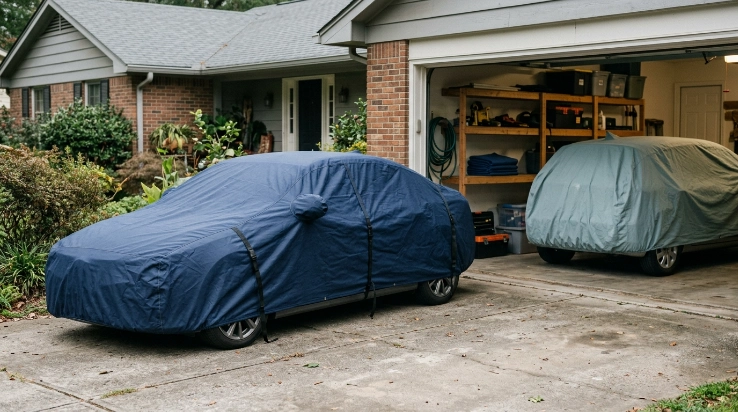
Car covers tend to fail when their design does not match the storage environment. Choosing by price alone can leave you with the wrong type of protection.
| Cover or Situation | Best Use | Common Failure | What Helps |
|---|---|---|---|
| Indoor dust cover | Garage or enclosed storage | Poor performance in wind or heavy weather | Keep it indoors and clean |
| Outdoor breathable cover | Routine outdoor parking | Movement if oversized or unsecured | Correct fit and secure attachments |
| Water-resistant cover | Moderate weather exposure | Water penetration during severe exposure | Match weather rating to conditions |
| Loose universal cover | Vehicles within specified size range | Flapping, shifting, exposed panels | Measure the vehicle and secure correctly |
| Fitted vehicle-specific cover | Frequent covering or storage | Damage if installed dirty or wet | Clean both car and cover before use |
Notice that even the better-fitting option can fail when installation habits are poor. No cover design eliminates the need for clean paint and correct handling.
You should also treat marketing terms carefully. Check the manufacturer’s instructions for outdoor use, breathability, washing, wind security, and storage rather than assuming every “all-weather” cover works the same way.
How Do You Stop a Car Cover From Failing?
You prevent most car cover failures by keeping the contact surfaces clean, matching the cover to the environment, controlling moisture, and minimizing movement. A short installation routine makes a major difference.
- Inspect the vehicle. Remove loose dirt, leaves, grit, and anything that could rub against the paint.
- Make sure the car is dry. Avoid sealing wash water, rain, or condensation beneath the cover.
- Check the cover. Look for dirty lining, torn seams, stretched elastic, and damaged straps.
- Install it carefully. Follow the cover manufacturer’s front-to-rear or rear-to-front installation method.
- Secure the fit. Use supplied straps, hems, or attachment systems correctly.
- Check after bad weather. Make sure the cover has not shifted, torn, or collected excessive water.
- Store it clean and dry. Keep the inner surface away from pavement, garage floors, and dirty shelves.
When should you replace a car cover?
Replace it when deterioration prevents proper fit or protection. Common warning signs include major tears, separated seams, failed elastic, damaged attachment points, or material that no longer performs as intended.
Don’t assume age alone determines replacement. A garage cover used occasionally may experience much less stress than one sitting outdoors every day.
What should you do if the cover already scratched the car?
First, stop using the cover until you identify the cause. Wash and inspect both the car and cover before deciding whether the cover itself needs replacement.
Light surface marks may sometimes be addressed through proper detailing, while deeper paint damage can require professional correction. Avoid aggressive polishing when you are unsure how much clear coat damage exists.
Mechanic Alert: If damage involves exposed metal, corrosion, electrical components, or anything beyond basic cosmetic care, have the vehicle inspected by a qualified automotive professional.
My simple rule is to treat a cover like a clean detailing tool. If I wouldn’t rub its inner surface across clean paint by hand, I don’t put it over the car.
Section Takeaway: Clean, dry, correctly fitted, and securely installed beats expensive but poorly used every time.
Frequently Asked Questions
Can a car cover damage your paint?
Yes, a car cover can contribute to paint damage when dirt is trapped underneath or when loose fabric repeatedly moves against the finish. Clean the vehicle and inner cover surface, then make sure the cover fits securely before reinstalling it.
Why is my car wet under a waterproof cover?
The moisture may be condensation rather than direct rain leakage. Humid air, a wet vehicle, temperature changes, or poor ventilation can leave moisture trapped beneath a cover even when the outer material resists water.
Should you put a car cover on a dirty car?
It is better to remove loose dirt first. Dust and grit trapped between fabric and paint can move when you install, remove, or expose the cover to wind, increasing the chance of surface marks.
Should a car cover be tight or loose?
A cover should fit securely according to its manufacturer’s design without excessive loose material. Too much slack can encourage wind movement, while forcing an undersized cover may overstress seams, elastic, mirrors, or attachment points.
Can you put a car cover on immediately after washing?
Wait until the vehicle is adequately dry. Water can remain around mirrors, trim, seals, handles, and panel gaps even after the main body appears dry, so give those areas extra attention before covering the car.
Are indoor car covers safe to use outside?
Indoor covers are generally designed around dust protection and gentler storage conditions. For outdoor use, choose a product specifically intended for weather, wind, moisture management, and the environmental exposure your vehicle will face.
How often should you wash a car cover?
There is no universal interval because usage and materials vary. Clean it when contamination builds up and follow its care label, since machine washing, detergent choice, drying methods, and other instructions differ among manufacturers.
The Bottom Line on Why Car Covers Fail
Most car cover failures are preventable. Dirt, wind movement, moisture, wrong materials, weak fit, and poor storage cause far more trouble than owners expect.
Start with a clean and dry vehicle, choose a cover designed for your storage environment, and secure it exactly as the manufacturer recommends. Then inspect it regularly instead of assuming it can stay untouched for months.
Used correctly, a car cover can be a useful layer of protection. Used carelessly, the same cover can trap the very contaminants and moisture you were trying to keep away.