
Car Cover Scratches Windshield: Causes, Fixes, and Prevention

Quick Answer
A car cover can scratch a windshield when dust, sand, grit, dirty fabric, or hard cover hardware moves across the glass. The safest response is to clean the windshield first, inspect the cover’s inner surface, and stop using any cover that repeatedly rubs the glass. For broader vehicle-safety information, you can also check NHTSA’s vehicle safety resources.
Most Likely Causes
- Trapped grit: Sand or road dust between the cover and windshield can become abrasive when the fabric moves.
- Wind movement: A loose cover can flap repeatedly across the same section of glass.
- Dirty lining: Debris stuck to the cover’s inner surface can drag across otherwise clean glass.
- Hard hardware: Buckles, clips, zippers, hooks, or straps can mark glass if they contact it during installation.
- Dragging removal: Pulling the cover across a dusty windshield increases friction and contamination movement.
Best First Step
- Wash and dry the glass, inspect the scratch under good lighting, and replace or clean the cover before using it again.
If you’re searching for why a car cover scratches windshield glass, the cover material may not be the only culprit. Dirt, wind, and installation technique usually matter just as much.
I’ve seen soft-looking covers cause marks because one gritty contact point kept moving over the same area. This guide explains how to identify the cause, prevent more damage, and decide what to do with scratches already present.
In This Guide
- Can a Car Cover Really Scratch a Windshield?
- Why Does a Car Cover Scratch Windshield Glass?
- How Can You Tell if the Cover Caused the Scratches?
- Can You Remove Car Cover Scratches From a Windshield?
- How Do You Prevent a Car Cover From Scratching Glass?
- When Should You Replace the Car Cover?
- Frequently Asked Questions
Can a Car Cover Really Scratch a Windshield?
Yes. A car cover can contribute to windshield scratches when abrasive contamination gets trapped between the fabric and glass.
The cover doesn’t need to feel rough. Even soft fabric can move a hard grain of sand across a windshield.
A windshield is automotive safety glazing designed to provide visibility while helping protect vehicle occupants. U.S. automotive glazing is subject to federal performance requirements, including FMVSS No. 205.
You can review general vehicle-safety information through NHTSA if you want more background on federal automotive safety standards.
Glass is hard, but it isn’t impossible to mark
Drivers sometimes assume glass cannot be scratched by anything associated with a fabric cover. That’s only true when the contact remains clean and controlled.
Contamination changes the situation. A cover can trap material picked up from roads, driveways, garages, trees, and storage floors.
- Sand: Small grains can become abrasive under pressure.
- Road grit: Dirty vehicles carry mineral particles and debris.
- Dried mud: Hardened contamination can be dragged across the glass.
- Dirty fabric: An older cover may hold particles in its fibers.
- Hard components: Clips and buckles can directly contact the windshield.
The repeated motion is what concerns me most. One contaminated spot moving back and forth overnight can create a visible line or haze.
Section Takeaway: A soft car cover does not guarantee scratch-free glass. Clean surfaces and controlled movement matter more than softness alone.
Why Does a Car Cover Scratch Windshield Glass?
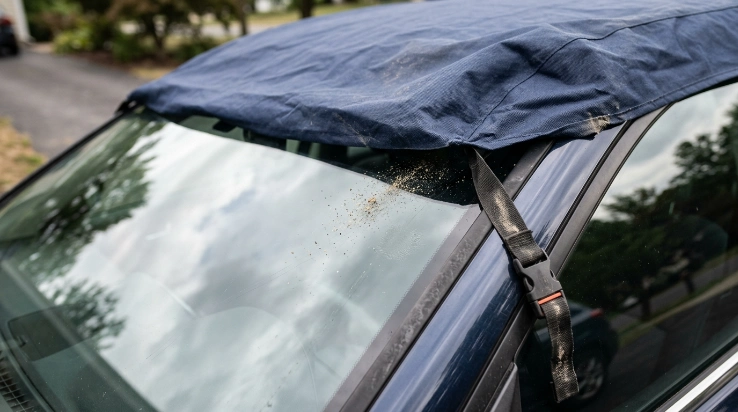
The most common causes are contamination, loose fit, wind movement, dirty fabric, and careless installation. Looking at the scratch pattern often helps narrow down which problem occurred.
| What You Notice | Likely Cause | What to Check |
|---|---|---|
| Long curved marks | Cover dragged during removal | Your removal technique and inner lining |
| Repeated marks near roof edge | Wind-driven movement | Cover fit, straps, and exposed fabric |
| Fine random scratches | Dust or grit | Windshield and cover cleanliness |
| One deep localized line | Hard object or hardware contact | Buckles, clips, hooks, seams, or trapped debris |
| Hazy rubbed area | Repeated contaminated contact | Loose fabric and dirty lining |
Wind can turn a small problem into repeated abrasion
A loose outdoor cover may lift and settle hundreds of times during changing wind. Raised areas around the windshield often become contact points.
That movement matters more when grit sits between the surfaces. The same particle can travel across one narrow path repeatedly.
Installation can cause scratches too
I prefer to place and unfold a cover instead of pulling it sideways across the car. Sliding fabric across dirty glass creates unnecessary contact.
Removal deserves the same care. Fold the material toward the center instead of dragging an entire dirty panel across the windshield.
- Do not throw metal buckles over the roof.
- Keep straps from whipping against the glass.
- Never let the inner lining touch the ground.
- Remove obvious grit before covering the vehicle.
- Avoid forcing a cover that is too small.
Section Takeaway: Windshield scratching normally requires contact plus an abrasive contaminant or hard object. Reducing both is the key to prevention.
How Can You Tell if the Cover Caused the Scratches?
Start by cleaning the windshield thoroughly and inspecting it under several lighting angles. Dirt, mineral deposits, wiper marks, and residue can resemble scratches.
Don’t assume the newest visible mark came from the cover. Windshield damage has several possible causes.
Look at where the marks appear
Cover-related marks often correspond with areas where fabric can move or hardware can touch. Pay special attention to the upper windshield and roofline.
- Upper edge: Look for cover movement near the roof transition.
- Windshield corners: Check for tension or loose fabric.
- Center glass: Inspect for debris dragged during installation.
- Near straps: Look for hard buckle or clip contact.
Compare them with wiper scratches
Wiper-related marks usually follow the sweep of the wiper blade. A trapped piece of grit under a blade can create an arc-shaped scratch.
Cover marks don’t necessarily follow that pattern. They may run downward, sideways, diagonally, or near the roof edge.
Clean before diagnosing
Use an automotive glass cleaner and clean microfiber towels. Current automotive-glass testing from Car and Driver also emphasizes products designed specifically for automotive glass.
Once the surface is clean, use a bright light from several angles. That makes shallow scratches easier to distinguish from stubborn residue.
Can You Remove Car Cover Scratches From a Windshield?
Some light surface marks may be improved through professional glass polishing. Deep scratches, chips, cracks, and optical distortion require more caution.
I wouldn’t start with aggressive polishing just because a line is visible. Windshield clarity matters more than chasing cosmetic perfection.
Start with the least aggressive inspection
- Wash the windshield. Remove loose dirt before touching the affected area.
- Dry it completely. Use clean microfiber towels.
- Inspect from inside and outside. Confirm which surface contains the mark.
- Use directional light. Sunlight or an inspection lamp can reveal its depth.
- Check visibility. Note whether the scratch creates glare or distortion while driving.
A mark that disappears when the windshield is wet may be shallow. That observation isn’t a guarantee that polishing is appropriate.
Be careful with DIY glass polishing
Glass-polishing compounds can remove or reduce some fine defects. Poor technique can also create uneven optical distortion or make the problem more noticeable.
Mechanic Alert: If a scratch is deep, obstructs your driving view, creates optical distortion, or sits near a chip or crack, have an automotive-glass professional inspect it instead of aggressively polishing it yourself.
NHTSA treats windshields as safety glazing because visibility and occupant protection matter. That is why I take damage in the driver’s viewing area more seriously than cosmetic marks elsewhere.
For estimating professional repair or comparing local repair options, Kelley Blue Book’s auto repair resources can also provide useful ownership context.
Section Takeaway: Clean and diagnose first. Don’t trade a minor scratch for distorted glass by using an aggressive polishing method without knowing the defect’s depth.
How Do You Prevent a Car Cover From Scratching Glass?
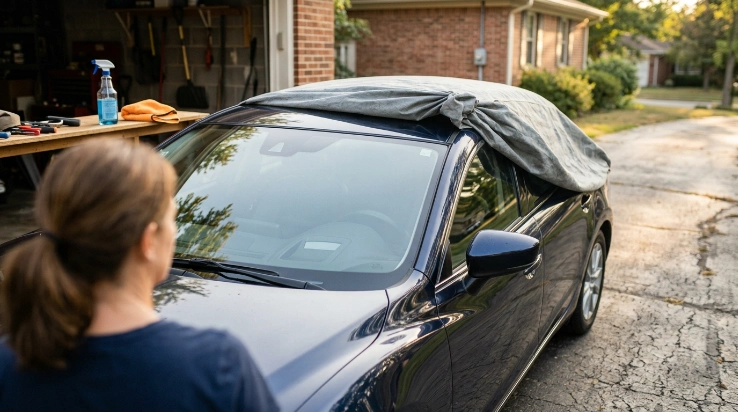
Keep the windshield and cover clean, minimize fabric movement, and install the cover without dragging it. Those three habits address most preventable causes.
Clean the vehicle before covering it
You don’t always need a full detailing session. You do need to avoid trapping obvious sand, road grit, dried mud, or heavy dust.
I use a simple rule. If I wouldn’t comfortably wipe the surface with a clean microfiber towel, I don’t want fabric moving over it either.
Keep the cover’s inside surface clean
The inner lining should never become the dirty side. That means keeping it away from pavement and dusty garage floors.
- Fold the cover while it’s still on the vehicle.
- Keep its inner surface folded inward.
- Store it in a clean bag or container.
- Wash it according to the manufacturer’s instructions.
- Let it dry completely before storage.
Control movement outdoors
A cover should fit the vehicle closely enough to prevent excessive flapping. It should not require hard stretching over mirrors or roof edges.
Use only the securing system intended for that cover. Improvised metal hooks or hard objects can introduce new damage risks.
Lift instead of drag
Dragging is one of the easiest habits to correct. Gather the cover toward the center and lift sections away from the glass.
That approach also helps prevent dirty exterior fabric from folding against the cleaner inner lining.
Inspect the windshield periodically
Outdoor conditions change. Wind, dust, pollen, construction debris, and storms can alter what sits under the cover.
During long-term storage, periodically check the cover and vehicle. Catching a dirty contact point early can prevent repeated rubbing.
Section Takeaway: The safest car-cover routine keeps both surfaces clean, limits movement, and avoids dragging contaminated material across the windshield.
When Should You Replace the Car Cover?
Replace a cover when it can no longer stay clean, secure, and appropriately fitted. Age alone isn’t the most useful measurement.
Condition tells you more. I would stop trusting a cover that has rough damage around the windshield area.
Warning signs your cover has become a risk
- Failed elastic: The cover constantly moves in light wind.
- Broken straps: It cannot remain properly secured.
- Rough seams: Hardened or damaged material touches glass or paint.
- Embedded debris: Grit remains trapped after cleaning.
- Torn fabric: Loose edges flap against the vehicle.
- Damaged hardware: Buckles or clips can contact the windshield.
- Wrong fit: Excess material repeatedly moves across the glass.
Don’t automatically assume a more expensive cover solves every problem. Correct fit and careful handling remain important at every price point.
When comparing vehicle-care decisions, Edmunds is another established resource for broader ownership and maintenance research.
Frequently Asked Questions
Can a soft car cover scratch a windshield?
Yes. A soft cover can still contribute to scratching if sand, dirt, or another abrasive contaminant sits between the fabric and glass. Cleanliness matters because the trapped particle, rather than the soft fabric itself, may create the mark.
Can wind make a car cover scratch the windshield?
Yes. Wind can repeatedly move loose fabric across the windshield and roof edge. If dirt is trapped underneath, that movement can increase abrasion. A properly fitted and secured cover reduces unnecessary movement.
Can a dirty car cover damage automotive glass?
It can. A dirty inner lining may hold grit, dried mud, or other debris. When those particles move against the glass during installation, removal, or wind exposure, scratches can develop.
Can windshield scratches be polished out?
Some shallow surface marks may respond to professional glass polishing. Deep scratches are more difficult, and aggressive polishing can affect optical clarity. Have significant damage in the driver’s viewing area inspected professionally.
Should I replace my windshield because of a scratch?
Not every scratch requires replacement. The decision depends on depth, location, visibility, glare, distortion, and whether other damage is present. An automotive-glass specialist can evaluate a serious scratch before you choose repair or replacement.
Should I wash my car every time before covering it?
A complete wash isn’t necessary before every installation when the vehicle remains clean. However, don’t put a cover over obvious grit, sand, dried road dirt, or heavy contamination that could move against the windshield or paint.
How should I remove a cover without scratching the windshield?
Release the securing points, fold the sides toward the roof, and gather the cover instead of dragging it across the glass. Keep the dirty exterior surface away from the cleaner inner lining during removal.
Final Takeaway
If a car cover scratches your windshield, don’t assume the fabric alone caused it. Trapped grit, wind movement, dirty lining, hard hardware, and dragging are more useful places to investigate.
Clean the glass first and inspect the damage carefully. Then clean, repair, refit, or replace the cover before putting it back on the vehicle.
If the scratch affects visibility, produces noticeable glare, or appears deep, get professional automotive-glass advice. Protecting clear driving vision matters more than trying an aggressive DIY cosmetic fix.