
Tree Sap on Car Cover: How to Remove It Without Damaging the Cover or Paint

Quick Answer
If you find tree sap on a car cover, remove the cover carefully so the contaminated area never folds against the vehicle. Rinse away loose debris, soften the sap with lukewarm water and a mild cleaner approved for the fabric, then gently blot or sponge the stain before rinsing thoroughly. Always check the cover manufacturer’s instructions first; Covercraft’s car cover cleaning guidance is a good example of why cleaning methods depend on the specific material.
Safest First Steps
- Remove carefully: Keep the sap-covered section away from the vehicle’s paint while taking the cover off.
- Rinse first: Use plain water to remove needles, dust, pollen, and other loose contamination.
- Soften, don’t scrape: Give hardened sap time to soften instead of attacking it with a blade or stiff brush.
- Use mild cleaner: Follow the cover maker’s recommended soap, detergent, water temperature, and washing method.
- Rinse completely: Cleaner and loosened sap should not remain embedded in the material.
- Dry before reuse: Never put a damp or still-sticky cover back onto clean paint.
One Important Rule
- Don’t assume a solvent that’s safe on automotive paint is also safe on your car-cover fabric or its water-resistant coating.
Tree sap on a car cover creates two problems at once. You need to clean the cover without spreading sticky residue onto the vehicle underneath.
I take a gentler approach with covers than I do with bare painted panels. Fabric coatings, laminated layers, soft linings, and water-resistant treatments can react badly to aggressive cleaners.
This 2026 guide covers fresh and hardened sap, hand cleaning, machine washing, drying, stain removal, and what to do before putting the cover back on your daily driver.
In This Guide
- Why Is Tree Sap on a Car Cover a Problem?
- How Do You Remove Tree Sap From a Car Cover?
- Does Fresh Sap Need Different Cleaning Than Dried Sap?
- Can You Machine Wash a Car Cover With Tree Sap on It?
- What Cleaners Should You Avoid on a Car Cover?
- How Do You Protect the Car After Cleaning the Cover?
- Tree Sap on Car Cover FAQs
Why Is Tree Sap on a Car Cover a Problem?
Tree sap becomes a problem because it can harden inside the cover fibers and collect dirt. If the contaminated fabric later touches or moves across paint, that combination can create staining or abrasion.
Tree sap on a car cover means resinous plant material has landed on and bonded to the cover’s exterior fabric. Fresh sap may stay tacky, while older sap can become hard and stubborn after exposure to heat and sunlight.
Why you should not leave the sap there
Sap doesn’t become harmless just because it landed on the cover instead of the vehicle. Sticky areas collect pollen, dust, tiny leaves, and airborne grit.
- Dirt accumulation: Sticky sap can hold abrasive contamination against the fabric.
- Fabric staining: Sap may leave discoloration even after the sticky material is removed.
- Water-repellent performance: Heavy contamination can interfere with how some cover fabrics shed water.
- Paint transfer: Folding the cover inward can bring sap or dirt into contact with the soft inner surface.
- Storage problems: Putting a dirty cover into a bag can spread contamination across a much larger area.
Cover manufacturers also warn that dirt between a cover and paint can contribute to scratching. Covercraft specifically recommends keeping both the vehicle and the cover clean to reduce that risk.
Can the sap get through the cover?
It depends on the cover construction and how much sap is present. A thick droplet on a multi-layer cover is different from liquid contamination soaking into a thin single-layer material.
Don’t assume that a visible spot on top means the underside is clean. Remove the cover and inspect both sides under good light.
My inspection rule: If I can feel tackiness, stiffness, oily residue, or embedded debris on the inner surface, that cover doesn’t go back onto the car until it’s clean and completely dry.
Section Takeaway: Tree sap is more than a cosmetic stain. The real concern is keeping hardened residue and trapped grit away from the paint-facing side of the cover.
How Do You Remove Tree Sap From a Car Cover?
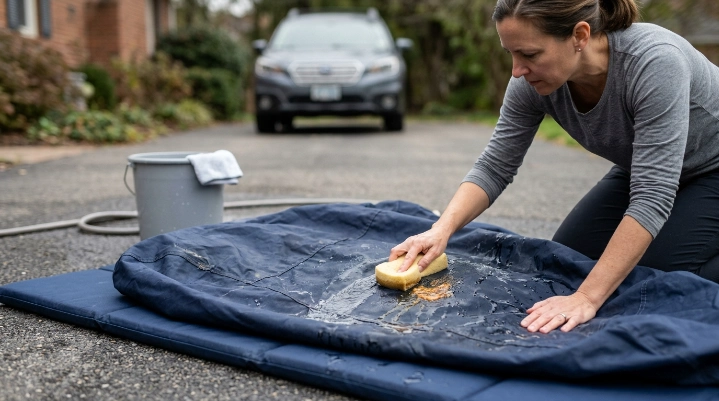
Start with water and the least aggressive fabric-safe cleaner. The goal is to soften and release the sap rather than scrub it deeper into the material.
Step 1: Remove the cover without transferring sap
Locate the contaminated section before pulling the cover from the vehicle. Keep that area folded outward so it doesn’t drag across the roof, hood, trunk, or glass.
Avoid throwing the cover onto pavement. Concrete and asphalt can load the fabric with grit that may later contact your paint.
Step 2: Remove loose debris
Shake off dry leaves and needles where practical. Then rinse the sap area with plain lukewarm or cool water.
This preliminary rinse matters because scrubbing dusty fabric can turn loose grit into an abrasive.
Step 3: Soften the tree sap
Wet the affected area and allow the water to soften surface contamination. For stubborn areas, apply the mild cleaner recommended by the cover manufacturer with a soft cloth or sponge.
- Keep the fabric wet while working.
- Use light pressure.
- Blot or gently work the cleaner into the stain.
- Give the sap time to release.
- Repeat instead of increasing scrubbing pressure.
Official Covercraft guidance for outdoor cover material recommends mild cleaning methods and warns against aggressive scrubbing on applicable products. Their instructions also emphasize thoroughly rinsing cleaning residue.
Step 4: Rinse until the fabric feels clean
Rinse the treated section with plenty of clean water. Sap residue can remain sticky even when the obvious dark spot disappears.
Run clean fingers gently over the wet exterior surface. If it still feels tacky, repeat the mild cleaning process before drying.
Step 5: Inspect the inside
Turn the affected portion over and inspect the paint-facing surface. Look for a darker patch, stiffness, sticky residue, or debris that appears to have migrated through the material.
Clean the inner surface only according to the manufacturer’s instructions. A soft lining deserves extra care because harsh brushing can damage its texture.
Step 6: Dry the cover fully
Drying instructions vary considerably between car-cover materials. Some covers are air-dry only, while manufacturers allow certain fabrics to use a dryer under specific settings.
That difference is why I always follow the sewn-in care label instead of using one universal drying rule.
Section Takeaway: Rinse first, soften the sap, use the approved cleaner, rinse thoroughly, inspect both sides, and follow the fabric-specific drying instructions.
Does Fresh Sap Need Different Cleaning Than Dried Sap?
Yes. Fresh sap normally needs less aggressive treatment, while hardened sap benefits from repeated soaking and patience.
The worst approach is treating a hardened deposit like dried mud and trying to scrape it away.
| Sap Condition | Best First Approach | Main Risk | What to Do Next |
|---|---|---|---|
| Fresh and sticky | Rinse and gently blot with approved mild cleaner | Smearing it across more fabric | Rinse and inspect both sides |
| Partly dried | Soak repeatedly before gentle cleaning | Grinding trapped grit into the fabric | Repeat the soak instead of scrubbing harder |
| Hard or baked-on | Longer wetting plus manufacturer-approved cleaner | Damaging coatings with solvents or scraping | Contact the cover manufacturer if it will not release |
| Transferred to inner lining | Stop using the cover and clean according to its care label | Sap or grit contacting vehicle paint | Reinstall only after the lining is clean and dry |
What if the sap already reached the car paint?
Treat the car and the cover as two separate cleaning jobs. A product safe for clear coat may still be inappropriate for coated polyester, polypropylene, flannel, or another cover material.
Consumer Reports’ tree-sap removal guidance recommends washing surrounding dirt away before working on sap stuck to automotive paint. It also stresses dealing with contamination sooner rather than later.
Manufacturer paint-care instructions available through NHTSA records use the same basic principle. One NHTSA-hosted manufacturer finish-care bulletin tells technicians to soften contamination and minimize rubbing rather than attacking the finish aggressively.
That guidance is for vehicle finishes, not car-cover fabric. I’m mentioning it because it reinforces why you shouldn’t drag contaminated material across paint.
Can You Machine Wash a Car Cover With Tree Sap on It?
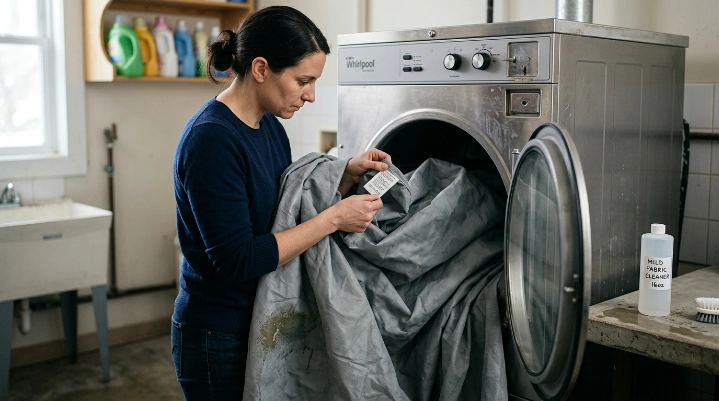
You can machine wash some car covers, but not every cover belongs in a household washing machine. Follow the exact fabric-specific instructions supplied by your cover manufacturer.
Machine type also matters. A large cover can overload a small washer and may require a large commercial machine.
Check these instructions before washing
- Machine type: Confirm whether your cover can use a household or commercial washer.
- Agitator restrictions: Some manufacturers prohibit certain center-agitator machines.
- Cleaner: Use only the type and amount approved for your fabric.
- Water temperature: Follow the label instead of assuming hot water is better.
- Cycle: Use the specified setting, often a gentler cycle when applicable.
- Rinsing: Follow any extra-rinse instructions from the manufacturer.
- Drying: Confirm whether air drying or machine drying is permitted.
Covercraft’s current care instructions demonstrate how specific these rules can be. Depending on fabric, its instructions specify different washing and drying methods and warn against fabric softener.
That is why blanket advice like “just throw it in the washer” isn’t good enough.
Should you remove the sap before machine washing?
I prefer to rinse and pre-treat a concentrated sap deposit first. That keeps a sticky lump from circulating through the rest of the cover during the wash.
Don’t pre-treat it with an unapproved stain remover. The cleaner itself may become harder to remove than the sap.
Important: Don’t machine dry a cover unless its manufacturer specifically allows that fabric to be machine dried. Heat can damage some cover materials, coatings, or laminated layers.
Section Takeaway: Machine washing can be safe when the care label allows it, but the correct machine, cleaner, rinse procedure, and drying method depend on the cover material.
What Cleaners Should You Avoid on a Car Cover?
Avoid improvising with strong solvents just because they remove tree sap from another surface. Automotive cover fabrics can contain coatings and laminates that household chemicals may damage.
Don’t reach for these first
- Gasoline or fuel: It creates unnecessary chemical and fire hazards.
- Paint thinner: Strong solvents can attack coatings, adhesives, and synthetic materials.
- Acetone: It is far too aggressive to use as a universal car-cover cleaner.
- Bleach: It may discolor or weaken materials unless a manufacturer specifically permits it.
- Fabric softener: Cover manufacturers such as Covercraft specifically prohibit it for their car covers.
- Abrasive powder: Granular cleaners can remain in fibers and create additional contamination.
- Stiff brushes: Aggressive brushing can damage fibers or surface treatments.
- Metal scrapers: They can cut, puncture, or permanently mark the cover.
What about rubbing alcohol?
Isopropyl alcohol is commonly discussed for sap on automotive paint, but don’t automatically transfer that method to a car cover. Synthetic fabric, water-resistant treatments, printed areas, adhesives, and laminated layers may respond differently.
For example, Kelley Blue Book discusses isopropyl alcohol specifically in the context of automotive paint. That does not make alcohol universally approved for car-cover materials.
If the manufacturer lists alcohol or a specialty solvent as acceptable, follow its directions. Otherwise, stay with the approved mild-cleaning method or contact the company.
Why stronger isn’t always better
The coating that makes an outdoor cover useful may be more sensitive than the base fabric. Removing one sap stain isn’t a win if the treated patch later absorbs water differently or becomes brittle.
I would rather repeat a mild wash twice than permanently alter a large section of an expensive fitted cover.
Section Takeaway: Paint-safe does not automatically mean fabric-safe. Use the cleaner approved for your exact cover material before experimenting with alcohol, degreasers, or solvents.
How Do You Protect the Car After Cleaning the Cover?
Don’t reinstall the cover immediately just because the visible sap is gone. Both the vehicle and cover should be clean, dry, and free of residue first.
Inspect the car before putting the cover back
- Check the roof, hood, trunk, mirrors, and glass for transferred sap.
- Wash away loose pollen and dust.
- Look for sticky or rough areas under bright light.
- Confirm that no sap remains around seams or cover contact points.
- Let the vehicle dry fully before covering it.
Pay particular attention to the panel directly below the contaminated part of the cover. A tiny transferred spot can be easy to miss until it hardens.
Inspect the cover one more time
Run your hand lightly over the dry exterior and lining. The fabric should not feel sticky, crusty, greasy, or unusually stiff.
Also check seams, elastic hems, mirror pockets, and folds. Contamination can migrate when a wet cover gets rolled or bunched together.
How can you prevent another sap problem?
- Avoid high-sap parking spots: Move away from trees that repeatedly drip resin when practical.
- Inspect frequently: Fresh contamination is easier to address than hardened buildup.
- Keep the cover clean: Periodic cleaning stops dirt and organic contamination from accumulating.
- Keep the car clean: Never intentionally trap grit underneath the cover.
- Store correctly: Fold the cover only when it is clean and dry.
- Follow the care label: Different cover materials need different maintenance.
There’s some irony here: a car cover is one of the simplest ways to keep sap off paint, yet the cover itself still requires maintenance. I treat it as a washable protective barrier, not a permanent roof.
Section Takeaway: A clean cover should only go onto a clean, dry vehicle. Regular inspection is much easier than dealing with hardened sap, embedded dirt, and paint contamination later.
Tree Sap on Car Cover FAQs
Can tree sap ruin a car cover?
Tree sap can stain a car cover and become embedded in its fabric, especially when left in heat for a long time. Whether it permanently damages the material depends on the cover construction, protective treatments, sap exposure, and cleaning method.
Should I let tree sap dry before cleaning the car cover?
No. Fresh contamination is generally easier to remove than hardened sap, so address it as soon as practical. Remove the cover carefully, rinse loose debris away, and follow the manufacturer’s cleaning instructions.
Can I scrape dried tree sap off a car cover?
Avoid sharp or metal scrapers. They can cut fibers, puncture thin material, or damage protective surface treatments, so soaking and gentle cleaning are safer first steps.
Can I put a sap-covered car cover in the washing machine?
Only if the manufacturer permits machine washing for your specific cover. Check the machine type, cycle, cleaner, water temperature, rinsing, and drying instructions before washing it.
Can I use rubbing alcohol on tree sap stuck to a car cover?
Don’t use rubbing alcohol unless the cover manufacturer approves it for that material. Alcohol may be used in some automotive paint-cleaning situations, but coated and laminated cover fabrics can respond differently.
Can I put the cover back on while it is slightly damp?
I wouldn’t. Let the cover and vehicle dry fully before reinstallation so you don’t trap unnecessary moisture between the fabric and vehicle surfaces.
What if tree sap went through the cover onto the paint?
Remove the cover and clean the vehicle separately using a paint-safe sap-removal method. Don’t rub the cover across the affected panel, because trapped grit or hardened residue can create additional marks.
Final Takeaway: What Should You Do With Tree Sap on a Car Cover?
The safest approach is simple: remove the cover carefully, rinse loose contamination away, soften the tree sap, and clean it using the method approved for that cover material. Don’t solve a small sap stain with a chemical that damages the fabric.
Once the cover is clean, inspect both sides and let it dry according to its care instructions. Check the vehicle for transferred sap before reinstalling it.
Most importantly, don’t let contaminated fabric sit against the paint. A car cover protects your vehicle best when both the cover and the car underneath stay clean.
