
Ice Under Car Cover: Causes, Risks, and Safe Removal

Quick Answer
Ice under a car cover usually forms when rain, melting snow, condensation, or other moisture becomes trapped between the cover and vehicle, then freezes as temperatures fall. Don’t yank a frozen cover from the paint or glass; allow it to thaw or loosen gradually, and follow basic winter vehicle safety guidance before driving.
Common reasons ice forms underneath
- Wet vehicle: The cover was installed before rainwater, snowmelt, or wash water dried.
- Condensation: Moist air became trapped beneath the cover and condensed on cold body panels.
- Wind-driven snow: Powder entered beneath loose edges and later melted and refroze.
- Poor ventilation: A cover that cannot release moisture keeps damp air against the vehicle longer.
- Freeze-thaw cycles: Daytime melting followed by overnight freezing can repeatedly bond the cover to the car.
What should you do?
- Don’t pull hard on a cover that feels frozen to the paint, windows, mirrors, or trim.
- Let natural warmth, a garage, or gentle vehicle-safe defrosting loosen the ice first.
Finding ice under a car cover can be alarming, especially when the fabric feels glued to the roof or windshield. The good news is that the ice itself usually isn’t the biggest threat.
The bigger risks come from trapped moisture, grit, road salt, and forcing the frozen cover away from the vehicle. Here’s how I’d handle the problem and prevent it from coming back.
In This Guide
Why Is There Ice Under My Car Cover?
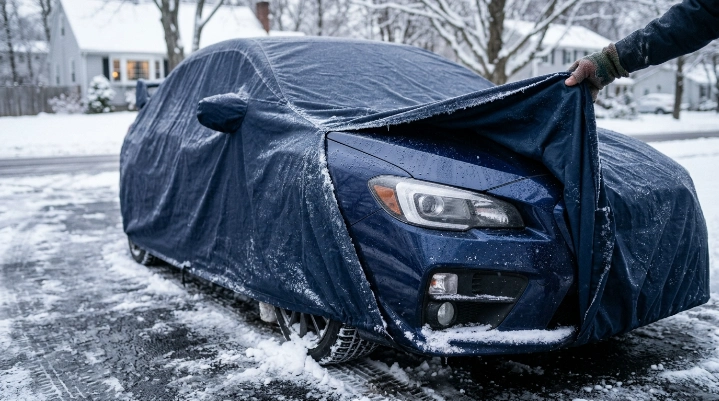
Ice gets under a car cover when moisture reaches the space between the cover and vehicle, then freezes. That moisture may come from the vehicle itself, the weather, or condensation.
Definition: Ice under a car cover is frozen moisture located between the cover material and the vehicle’s exterior surfaces.
Covering a wet car is the most obvious cause
If you install a cover while the paint is wet, you’ve already trapped the water needed to create ice. Overnight freezing temperatures can then turn that thin moisture layer solid.
- Rainwater: Water remains around trim, mirrors, seams, and body gaps.
- Snowmelt: A partially cleared vehicle may still carry water beneath loose snow.
- Car washes: Water often remains inside mirror housings, door gaps, and weatherstripping.
- Morning frost: Covering a frosty vehicle can trap moisture as temperatures change.
Condensation can form even when the car looked dry
Air beneath the cover contains water vapor. When warm, moist air meets colder sheet metal or glass, some moisture can condense into droplets.
A cover with limited moisture transfer may slow drying. Repeated freezing and thawing makes the problem more noticeable.
Snow can enter beneath loose edges
Wind can blow fine snow beneath an outdoor cover, especially around bumpers and wheel openings. That snow may melt during a warmer afternoon and freeze again overnight.
| What You Notice | Likely Cause | Best Response |
|---|---|---|
| Thin ice across roof or hood | Condensation or trapped surface moisture | Thaw before removing the cover |
| Cover frozen around lower edges | Snowmelt, puddling, or wind-driven snow | Free the perimeter gradually |
| Repeated dampness after cold nights | Poor ventilation or frequent freeze-thaw cycles | Dry the car and cover before reinstalling |
| Dirty frozen patches | Moisture mixed with road grime or salt | Thaw, rinse, dry, and inspect the paint |
Section Takeaway: Moisture is the root cause. Stopping water from becoming trapped beneath the cover is more effective than trying to fight the ice afterward.
Can Ice Under a Car Cover Damage the Paint?
A thin layer of ice normally doesn’t destroy healthy automotive clear coat by itself. Damage becomes more likely when dirt is trapped underneath or someone pulls a frozen cover across the paint.
A frozen cover shouldn’t be ripped loose
When fabric freezes to a wet surface, the bond can feel surprisingly strong. Pulling hard may drag grit across the clear coat or strain delicate cover seams.
- Paint: Dirt trapped beneath moving fabric can create fine scratches or swirl marks.
- Trim: Frozen edges can catch around badges, moldings, antennas, and spoilers.
- Mirrors: Tight covers can place unwanted force on mirror housings.
- Glass: Ice around windshield edges should be loosened rather than attacked with excessive force.
Salt and dirt matter more than clean frozen water
Winter roads can leave salt, sand, and abrasive grime on lower body panels. Covering the vehicle without cleaning it can trap those contaminants directly against the finish.
As the cover shifts in wind, that contamination can rub against the paint. A snug, clean cover on a clean vehicle reduces this risk.
Long-term moisture deserves attention
Persistent dampness can create water spotting and keep existing paint chips wet longer. Bare metal or already-damaged areas deserve closer inspection after the vehicle dries.
As of 2026, winter-care advice still centers on keeping the vehicle clean, maintaining visibility, and preparing the car for freezing conditions. Kelley Blue Book’s winterization checklist also emphasizes cold-weather maintenance before problems develop.
Section Takeaway: Don’t panic over clean ice alone. The combination of moisture, contamination, movement, and forced removal creates the greater paint risk.
How Do You Safely Remove a Frozen Car Cover?
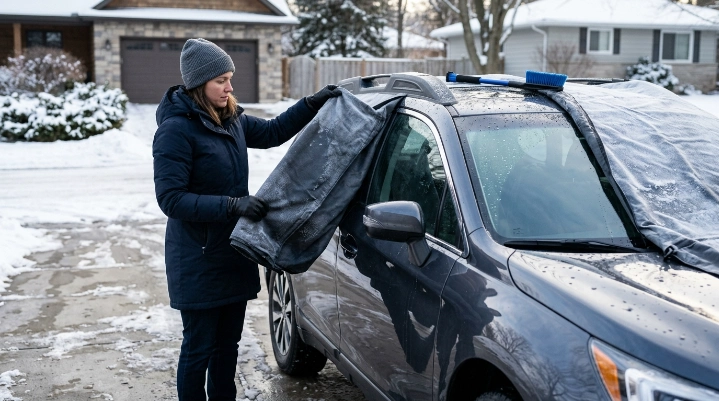
The safest method is to loosen the ice before moving the cover across the vehicle. Patience costs less than paint correction or torn cover material.
Use this removal sequence
- Check how firmly it’s frozen. Gently lift one loose corner without pulling across the paint.
- Remove loose snow. Brush snow from the top without grinding it into the cover.
- Move the vehicle into warmth if possible. A garage or warmer period can loosen the bond naturally.
- Wait for the ice to soften. Start at areas where the cover releases without resistance.
- Peel rather than drag. Lift the cover upward and fold it onto itself as sections become free.
- Dry everything afterward. Don’t reinstall a soaked cover on the vehicle before another freeze.
Don’t pour hot water over a frozen vehicle
Hot water isn’t my choice for freeing frozen glass or cover material. Rapid temperature changes can stress cold glass, while the extra water may simply freeze elsewhere.
A proper snow brush and scraper are better winter tools once the cover is removed. Car and Driver’s 2026 ice-scraper testing shows why purpose-built tools remain useful for clearing exposed glass and snow.
Remove the cover before starting or driving the car
Never drive with a vehicle cover attached. Clear the windshield, windows, mirrors, lights, sensors, roof, hood, and other obstructed areas before entering traffic.
Also make sure the exhaust outlet isn’t blocked by packed snow. Winter conditions demand a complete visibility and safety check before departure.
Mechanic Alert: If ice has damaged trim, wiring, sensors, glass, or another vehicle component, have a qualified technician inspect it rather than forcing or disassembling frozen parts.
How Do You Prevent Ice Under a Car Cover?
Start with a completely dry vehicle and a completely dry cover. That single habit prevents many cases of frozen cover material.
Dry the vehicle before covering it
My rule in freezing weather is simple: dry car, dry cover, clean contact surfaces. I pay extra attention to mirrors, roof channels, door seams, spoilers, and the base of the windshield.
A quick microfiber check helps. If a dry towel picks up visible moisture from the roof or hood, I’d give the car more drying time.
- After rain: Wait until standing water has drained and surfaces have dried.
- After washing: Dry panel gaps and mirror housings as well as the paint.
- After snow: Remove the snow and let remaining meltwater dry first.
- After using the cover: Dry the cover itself before folding or reinstalling it.
Keep the car clean before covering it
Winter grime can include salt, sand, mud, and road film. Placing a cover directly over that contamination creates an abrasive layer between fabric and paint.
When weather permits, clean and dry the vehicle before longer outdoor storage. This matters especially along rocker panels, bumpers, and wheel arches.
Secure the cover without making it overly tight
A cover should resist wind without constantly rubbing against the body. Use the manufacturer’s supplied straps or attachment system rather than improvised cords touching painted surfaces.
For broader cold-weather preparation, NHTSA recommends checking tires, battery condition, windshield equipment, coolant, lights, and other winter essentials. Its TireWise guidance is also useful because cold temperatures affect tire pressure and winter traction requirements.
Section Takeaway: Prevention comes down to three things: keep the car clean, keep both surfaces dry, and use a correctly fitted cover that can manage outdoor moisture.
What Type of Car Cover Is Best for Freezing Weather?
For outdoor winter storage, look for a cover designed to block precipitation while allowing trapped moisture to escape. Fit and construction matter as much as the waterproof claim on the package.
Look for weather resistance and moisture management
A cover needs protection from snow and rain without becoming a sealed plastic bag around the vehicle. Breathable or moisture-managing construction helps damp air escape when conditions allow.
- Weather-resistant outer layer: Helps keep snow and precipitation from soaking through quickly.
- Soft inner surface: Reduces harsh contact with clean paint.
- Secure fit: Limits wind movement and snow entering around the perimeter.
- Mirror and body fit: Reduces stress on protruding parts.
- Strong seams: Better withstand repeated outdoor exposure and handling.
Waterproof doesn’t mean moisture can never appear underneath
Even an effective outdoor cover cannot eliminate every source of moisture. Water may already be on the vehicle, enter from below, or appear through condensation.
That’s why storage technique matters. A premium cover installed over a wet, dirty car can still create trouble during a hard freeze.
A garage is better for long winter storage when available
Covered indoor storage reduces direct exposure to snow, freezing rain, and repeated freeze-thaw cycles. Kelley Blue Book’s winter survival guide likewise recommends covered parking or garage storage for extended winter storage when available.
If outdoor storage is your only option, inspect the vehicle after storms and temperature swings. Don’t leave a visibly saturated or ice-bound cover untouched for weeks.
Frequently Asked Questions
Why does my car cover freeze to my car?
Your car cover usually freezes to the vehicle because moisture sits between the fabric and the paint or glass when temperatures fall below freezing. The moisture may come from rain, snowmelt, washing, frost, or condensation trapped beneath the cover.
Should I pull a frozen car cover off?
No. If the cover resists gentle lifting, don’t yank or slide it forcefully across the paint. Allow the ice to soften naturally, move the vehicle into warmer shelter when practical, and lift released sections gradually rather than dragging them.
Can I use warm water to remove a frozen car cover?
I would avoid pouring hot water over frozen glass or body panels. The water can create more freezing, and sudden temperature changes are unnecessary when slower thawing works. Let warmth loosen the bond and use proper winter tools afterward.
Will a breathable car cover stop condensation?
A breathable cover can help moisture escape, but it cannot guarantee a completely dry space underneath. Condensation depends on temperature, humidity, airflow, and existing surface moisture, so the car and cover should still be dry before installation.
Should I cover my car before a snowstorm?
A suitable outdoor cover can make snow cleanup easier and reduce direct exposure, but only if the vehicle is clean and dry first. Secure the cover correctly, inspect it after severe weather, and never attempt to drive until the cover and accumulated snow are fully removed.
What if the cover is frozen around the wheels or ground?
Don’t pull the entire cover upward from one point. Free frozen perimeter sections individually as conditions warm, and remove packed snow around the edges. If fabric is embedded in thick ice, waiting for a thaw is safer than forcing it.
Final Takeaway
Ice under a car cover usually means moisture became trapped and froze. The fix isn’t aggressive scraping or pulling; it’s controlled thawing, gentle removal, and thorough drying.
Before the next freeze, clean the vehicle, let it dry completely, and make sure the cover is dry and correctly secured. Those simple habits do more to protect the finish than fighting a frozen cover after the temperature drops.
