
Frozen Car Cover: What to Do When It Freezes to Your Car

Quick Answer
If your car cover is frozen to the car, don’t pull, peel, or yank it loose. Let the ice thaw naturally or gently warm the vehicle with its normal defroster where appropriate, following NHTSA winter vehicle guidance before driving in freezing conditions.
What to do first
- Don’t force it: Pulling frozen fabric can drag ice and dirt across the paint or stress trim.
- Find the bond: Check whether only the edges are frozen or large sections are stuck.
- Allow thawing: Above-freezing air, sunlight, or a warmer sheltered location is usually the safest solution.
- Avoid hot water: Sudden heat can damage cold glass and may create more water that refreezes.
- Dry everything: Once removed, dry both the vehicle and cover before installing it again.
Before driving
- Remove the entire cover and clear snow or ice from windows, lights, roof, hood, mirrors, sensors, and other critical surfaces.
A frozen car cover can look like a simple winter inconvenience, but pulling it off the wrong way can create scratches, torn fabric, damaged trim, or a much bigger cleanup job.
My rule is simple: when a cover has bonded to a cold vehicle, I treat the ice as the problem rather than trying to overpower the cover.
In This Guide
- Why Does a Car Cover Freeze to a Car?
- How Do You Safely Remove a Frozen Car Cover?
- Can a Frozen Car Cover Damage Your Paint or Trim?
- How Do You Stop a Car Cover From Freezing to the Car?
- What Type of Car Cover Works Best in Snow and Ice?
- What Is the Safest Winter Car-Cover Routine?
- Frequently Asked Questions About Frozen Car Covers
Why Does a Car Cover Freeze to a Car?
A car cover usually freezes to a vehicle because moisture becomes trapped between the fabric and the body, then turns to ice as temperatures fall.
That moisture may come from rain, melted snow, condensation, washing the vehicle, or installing a damp cover.
Definition: A frozen car cover is a vehicle cover that has become temporarily bonded to paint, glass, trim, seals, or other surfaces by frozen moisture.
The problem often develops after temperatures swing above and below freezing. Snow melts during the warmer part of the day, works beneath the fabric, and freezes again overnight.
Condensation can freeze even without rain
A vehicle doesn’t need to sit through a snowstorm for this problem to happen. Moist air underneath the cover can condense on cold metal and glass.
If the temperature drops far enough, that thin water layer becomes ice.
- Wet vehicle: Water remains on the body before the cover goes on.
- Damp cover: Stored moisture transfers back to the vehicle.
- Melting snow: Liquid water works beneath hems and openings.
- Temperature swings: Daytime thawing followed by overnight freezing creates repeated ice bonds.
- Poor ventilation: Moisture takes longer to escape from beneath some covers.
Wind can make the problem worse
A loose cover can lift during a storm and allow snow or freezing rain underneath. It may then settle back onto the wet body.
When the temperature falls, those wet contact areas can freeze together.
Correct fit therefore matters in winter for more than keeping the cover from blowing away. Recent Car and Driver car-cover testing also highlights fit, secure fastening, outdoor construction, and soft inner surfaces as important cover characteristics.
How Do You Safely Remove a Frozen Car Cover?
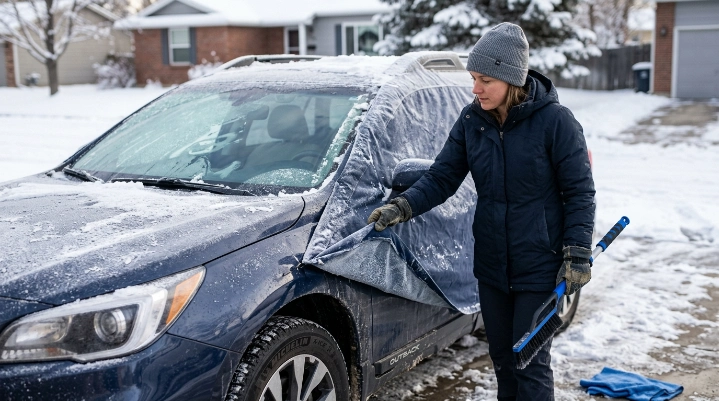
The safest method is to thaw the ice before trying to remove the cover. Avoid turning a frozen fabric problem into a paint, glass, or trim problem.
Start by checking how firmly the cover is attached.
Step 1: Test a loose edge gently
Find a corner or lower hem that isn’t under heavy tension. Lift it with light hand pressure only.
If the fabric separates easily, continue slowly. Stop immediately if you feel resistance from ice.
Step 2: Remove loose snow first
Brush loose snow from the top of the cover with a soft snow brush. Reducing the weight makes the cover easier to handle after it thaws.
Don’t hammer, strike, or aggressively scrape frozen fabric.
Step 3: Let the ice soften
Natural thawing is the lowest-risk solution. Sunlight, rising daytime temperatures, or moving the vehicle into a warmer sheltered location can help when that move is possible without removing the cover.
Give the ice time to release rather than repeatedly tugging at the same spot.
Step 4: Use the vehicle’s defrost system carefully
If the windshield area is involved and the vehicle can be safely started, normal defrost heat can gradually warm the glass from inside. Don’t activate frozen wipers until they move freely.
AAA specifically advises against pulling frozen wipers free and against using hot water on frozen glass because sudden temperature changes can crack the windshield.
Step 5: Peel only after the bond releases
Once the fabric feels flexible and lifts without resistance, fold it away from the vehicle in sections. Lift rather than dragging the material across the paint.
Look underneath as you work because small patches may remain frozen after larger areas release.
Step 6: Dry the car and cover
Don’t immediately reinstall a soaking wet cover. Shake away loose water, spread the cover where it can dry, and dry accessible vehicle surfaces.
Pay extra attention to mirrors, door seals, windshield edges, seams, emblems, spoilers, and other areas where water can collect.
- Safe: Patient thawing and gentle lifting.
- Usually safe: Normal vehicle defrost heat used as intended.
- Avoid: Yanking or peeling firmly bonded fabric.
- Avoid: Metal tools against the cover or vehicle.
- Avoid: Boiling or very hot water on cold glass.
- Avoid: Torches, heat guns, or concentrated high heat.
AAA’s windshield de-icing guidance also warns against hot water and concentrated heat because cold automotive glass can suffer thermal shock.
Section Takeaway: A frozen cover is safest to remove after the ice releases naturally. If you have to pull hard, it isn’t ready to come off.
Can a Frozen Car Cover Damage Your Paint or Trim?
The ice itself doesn’t automatically damage automotive paint, but removing a frozen cover incorrectly can. The biggest concern is abrasion, pulling force, or trapped contamination.
Dirt matters just as much as ice.
| What You Find | Likely Situation | Main Risk | Best Response |
|---|---|---|---|
| Loose frost on cover | Little or no bonding | Low if handled gently | Brush loose frost and lift carefully |
| Edges frozen to body | Water collected near hems | Paint rubbing or stretched fabric | Wait for edges to thaw |
| Large panel bonded | Moisture froze beneath fabric | Higher abrasion risk if pulled | Allow complete thawing |
| Grit visible underneath | Dirty car or contaminated cover | Fine scratches and swirl marks | Lift cover without dragging, then clean both surfaces |
| Cover stiff or brittle | Cold fabric or material aging | Tears, seam failure, trim stress | Warm and inspect before reuse |
Paint damage usually comes from movement
Imagine fine winter grit trapped between two surfaces. Dragging frozen fabric across that grit can create the same kind of abrasive contact you’d avoid when washing a dirty car.
A soft lining helps, but it doesn’t make trapped sand harmless.
Trim and accessories need special attention
Mirror caps, antennas, spoilers, badges, door handles, and other raised parts can catch the fabric. Frozen material has less flexibility, so forcing it over those areas can increase stress.
Take extra care with aftermarket accessories that create sharp corners or unusual contact points.
How Do You Stop a Car Cover From Freezing to the Car?
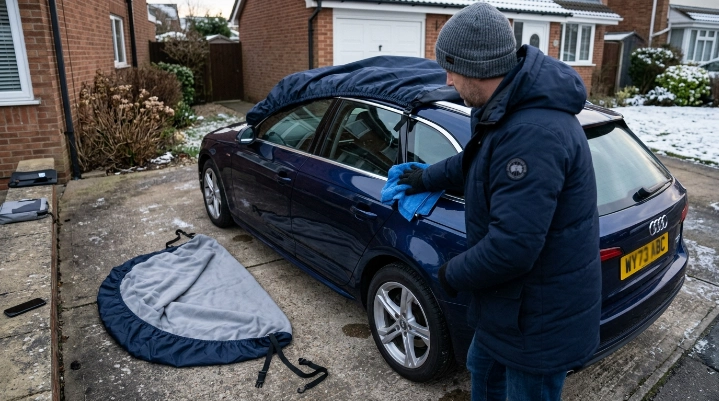
Prevention comes down to moisture, cleanliness, fit, and timing. Put the cover on under the driest conditions you can manage.
You can’t control winter weather, but you can reduce the amount of water trapped underneath.
Only cover a dry vehicle when possible
Installing a cover immediately after washing the car is risky in freezing weather. Water can remain around trim, panel gaps, mirrors, seals, and glass even when the paint looks dry.
Give those areas time to drain and dry before covering the vehicle.
Keep the inside of the cover clean
A cover dropped onto a wet, salty driveway can pick up debris immediately. That debris may end up directly against your paint the next time you install it.
- Fold inward: Keep the paint-facing side away from the ground.
- Store dry: Don’t pack a wet cover tightly into its storage bag.
- Inspect seams: Look for damaged areas where water can enter more easily.
- Clean as directed: Follow the cover manufacturer’s washing instructions.
- Check the lining: Replace a cover if the inner surface becomes rough or contaminated beyond cleaning.
Secure the cover before wind arrives
Wind can lift a loose edge and carry snow underneath. A correctly sized cover with working straps, elastic hems, or manufacturer-designed fastening points is easier to control.
Don’t improvise with cords that rub directly against painted panels.
Watch the freeze-thaw forecast
The troublesome weather pattern isn’t always the coldest night. Temperatures hovering around freezing can produce repeated melting and refreezing.
If wet snow or freezing rain is expected, inspect the cover once conditions improve instead of leaving trapped moisture untouched for days.
Don’t trap road salt under the cover
A daily driver may arrive home with salty slush around the rocker panels, bumpers, wheel openings, and lower body. Covering that contamination doesn’t remove it.
Consumer Reports’ winter salt guidance notes that road salt accelerates corrosion and recommends regular cleaning during snow season.
Section Takeaway: The best defense against a frozen car cover is a clean, dry vehicle paired with a clean, secure cover. Reducing moisture underneath stops the ice bond before it starts.
What Type of Car Cover Works Best in Snow and Ice?
A winter cover should be designed for outdoor weather, fit the vehicle closely, manage moisture, and stay secure in wind. A thin indoor dust cover isn’t built for the same conditions.
As of 2026, I would judge a winter cover by function rather than by the number of layers printed on the package.
- Correct fit: Excess fabric creates more movement and more places for snow to enter.
- Outdoor rating: Use material intended for rain, snow, wind, and temperature changes.
- Secure fastening: Straps or fitted hems help control movement during storms.
- Paint-friendly lining: The inner surface should be clean and smooth against finished bodywork.
- Moisture management: Look for construction designed to let trapped moisture escape rather than remain sealed against the vehicle.
- Strong seams: Winter wind and frozen fabric put additional stress on stitching.
Waterproof versus breathable isn’t a simple choice
Keeping precipitation out matters, but moisture can also originate underneath the cover. That’s why winter performance involves more than choosing the most water-resistant material.
The cover must suit your parking conditions and the manufacturer’s intended use.
Custom fit can be worth considering
A vehicle-specific or closely fitted cover usually leaves less loose fabric to flap around mirrors, bumpers, and corners. That’s useful during windy winter weather.
Universal covers can still work, but sizing deserves careful attention.
What Is the Safest Winter Car-Cover Routine?
A simple routine prevents most frozen-cover problems. Inspect the vehicle, weather, and cover every time rather than installing it automatically.
- Check the forecast. Pay attention to rain, wet snow, freezing rain, wind, and overnight temperature drops.
- Clean obvious contamination. Don’t seal heavy dirt, slush, or road salt against the vehicle.
- Let the car dry. Pay attention to mirrors, windshield edges, seals, and lower panels.
- Inspect the cover. Make sure its inner surface is clean and the material isn’t already wet.
- Install without dragging. Position the cover carefully over the vehicle.
- Secure it correctly. Use the fastening system supplied or recommended by the manufacturer.
- Inspect after severe weather. Check for displaced fabric, trapped snow, pooled water, or frozen sections.
- Thaw before removal. Never make force your first solution.
Before driving, remove all snow and ice that could block visibility or separate from the vehicle on the road. Kelley Blue Book’s winter driving guidance also stresses clearing the vehicle and preparing it before heading into snowy conditions.
Check headlights, taillights, mirrors, cameras, radar areas, and the windshield before leaving. A clean view matters more than saving a few minutes.
If the vehicle has been sitting through heavy snow, make sure the exhaust outlet isn’t blocked before prolonged engine operation.
Section Takeaway: Winter car-cover care works best as a routine, not an emergency fix. Dry installation, secure fit, regular inspection, and patient thawing solve most problems.
Frequently Asked Questions About Frozen Car Covers
Should I pull a frozen car cover off my car?
No. If the fabric is firmly bonded by ice, pulling it can drag frozen dirt across paint, tear the material, or stress trim.
Wait until the ice softens enough for the cover to lift with minimal resistance.
Can I pour hot water on a frozen car cover?
Avoid pouring hot or boiling water over a frozen vehicle, especially near glass. Rapid temperature changes can crack cold automotive glass, and the added water may simply refreeze elsewhere.
Can I use de-icer on the car cover?
Don’t spray a chemical de-icer onto the cover unless the cover manufacturer says that product is compatible with its fabric and coatings. Some chemicals may stain material, affect water resistance, or reach waxed and painted surfaces underneath.
Will a car cover prevent frost?
A cover can keep frost and ice from directly settling on some exterior surfaces, but it cannot guarantee a frost-free vehicle. Moisture beneath the fabric can still condense and freeze when temperatures drop.
Should I put a car cover on before snow?
A suitable outdoor cover can be useful before snow if the vehicle and cover are clean and dry. Secure it properly so wind doesn’t push snow or abrasive debris beneath loose sections.
Can I put a car cover on a wet car in winter?
It’s better to avoid it when freezing temperatures are expected. Trapped water can freeze between the vehicle and cover, while prolonged moisture may also create other storage problems.
What if only one corner of the cover is frozen?
Leave the frozen corner alone while removing only sections that lift freely. Once the bonded area thaws, lift it gently rather than using the loose part of the cover as leverage.
Is a garage better than a winter car cover?
A dry enclosed garage avoids direct snow, freezing rain, and most wind exposure, so it usually creates an easier storage environment. An outdoor cover remains useful when sheltered parking isn’t available, provided it’s designed and fitted for those conditions.
A frozen car cover doesn’t require aggressive tools or brute force. Most of the time, patience, thawing, and better moisture control are the safest fixes.
Before the next freeze, inspect your cover’s fit and condition, dry both surfaces, and secure the cover properly. Those small habits can save your paint, your cover, and a frustrating winter morning.
