
Outdoor Car Cover Problems: Causes, Damage, and Fixes

Quick Answer
The most common outdoor car cover problems are trapped moisture, paint scratches, wind flapping, poor fit, mildew, dirt transfer, torn seams, and water getting underneath. Most problems can be prevented by covering only a clean, dry vehicle and using a properly fitted cover designed for outdoor conditions, which is also emphasized in Car and Driver’s 2026 car cover testing.
Problems to check first
- Moisture underneath: Rain, condensation, or a damp vehicle can leave water trapped beneath the fabric.
- Paint marks: Dust or grit between the cover and paint can become abrasive when the fabric moves.
- Wind flapping: Excess material can repeatedly rub mirrors, fenders, roof edges, and body lines.
- Poor fit: Covers that are too loose can move, while overly tight covers may strain seams and trim.
- Mildew or odors: Damp covers and poor drying conditions encourage musty smells and material deterioration.
- Cover deterioration: Sun, weather, dirt, and repeated handling eventually weaken fabric, straps, elastic, and seams.
Best first move
- Remove the cover, let the vehicle and cover dry completely, inspect both surfaces for dirt or damage, and correct the fit before covering the car again.
An outdoor car cover looks like simple protection, but it can create its own problems when moisture, dirt, wind, or poor fit enter the picture. As of 2026, I still treat preparation and fit as more important than marketing terms printed on the cover package.
This guide explains the major outdoor car cover problems, how to identify their causes, and what you can do before minor issues turn into paint or body damage.
In This Guide
- What Outdoor Car Cover Problems Are Most Common?
- Why Does Moisture Build Up Under an Outdoor Car Cover?
- Can an Outdoor Car Cover Scratch or Damage Paint?
- Why Does an Outdoor Car Cover Flap, Tear, or Blow Off?
- Can an Outdoor Car Cover Cause Rust, Mildew, or Heat Problems?
- How Do You Prevent Outdoor Car Cover Problems?
- Frequently Asked Questions About Outdoor Car Cover Problems
What Outdoor Car Cover Problems Are Most Common?
Most outdoor car cover problems come from four things: moisture, contamination, movement, and incorrect fit. A cover can be good quality and still cause trouble when one of those conditions is wrong.
Definition: An outdoor car cover is a removable protective barrier designed to reduce a parked vehicle’s exposure to sunlight, rain, dust, bird droppings, tree debris, and other environmental contaminants.
The key word is reduce. A cover doesn’t turn an exposed driveway into a climate-controlled garage.
Outdoor car cover problem and cause comparison
| What You Notice | Likely Cause | Main Risk | First Check |
|---|---|---|---|
| Water droplets under cover | Condensation or trapped rain | Persistent dampness | Drying and ventilation |
| Fine marks on paint | Grit plus fabric movement | Swirls or scratches | Inside cover surface |
| Constant flapping | Loose fit or wind entry | Rubbing and seam stress | Sizing and fasteners |
| Musty smell | Cover stored or installed damp | Mildew and deterioration | Fabric dryness |
| Rain inside | Leaks, seams, or wind-driven water | Wet body panels | Fabric and seams |
| Cover lifting off | Weak fastening or oversized cover | Vehicle exposure and rubbing | Hem and straps |
When I inspect a cover setup, I don’t start by asking whether the fabric is expensive. I first look at what touches the paint and how much the material can move.
A soft cover loaded with sand can be worse than a basic cover that’s clean and secure. Condition matters every time.
Section Takeaway: Most outdoor car cover problems become easier to diagnose once you check moisture, dirt, movement, and fit separately.
Why Does Moisture Build Up Under an Outdoor Car Cover?
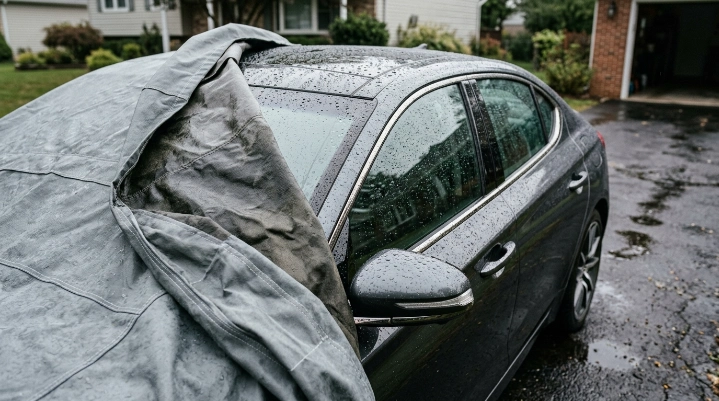
Moisture appears under a car cover when water or humid air gets beneath the fabric and doesn’t escape quickly. Rain isn’t the only possible source.
Condensation can develop even when the outside of the cover looks dry. Temperature changes can turn moisture in the surrounding air into droplets on cooler surfaces.
Common sources of trapped moisture
- Covering a wet car: Water remains around mirrors, trim, weather seals, badges, and panel gaps.
- Installing a damp cover: Moisture already inside the fabric becomes trapped against the vehicle.
- Condensation: Humid air underneath the cover cools and deposits moisture on the vehicle.
- Rain penetration: Water may pass through worn material, damaged seams, or openings around loose edges.
- Wind-driven rain: Strong wind can push water beneath a cover that would otherwise shed normal rainfall.
- Wet ground: Damp soil or standing water around the vehicle can increase humidity beneath and around the cover.
Waterproof does not automatically mean moisture-free
A cover that blocks rain from above still has to deal with moisture already beneath it. That’s why I look for an outdoor design that combines weather resistance with sensible moisture management.
A plastic sheet is a good example of the problem. It may block direct rain, yet it can also limit drying and fit poorly around the vehicle.
What should you do when the car is wet underneath?
- Remove the cover. Don’t leave the vehicle sealed in a damp environment.
- Let the car dry. Pay attention to mirrors, seams, door handles, trim, and recessed areas.
- Dry the cover separately. Make sure both inner and outer surfaces are dry before reuse.
- Inspect for leaks. Look at seams, tears, stretched fabric, and damaged coatings.
- Check the parking area. Persistent standing water or wet ground can make the problem return.
Don’t simply put a dry cover back onto a vehicle with visible water underneath. That restarts the same cycle.
Section Takeaway: A dry cover cannot solve a moisture problem if the vehicle, surrounding air, or parking surface is already wet.
Can an Outdoor Car Cover Scratch or Damage Paint?
Yes, a car cover can contribute to fine scratches when abrasive contamination becomes trapped between the fabric and paint. Movement then drags those particles across the finish.
The cover itself isn’t always the main offender. Sand, road grime, pollen, and dirty fabric often create the damaging combination.
Dirt turns normal movement into abrasion
Think about what happens when a dusty car sits under a moving cover. Every gust can shift contamination across the clear coat.
That’s why surface preparation matters. Consumer Reports’ car-washing guidance recommends removing loose dirt before making contact with the paint because debris can create scratches.
Where cover-related marks often appear
- Mirror housings: Fabric changes direction sharply around the mirror.
- Fender peaks: Raised body lines become repeated contact points.
- Hood corners: Loose material may slide across these areas during gusts.
- Roof edges: Wind can pull material tight and release it repeatedly.
- Spoilers: Added bodywork changes fit and may concentrate cover pressure.
- Bumpers: Loose hems can shift as wind enters from below.
Never drag the cover off a dirty car
Removal technique matters as much as installation. I prefer lifting and folding the material progressively rather than pulling the whole cover across the vehicle.
If the car has collected road film or grit since the cover was last removed, clean it before reinstalling the cover. Edmunds also recommends rinsing loose dirt and debris from paint before washing to reduce scratching risk.
You can review that principle in Edmunds’ vehicle washing guide.
What about wax or ceramic coatings?
Wax, sealant, or ceramic coating doesn’t make paint immune to physical abrasion. Dirt dragged across a protected finish can still leave visible marks.
Freshly applied products may also have manufacturer-specific drying or curing instructions. Follow those directions before letting a cover touch the surface.
Section Takeaway: The safest car-cover setup combines clean paint, a clean inner surface, controlled movement, and careful installation.
Why Does an Outdoor Car Cover Flap, Tear, or Blow Off?
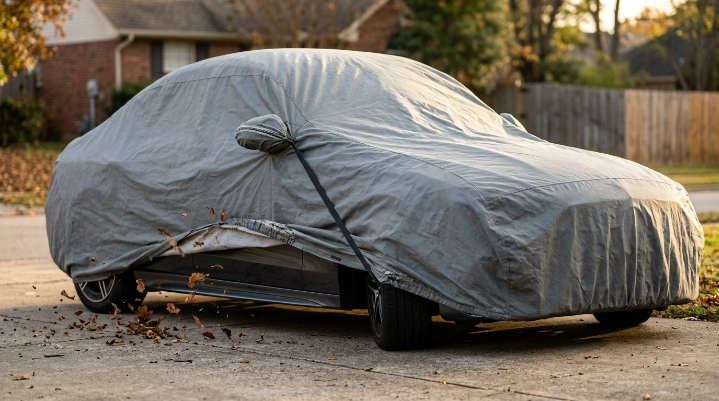
A cover usually flaps because wind can get underneath loose sections and create lift. Incorrect sizing, weak elastic, missing straps, and exposed parking locations make the problem worse.
A small amount of fabric movement may be unavoidable outdoors. Constant aggressive flapping is different.
A loose cover creates several problems at once
- Paint contact: Material repeatedly moves across the same body panels.
- Seam stress: Gusts pull against stitching and attachment points.
- Buckle stress: One loose side can transfer extra load to remaining fasteners.
- Debris entry: Open edges allow leaves, sand, dust, and other contamination underneath.
- Water entry: Wind can push rain beneath loose hems.
- Cover loss: A strong enough gust may lift an unsecured cover away from the vehicle.
Too tight is not ideal either
An undersized cover can pull hard across mirrors, antennas, spoilers, and other protruding parts. Stretching fabric beyond its intended fit can also strain seams.
You shouldn’t have to wrestle the cover into place. It should follow the vehicle’s shape without large loose sections or excessive tension.
Check accessories before choosing a size
Aftermarket equipment can change the dimensions the cover needs to accommodate. A roof rack, spoiler, external antenna, brush guard, or other accessory may affect fit.
Don’t assume a cover sized only by a generic label such as sedan, SUV, or truck will automatically fit correctly. Check the cover manufacturer’s measurements and vehicle application information.
What should you inspect after windy weather?
- Look for stretched or loose straps.
- Check plastic buckles for cracking.
- Inspect stitching around strap attachment points.
- Look for new holes or thin areas.
- Check whether elastic hems still grip.
- Inspect mirrors and body edges for rubbing.
- Remove any debris that entered underneath.
The first windy day after installing a new cover is a useful real-world fit check. If large sections balloon or whip across the body, I would correct the setup instead of accepting the movement.
Section Takeaway: A properly sized and secured cover should limit uncontrolled movement without being stretched tightly over the vehicle.
Can an Outdoor Car Cover Cause Rust, Mildew, or Heat Problems?
A car cover doesn’t directly create rust by itself, but persistent moisture can contribute to corrosion where exposed metal is vulnerable. The same damp conditions can also encourage mildew and unpleasant odors.
Heat is another consideration in strong sunlight. Cover material, color, airflow, and the surrounding environment all affect how the covered vehicle behaves.
Rust risk starts with moisture and exposed metal
Modern automotive paint and clear coat provide substantial protection, but chips and damaged areas can expose underlying material. Keeping road grime and corrosive contamination on those areas is not helpful.
Regular cleaning is important for that reason. Consumer Reports notes that road grit, salt, bird residue, and other contamination should be removed because buildup can contribute to paint damage and corrosion.
See its discussion of why regular vehicle washing matters.
Watch for mildew on the cover
A musty smell is a warning that the cover has spent too much time damp. Folding wet material into a storage bag makes the problem more likely.
Always dry the cover completely before storing it. Check thick seams, elastic hems, and folded edges because those areas may remain damp longer.
Sun exposure also ages the cover
Outdoor fabric works hard. Ultraviolet exposure, rain, wind, dirt, temperature changes, and repeated handling gradually affect materials and stitching.
Don’t judge a cover only by its age. Condition tells you more.
Signs your outdoor cover may be wearing out
- Fabric feels brittle, stiff, powdery, or unusually thin.
- Small tears appear near mirrors or sharp body contours.
- Seams begin separating.
- Elastic no longer holds the lower edge securely.
- Straps or buckles show damage.
- The inner surface becomes rough or contaminated.
- Rain starts entering areas that previously stayed protected.
- The cover fits more loosely than it once did.
A damaged outdoor cover isn’t automatically worth repairing. Replace it when deterioration prevents it from protecting the vehicle without creating new risks.
Section Takeaway: Moisture management and regular cover inspection matter because both the vehicle and protective fabric change with outdoor exposure.
How Do You Prevent Outdoor Car Cover Problems?
The best prevention routine is simple: start clean, start dry, get the fit right, and inspect the setup after changing weather. Those habits solve many problems before they become expensive.
Use this outdoor car cover checklist
- Clean visible contamination. Don’t install the cover over sand, mud, road salt, or heavy dust.
- Dry the vehicle. Check mirrors, trim, badges, handles, seals, and recessed areas.
- Inspect the inner fabric. Remove dirt, leaves, grit, or anything that could rub paint.
- Check the fit. Avoid large loose sections and excessive tension around accessories.
- Secure approved fasteners. Use the cover according to its manufacturer’s instructions.
- Watch the first windy period. Look for ballooning, flapping, or loose edges.
- Inspect after heavy rain. Check for water penetration and trapped condensation.
- Dry before storage. Never seal a wet cover inside its storage bag.
Choose the cover for the environment
| Parking Situation | Main Priorities | Common Mistake |
|---|---|---|
| Sheltered carport | Fit, moisture control, wind resistance | Ignoring wind-driven rain |
| Open driveway | Weather protection, secure fit, UV durability | Using an indoor-only cover |
| Under trees | Debris protection and frequent inspection | Leaving trapped leaves underneath |
| Long-term outdoor parking | Durable fabric, secure fit, regular checks | Installing it once and never inspecting it |
Know when not to cover the car
Sometimes waiting is safer than immediately installing the cover. Don’t use it simply because rain or dust is expected.
- The vehicle is still wet after washing or rain.
- The paint is covered with gritty road contamination.
- The cover itself is damp or dirty.
- Straps, seams, or elastic are damaged.
- The cover is visibly too large or too small.
- Weather conditions are exceeding what the cover manufacturer recommends.
- Fresh paint, wax, sealant, or coating has not completed its specified drying or curing period.
Keep the inside of the cover off the ground
I treat the inner surface almost like a large detailing towel. Once it touches gritty pavement, I don’t want that contamination transferred directly onto clean paint.
Fold or roll the cover in a controlled way during removal. Store it somewhere clean and completely dry.
Good paint-care products also need clean applicators and surfaces. Consumer Reports’ car wax guidance similarly warns that unsuitable or contaminated materials can scratch automotive finishes.
Section Takeaway: Clean surfaces, correct fit, secure fastening, and regular inspection are more important than assuming any cover can be installed and forgotten.
Frequently Asked Questions About Outdoor Car Cover Problems
Is it bad to leave a car covered outside all the time?
Not necessarily, but an outdoor cover still needs regular inspection. Remove it periodically to check for moisture, dirt, wind damage, strap wear, and contamination underneath rather than treating the cover as permanent unattended protection.
Should I put a car cover on when the car is wet?
No. Let the vehicle dry first whenever possible because installing a cover over wet paint can slow evaporation and keep moisture around body panels, trim, seals, and other hidden areas.
Can a waterproof car cover cause condensation?
Condensation can still occur beneath weather-resistant or waterproof material. Humid air trapped underneath may form droplets when temperatures change, so blocking rain alone doesn’t guarantee a completely dry environment.
Can wind make a car cover scratch the paint?
Yes. Wind can repeatedly move loose fabric across paint, especially around mirrors, roof edges, fenders, bumpers, and spoilers. Dirt between the cover and paint increases the risk because particles become abrasive during movement.
Should I wash my car every time before putting the cover on?
A full wash isn’t automatically necessary every time, but you shouldn’t cover visible grit, sand, mud, road salt, or heavy dust. The goal is to prevent abrasive contamination from becoming trapped against the paint.
Is a tight car cover better than a loose one?
The best fit is secure without excessive tension. A loose cover can flap and admit debris, while an undersized cover may pull against mirrors, trim, antennas, spoilers, seams, and other protruding areas.
How do I know when my outdoor car cover needs replacing?
Replace it when deterioration affects protection or fit. Warning signs include tears, brittle fabric, failed seams, damaged straps, weak elastic, rough inner material, persistent leaks, or uncontrolled movement that cannot be corrected.
Final Takeaway: Outdoor car cover problems usually aren’t caused by one feature alone. Moisture, dirt, poor fit, and wind tend to work together.
Before installing a cover, make sure the vehicle and fabric are clean and dry. Then check the fit after rain and wind so the cover stays a protective barrier instead of becoming another source of damage.
If you notice fresh scratches, active corrosion, damaged paint, or a cover that can no longer stay secure, stop using it until you’ve identified the cause. Protecting the finish is easier than repairing damage later.
“`
