
Car Cover on Waxed Car: Is It Safe After Waxing?

Quick Answer
Yes, you can put a car cover on a waxed car. However, the wax should be fully buffed, dry, and given any cure time listed by the wax maker before the cover touches the paint. I also make sure the car is cool, clean, and dry first. For broader paint-care advice, see Consumer Reports car-care guidance.
Before putting the cover on
- Buff the wax: Remove all haze and leftover product from the paint.
- Check cure instructions: Some waxes and sealants need extra time before anything touches them.
- Let it cool: Don’t cover paint that’s hot from sunlight or driving.
- Keep it dry: Don’t trap wash water, rain, or heavy condensation under the cover.
- Use a clean cover: Dirt on the inner surface can rub against your freshly detailed paint.
The simple rule
- If the paint still feels damp, oily, tacky, hot, or dusty, don’t put the cover on yet.
I like a freshly waxed car to stay looking fresh for as long as possible. A good cover can help, but putting it on at the wrong time can create the very marks you’re trying to prevent.
The key isn’t avoiding a cover after waxing. It’s making sure the wax, paint, and cover are ready before they touch.
Is It Safe to Put a Car Cover on a Waxed Car?
Yes. A properly used car cover and automotive wax can work together rather than against each other.
Wax creates a thin protective layer over your vehicle’s clear coat. The cover adds another barrier between the car and dust, sunlight, bird droppings, leaves, and other contaminants.
Simple definition: Automotive wax is a paint-protection product applied over the clear coat. A car cover is a removable fabric barrier placed over the vehicle while it’s parked.
The problem starts when the cover touches unfinished wax residue or contaminated paint. That can smear product or drag tiny dirt particles across the surface.
For general washing and waxing practices, Edmunds is also a useful automotive reference. One basic paint-care principle matters here: clean surfaces reduce the chance of rubbing contaminants into the finish.
Does a car cover remove wax?
A clean, paint-friendly cover shouldn’t simply strip a cured coat of wax from your car. Normal washing, weather exposure, and time gradually reduce wax protection anyway.
What worries me more is friction. A dirty or loose cover can move against the surface and create fine marks, regardless of whether the car is waxed.
Does waxing before covering help?
Waxing can add sacrificial protection between environmental contamination and the clear coat. That makes waxing before storage a sensible step for many glossy painted vehicles.
Just don’t treat wax as protection against poor cover habits. A gritty cover can still scratch a beautifully waxed finish.
How Long Should You Wait After Waxing?
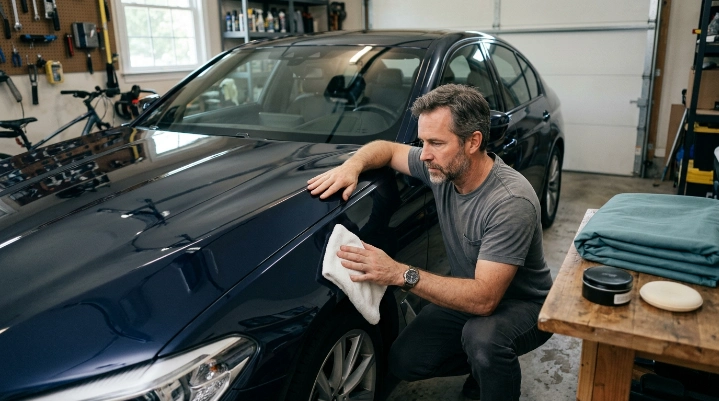
There isn’t one safe waiting time for every product. The wax manufacturer’s instructions should decide the cure time.
Some traditional waxes are ready after they haze and are completely buffed. Synthetic sealants, hybrid products, and ceramic-based protectants may have different curing requirements.
| Product | Before Covering | What I Check |
|---|---|---|
| Paste or liquid wax | Follow the label after buffing | No haze, smears, or oily residue |
| Spray wax | Allow it to flash and dry as directed | Surface feels clean and residue-free |
| Synthetic paint sealant | Observe its stated cure period | No moisture or unnecessary contact during curing |
| Ceramic spray or coating | Use the manufacturer’s specific cure instructions | Don’t assume normal wax timing applies |
| Freshly repainted vehicle | Ask the body shop first | Paint curing is different from wax curing |
Should you automatically wait 24 hours?
Not necessarily. I wouldn’t invent a 12-hour or 24-hour rule when the product maker gives different instructions.
If your wax label says to keep the surface dry or untouched for a set period, follow that direction. That’s more reliable than a generic internet number.
What if the wax has already been buffed?
Run a clean microfiber towel lightly over a small area. The surface should look even, dry, and free from greasy streaks.
Also check panel temperature. If the hood or roof feels hot, let the vehicle cool before covering it.
Section Takeaway: Don’t choose a waiting time by habit. Let the specific wax or paint-protection product determine when the car is ready.
Can a Car Cover Scratch Freshly Waxed Paint?
Yes, but the wax usually isn’t the cause. Scratches are more often linked to contamination, poor fit, or movement.
A car cover touching perfectly clean paint is much different from a cover sliding over road dust.
The biggest scratch risks
- Dust on the car: Fine grit can move between the fabric and paint.
- Dirty cover lining: Sand and debris can become trapped inside the fabric.
- Loose fit: Excess material can flap repeatedly in wind.
- Dragging during installation: Pulling a dirty cover sideways across paint increases friction.
- Wet surfaces: Moisture can carry dirt and keep contamination trapped against the vehicle.
Dark paint often makes fine swirl marks easier to see. That doesn’t mean lighter paint is immune.
My priority is always contact control. The cleaner the two surfaces are, the lower the chance of abrasive particles getting caught between them.
Can wax prevent cover scratches?
Wax adds protection, but it isn’t armor. Don’t expect a coat of wax to stop grit from producing marks under a moving cover.
Think of wax as one part of the system. Clean paint, soft material, secure fit, and careful handling matter just as much.
How Should You Cover a Freshly Waxed Car?
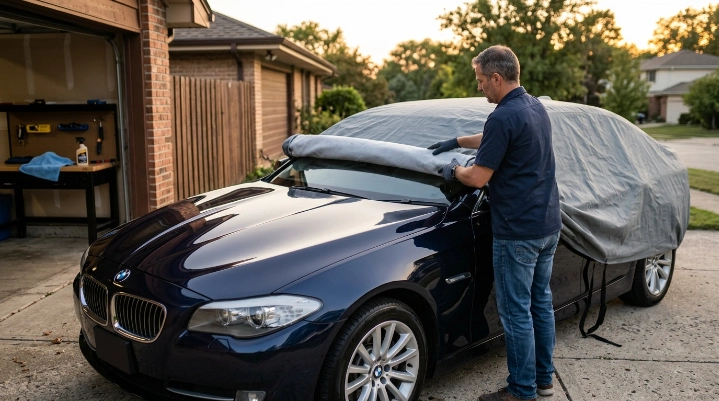
The safest routine is simple: finish the detailing work first, then make the cover your final step.
I avoid rushing this part. Five careful minutes can save far more time than correcting swirl marks later.
- Wash the vehicle if needed. Never trap road grit, mud, bird droppings, or salt under the fabric.
- Dry the car fully. Pay attention to mirrors, trim gaps, emblems, and other places that hold water.
- Apply the wax correctly. Work according to the product instructions instead of using one method for every formula.
- Buff away all residue. Check the hood and roof from several angles for streaks or haze.
- Respect the cure period. If the label specifies one, don’t shorten it just to get the cover installed.
- Let the vehicle cool. Avoid installing fabric over hot panels, exhaust parts, or a hot engine area.
- Inspect the cover. The vehicle-facing side should be clean and dry.
- Install without dragging. Center the material and carefully unfold or roll it over the vehicle.
- Secure an outdoor cover. Use its intended straps or fastening system so wind cannot make it flap.
Should you wash a waxed car every time before covering it?
If you’ve just driven through dust, rain, road spray, or mud, cleaning it first is safer. Covering visible contamination is asking the fabric to rub against it.
A clean garage-kept vehicle that hasn’t moved may only need a careful inspection. Use judgment instead of unnecessary washing.
Kelley Blue Book also provides general car-care information worth consulting when you’re choosing products for automotive paint.
Section Takeaway: A clean, cool, dry vehicle and a clean, secure cover are more important than simply having a fresh coat of wax.
Which Car Cover Is Best for Waxed Paint?
For waxed paint, I look first at the surface touching the vehicle. It should be clean, paint-friendly, and appropriate for where the car is stored.
Indoor and outdoor covers solve different problems.
| Feature | Indoor Cover | Outdoor Cover |
|---|---|---|
| Main job | Dust and light contact protection | Weather, UV, dust, and environmental exposure |
| Inner surface | Soft material is ideal | Should still be paint-friendly |
| Fit | Snug without excessive tension | Secure enough to limit wind movement |
| Breathability | Useful in changing garage humidity | Important where condensation may develop |
| Best use | Garage or enclosed storage | Driveway or exposed parking |
Is a custom-fit cover better?
A well-fitted cover can reduce excess fabric movement. That’s especially useful outdoors, where wind may get underneath loose material.
A universal cover can still work if the sizing is right and it’s secured correctly. The problem is a poor fit, not simply the word “universal.”
Should a car cover be waterproof?
I prefer to think in terms of weather resistance and moisture management instead of assuming more waterproofing is always better. Outdoor conditions can create moisture from rain, humidity, and condensation.
Use a cover designed for your storage environment, and follow its care instructions. A wet or dirty cover should be dried and cleaned before storage.
What If You Put the Car Cover on Too Soon After Waxing?
Don’t panic. Remove the cover carefully and inspect the finish under good light.
Most problems you’ll notice early are cosmetic, such as wax smears, uneven haze, or marks from residue.
What should you check?
- Wax smearing: Look for cloudy or oily-looking patches.
- Fabric marks: Check whether the cover left a visible pattern on the finish.
- Fine scratches: Inspect areas where loose fabric may have moved.
- Moisture: Look around mirrors, trim, roof channels, and lower body panels.
- Cover contamination: Check the inner surface before using it again.
If you only see wax residue, start with a clean microfiber towel and the product maker’s recommended finishing method. Don’t reach immediately for strong cleaners or solvents.
If the car became dirty under the cover, wash it with an automotive-safe product before rubbing the paint. NHTSA remains a useful general resource for vehicle-safety information, although detailing-product instructions should come from the product manufacturer.
Frequently Asked Questions
Can I put a car cover on immediately after waxing?
Only if the wax maker says the product is ready for contact. The wax should be completely buffed, residue-free, and dry. If the label specifies additional curing time, follow it before installing the cover.
Will a car cover ruin car wax?
A clean and suitable car cover shouldn’t automatically ruin cured wax. Problems are more likely when dirt, moisture, heat, or a loose cover creates unwanted contact with the paint.
How long after waxing can I cover my car?
There is no universal waiting period. Check the wax label. Traditional wax, synthetic sealant, hybrid protectant, and ceramic products can have different cure requirements, so avoid relying on one fixed number.
Can I cover my car if it is still slightly wet?
It’s better to let the vehicle dry first. Water can remain in trim gaps and may keep the area under the cover damp, especially when ventilation is limited.
Should I wax my car before long-term storage?
Waxing a clean, glossy painted vehicle before storage can add a temporary protective layer. Finish the wax process completely, let it cure as directed, and use a clean cover suited to the storage location.
Does a soft car cover prevent swirl marks?
Soft fabric helps, but cleanliness matters just as much. Even a soft liner can move abrasive dust across paint if the vehicle or inside of the cover is dirty.
Can I put a cover over newly painted car panels?
Fresh paint is different from freshly applied wax. Don’t assume the normal wax rule applies. Ask the body shop or painter when the specific paint system is cured enough for a cover.
Final Takeaway: You can safely use a car cover on a waxed car. Just let the wax finish or cure as directed, then make sure the paint and cover are clean, cool, dry, and free from grit.
As of 2026, that’s still the practical rule I would follow. Don’t rush the final five minutes after spending hours cleaning and waxing the car.
