
Ceramic Coated Car Under Cover: Is It Safe to Use a Car Cover?

Quick Answer
Yes, you can keep a ceramic coated car under cover, but only after the coating has cured according to its manufacturer’s instructions. The car and the inside of the cover must also be clean because trapped grit and cover movement can still create fine marks. If the coating is fresh, follow its cure instructions before letting fabric touch the paint; this ceramic coating overview from Car and Driver explains why curing matters.
The safest approach
- Wait for curing: Don’t assume a newly coated vehicle is ready for a cover immediately.
- Clean the paint: Never drag a cover across dust, pollen, sand, or road grime.
- Use soft fabric: Choose a smooth, paint-safe inner surface without rough seams.
- Get the right fit: A loose outdoor cover can move in wind and rub the finish.
- Keep it breathable: Outdoor covers should let trapped moisture escape instead of holding it against the car.
My simple rule
- If I wouldn’t wipe the paint with a clean microfiber towel in its current condition, I won’t put a cover over it either.
A ceramic coating makes car care easier, but it doesn’t make the paint impossible to scratch. That’s the part I pay the most attention to when deciding whether a ceramic coated car should stay under a cover.
As of 2026, my approach is simple. I use a cover only when the coating has cured, the surface is clean, and the cover can stay secure without rubbing the car.
In This Guide
- Can You Put a Car Cover on a Ceramic-Coated Car?
- When Is It Safe to Cover a Newly Ceramic-Coated Car?
- Can a Car Cover Scratch or Damage Ceramic Coating?
- What Type of Car Cover Is Best for a Ceramic-Coated Car?
- How Do You Cover a Ceramic-Coated Car Without Marring It?
- Is It Better to Leave a Ceramic-Coated Car Covered or Uncovered?
- Frequently Asked Questions
Can You Put a Car Cover on a Ceramic-Coated Car?
Yes. A fully cured ceramic coating and a suitable car cover can be used together. The important issue isn’t simply whether fabric touches the coating.
The bigger issue is what sits between that fabric and the paint. Dust, sand, pollen, and road film can turn harmless movement into abrasion.
Definition: A ceramic coating is a liquid protective product that bonds to the vehicle’s painted surface and forms a thin protective layer over the clear coat. It can improve water behavior, gloss, chemical resistance, and ease of cleaning, but it isn’t a thick physical shield.
- Ceramic coating: Helps protect the clear coat from contamination and makes cleaning easier.
- Car cover: Creates a physical barrier against dust, sun, bird droppings, pollen, and weather.
- Paint protection film: A thicker physical film designed for more impact and abrasion protection than ceramic coating alone.
I don’t treat ceramic coating as permission to drag anything across the car. That includes wash towels, drying towels, and especially a dusty cover.
A useful way to think about it is this: ceramic coating protects the surface, while good maintenance protects the ceramic coating.
Garage rule: If the vehicle picked up visible dust during the last drive, I clean it before installing a fitted cover. I never try to save time by rubbing a cover over contamination.
When Is It Safe to Cover a Newly Ceramic-Coated Car?
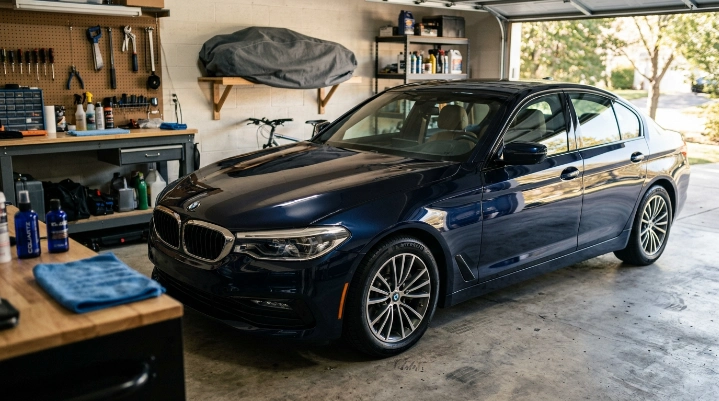
A new ceramic coating should remain untouched until it has completed the cure period specified by the coating maker or installer. Cure times vary, so the product instructions take priority over a generic number.
This is one area where I wouldn’t guess. A coating can feel dry before it has reached its intended final cure.
Why the first days matter
The coating needs time to bond and harden. Pressing fabric against it too soon can add unnecessary contact during its most sensitive period.
Professional and consumer coatings don’t all use the same chemistry. Some specify an initial dry period around a day, while complete curing may take several days or longer.
| Stage | Cover Approach | What I Would Do |
|---|---|---|
| Fresh application | Avoid fabric contact unless the coating maker specifically permits it | Keep the vehicle indoors and protected from contamination |
| Initial cure | Continue following installer or product restrictions | Avoid unnecessary touching, washing, or covering |
| Fully cured | A clean, soft, properly fitted cover can be used | Check both paint and cover for contamination first |
If a professional applied your coating, ask for the exact aftercare sheet. I keep that instruction ahead of any general advice because the installer knows which coating system was used.
Can a Car Cover Scratch or Damage Ceramic Coating?
Yes, a car cover can cause micro-marring when dirt gets trapped underneath or the fabric repeatedly moves across the surface. Ceramic coating reduces some risks, but it doesn’t make the paint scratch-proof.
The problem usually comes from friction plus contamination. A dirty cover can behave much like a dirty towel being moved across the hood.
The four risks I watch most closely
- Dust and grit: Small particles can become abrasive when pressure and movement are added.
- Wind movement: Loose outdoor covers can flap against corners, mirrors, fenders, and body lines.
- Rough material: Coarse fabric, seams, buckles, and dirty straps may create contact marks.
- Trapped moisture: A poor outdoor cover can hold dampness against the vehicle instead of letting it escape.
Covercraft gives similar advice in its guidance on preventing car-cover scratches. It points to dirt, debris, and loose movement as key causes of paint damage.
I pay special attention to dark paint. Fine swirls and light marring can become much easier to see under direct sun or bright garage lighting.
Important: Don’t wipe dust off a ceramic-coated car with a dry towel just because you want to put the cover on. Clean the surface safely or leave it uncovered until you can.
What Type of Car Cover Is Best for a Ceramic-Coated Car?
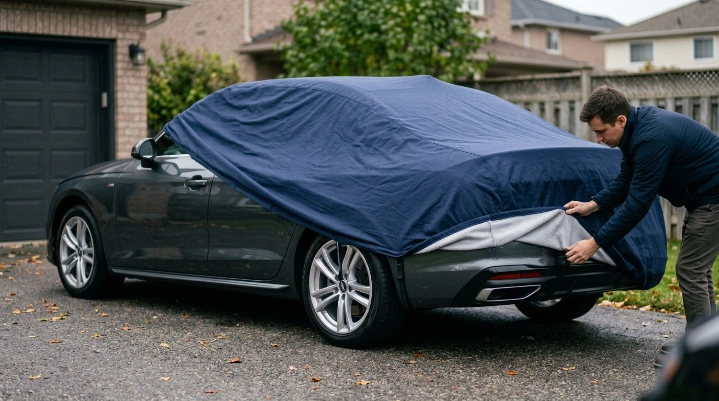
The best car cover for ceramic coated paint has a soft inner surface, correct fit, clean construction, and the right material for where the car is stored. Indoor and outdoor covers solve different problems.
I usually choose fit before extra features. A soft cover isn’t much help outdoors if it constantly slides across the body in wind.
| Cover Type | Best Use | Main Concern |
|---|---|---|
| Soft fitted indoor cover | Clean garage storage | Dust trapped under the fabric |
| Breathable fitted outdoor cover | Outdoor parking and weather exposure | Wind movement and moisture |
| Loose universal cover | Occasional temporary protection | Extra movement against paint |
| Non-breathable plastic sheet | Limited short-term uses only | Moisture and poor fit |
Current 2026 car-cover testing from Car and Driver also highlights fit, soft undersides, weather protection, and secure fastening as meaningful differences between covers.
Features worth looking for
- Soft inner face: The material touching the paint should feel smooth and non-abrasive.
- Model-appropriate sizing: Less excess material means less movement.
- Secure hems or straps: Outdoor covers need to stay controlled during wind.
- Breathability: Moisture should be able to escape.
- Clean storage bag: The cover needs protection from garage-floor dirt when removed.
I also check seams and fasteners with my hand before first use. Anything sharp or rough enough to worry me gets kept away from the paint.
How Do You Cover a Ceramic-Coated Car Without Marring It?
Start with a clean, dry car and a clean cover. Then install the cover with as little sliding across the paint as possible.
I treat installation more like placing a clean towel than dragging a blanket. Controlled contact is the goal.
My step-by-step routine
- Check the coating first. Make sure the required curing period has passed.
- Inspect the paint. Look for dust, pollen, sand, insects, bird droppings, or damp spots.
- Inspect the cover. Check the inside for grit, leaves, dirt, or dried debris.
- Find the front and rear. Don’t spin a cover around on the vehicle while trying to orient it.
- Place it gently. Position the cover over the roof area and work outward without dragging it unnecessarily.
- Fit mirrors carefully. Don’t force tight pockets over mirrors or sharp body edges.
- Secure the cover. Use the intended fastening system so wind can’t turn it into moving sandpaper.
Removal deserves the same care. I fold the cover inward as it comes off so the potentially dirty outer surface doesn’t touch the clean inner lining.
Once removed, I store it somewhere dry and clean. Tossing a paint-safe cover onto a dusty garage floor defeats the whole purpose.
For broader washing and detailing information, the Car and Driver car-cleaning section is also useful when building a low-contact maintenance routine for coated paint.
What if the car is dusty?
Don’t install the cover just to hide the dust. The cover can move those particles across the surface each time it shifts.
If the car needs cleaning, use the wash method recommended by your coating manufacturer. For heavy dirt, I prefer a proper wash rather than trying to wipe contamination away dry.
Is It Better to Leave a Ceramic-Coated Car Covered or Uncovered?
It depends on where the car is parked. A clean garage and a dusty outdoor driveway create completely different risks.
I don’t use a cover automatically. I first ask what problem the cover needs to solve.
- Clean indoor garage: A fitted indoor cover can help keep dust off a vehicle stored for longer periods.
- Daily indoor parking: Leaving the car uncovered can make more sense if constant cover removal would add unnecessary contact.
- Outdoor sun: A suitable outdoor cover can reduce direct environmental exposure while parked.
- Windy outdoor area: Cover fit and fastening become critical because movement raises abrasion risk.
- Dirty daily driver: Repeatedly covering road grime is usually a poor idea.
A ceramic coating already makes a vehicle easier to clean. For a daily driver that moves every day, I often prefer good washing habits over repeatedly installing and removing a cover.
Long-term storage is different. A clean, fully cured car under a properly fitted indoor cover can make good sense because the cover may stay undisturbed for weeks.
My decision test: Use the cover when it removes more risk than it creates. If installing it means rubbing fabric over a dirty car twice every day, leaving the vehicle uncovered may be the safer choice.
Frequently Asked Questions
Can I put a cover on my car right after ceramic coating?
Don’t cover a newly ceramic-coated car until the coating manufacturer or installer says the required cure period has passed. Different coatings cure at different rates, so the instructions for your exact product matter more than a universal waiting period.
Will a car cover remove ceramic coating?
A clean, soft, well-fitted cover shouldn’t simply strip a fully cured coating away. However, repeated rubbing with trapped grit can abrade the surface, create marring, and shorten the useful life of the coating in affected areas.
Does ceramic coating stop car-cover scratches?
No. Ceramic coating isn’t scratch-proof. Dirt trapped under a moving cover can still create fine marks, especially when the cover shifts repeatedly in wind or is dragged across dusty paint.
Should a ceramic-coated car be covered indoors?
It can be useful during longer indoor storage because a soft fitted cover helps keep dust off. For a car driven every day, frequent installation and removal may create more paint contact than necessary.
Can I put a car cover over a wet ceramic-coated car?
I avoid it. Let the car dry before covering it unless the cover manufacturer specifically provides different guidance. Trapping water can encourage spotting, dampness, and contamination between the cover and the vehicle.
Is a breathable cover better for a ceramic-coated car?
Breathability matters most outdoors because moisture needs a path to escape. The cover should still provide suitable weather protection, fit securely, and have a soft surface where it contacts the vehicle.
Do I need a special ceramic-coating car cover?
You don’t need a cover simply because the car has ceramic coating. What matters is a paint-safe inner surface, proper sizing, clean fabric, suitable weather protection, and secure installation.
The main takeaway is simple: keeping a ceramic coated car under cover can work well, but cleanliness and fit matter more than the word “ceramic” on the paint.
Let the coating cure first. Keep both surfaces clean, stop the cover from moving, and don’t expect ceramic protection to make careless contact harmless.
If the car is a daily driver, choose the option that creates the least unnecessary paint contact. For storage, a clean and properly fitted cover can be a useful second layer of protection.
