
Folded Car Cover Damage: What Causes It and How to Prevent It

Quick Answer
Folding a car cover normally does not damage your vehicle or the cover. Problems start when dirt, moisture, sharp creases, or debris get trapped in the folds and later rub against the paint. Covercraft’s paint-safety guidance also warns that trapped debris and cover movement can lead to scratches.
What usually causes damage?
- Trapped grit: Dust or sand inside the folded cover can rub against the clear coat.
- Stored moisture: Folding a damp cover can encourage odors, mildew, stains, and material deterioration.
- Dirty lining: Contamination on the soft inner surface can be transferred back onto the vehicle.
- Dragging: Pulling the cover across concrete can load the fabric with abrasive particles.
- Forced folds: Crushing a stiff or specialty cover into a tiny bag can stress coatings, seams, or padded sections.
The safest routine
- Keep the cover clean and completely dry, fold the sides inward while it is still on the car, then roll or fold it without letting the inner surface touch the ground.
If you’re worried about folded car cover damage, the fold itself usually isn’t the problem. How the cover is removed, cleaned, folded, and stored matters much more.
I treat a car cover like a large detailing towel. Once the paint-side surface picks up grit, I don’t want that grit touching the vehicle again.
In This Guide
Does Folding a Car Cover Damage It?
No. A normal fabric car cover is designed to be removed, folded or rolled, and stored between uses.
The real risk comes from what gets folded into the cover. Dirt, moisture, chemicals, and sharp debris can remain hidden until the cover goes back onto the vehicle.
Folded car cover damage is damage to the cover or vehicle caused during removal, folding, storage, or later reuse. It can include paint marring, contaminated lining, mildew, weakened coatings, torn seams, or permanent deformation in some specialty covers.
Normal folds are not the same as damaging creases
Soft polyester, woven, and multilayer fabric covers normally tolerate ordinary folding. The manufacturer’s care instructions should still take priority.
A problem is more likely when a cover gets twisted, crushed under heavy objects, or forced into a bag that is too small. Specialty padded and hail-resistant covers may need more room.
- Loose folds: Usually harmless for common fabric covers.
- Rolling: Often reduces hard crease lines and makes installation easier.
- Tight compression: Can place unnecessary stress on thick layers and seams.
- Folding while wet: Creates a bigger concern than the fold itself.
- Folding while dirty: Can trap abrasives against the inner lining.
One useful clue comes from Coverking’s installation and care instructions. Its removal method tells owners to fold the sides onto the vehicle and then roll the cover for storage.
That approach also solves another problem. The paint-facing side stays away from dirty pavement.
Section Takeaway: Folding is normal. Contamination, moisture, excessive compression, and rough handling are the bigger risks.
What Causes Folded Car Cover Damage?
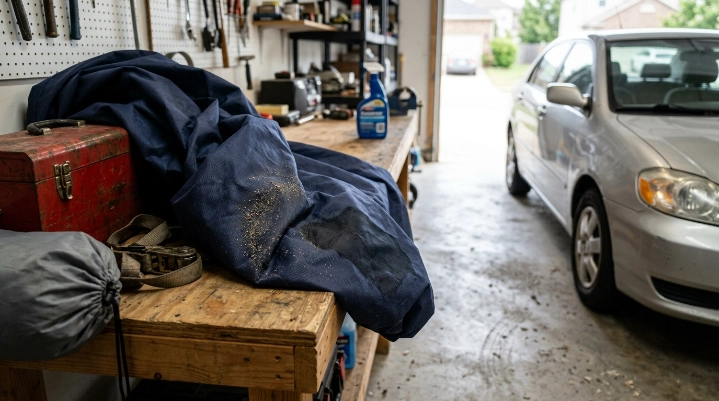
The most common causes are easy to prevent. I focus first on dirt and water because those can create problems for both the cover and the paint.
Dirt trapped inside the folds
Imagine removing a cover after several dusty days. The outside may contain sand, pollen, road dust, leaves, or other particles.
If you drop the cover onto a driveway and bunch it together, some of that contamination can reach the inner lining. It may later be pressed against your paint.
This is why I avoid dragging covers across concrete. A clean-looking driveway can still hold fine grit.
Moisture trapped during storage
A rain-soaked cover should not go straight into its storage bag. Moisture needs a chance to leave the material first.
Covercraft’s published care instructions tell owners to make sure a cover is completely dry before storing or reinstalling it. They also recommend storage in a cool, dry location.
That matters even with a breathable outdoor cover. Breathability during use does not make sealed, damp storage a good idea.
Heat and chemical contamination
Don’t fold a cover against a hot exhaust component or use harsh cleaners without checking its care label. Heat and unsuitable chemicals can affect some fabrics, membranes, coatings, or elastic sections.
The same rule applies to washing. Follow the specific cover manufacturer’s detergent, machine, and drying instructions rather than assuming every cover uses the same method.
| Situation | Main Risk | Warning Sign | Safer Action |
|---|---|---|---|
| Folded while dusty | Paint abrasion | Grit on inner lining | Clean before reuse |
| Folded while damp | Odor, mildew, material deterioration | Musty smell or spots | Dry completely first |
| Dragged on pavement | Embedded debris | Sand or grit in fabric | Keep lining off ground |
| Over-compressed | Seam or layer stress | Persistent hard creases | Use a larger storage bag |
| Stored near sharp tools | Tears or punctures | Small holes or pulled threads | Use a protected shelf or bag |
Section Takeaway: A folded cover is safest when it goes into storage clean, dry, loosely packed, and protected from grit or sharp objects.
Can a Folded Car Cover Scratch Your Paint?
Yes, but not simply because it was folded. Scratching usually needs an abrasive contaminant plus movement against the paint.
Tiny particles matter. Sand, brake dust, dry mud, and road grit can be harder than the clear coat they touch.
Consumer Reports’ car-washing guidance makes the same broader point about paint care. Dirt trapped in washing materials can create scratches, so loose contamination should be removed before rubbing the finish.
How folding can transfer grit to the lining
The outer surface of a cover is supposed to face weather and dirt. The inner surface is supposed to stay comparatively clean.
Careless folding can mix those surfaces together. Once contaminated, a soft liner isn’t automatically paint-safe.
- Don’t flip the dirty outer surface onto the lining.
- Don’t step on the cover while folding it.
- Don’t place the paint-side surface on concrete.
- Don’t reinstall it if you can feel grit inside.
- Don’t pull a contaminated cover across the hood or roof.
A loose cover can make the problem worse
Contamination is only half of the scratch equation. Movement supplies the rubbing action.
A loose cover can shift in wind or during removal. That movement can drag trapped particles across the finish.
This is why fit still matters after proper folding. A correctly sized cover should be secured according to its instructions.
Be extra careful with fresh paint
Recently repaired or repainted panels need special attention. Don’t assume the normal car-cover routine applies immediately.
Covercraft’s car-cover care instructions warn owners of repainted vehicles to ask the painter or body shop when a cover can safely be used.
Paint systems and repair procedures vary. Follow the body shop’s curing instructions instead of choosing your own waiting period.
Section Takeaway: Folding becomes a paint risk when it transfers abrasive dirt to the lining. Keep the inner surface clean and minimize cover movement.
How Should You Fold a Car Cover Safely?
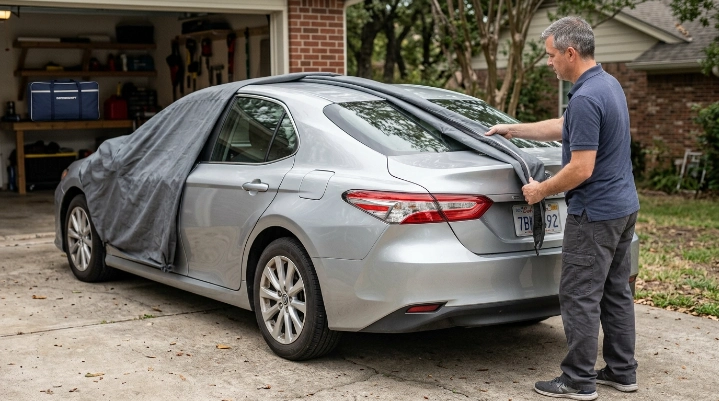
The cleanest method is to do most of the folding while the cover remains on the vehicle. This keeps the inner lining away from the ground.
I prefer a simple lengthwise method because it also makes the next installation easier.
- Check the cover first. Remove leaves, loose grit, and other debris without rubbing them into the fabric.
- Make sure it is dry. If rain or condensation is present, let the cover dry according to its care instructions.
- Release all straps. Don’t fold buckles or tensioned straps against painted panels.
- Lift the sides upward. Fold each side toward the centerline of the roof.
- Keep the liner inward. Try to prevent the paint-facing surface from touching the ground.
- Create a long strip. Continue bringing each side inward until the cover is manageable.
- Roll or fold from one end. Work steadily rather than dragging the bundle across the vehicle.
- Place it in its storage bag. Don’t force the bundle if the bag is too tight.
Should you fold or roll a car cover?
Either can work for many soft covers. The manufacturer’s instructions should decide when a particular material needs special handling.
Rolling can reduce sharp fold lines. Folding may produce a smaller package and can be faster with lightweight fabric.
For a thick padded cover, I would avoid aggressively compressing it just to save trunk space. The extra storage room is a better trade than stressing expensive material.
What if the cover is dirty?
Don’t make the dirt disappear by folding it inward. Clean the cover according to its label before putting the contaminated surface back onto your paint.
Car-cover washing directions vary by material. Some can use a suitable washing machine, while others require different care.
That is why generic washing advice can cause trouble. Follow the exact instructions supplied with your model.
Section Takeaway: Fold upward from the sides, keep the liner off the ground, and roll or fold without dragging the cover across paint or pavement.
How Should You Store a Folded Car Cover?
Store it in a clean, dry place away from sharp objects and chemicals. A storage bag helps keep new dust from reaching the fabric.
Don’t treat the trunk floor as automatically clean. Shoes, groceries, tools, and roadside gear can leave grit there.
Make sure the cover is completely dry
A damp cover should get airflow before storage. Packing it tightly can hold moisture against multiple fabric layers.
If the cover smells musty when you reopen the bag, I wouldn’t put it straight onto the car. Inspect and clean it first.
Keep heavy objects off the cover
A soft cover may survive being squeezed under luggage. That doesn’t mean this should become the normal storage method.
Long periods under tools, tires, or heavy boxes can stress buckles, seams, elastic hems, and thicker multilayer sections.
Use a clean storage bag
The bag deserves attention too. Putting a freshly cleaned cover into a dirty bag defeats part of the process.
- Empty loose dirt from the bag.
- Keep the bag dry.
- Store it away from oil and solvents.
- Don’t place sharp tools beside it.
- Check for insects or rodent damage during long storage.
As of 2026, there is no single folding method that applies to every car-cover material. Construction still varies widely between lightweight indoor covers, multilayer outdoor fabrics, stretch covers, and padded hail designs.
Section Takeaway: Dry storage matters more than a perfect-looking fold. Protect the stored cover from moisture, contamination, compression, and sharp objects.
When Is a Folded Car Cover Too Damaged to Use?
Don’t judge a cover only by how neatly it unfolds. Inspect the paint-facing surface, seams, straps, and protective outer layer.
I would stop and investigate any rough patch that wasn’t there before. A cover should protect the finish, not give you another abrasive surface to worry about.
Check for these warning signs
- Embedded grit: The liner feels sandy or rough when lightly inspected.
- Musty odor: The cover may have been stored damp.
- Visible mildew or staining: Clean and assess it before reuse.
- Torn lining: Rough backing or exposed layers may contact paint.
- Damaged seams: Separation can allow poor fit or continued tearing.
- Broken straps: The cover may no longer stay secure in wind.
- Worn outer coating: The cover may no longer perform as intended.
- Sharp melted areas: Heat-damaged material should not rub against paint.
Can you reuse a badly creased cover?
A cosmetic crease in soft fabric is not automatically a reason to replace the cover. Spread it out and inspect the material around the crease.
Look for cracking, delamination, thinning, or a rough ridge. Those signs matter more than the visible fold line itself.
What about existing paint scratches?
First determine whether they are light surface marks or deeper paint damage. Don’t keep using a dirty cover while trying to diagnose the cause.
Edmunds’ exterior-care guidance stresses removing contaminants before later paint-care steps because gritty residue can contribute to scratching.
Minor marring may be correctable with appropriate detailing. Deep scratches, failing clear coat, or uncertain paint damage deserve professional inspection.
Mechanic Alert: If damage reaches through the paint, exposes metal, or involves corrosion, a qualified body or paint professional can assess the proper repair.
Section Takeaway: Replace or repair a cover when damage changes its surface, fit, strength, or protective performance—not simply because you can see fold lines.
Frequently Asked Questions
Does folding a car cover cause permanent creases?
Soft fabric covers can develop temporary fold lines, but those lines do not automatically mean the material is damaged. Check the crease for cracking, thinning, delamination, or a rough ridge before placing the cover back on the car.
Can I put a wet car cover in its storage bag?
It’s better to let the cover dry according to the manufacturer’s instructions first. Trapping moisture inside a tightly folded cover can lead to odor, staining, mildew, or deterioration during storage.
Can a folded car cover scratch my car?
A clean folded cover normally shouldn’t scratch healthy paint. The risk increases when folding transfers sand, dust, or road grit onto the inner lining and that contamination later moves against the clear coat.
Should the inside of a car cover touch the ground?
Ideally, no. Keeping the paint-facing surface away from pavement, garage floors, and other dirty surfaces reduces the chance of picking up abrasive particles that could later contact the vehicle.
Is rolling a car cover better than folding it?
Rolling can reduce hard crease lines and works well for many soft covers. Folding also works when the manufacturer allows it, so use the method recommended for your specific material and construction.
Should I wash my car before reinstalling a stored cover?
The vehicle should be clean enough that abrasive dirt is not trapped between the cover and paint. If the surface has accumulated dust, sand, road film, bird residue, or similar contamination, clean it before covering.
How do I know whether an old cover is still safe?
Inspect the inner lining, seams, straps, elastic areas, and outer material. Replace or repair the cover if you find abrasive patches, major tears, failing layers, damaged fasteners, or deterioration that prevents a secure fit.
The main lesson is simple: folding a car cover is normal and usually harmless. Folding it dirty, wet, contaminated, or carelessly is what creates most avoidable problems.
Before the next installation, give both surfaces a quick check. A few minutes spent keeping grit out of the folds can save far more time dealing with paint marks later.
