
Car Cover Stretching: How to Fit, Fix, and Prevent Tight Vehicle Covers

Quick Answer
Stretching a tight car cover safely requires using warmth, moisture, and controlled tension rather than brute force. You can relax synthetic fabrics like polyester and polypropylene using warm sunlight or a low-heat steamer, then install the cover while warm to let the fibers mold to your vehicle’s body lines. Always check out expert maintenance resources like Edmunds car care advice to ensure your paint stays protected against abrasive friction.
Safe Methods to Relax Tight Car Covers
- Solar heat relaxation: Lay the cover out under direct sunlight for one to two hours to soften synthetic polymer threads.
- Warm water rinse: Soak the fabric in lukewarm water for twenty minutes to make the weave temporarily pliable.
- Controlled tension fitting: Pull the cover downward from the center outward rather than tugging aggressively at the corners.
- Professional steaming: Use a garment steamer on low settings across stubborn panels to gently expand tightened weaves.
Crucial Prevention Tips
- Never store wet covers in a hot trunk, as heat shrinkage will permanently ruin the custom tailored fit.
Every daily driver owner knows the frustration of wrestling with a stubborn vehicle cover that suddenly feels two sizes too small. You pull, you tug, and you sweat in the driveway while the elastic hem refuses to clear your bumper. Fabrics shrink due to temperature drops, improper washing cycles, or natural material relaxation settling into a new shape.
We are going to break down exactly how to stretch your cover safely without ripping seams or scratching your clear coat. Let us dive into the mechanics of fabric behavior and restore a custom fit to your daily driver.
In This Guide
Why Do Car Covers Shrink or Tighten Over Time?
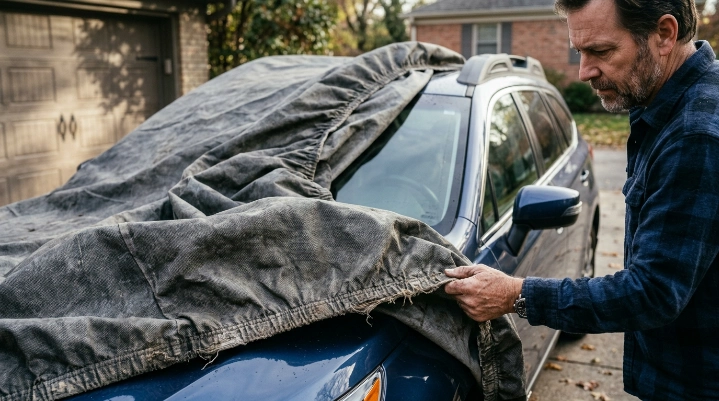
A car cover is a complex shield made of woven synthetic polymers engineered to repel UV rays, moisture, and dust. Understanding why these materials contract helps you diagnose whether your cover can be saved or if it has reached the end of its lifespan.
Thermal contraction is the primary culprit behind a suddenly tight vehicle cover. When temperatures plummet during winter months, synthetic fibers like polypropylene, woven polyester, and multi-layer composite blends naturally contract and tighten their weave.
Improper cleaning cycles also trigger permanent fabric distortion. If you run a synthetic car cover through a hot commercial washing machine or toss it into a heated tumble dryer, the synthetic polymers melt slightly and lock into a much tighter geometry.
Environmental exposure plays a massive role in how fabric behaves on your daily driver. Constant bombardment from direct sunlight bakes UV inhibitors out of the outer layers, causing microscopic fibers to embrittle and lose their natural elasticity.
Mechanic Alert: Never force an excessively shrunken cover onto a vehicle with sharp aftermarket aerodynamic splitters or aggressive spoilers. Ripping stressed seams can cause metal grommets or abrasive clips to snap back against your vehicle’s painted panels.
Section Takeaway: Temperature drops, hot washing cycles, and UV degradation cause synthetic car cover fibers to contract, making them difficult to install without proper relaxation techniques.
Proven Methods for Safely Stretching Your Car Cover
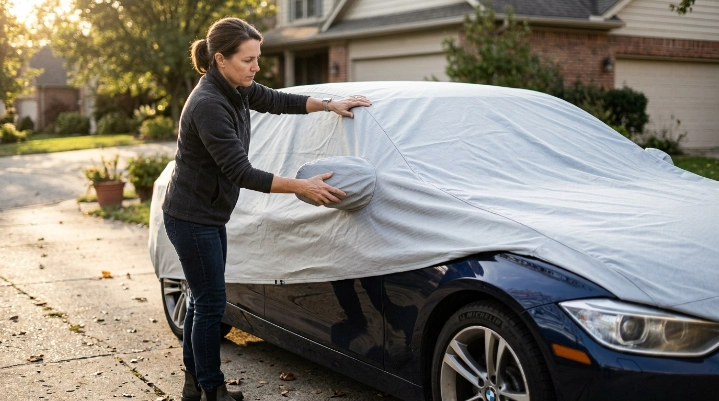
You do not need to throw away a tight car cover just because it refuses to slip over your mirrors. Several garage-tested techniques safely relax tightened synthetic fibers without destroying the weatherproofing integrity of the material.
Solar heating is the easiest and safest way to expand a stiff cover. Lay the cover out flat on a clean driveway or patio under direct sunlight for one to two hours, allowing thermal energy to soften the polymer threads naturally.
If sunlight is unavailable, you can use a controlled moisture bath. Submerge the cover in a large tub filled with lukewarm water for twenty minutes, then drape it loosely over your vehicle while damp so it stretches organically as the water evaporates.
For stubborn areas around mirror pockets or bumpers, utilize a handheld garment steamer on a low, synthetic-safe setting. Keep the nozzle moving continuously to avoid scorching multi-layer composite fabrics.
Installing the cover correctly makes a massive difference when dealing with tight tolerances. Start by securing both mirror pockets first, then pull the front and rear hems down evenly rather than yanking one corner violently.
Section Takeaway: Utilizing natural sunlight, warm water soaking, or careful garment steaming safely relaxes tightened synthetic weaves, allowing you to achieve a proper fit on your vehicle.
Fabric Comparison: Which Materials Resist Shrinkage?
Different automotive cover materials react differently to environmental stress and maintenance routines. Choosing the right fabric weave ensures you spend less time wrestling with tight fits.
| Fabric Material | Shrinkage Resistance | Breathability | Best Environment |
|---|---|---|---|
| Woven Polyester | Moderate | High | Indoor garage / Mild outdoor |
| Multi-Layer Polypropylene | High | Moderate | All-weather outdoor storage |
| Evolution / Composite | Very High | High | Harsh sun and heavy rain |
| Canvas / Cotton Blend | Low (prone to shrinking) | Very High | Dust-free indoor storage |
Polypropylene and composite multi-layer covers offer superior dimensional stability compared to traditional cotton blends. Natural fibers absorb moisture readily and contract severely when dried incorrectly.
When shopping for a new cover for your daily driver, check product specifications for UV-stabilized threads. These specialized weaves resist thermal contraction and maintain their tailored dimensions across changing seasons.
Section Takeaway: Selecting synthetic multi-layer composite fabrics dramatically reduces the risk of long-term fabric shrinkage compared to traditional cotton or canvas blends.
How to Prevent Future Shrinkage and Fit Issues
Maintaining a car cover properly extends its usable lifespan and prevents it from shrinking into an unusable state. Simple storage and cleaning habits protect your investment for years.
Always hand-wash your vehicle cover using mild, non-detergent soap in a large tub or while draped directly over your clean car. Never use hot water settings or mechanical dryers.
Air-drying is mandatory for synthetic fabrics. Hang the cover over a smooth fence or a dedicated drying rack in a shaded area until every layer is completely dry before folding.
Proper storage prevents creases from locking into the fabric weave. Roll your cover loosely into a breathable storage bag rather than tightly cramming it into a hot trunk where trapped moisture can warp the material.
Inspect the elastic hem periodically for signs of dry rot or loss of tension. Replacing worn elastic cords takes minimal effort and restores a snug fit without needing to replace the entire cover.
Section Takeaway: Hand-washing with cold water, air-drying in the shade, and storing the cover loosely prevents permanent polymer distortion and maintains a perfect fit.
Frequently Asked Questions
Can I use a hair dryer to stretch a tight car cover?
Using a high-heat hair dryer or heat gun on synthetic car covers is extremely risky. Excessive heat can melt delicate polymer fibers instantly, creating holes and ruining the waterproof membrane.
Why does my car cover feel tighter in the winter?
Cold weather causes synthetic polymer threads to contract and tighten their molecular structure. Once ambient temperatures rise or you warm the fabric in the sun, the material regains its normal flexibility.
Is it safe to wash a car cover in a washing machine?
Most commercial washing machines feature agitators that snag seams and stretch fabrics unevenly. Always wash your cover by hand using mild automotive soap to preserve stitching and waterproof coatings.
How do I know if my car cover is permanently ruined?
If the fabric has melted spots, brittle areas that tear easily under normal tension, or has shrunk so severely that mirror pockets no longer align with your vehicle, it is time for a replacement.
Will stretching a car cover damage its UV protection?
Gently relaxing a cover using warmth or moisture does not strip chemical UV inhibitors. However, aggressive physical pulling or over-stretching can thin out the weave and reduce overall weather protection.
Protect Your Daily Driver Year-Round
Proper maintenance and smart handling keep your vehicle’s paint and finish safe from environmental wear. Explore our additional guides for more expert automotive care tips.