
UV Damage to Car Cover: Protecting Your Investment from the Sun

Quick Answer
Ultraviolet radiation breaks down the polymer chains in outdoor car covers, leading to fading, brittleness, flaking, and a complete loss of water resistance over time. To protect your vehicle’s finish, you must recognize the early warning signs of degradation and choose a cover rated for high solar exposure. According to industry guidance from Edmunds, selecting the right material is essential for long-term vehicle storage.
Key Warning Signs of UV Damage
- Color fading: The outer layer loses its pigment, looking chalky or washed out.
- Material stiffening: Flexible fabrics turn rigid and lose their soft drape.
- Powdery residue: Tiny plastic particles flake off onto your vehicle’s paint.
- Micro-tearing: Stress points near mirrors and corners snap easily in the wind.
Actionable Prevention Steps
- Clean your car cover monthly with mild soap and cold water to remove abrasive dust.
- Apply a UV-blocking fabric protectant spray specifically rated for outdoor covers.
I have spent years keeping my daily driver parked outside under blistering summer conditions, and I learned the hard way that sun exposure destroys protective car gear just as fast as it wrecks a dashboard. When you invest in a quality cover to shield your paint from tree sap, bird droppings, and heat, you expect it to last for years. Unfortunately, relentless solar radiation quietly eats away at synthetic threads until your shield turns into a brittle liability.
This comprehensive guide breaks down exactly how UV rays degrade vehicle covers, how to spot the damage before it harms your paint, and how to choose materials that survive harsh climates.
In This Guide
How Solar Radiation Destroys Car Cover Fabric
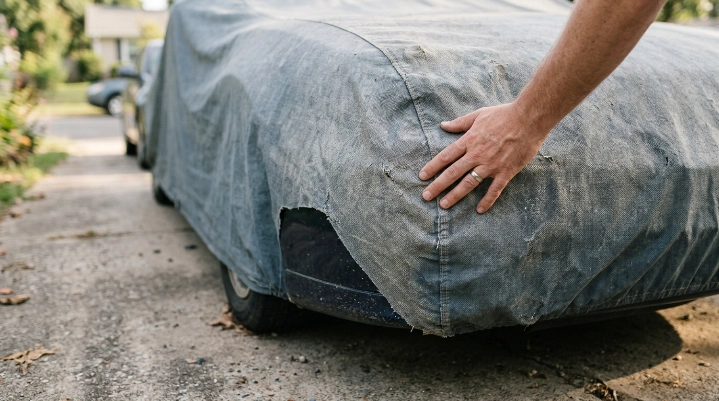
Ultraviolet radiation consists of invisible high-energy waves that break molecular bonds in polymers. When your car cover sits in direct sunlight, photons attack the synthetic fibers like polyester, polypropylene, and cotton blends.
This process is known as photodegradation. The chemical structure of the fabric weakens steadily over months of exposure. Eventually, the textile loses its tensile strength and flexibility.
A car cover is a barrier designed to take the beating so your clear coat does not have to. As the sun bombards the outer layer, chemical stabilizers mixed into the fabric during manufacturing slowly deplete. Once these additives are gone, the material deteriorates rapidly.
Sun-exposed synthetic fibers lose structural integrity, turning a once-durable shield into a porous, fragile net.
Identifying the Early Signs of Degradation
Catching UV damage early prevents your cover from disintegrating during a heavy storm or leaving powdery residue all over your clean vehicle. You must inspect your cover every few months under bright daylight.
Look closely at the roof and hood sections of the cover, as these areas receive the most direct overhead sunlight. Color fading is usually the first visible indicator that your protection is wearing thin.
Touch the fabric to check for texture changes. Healthy material feels pliable and soft, while sun-damaged fabric feels dry, rough, or paper-thin.
Check your hands after handling the cover. If you notice a fine dust or colorful residue left on your skin, the polymer coating is breaking down into powder.
Regular tactile inspections reveal hidden structural failure long before large rips appear.
Comparing Cover Materials for UV Resistance
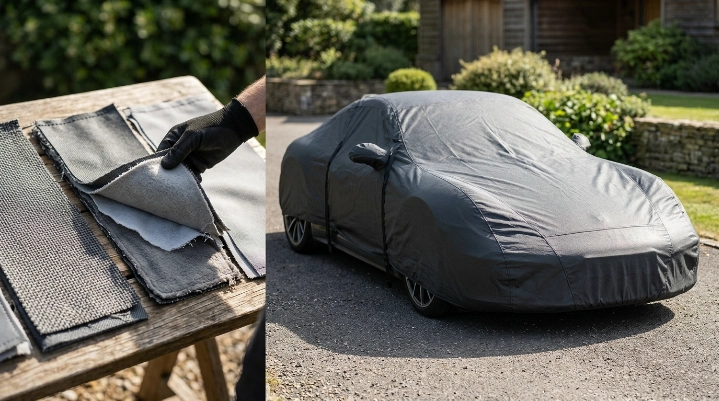
Not all car covers handle solar radiation equally. Choosing the right textile depends entirely on your local climate and whether your vehicle sits under direct sun all day.
The table below compares popular car cover materials based on their solar endurance and overall performance.
| Material Type | UV Resistance | Average Lifespan | Best Climate |
|---|---|---|---|
| Multi-Layer Woven Polypropylene | High | 3 to 5 Years | Sunny and Arid |
| Evolution / Four-Layer Fabric | Very High | 4 to 6 Years | All-Weather |
| Standard Satin / Lightweight Polyester | Low | 1 to 2 Years | Indoor Only |
| Woven Acrylic (Sunbrella) | Maximum | 5+ Years | Extreme Desert Sun |
Lightweight indoor covers placed outside will disintegrate in a matter of months. Investing in heavy-duty woven acrylic or multi-layer composite materials saves money over time.
Matching your cover material to your local climate prevents premature fabric failure and costly paint exposure.
How a Damaged Cover Harms Your Paint
A degraded car cover poses a hidden danger to your vehicle’s exterior. When ultraviolet light destroys the inner lining, abrasive fibers make direct contact with your clear coat.
Wind causes the loose cover to shift back and forth across the panels. This constant friction acts like fine sandpaper, inducing swirls and micro-scratches.
Furthermore, degraded covers lose their waterproof properties. Trapped moisture mixes with the powdery residue of broken-down polymers, creating a chemical film on the vehicle.
When high ambient heat bakes this mixture onto the car, it can etch into the clear coat and ruin the finish.
A compromised cover stops protecting your vehicle and starts creating new surface damage through friction and trapped moisture.
Proactive Maintenance to Extend Lifespan
You can dramatically slow down ultraviolet degradation with proper care habits. Simple cleaning routines preserve the chemical stabilizers embedded in the fabric.
Wash your cover every four to six weeks using specialized technical fabric cleaners. Never use harsh household detergents or dish soap, as these strip away remaining protective treatments.
Allow the cover to air dry completely before folding or storing it. Trapped humidity combined with residual sun-baked dirt accelerates fabric rot.
Spray a dedicated UV inhibitor designed for outdoor fabrics onto the exterior surface annually. This extra layer deflects harmful rays and keeps the material supple.
Routine cleaning and annual UV treatment double the functional lifespan of most outdoor vehicle covers.
Frequently Asked Questions
Can a sun-damaged car cover let water leak through to my paint?
Yes. Ultraviolet radiation breaks down the waterproof micro-porous membrane inside composite covers. Once these layers degrade, rain seeps right through the fabric.
How often should I replace an outdoor car cover exposed to intense sun?
Standard outdoor covers last between two and four years in high-sun environments. Premium multi-layer fabrics with heavy UV inhibitors can last up to six years with proper care.
Does car cover color affect how fast UV damage occurs?
Darker colors absorb more solar heat and light, which can accelerate thermal breakdown. However, high-quality manufacturers use specialized UV-stable dyes that resist fading regardless of hue.
Taking care of your car cover ensures your paint stays factory-fresh underneath. Inspect your gear seasonally and replace it before degradation threatens your finish.