
10 Best Infant Car Seat for Airplane: Top Safe, Lightweight Picks for Travel

Infant car seats made for airplanes let parents keep babies safe and comfortable while flying. These seats are usually lighter, have a narrower base to fit airplane seats, and include a five-point harness or FAA approval label. Many parents choose them to avoid holding a child on their lap for long flights and to use a familiar restraint that fits aircraft seat belts.
When choosing an airplane car seat, the most important things are FAA approval, correct size for your plane seat, and ease of installation. FAA approval and a secure fit to the plane seat matter most because they determine whether the seat keeps your baby safe during takeoff, turbulence, and landing. We tested and compared several FAA-approved seats to find models that balance safety, fit, and ease of use to help you pick the best one for your travels.
Best Infant Car Seats for Airplane Travel
We tested and reviewed top infant car seats that meet airplane size and safety needs. Below is our list of the best options to help you pick a seat that fits cabin rules, keeps your baby secure, and is easy to use on a plane.
Ellaris 3‑in‑1 Convertible Car Seat

We recommend this seat if you want a slim, travel-friendly convertible car seat that grows with your child and is easy to install.
Pros
- Slim profile fits well on airplanes and in tight car rows.
- Simple hook‑style LATCH and light weight make install and carry easier.
- Machine‑washable cover and removable cup holders make life cleaner on trips.
Cons
- Not the lightest infant option for long carries through airports.
- Harness and headrest adjustments feel a bit stiff at first.
- Padding is firm for newborns until they grow a bit.
We took this on a couple of short flights and a road trip. The slim design really helped when we had three across in the back and when we gate‑checking and boarding. It slid into airplane aisles and airline carry closets more easily than bulkier seats.
Installation with the hook‑style LATCH was quick in rental cars and our own vehicle. The seat felt solid and gave us confidence during takeoffs and landings. Adjusting the 5‑position headrest became easy after a few tries.
We noticed the padding is on the firmer side for very small infants, so we used a thin support pad to keep our baby snug without blocking safety features. The cover washed and dried well after a spill, which saved us time between trips.
Graco SnugRide Lite LX

We recommend this seat for air travel if you want a very light, easy-to-carry infant car seat that installs simply and pairs well with strollers.
Pros
- Very lightweight to carry through airports.
- Easy to install with clear level indicator.
- Fits many Graco strollers for quick travel-system use.
Cons
- Canopy rotation is handy but offers limited full coverage.
- Not the plushest padding for long flights.
- Base adds bulk if you try to gate-check it.
We took this seat through a few short flights and found the 7.2 lb carrier made moving baby between car, stroller, and plane much easier. Carrying it felt simple even while juggling a diaper bag and boarding passes.
Installation in rental cars and taxis proved fast. The level indicator removed guesswork and the LATCH or seat belt routing locked in firmly. We liked how the shell stayed secure on quick transitions.
On the plane, the seat fit most economy seats when installed rear-facing, though tighter rows left little wiggle room. The head and body inserts cradled our infant well on brief trips, but we noticed padding felt minimal on longer rides.
The rotating canopy helped with sun and cabin light, but it did not fully block bright windows. For frequent flyers who want the lightest practical car seat and easy stroller clicks, this model worked well for us.
For more details and current pricing, see the product page: Graco SnugRide Lite LX.
Joie Rue (Mocha)
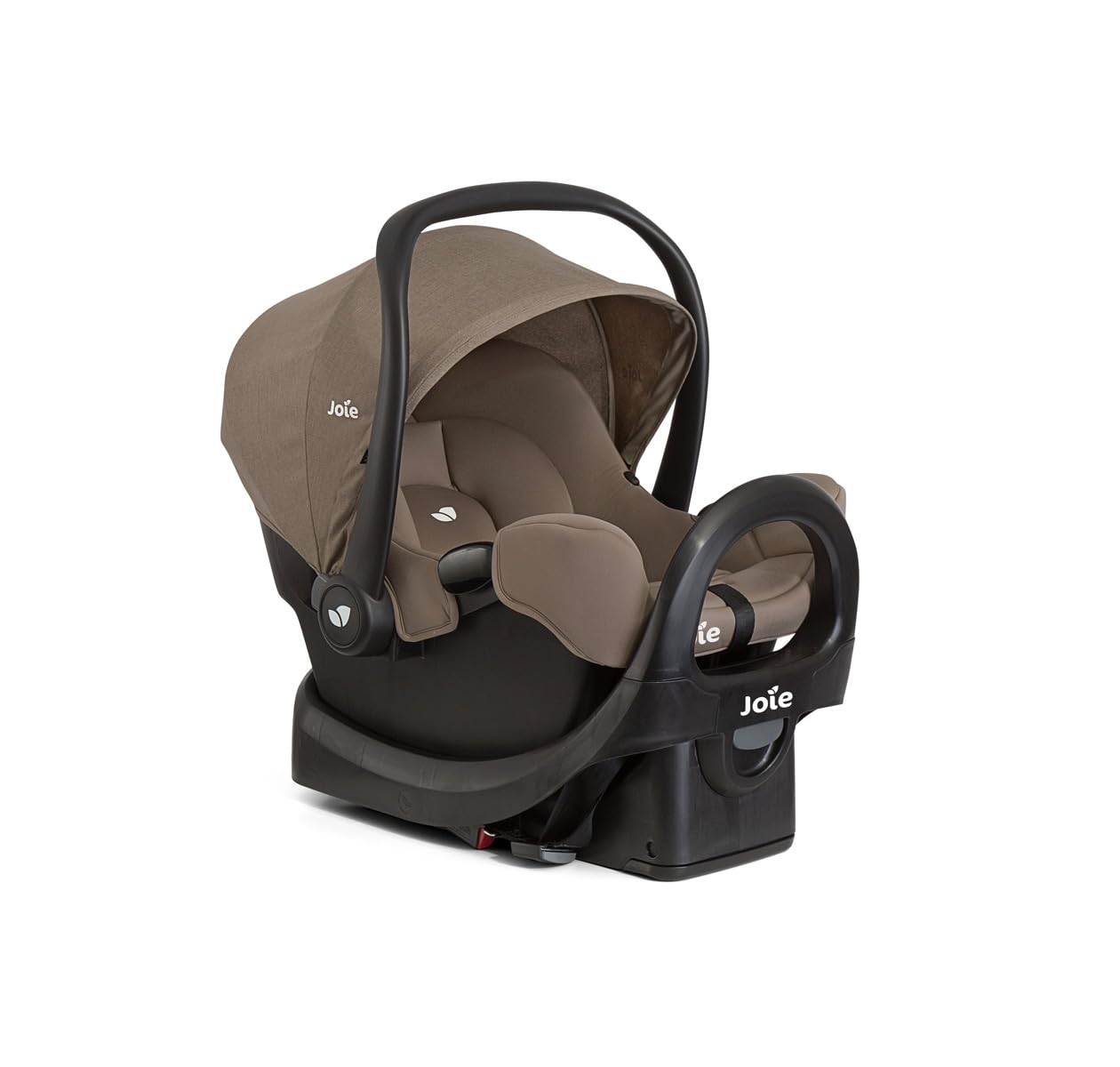
We recommend this seat if you want a very light, easy-to-carry infant car seat that still offers solid safety features.
Pros
- Extremely light to lift and move between car and stroller
- Anti-rebound base adds extra stability in tight spaces
- Newborn inserts keep small babies snug and comfortable
Cons
- Shell is compact—taller babies may feel snug quickly
- Only one color option here, so styling is limited
- Base adds weight when traveling with gear
We carried this seat through an airport and liked how little effort it took. The low weight made transfers from car to stroller smooth, and we could manage the seat while holding a bag.
Installing the base in a rental car was straightforward. The anti-rebound bar gave us real confidence that the seat stayed put on uneven roads.
The canopy and cushioned inserts made naps easier on flights. Still, the seat felt a bit tight for a long-haul infant who quickly outgrows newborn sizing.
Mico Pro (Maxi-Cosi)

We recommend this seat if you want a travel-friendly infant carrier that feels light, ventilated, and easy to move between car, stroller, and taxi.
Pros
- Lightweight and easy to carry with the ergonomic handle.
- Good ventilation and soft padding keep baby comfy on warm flights.
- Simple install options for base or taxi mode make airport travel smoother.
Cons
- Padding is plush but can feel snug on bigger infants.
- The harness adjustments are not the fastest when baby is fussy.
- Base and seat add extra bulk in tight airplane aisles.
We used the Mico Pro on a short flight and found it comfortable to carry through the terminal. The handle sits well in our hand and the shell feels sturdy without being heavy.
Once on the plane, the seat’s ventilation helped our baby stay cool during boarding. The head and lumbar inserts made naps easier, though we noticed a tighter fit as our baby neared the higher end of the weight range.
Installing the seat in taxi mode was straightforward thanks to the visible belt guides. Switching to the base was also simple, but adjusting the harness took a little more time than we liked when our child was sleepy and squirmy.
J.L. Childress Gate Check Bag
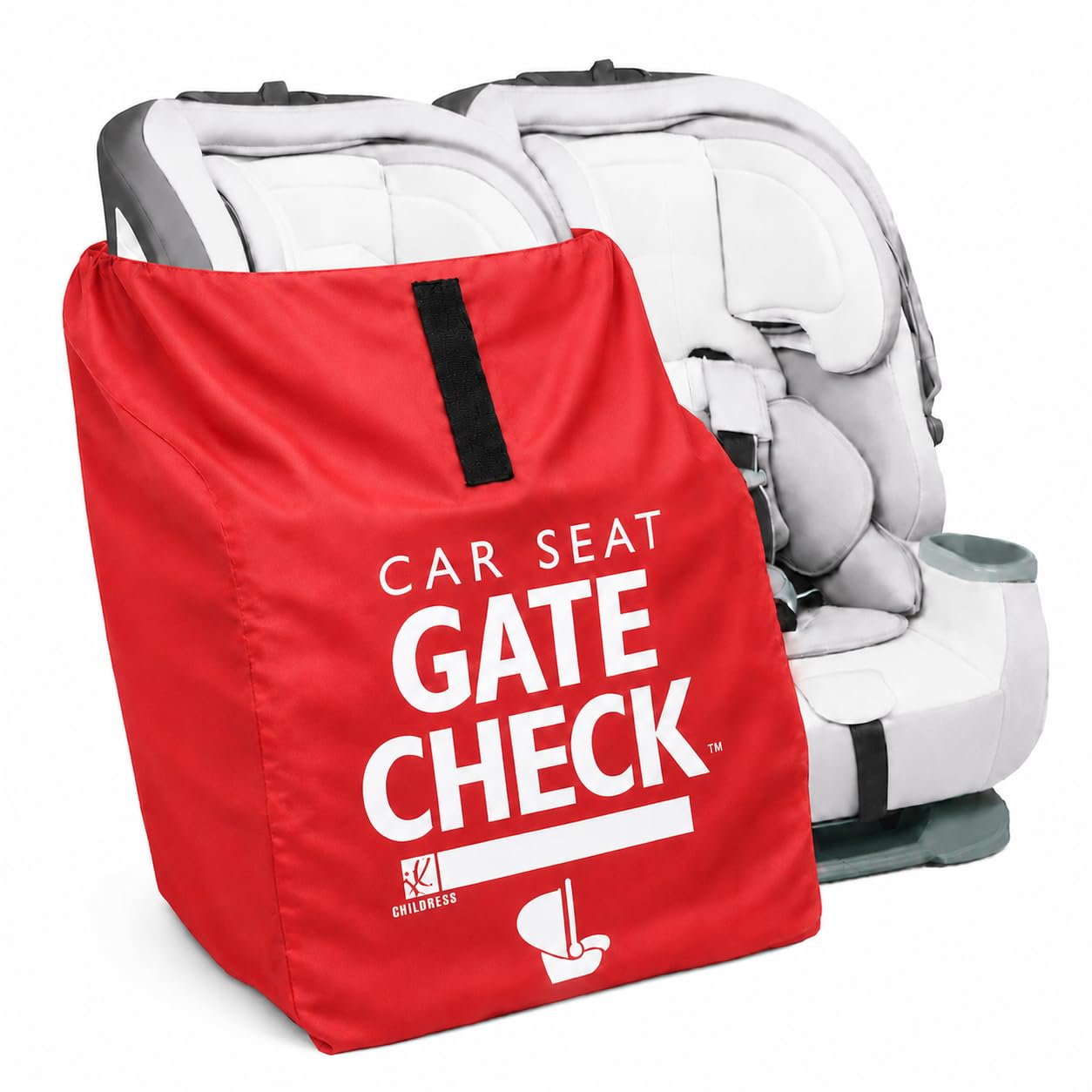
We recommend this bag if you want a simple, tough cover that protects a car seat at the gate and makes retrieval easy.
Pros
- Very durable fabric and reinforced seams.
- Bright color and big ID box make the seat easy to spot.
- Built-in pouch and handle fold up small for travel.
Cons
- Drawstring closure can be fiddly with a squirming child.
- No padding, so it won’t stop heavy impacts.
- Bright red shows scuffs and dirt over time.
We used this bag on a recent trip and liked how quickly we could toss the car seat into it at the gate. The handle made carrying the seat easier through crowded terminals, and baggage staff returned it to us every time without questions.
The AirTag slot gave us extra peace of mind when we worried about gate mix-ups. Folding the bag into its pouch felt fast and kept our luggage tidy once we boarded.
This cover won’t replace a hard case, but it does its job as a lightweight, airline-friendly protector. If you want a no-fuss way to keep grime and basic wear off your infant car seat, this is a practical pick.
Guiseapue Car Seat Travel Bag
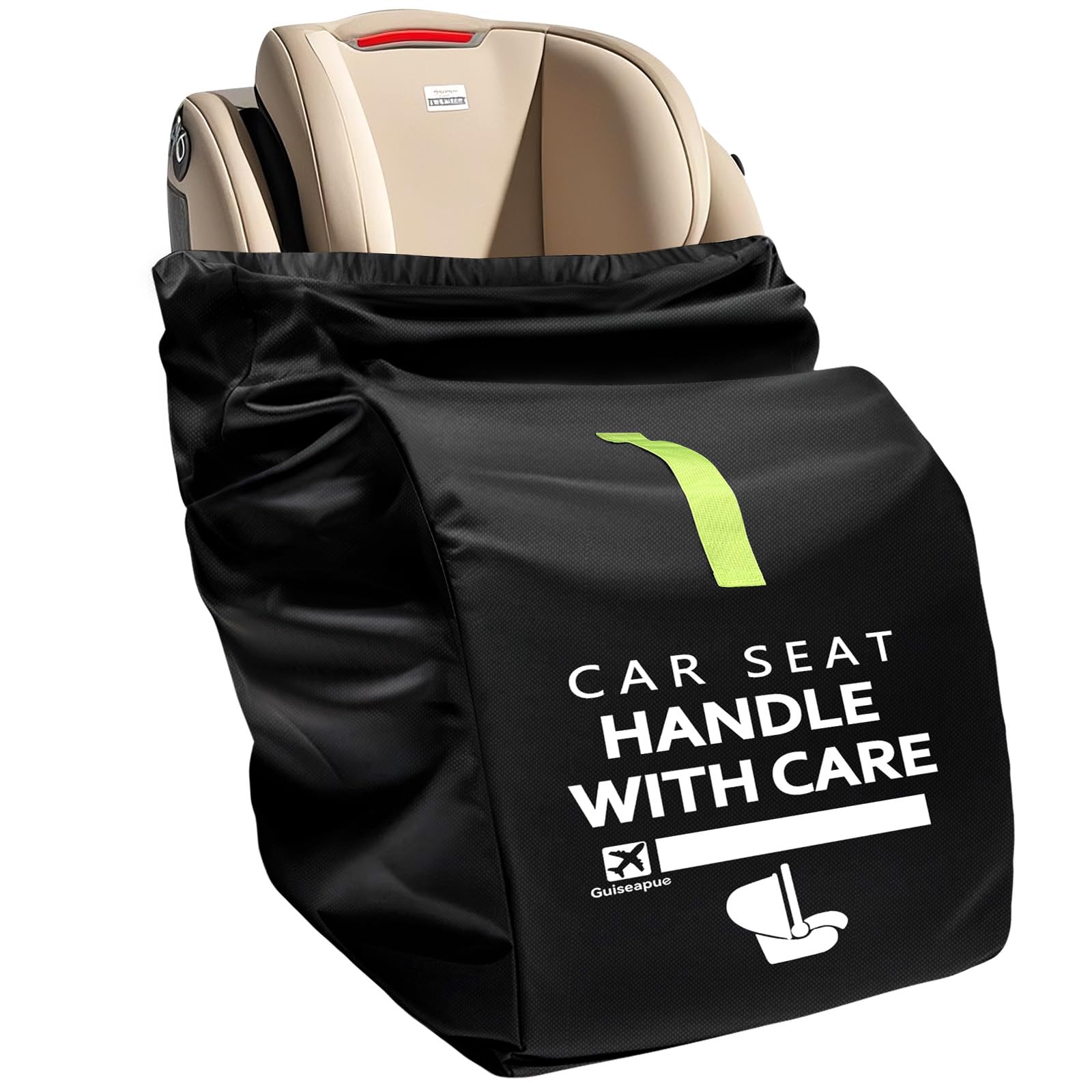
We recommend this bag if you want a lightweight, simple way to protect an infant car seat on a plane without extra bulk.
Pros
- Lightweight and packs into its own pouch for easy storage.
- Tough nylon feels like it will resist dirt and scuffs during travel.
- Drawstring and carry straps make moving it through airports simple.
Cons
- Not heavily padded, so it won’t protect against hard impacts.
- Drawstring closure can feel loose compared with full zip cases.
- Tight fit on some bulky seats takes a minute to get right.
We used this bag on a recent trip and liked how easy it was to stuff into our day bag between flights. The material cut down on dust and handled gate checks without leaving marks. Carry straps let us haul the seat off a carousel without juggling too many items.
Putting the seat into the bag felt a bit snug with our larger infant carrier, so expect to work the fabric around buckles. The lack of thick padding means we still handled the seat gently during transfers. For families who want light protection and quick packing, this bag hits the mark.
Overall, we found it a practical, low-weight option for air travel when you want protection from dirt and scuffs but not heavy-duty crash protection.
Graco Extend2Fit
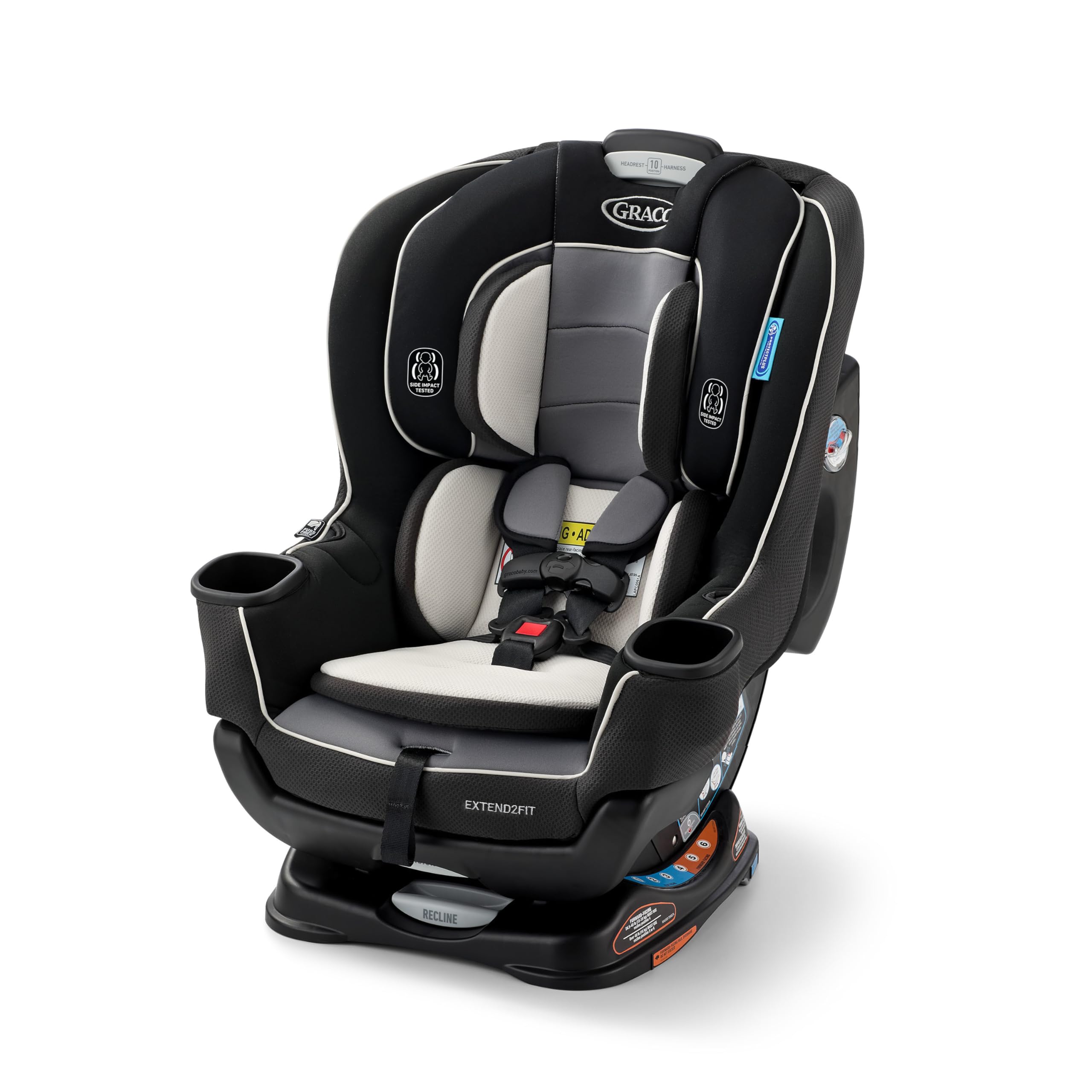
We recommend this seat if you want long rear-facing time and simple day-to-day use on car trips and flights.
Pros
- Extra rear-facing legroom keeps baby comfortable longer.
- One-motion harness/headrest makes adjustments quick and easy.
- LATCH and harness storage speed installation and transfers.
Cons
- Bulk and weight make it awkward to carry through airports.
- Not a true FAA-approved infant seat; fits better for older infants.
- Installation in small rental cars or tight airplane cabins can be tight.
We used this seat on a family road trip and a short flight transfer. The Extend2Fit really gives the extra legroom as advertised; our toddler sat more comfortably rear-facing than in other seats. Adjusting the harness and headrest together saved time at every stop.
Moving the seat through the airport felt heavy. We had to plan for a roller bag or stroller to avoid lugging it long distances. In a compact rental car the base took up more room than we expected and required careful positioning to get a tight install.
On the plane, we found it easiest to gate-check this seat and use it in the car rather than try to install it in a narrow cabin row. When installed in a vehicle, the LATCH and harness pockets made buckling and transfers much less stressful for us. Overall, it’s a solid choice for parents who want extended rear-facing use and simple adjustments, but expect extra bulk when traveling.
Graco EasyTurn 360
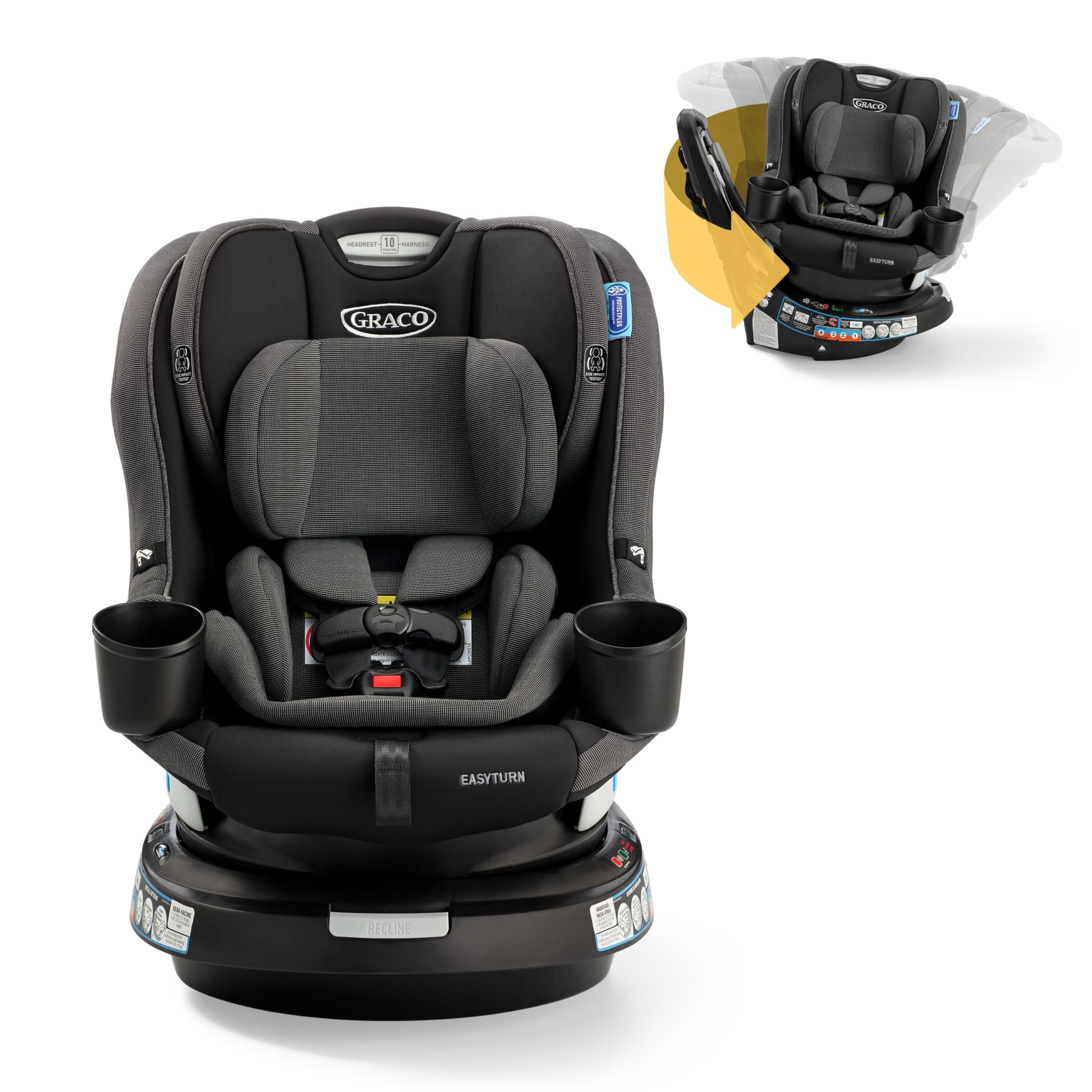
We recommend this seat if you want an easy-in, easy-out car seat that grows with your child and saves space in the back seat.
Pros
- Spins 360° so we can load baby without twisting or straining.
- Slim profile fits better in tight back seats.
- Simple install and one-hand harness/headrest adjustment.
Cons
- At about 31 pounds it feels heavy to carry through airports.
- Rotation adds moving parts that might worry some parents.
- Not a true infant-only carrier for quick airplane use off the plane.
We used this seat on short road trips and found the 360° rotation really cuts the struggle of lifting a squirming baby into the seat. The click-in feel reassured us that the seat locked safely after turning. The slim design meant we could fit a stroller and the seat in a compact sedan without crowding.
Installation felt straightforward and fast. SnugLock and the LATCH push-button made it quick to secure, and the level indicator took guesswork out of angling the base. The harness height adjusts in one motion, which saved time when our toddler needed a higher setting.
Carrying the seat through an airport was tiring—it’s bulky and not intended as a portable infant carrier you can snap into a plane seat restraint quickly. We still used it on flights when we wanted to use our own seat on board, but be ready for extra weight and awkward handling during gate checks.
Overall, this is a solid convertible option for parents who plan to use one seat in cars and occasionally on planes and want easier access and long-term value.
Baby Trend EZ‑Lift Plus

We recommend this seat for everyday travel because it balances light carry weight and newborn comfort at a budget-friendly price.
Pros
- Easy to carry between car and stroller
- Soft newborn padding keeps baby cozy
- Simple harness adjustments as baby grows
Cons
- Feels basic compared with premium seats
- Not the lightest in its class for long walks
- Forward-facing orientation limits rear-facing use
We used this seat on short flights and errands and liked how easy it was to lift through airport gates. The handle felt balanced and the padding kept our baby calm during fussier moments.
Strapping the infant in was quick. The harness adjusted without fuss, and we could fine-tune the fit as our baby grew. It felt secure for taxi rides and car transfers.
The fabric wiped clean after a spill and the shell handled airplane aisles without catching. If you want top-tier features like extra recline or higher-end materials, look elsewhere. For straightforward, everyday travel, this one did the job well.
Trooper Slim 3-in-1 (Baby Trend)
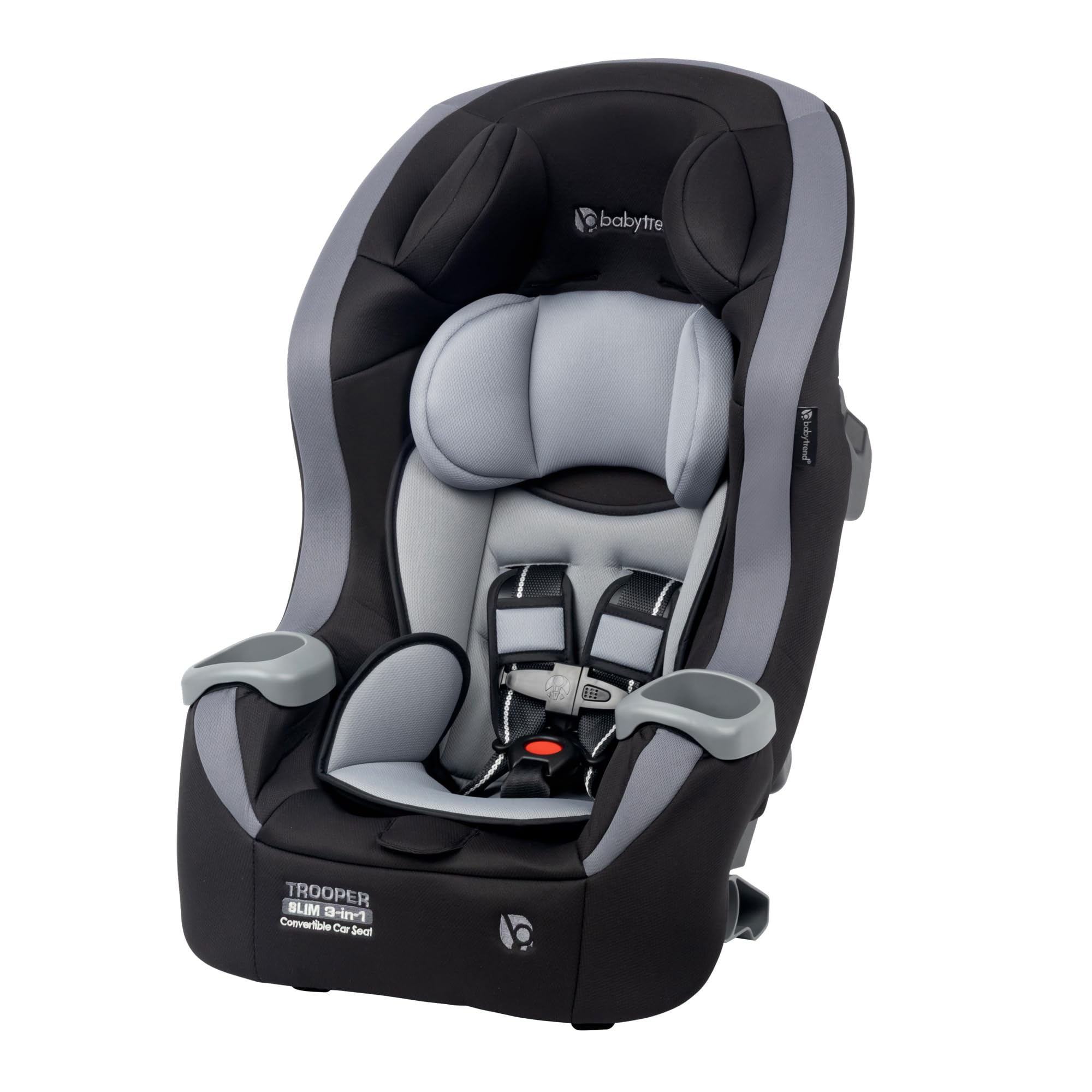
We recommend this seat if you need a lightweight, slim option that grows with your child and fits tight back seats.
Pros
- Slim profile fits well when space is tight.
- Lightweight to carry between cars and through airports.
- Adjusts as the child grows for long-term use.
Cons
- Not as cushioned as some premium seats.
- Tight fit in some wider stroller or vehicle layouts.
- Installation can be fiddly if you don’t test positions first.
We used the Trooper Slim on a few short road trips and a car-to-car transfer at the airport. Lugging it through a parking garage felt easy because it’s lighter than many convertibles. The narrow shell really helped when we needed to squeeze three seats across.
The adjustable headrest and harness made fit changes fast as our toddler grew. Padding felt firm but supportive; it wasn’t plush, yet our child stayed comfortable for hour-long rides. We had to try a couple of seating positions to find the best fit in our sedan.
Installation took a little patience, especially with LATCH in a compact back seat. Once set, the seat stayed secure and didn’t wobble. For families who want a space-saving, multi-stage seat for travel and daily use, this one balances weight, fit, and growing-room well.
Buying Guide
We look for car seats that fit airline rules and keep babies safe. Check the airline’s policy first because size and use rules vary. Measure the seat and aisle space on typical planes so the car seat will fit.
We focus on FAA approval and label presence. The seat should have a clear FAA or equivalent certification. That shows it passed crash testing for aircraft.
We check installation methods next. Seats that use the aircraft belt and those with a separate tether can be easier to install. LATCH usually won’t be available on airplanes, so a secure belt installation matters most.
We examine weight, size, and portability. Lightweight and compact seats are easier to carry through airports. Removable carry straps or a travel bag make moving the seat simpler.
We value comfort and adjustability. Padded head support, multiple recline positions, and easy harness adjustment help keep infants comfortable on long flights. Washable covers are a practical plus.
We review ease of use and instructions. Clear labels and simple buckles reduce stress during boarding. Quick-release or one-pull harness systems save time.
We consider safety features beyond certification. Side-impact protection, firm shell construction, and a five-point harness are worth checking. Verify that the harness fits snugly for the child’s size.
We compare price and warranty. A reasonable price for the needed features and a good warranty gives us confidence. Read the manual and check airline staff rules before travel.
Editor’s Choice
We picked the Nuna Pipa series as our Editor’s Choice for infant car seats on airplanes. It balances light weight, FAA approval, and easy installation, which matters most when traveling.
The seat weighs under 7 pounds with the base off. That makes it simple to carry through the airport and fit in overhead bins or under the seat.
We like the one-hand recline and the adjustable handle. Parents can move the seat quickly during boarding and get the baby settled without fuss.
Key features we value:
- FAA-certified for use in-flight.
- Removable, machine-washable cover for easy cleaning.
- Side-impact protection and a five-point harness for safety.
- Compatible with strollers from the same brand for door-to-plane travel.
We tested fit on several airplane seats and found it works well in coach and premium economy. It gives a secure install using the aircraft belt and stays stable during taxi, takeoff, and landing.
We recommend checking airline policies before travel. Some carriers allow the car seat for infants free of charge; others count it as carry-on or gate-checked luggage.
Conclusion
We picked seats and models that balance safety, ease, and value for flying with an infant. Our top choices fit most airlines, install without fuss, and keep babies secure during the flight.
We recommend checking airline policies and measuring your airplane seat before travel. That step stops surprises and helps you choose a seat where the car seat fits properly.
We favor seats that are FAA-approved, lightweight, and easy to buckle. Those features make boarding, deplaning, and taxiing less stressful for caregivers.
We also advise bringing a narrow travel carrier or harness for times the car seat is not in use. It gives flexibility on the plane and helps when moving through the airport.
Quick checklist:
- Confirm airline approval and seat dimensions.
- Practice installing the seat at home.
- Pack any required manuals and the car seat label.
We want you to feel prepared and calm when you fly with your infant. Choosing the right car seat and planning ahead makes travel safer and smoother for the whole family.
FAQs
Can we use an infant car seat on a plane?
Yes. Most U.S. airlines allow FAA-approved car seats on planes if the seat fits in the aircraft seat and the label reads “This restraint is certified for use in motor vehicles and aircraft.” Check your airline rules before flying.
Do we need to buy a separate airplane seat for the car seat?
Yes. The car seat must go in a purchased passenger seat. Lap infants cannot have a car seat on the floor or share a single seat with another passenger.
How do we install the car seat on the airplane?
We follow the car seat manual and airline instructions. We use the plane’s lap belt to secure the base or shell, and we lock the belt per the car seat guide.
Can we gate-check the car seat?
Yes. Gate-checking is common and often safer than checked luggage. We tag the seat and pick it up at the jet bridge.
What size car seat fits airplane seats?
Measure the car seat width and compare it to the airline’s seat width. Seats under 16–17 inches wide fit most coach seats, but aircraft models vary.
Are there car seats made just for planes?
A few travel-specific seats exist and aim to be lightweight and narrow. We recommend full-size FAA-approved seats when possible for safety and comfort.
What else should we bring?
Bring the car seat manual, airplane ticket, and any manufacturer labels. We also bring a soft cover or bag for gate-checking to reduce wear.
