15 Percent Window Tint: Benefits and Drawbacks

Contents
- 1 Key Takeaways
- 2 📑 Table of Contents
- 3 Introduction: The Allure of the Dark Side for Your BMW
- 4 What Exactly is 15% Window Tint? Demystifying VLT
- 5 The Compelling Benefits: Why 15% Tint is So Attractive
- 6 The Significant Drawbacks: The Real Costs of Going Dark
- 7 BMW-Specific Considerations: Is It Right for Your Model?
- 8 Installation, Maintenance, and Long-Term Care
- 9 Conclusion: Making the Informed Choice for Your Ultimate Driving Machine
- 10 Frequently Asked Questions

Magnetic Car Phone Mount

Torque Wrench Set

Brake Cleaner Spray

Multipurpose Lubricant Spray
15 percent window tint offers a dramatic, limousine-like appearance with exceptional privacy and heat rejection, making it a popular choice for luxury car owners. However, its very darkness creates significant legal restrictions in most states and can impair nighttime visibility. For BMW drivers, this tint level requires careful consideration of local laws, professional installation, and the trade-offs between style and safety.
Key Takeaways
- Extreme Privacy: 15% VLT allows only 15% of visible light through, making the interior very difficult to see from outside, ideal for securing valuables and personal space.
- Major Legal Hurdle: This is among the darkest legal tints, banned for front windows in nearly all states. You must know your specific state window tint laws to avoid fines and failed inspections.
- Superior Heat & UV Rejection: The dark film blocks a massive amount of infrared heat and 99%+ of UV radiation, drastically cooling the cabin and protecting the BMW’s interior from sun damage.
- Night Visibility Compromise: The darkness significantly reduces clarity at night or in low-light conditions, which can be a safety concern for drivers who frequently operate their vehicle after dark.
- Aesthetic Impact: It provides a bold, aggressive, “limo” look that dramatically enhances the sleek, premium profile of a BMW but may not suit all taste or model styles.
- Professional Installation is Non-Negotiable: Achieving a flawless, bubble-free finish on complex BMW curved glass requires a seasoned expert. Poor installation ruins the look and function.
- Potential for Resale Impact: While some buyers love the look, others may be wary due to legality or personal preference, potentially narrowing the pool of interested buyers when it’s time to sell.
📑 Table of Contents
- Introduction: The Allure of the Dark Side for Your BMW
- What Exactly is 15% Window Tint? Demystifying VLT
- The Compelling Benefits: Why 15% Tint is So Attractive
- The Significant Drawbacks: The Real Costs of Going Dark
- BMW-Specific Considerations: Is It Right for Your Model?
- Installation, Maintenance, and Long-Term Care
- Conclusion: Making the Informed Choice for Your Ultimate Driving Machine
Introduction: The Allure of the Dark Side for Your BMW
You’re sitting in your BMW, the pinnacle of German engineering and luxury. The sun beats down, turning the cabin into an oven, and you feel every gaze from passersby. The solution? A deep, sultry window tint. Among the most popular and dramatic choices is 15 percent window tint. It’s the shade that whispers “private jet” and screams “I value my comfort and privacy.” But before you hand over your keys to the first tint shop with a good Yelp review, it’s crucial to understand what you’re truly getting into. This isn’t just about a cosmetic upgrade; it’s a commitment with real legal, practical, and safety implications, especially for a vehicle as performance-oriented as a BMW.
This guide will pull back the curtain on 15% VLT (Visible Light Transmission). We’ll dive deep into the tangible benefits that make it so tempting—the blistering heat rejection, the fortress-like privacy—and confront the serious drawbacks, from navigating a minefield of state window tint laws to the very real challenge of seeing at dusk. For BMW owners, where the driving experience is everything, we’ll explore how this tint interacts with your car’s specific features and what it means for your daily drive. Is 15% the perfect shade for your ultimate driving machine, or a shortcut to trouble? Let’s find out.
What Exactly is 15% Window Tint? Demystifying VLT
Before we debate pros and cons, we need to speak the same language. Window tint darkness is measured by VLT, or Visible Light Transmission. This percentage tells you how much visible light can pass through the glass AND the film. A lower number means a darker tint.
Visual guide about 15 Percent Window Tint: Benefits and Drawbacks
Image source: moorparkwindowtint.com
Breaking Down the Numbers: 15% VLT in Plain English
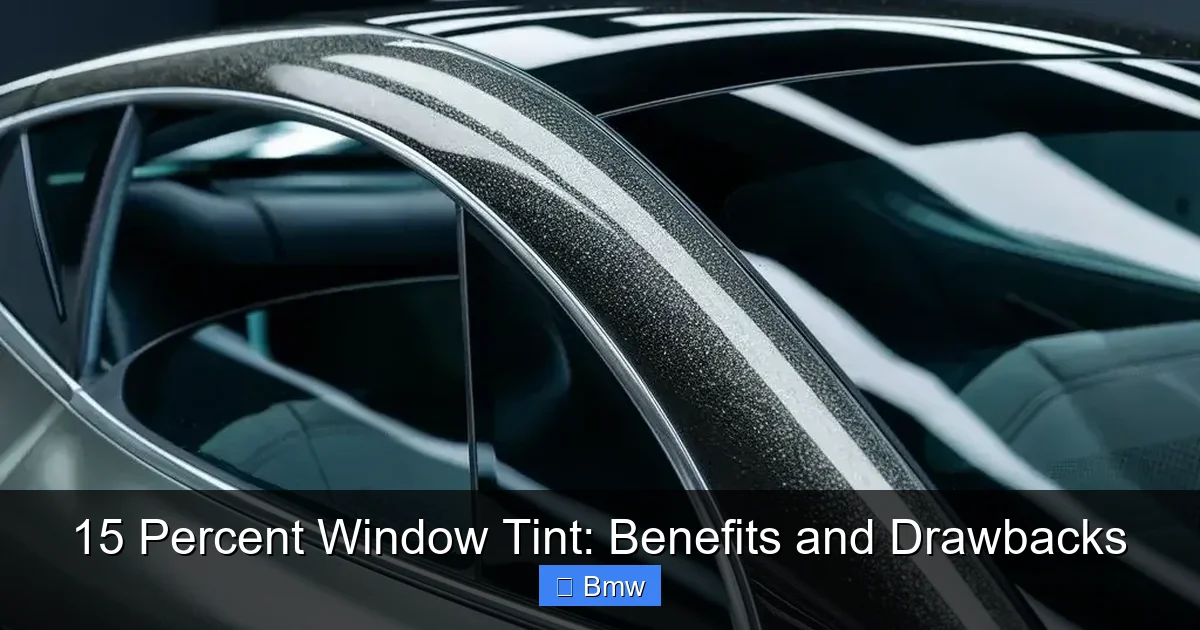
When you apply 15 percent window tint, the combination of your car’s glass and the new film only allows 15% of outside visible light to enter the cabin. That means 85% of that light is reflected or absorbed. To put that in perspective, most factory-tinted rear glass on modern BMWs (like an F30 3 Series or G05 X5) typically sits around 20-25% VLT. So, 15% is noticeably darker—a full 5%+ darker than what might already be on your car’s back glass. It’s not quite the “limo” look of a true 5% (which blocks 95% of light), but it’s deep enough that you’ll have serious difficulty seeing inside the vehicle from the outside during the day.
It’s also critical to understand that the VLT percentage is a measurement for the *entire assembly*. If your BMW already has a factory tint of 20%, applying a 15% film over it will result in a *combined* VLT that is much darker than 15%. Laws always refer to the final, installed VLT. This is why you must have your current glass measured by a professional before choosing a film.
The Compelling Benefits: Why 15% Tint is So Attractive
Let’s start with the good news. The reasons people choose 15% tint are powerful and directly address common BMW ownership pain points.

Visual guide about 15 Percent Window Tint: Benefits and Drawbacks
Image source: carglassadvisor.com
Unmatched Privacy and Security
This is the #1 draw. The deep, opaque look of 15 percent window tint turns your BMW’s cabin into a private sanctuary. Passersby cannot see your belongings, your passengers, or you. This is a major deterrent against smash-and-grab theft. For a luxury car, which is often a target, this is a significant security upgrade. It also simply feels more exclusive and personal. Whether you’re loading up for a trip or just want to enjoy your music without feeling like you’re on display, the privacy is profound.
Exceptional Heat and UV Rejection
Modern high-quality ceramic or metallic films at this darkness level are engineering marvels. They don’t just block visible light; they are specifically designed to reject Infrared Radiation (IR), which is the primary source of heat. A good 15% ceramic film can reject 60%+ of solar heat. For a BMW with a large panoramic roof (like many new models) or a black interior, this is transformative. The cabin stays dramatically cooler, reducing reliance on the A/C system, which in turn improves fuel efficiency (or electric range in a plug-in hybrid). Furthermore, these films block over 99% of harmful UV rays. This protects your skin and, crucially, prevents the sun from cracking, fading, and deteriorating your BMW’s premium leather, Alcantara, anddashboard materials over time.
Aesthetic Aggression and Style
There’s no denying the look. 15% tint gives a BMW a sleek, cohesive, and aggressive profile. It makes the glass surfaces appear as seamless, dark panels, enhancing the car’s lines and giving it a more expensive, custom, and menacing appearance. It can make a white or silver BMW look particularly striking, and it adds a touch of mystery to a classic black model. For owners who see their car as an expression of personal style, this shade delivers a major visual upgrade that factory glass simply cannot match.
The Significant Drawbacks: The Real Costs of Going Dark
Now for the other side of the coin. The very qualities that make 15% tint desirable also create its biggest problems. Ignoring these is how you end up with a ticket, a safety scare, or a ruined finish.

Visual guide about 15 Percent Window Tint: Benefits and Drawbacks
Image source: richsautobodyshop.com
The Legal Quagmire: State-by-State Variations
This is the most critical drawback. 15 percent window tint is illegal for front driver and passenger windows in every single U.S. state. Many states also have restrictions on rear side windows and rear windshields. For example:
- California, New York, Illinois, Virginia: Front windows must allow 70%+ of light (essentially no tint). Rear windows can be darker, but 15% is often still too dark for some.
- Florida, Texas: Allow 15% for rear windows but mandate a certain VLT for front sides (often 28% or 25%).
- Georgia: Has specific rules for passenger vehicles vs. multipurpose vehicles. You must understand the Georgia window tint laws to know exactly where 15% is permissible, typically only on the rear sides and back of certain vehicle types.
Getting caught with illegal tint results in a “fix-it” ticket or a fine, and you will be forced to remove the tint to pass a safety inspection. For a BMW owner, this is an embarrassing and costly hassle. Always check your specific state and local municipality regulations. Resources like our comprehensive window tint laws by state guide are essential pre-purchase research.
Compromised Nighttime and Low-Light Visibility
Your BMW’s excellent headlights and your own night vision are your primary safety tools. 15% tint dramatically reduces the amount of light entering the cabin, especially on the side windows. This makes it harder to see pedestrians, cyclists, animals, or poorly lit road signs in your peripheral vision. It can also create significant glare when facing oncoming headlights at night, as the dark glass contrasts sharply with the bright lights. For drivers who frequently commute at dusk, dawn, or in rural areas with poor lighting, this is a serious safety consideration that must not be underestimated.
Installation Complexity and Cost
Applying film to a new car is an art. Applying it to a BMW, with its complex curves, high door panels, and sensitive electronics (like antennas and sensors in the glass), is a master-level craft. A poor job results in bubbles, creases, peeling edges, and contamination under the film. This is not a DIY project for 99% of people. Professional installation on a BMW will cost more than on a standard sedan due to the labor intensity. Expect to pay a premium for a shop with proven experience on luxury brands. Cutting corners here means ruining the aesthetic and potentially damaging the defroster lines or heating elements in the glass.
Potential Interference with Technology
Many modern BMWs rely on glass-mounted antennas for AM/FM radio, GPS, and keyless entry systems. Heavily metallized films (which are common in darker shades for better heat rejection) can interfere with these radio frequency signals, leading to poor radio reception or intermittent key fob range. While high-quality ceramic films are largely RF-neutral, you must confirm this with your installer. Also, ensure the film is compatible with the factory-installed rain and light sensors, which are often located on the windshield near the rearview mirror.
BMW-Specific Considerations: Is It Right for Your Model?
A one-size-fits-all approach fails with BMWs. The suitability of 15% tint varies by model, year, and even your location.
Matching the Tint to Your BMW’s Character
Consider your specific vehicle. On a sporty M3 or M4, 15% tint on the rear sides and back window can look incredibly aggressive and appropriate, complementing the car’s performance stance. On a luxurious 7 Series or an X7, it adds a touch of executive privacy. However, on a classic 3 Series convertible, going this dark might feel too heavy and obscure the open-air experience. Think about the car’s overall design language. A sleek, low-slung coupe like an 8 Series can carry this look effortlessly, while a boxy X1 might look slightly overwhelmed.
Factory Tint vs. Aftermarket: The Layering Effect
As mentioned, your BMW likely already has some factory tint. A 2023 BMW X5 xDrive40i, for instance, often comes with about 20% VLT on the rear glass from the factory. If you add a 15% film over that, your *result* could be approaching 10-12% VLT—effectively darker than limo tint. This makes the legality issue even more critical. A reputable installer will use a calibrated meter to measure your existing glass and select a film that, when layered, will achieve your *desired final VLT* while staying within legal limits for your vehicle class. For the front windows, if you want a matched look, you would need a much lighter, legal film (like 70% or 50%) to approximate the rear’s darkness from the outside, though it will still look lighter than the rear from the inside.
Installation, Maintenance, and Long-Term Care
Assuming you’ve cleared the legal hurdle and decided to proceed, your focus shifts to execution and upkeep.
The Paramount Importance of a Professional Installer
For a BMW, this is the most important decision you’ll make. Seek out shops that specialize in luxury or European vehicles. Ask to see examples of their work on similar cars. Check reviews specifically mentioning BMW, Audi, or Mercedes. A good installer will:
- Use a computer plotter to cut the film precisely to your BMW’s window patterns, avoiding the “ghetto cut” look of hand-trimmed film.
- Perform a meticulous glass cleaning process, often involving a razor blade scrape and chemical wipe to remove every speck of dust and oil.
- Apply the film in a clean, controlled environment (a dust-free shop bay) to prevent contamination.
- Use proper heat-shrinking techniques to conform the film to the complex curves of your BMW’s rear window without cutting it.
- Provide a comprehensive warranty on both the film (against bubbling, fading, peeling) and the workmanship.
Investing $500-$1000+ on a full set for a BMW from a top-tier shop is far wiser than saving $200 on a questionable job that will look terrible in a year.
Caring for Your New Tint
Newly installed film needs time to cure. The water used in installation needs 3-7 days (sometimes longer in humid/cold weather) to fully evaporate. During this time, you may see small bubbles or a hazy appearance—this is normal and should disappear. Do not roll down windows or aggressively clean the interior side during this period. After curing, clean the glass with a soft microfiber cloth and an ammonia-free (ammonia can degrade film over time) glass cleaner. Avoid abrasive scrubbers. The film itself is quite durable but can be scratched by sharp objects or improper cleaning tools.
Conclusion: Making the Informed Choice for Your Ultimate Driving Machine
15 percent window tint is a statement. It’s a commitment to a specific aesthetic and a prioritization of privacy and cabin comfort above all else. For a BMW owner, it can be the perfect finishing touch, transforming the car’s silhouette and creating a serene, cool, and secluded cockpit. The benefits—privacy, heat rejection, UV protection, and style—are tangible and significant.
However, this statement comes with conditions you cannot ignore. The legal landscape is the biggest barrier; you must be absolutely certain that applying 15% to your specific BMW model (taking factory tint into account) is legal on the windows you want to tint in your state and for your vehicle classification. The compromise in nighttime visibility is a genuine safety factor that requires honest self-assessment about your driving habits. And the cost of a flawless, professional installation is not optional; it’s part of the package.
Before you decide, compare it to other popular shades. You might find that a slightly lighter 20 percent window tint or 30 percent window tint offers 90% of the aesthetic and privacy benefits with far fewer legal and visibility headaches. Research the 20 percent window tint meaning and 30 percent window tint meaning to see if a marginally lighter shade might be the smarter, more versatile choice for your daily-driven BMW.
Ultimately, the decision rests on your priorities. If your goal is maximum privacy and heat rejection for a car that is primarily a daytime cruiser, and you’ve confirmed full legal compliance, then 15% can be a superb upgrade. If you value all-around visibility, worry about legal trouble, or want a more universally accepted look, exploring the 20-35% range is highly advisable. Your BMW deserves a modification that enhances the ownership experience for years to come, not one that becomes a source of stress. Choose wisely.
Frequently Asked Questions
Is 15% window tint legal for my BMW’s front windows?
Almost certainly not. 15% VLT is darker than the legal limit for front driver and passenger windows in all 50 states. You must check your specific state’s regulations, which typically allow 35% to 70% VLT for front windows. Applying 15% to the front will result in a ticket and a requirement to remove it.
How much does it cost to tint a BMW with 15% film?
For a full set (all side and rear windows) on a typical BMW sedan or SUV, professional installation using high-quality ceramic film from a reputable shop will range from $500 to over $1,200. Price depends on the BMW model (window size and complexity), the specific film brand/technology, and the installer’s reputation. Never choose based on price alone for a luxury car.
Will 15% tint make it hard to see at night?
Yes, it will have a noticeable impact. The darkness reduces the amount of light entering the cabin, which can make it more difficult to see pedestrians, cyclists, or poorly lit road signs in your peripheral vision. It can also increase glare from oncoming headlights. Drivers should exercise extra caution at night and ensure their headlights are perfectly aligned and clean.
Can I install 15% tint on my BMW myself to save money?
We strongly advise against it. The complex curves of BMW windows, the need for a perfectly clean environment, and the risk of ruining expensive glass or defroster lines make this a poor DIY project. A professional installation ensures a flawless, bubble-free finish that lasts for years and maintains your warranty.
How long does 15% window tint last on a BMW?
With proper installation and care, high-quality ceramic or metallic film can last 10+ years on a BMW. The lifespan is affected by sun exposure (especially in extreme climates), the quality of the film, and the skill of the installer. Poorly installed film may bubble, peel, or turn purple within 2-3 years. Always get a written warranty from your installer.
Will 15% tint affect my BMW’s resale value?
It’s a mixed bag. For the right buyer who values privacy and style, it can be a plus. However, for many buyers, especially in states with strict tint laws, it can be a deal-breaker. They may see it as a hassle (potential ticket, need for removal) or simply not like the dark aesthetic. It can narrow your pool of potential buyers and may slightly reduce the offers you receive compared to a stock, legal vehicle.