Wire Diagram for 7 Pin Trailer Plug
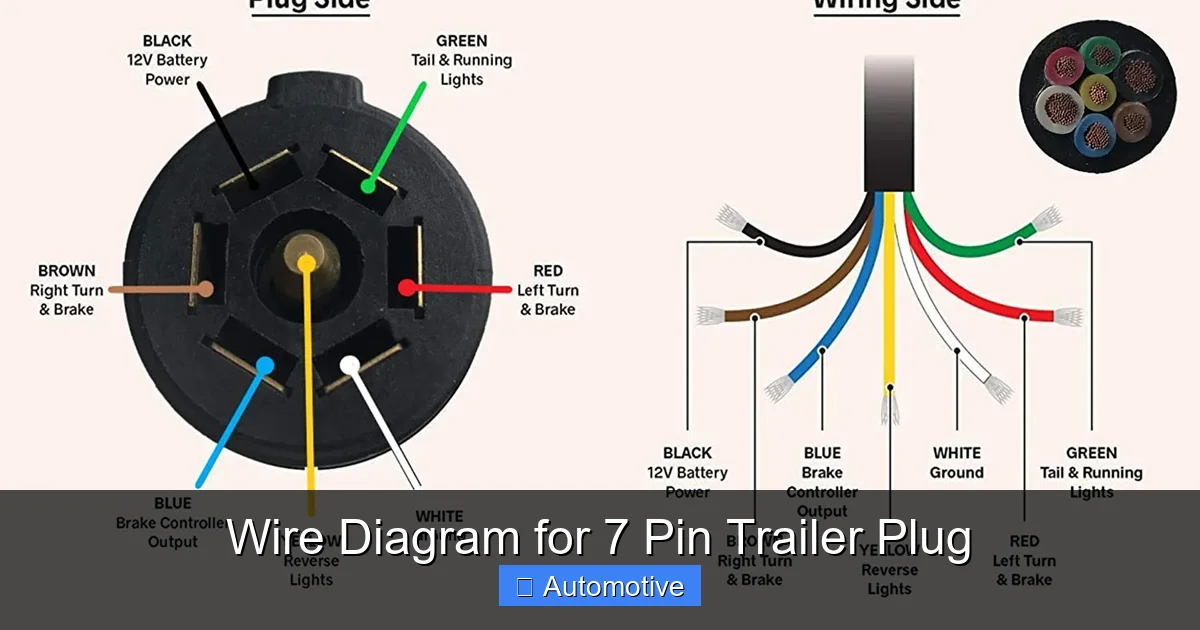
Understanding the wire diagram for a 7 pin trailer plug is essential for safe and reliable towing. This guide breaks down each wire’s purpose, color coding, and proper installation to help you connect your trailer lights, brakes, and auxiliary power with confidence.
In This Article
- 1 Key Takeaways
- 2 📑 Table of Contents
- 3 Understanding the 7 Pin Trailer Plug: A Complete Guide
- 4 What Is a 7 Pin Trailer Plug?
- 5 Breaking Down the 7 Pin Trailer Plug Wiring Diagram
- 5.1 Pin 1: White Wire – Ground
- 5.2 Pin 2: Brown Wire – Taillights / Running Lights
- 5.3 Pin 3: Green Wire – Right Turn Signal & Brake Light
- 5.4 Pin 4: Yellow Wire – Left Turn Signal & Brake Light
- 5.5 Pin 5: Blue Wire – Electric Brake Power
- 5.6 Pin 6: Red Wire – Auxiliary / 12V Power
- 5.7 Pin 7: Black Wire – Reverse Lights
- 6 How to Wire a 7 Pin Trailer Plug: Step-by-Step
- 7 Troubleshooting Common 7 Pin Trailer Plug Issues
- 8 Safety Tips and Best Practices
- 9 Conclusion
- 10 Frequently Asked Questions
- 10.1 What is the standard wire color for the ground in a 7 pin trailer plug?
- 10.2 Can I use a 7 pin plug on a trailer without electric brakes?
- 10.3 Why are my trailer lights dim or flickering?
- 10.4 Do all 7 pin trailer plugs have the same wiring?
- 10.5 How do I test my 7 pin trailer plug?
- 10.6 Can I wire a 7 pin plug myself?
Key Takeaways
- Standardized Wiring: The 7 pin trailer plug uses a universal wiring system, making it compatible with most trailers and tow vehicles.
- Color-Coded Wires: Each wire has a specific color and function—such as brown for taillights and yellow for left turn/brake—ensuring easy identification.
- Critical Functions Covered: The plug supports essential systems including brake lights, turn signals, running lights, reverse lights, and electric brake power.
- Proper Grounding is Vital: A solid ground connection (usually white wire) prevents electrical issues and ensures all lights function correctly.
- Use a Wiring Diagram: Always refer to a visual wire diagram when installing or troubleshooting to avoid misconnections.
- Test After Installation: Use a multimeter or trailer light tester to verify each circuit works before hitting the road.
- Weatherproofing Matters: Protect connections with dielectric grease and heat shrink tubing to prevent corrosion and failure.
📑 Table of Contents
Understanding the 7 Pin Trailer Plug: A Complete Guide
If you’ve ever hooked up a trailer to your truck, RV, or SUV, chances are you’ve encountered the 7 pin trailer plug. It’s that round or blade-style connector that links your vehicle’s electrical system to the trailer’s lights, brakes, and other accessories. While it might look intimidating at first, the wire diagram for a 7 pin trailer plug is actually quite straightforward—once you know what each wire does.
Whether you’re towing a small utility trailer, a camper, or a heavy-duty equipment hauler, getting the wiring right is crucial. A faulty connection can lead to brake lights that don’t work, turn signals that flicker, or worse—accidents due to poor visibility. That’s why understanding the wire diagram for a 7 pin trailer plug isn’t just helpful; it’s essential for safety and compliance with road laws.
In this guide, we’ll walk you through every aspect of the 7 pin trailer plug wiring system. From the color codes and pin functions to step-by-step installation tips and troubleshooting advice, you’ll have everything you need to wire your trailer like a pro. No electrical degree required—just clear explanations, practical examples, and a friendly tone to keep things simple.
What Is a 7 Pin Trailer Plug?
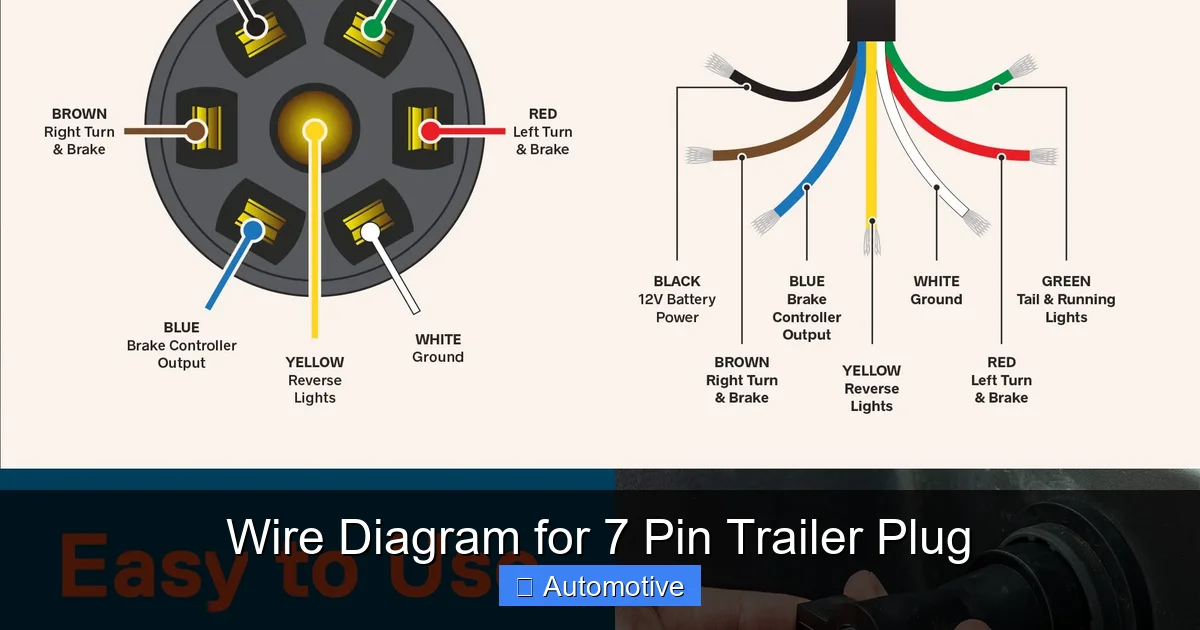
Visual guide about Wire Diagram for 7 Pin Trailer Plug
Image source: m.media-amazon.com
The 7 pin trailer plug is the standard electrical connector used to link a tow vehicle to a trailer. It carries power and signals for various trailer functions, ensuring that lights, brakes, and other systems operate in sync with the towing vehicle. Unlike simpler 4-pin connectors used on smaller trailers, the 7-pin setup supports more advanced features, making it ideal for larger or more complex trailers.
There are two common types of 7 pin connectors: the **round 7-pin** (often used on RVs and European vehicles) and the **blade-style 7-pin** (common in North America). Despite the physical differences, both use the same wiring logic and pin assignments. This standardization means that as long as you follow the correct wire diagram for a 7 pin trailer plug, you can connect almost any compatible trailer to your vehicle.
The seven pins are arranged in a specific pattern—either in a circular layout (for round plugs) or in two rows (for blade-style plugs). Each pin corresponds to a specific electrical function, and each wire connected to it has a designated color. This system eliminates guesswork and ensures compatibility across different manufacturers.
Common Uses for 7 Pin Trailer Plugs
You’ll find 7 pin trailer plugs on a wide range of trailers, including:
– **Travel trailers and RVs:** These often require power for interior lights, refrigerators, and battery charging.
– **Boat trailers:** Need reliable brake and turn signals, especially when launching or retrieving boats.
– **Utility and cargo trailers:** Use basic lighting but may also have electric brakes.
– **Horse and livestock trailers:** Require extra safety features like interior lighting and brake controllers.
– **Equipment trailers:** Often have hydraulic brakes and auxiliary power needs.
No matter the trailer type, the wire diagram for a 7 pin trailer plug remains consistent. This universality is one of the reasons it’s the go-to choice for serious towing.
Breaking Down the 7 Pin Trailer Plug Wiring Diagram
Visual guide about Wire Diagram for 7 Pin Trailer Plug
Image source: offroadofficial.com
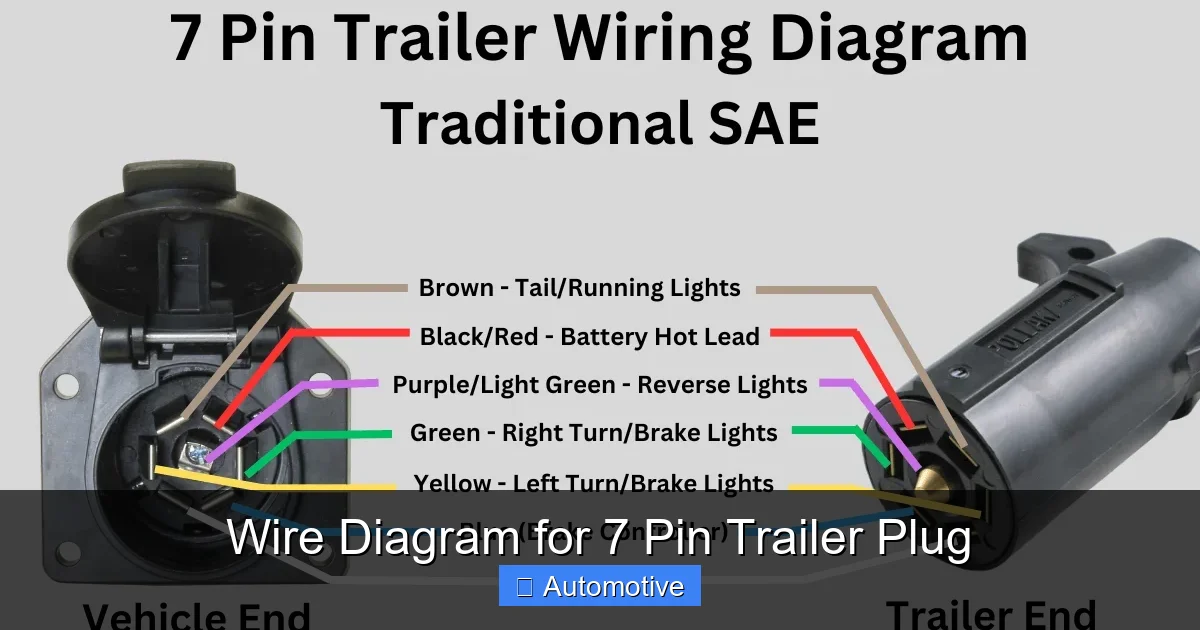
Now let’s get into the heart of the matter: the actual wire diagram for a 7 pin trailer plug. Each of the seven wires has a specific color and function. Knowing these by heart—or at least having a reference handy—will save you time and frustration.
Here’s a breakdown of the standard 7 pin trailer plug wiring:
| Pin Number | Wire Color | Function |
|————|————|———|
| 1 | White | Ground |
| 2 | Brown | Taillights / Running Lights |
| 3 | Green | Right Turn Signal & Brake Light |
| 4 | Yellow | Left Turn Signal & Brake Light |
| 5 | Blue | Electric Brake Power |
| 6 | Red | Auxiliary / 12V Power (Battery Charge) |
| 7 | Black | Reverse Lights |
Let’s go through each one in detail.
Pin 1: White Wire – Ground
The white wire is the ground connection. It’s arguably the most important wire in the entire system because it completes the electrical circuit. Without a solid ground, none of the lights or brakes will work properly—even if everything else is wired correctly.
The ground wire connects to the trailer’s metal frame, which then connects to the tow vehicle’s chassis. It’s essential to ensure this connection is clean, tight, and free of rust or paint. A loose or corroded ground is one of the most common causes of trailer light failure.
Tip: Always use a star washer or self-tapping screw to secure the ground wire to the trailer frame. This creates a better metal-to-metal connection.
Pin 2: Brown Wire – Taillights / Running Lights
The brown wire powers the trailer’s taillights and running lights. These are the lights that stay on whenever your vehicle’s headlights are on, making the trailer visible from behind.
This wire connects to the trailer’s side marker lights, rear running lights, and sometimes the license plate light. It’s controlled by the vehicle’s headlight switch, so when you turn on your headlights, the trailer lights should come on too.
If your trailer’s running lights aren’t working, check the brown wire first. A broken wire, loose connection, or blown fuse could be the culprit.
Pin 3: Green Wire – Right Turn Signal & Brake Light
The green wire handles the right-side turn signal and brake light. When you press the brake pedal or activate the right turn signal, this wire sends power to the corresponding lights on the trailer.
This is a dual-function wire, meaning it carries both brake and turn signals. The brake signal is constant when the pedal is pressed, while the turn signal pulses. The trailer’s wiring harness combines these signals so the same bulb can serve both purposes.
A common issue is when the right brake light works but the turn signal doesn’t (or vice versa). This usually points to a wiring fault in the green wire or a problem with the trailer’s light assembly.
Pin 4: Yellow Wire – Left Turn Signal & Brake Light
Just like the green wire, the yellow wire controls the left-side turn signal and brake light. It’s identical in function but serves the opposite side of the trailer.
This wire is activated when you press the brake or use the left turn signal. It’s essential for signaling your intentions to other drivers, especially when changing lanes or making turns.
If the left lights aren’t working, inspect the yellow wire for cuts, corrosion, or loose connections. Also, check the fuse in your vehicle’s fuse box—sometimes a blown fuse can affect only one side.
Pin 5: Blue Wire – Electric Brake Power
The blue wire delivers power to the trailer’s electric brakes. This is a critical safety feature for heavier trailers that require additional stopping power beyond what the tow vehicle can provide.
The blue wire connects to a brake controller inside the tow vehicle. When you apply the brakes, the controller sends a variable voltage through the blue wire to activate the trailer’s brakes. The amount of power depends on how hard you’re braking and the settings on your brake controller.
Not all trailers have electric brakes, so this wire may not be used in every setup. However, if your trailer has brakes, this wire must be connected and functioning properly.
Tip: Always test your electric brakes before towing. Use the manual override on your brake controller to ensure the trailer brakes engage.
Pin 6: Red Wire – Auxiliary / 12V Power
The red wire provides constant 12V power from the tow vehicle’s battery. This is often used to charge the trailer’s battery (in RVs or campers) or power accessories like interior lights, refrigerators, or water pumps.
This wire is always live when the vehicle is running, so it’s important to use it wisely. Overloading this circuit can drain your vehicle’s battery or blow a fuse.
Some trailers use this wire to power a breakaway switch system, which activates the trailer brakes if it becomes disconnected from the tow vehicle.
Pin 7: Black Wire – Reverse Lights
The black wire powers the trailer’s reverse lights. These lights come on when you shift into reverse, helping you see behind you when backing up.
Not all trailers have reverse lights, but they’re common on larger RVs and boat trailers. This wire is connected to the vehicle’s reverse light circuit, so it only activates when the transmission is in reverse.
If your trailer has reverse lights and they’re not working, check the black wire and the corresponding fuse in your vehicle.
How to Wire a 7 Pin Trailer Plug: Step-by-Step
Visual guide about Wire Diagram for 7 Pin Trailer Plug
Image source: i.pinimg.com
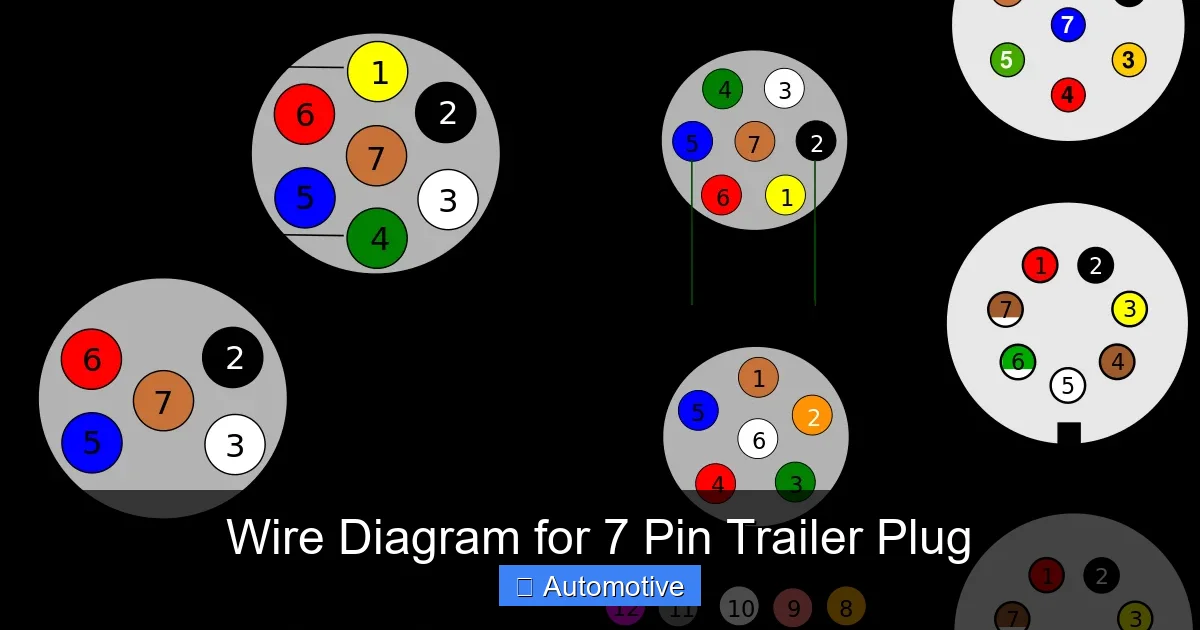
Now that you understand what each wire does, let’s walk through the process of wiring a 7 pin trailer plug. Whether you’re installing a new plug or replacing an old one, these steps will guide you through a safe and reliable installation.
Gather Your Tools and Materials
Before you start, make sure you have:
– A 7 pin trailer plug (round or blade-style)
– Wire strippers
– Crimping tool or soldering iron
– Heat shrink tubing or electrical tape
– Dielectric grease
– Multimeter or trailer light tester
– Wire connectors (butt splices, ring terminals, etc.)
Step 1: Disconnect the Vehicle Battery
Safety first! Always disconnect the negative terminal of your vehicle’s battery before working on electrical systems. This prevents accidental shorts or shocks.
Step 2: Identify the Wires
Match the wires from your trailer harness to the correct colors in the wiring diagram. If your trailer uses non-standard colors, label them clearly to avoid confusion.
Step 3: Strip and Prepare the Wires
Strip about 1/2 inch of insulation from each wire. Twist the strands tightly to prevent fraying.
Step 4: Connect the Wires to the Plug
Insert each wire into the correct terminal on the plug. Use a crimping tool to secure the connection. For extra durability, solder the joints and cover them with heat shrink tubing.
Step 5: Secure the Ground Wire
Attach the white ground wire to a clean, unpainted metal part of the trailer frame. Use a ring terminal and a self-tapping screw for a solid connection.
Step 6: Test the Connections
Reconnect the battery and use a multimeter or trailer light tester to verify each circuit. Turn on the headlights, brake lights, and turn signals to ensure everything works.
Step 7: Weatherproof the Plug
Apply dielectric grease to the terminals to prevent corrosion. Use a protective boot or cover to shield the plug from moisture and dirt.
Troubleshooting Common 7 Pin Trailer Plug Issues
Even with proper wiring, problems can arise. Here are some common issues and how to fix them.
No Lights at All
If none of the trailer lights work, check the ground connection first. A bad ground is the most likely cause. Also, verify that the vehicle’s fuse for the trailer circuit is intact.
Only Some Lights Work
If only one side or one function (like brakes but not turn signals) works, inspect the corresponding wire. Look for breaks, corrosion, or loose connections.
Flickering Lights
Flickering usually indicates a poor connection. Check all wire joints and the ground. Vibration while driving can loosen connections over time.
Brake Lights Don’t Work
Test the brake controller and the blue wire. Ensure the brake controller is properly calibrated and the trailer brakes are adjusted.
Reverse Lights Not Working
Check the black wire and the vehicle’s reverse light fuse. Some vehicles require a relay to activate the trailer reverse lights.
Safety Tips and Best Practices
Wiring a trailer plug isn’t just about making lights work—it’s about safety. Here are some best practices to keep in mind:
– Always use a wiring diagram specific to your vehicle and trailer.
– Never splice wires without proper insulation.
– Use weatherproof connectors and protect exposed wires.
– Test all functions before every trip.
– Carry spare fuses and a trailer light tester in your vehicle.
– Replace damaged plugs immediately—don’t tape them up as a temporary fix.
Conclusion
The wire diagram for a 7 pin trailer plug may seem complex at first, but it’s actually a simple and reliable system once you understand the basics. Each wire has a clear purpose, and the color-coding makes identification easy. Whether you’re installing a new plug or troubleshooting an existing one, following the correct wiring diagram ensures your trailer lights, brakes, and accessories work safely and efficiently.
Remember, a well-wired trailer isn’t just convenient—it’s a legal requirement in most places. Faulty lights or brakes can lead to tickets, accidents, or worse. Take the time to do it right, test your connections, and maintain your wiring over time.
With this guide, you’re now equipped to handle any 7 pin trailer plug wiring job with confidence. Safe towing!
Frequently Asked Questions
What is the standard wire color for the ground in a 7 pin trailer plug?
The standard wire color for the ground in a 7 pin trailer plug is white. This wire must be securely connected to the trailer’s metal frame to complete the electrical circuit.
Can I use a 7 pin plug on a trailer without electric brakes?
Yes, you can use a 7 pin plug even if your trailer doesn’t have electric brakes. Simply leave the blue wire (electric brake power) disconnected or capped off.
Why are my trailer lights dim or flickering?
Dim or flickering lights are usually caused by a poor ground connection or corroded wires. Check the white ground wire and clean all connections.
Do all 7 pin trailer plugs have the same wiring?
Yes, the wiring for 7 pin trailer plugs is standardized across most vehicles and trailers. The color codes and pin functions are consistent, regardless of plug style.
How do I test my 7 pin trailer plug?
Use a multimeter or a dedicated trailer light tester. Connect the tester to the plug and activate each function (brakes, turn signals, etc.) to verify proper operation.
Can I wire a 7 pin plug myself?
Absolutely! With basic tools and this guide, most people can wire a 7 pin trailer plug safely. Just follow the wiring diagram and test all connections.