

Will Dodge Ram Wheels Fit a Chevy Silverado

Contents
- 1 Key Takeaways
- 2 📑 Table of Contents
- 3 Understanding Wheel Compatibility Basics
- 4 Dodge Ram vs. Chevy Silverado: A Side-by-Side Comparison
- 5 Can You Make Dodge Ram Wheels Fit a Chevy Silverado?
- 6 Real-World Examples and Case Studies
- 7 Safety, Legality, and Long-Term Considerations
- 8 Alternatives to Swapping Dodge Wheels
- 9 Final Thoughts: Should You Do It?
- 10 Frequently Asked Questions



Swapping Dodge Ram wheels onto a Chevy Silverado isn’t as simple as bolting them on—it depends on bolt pattern, offset, and hub size. While some models may fit with adapters or modifications, others won’t work at all without compromising safety or performance.
If you’re a truck enthusiast looking to customize your Chevy Silverado with a bold new look, you might have considered using wheels from a Dodge Ram. After all, both trucks are American icons, built for power, durability, and off-road capability. The aggressive styling of Dodge Ram wheels—especially the iconic “Ram Head” center caps and rugged spoke designs—can be tempting to slap onto your Silverado. But here’s the million-dollar question: **Will Dodge Ram wheels fit a Chevy Silverado?**
The short answer? It depends. While it’s technically possible in some cases, it’s not a straightforward bolt-on swap. There are several critical factors to consider—bolt pattern, hub size, offset, backspacing, and overall wheel dimensions—that determine whether those sleek Dodge rims will actually work on your Chevy. Ignoring these details can lead to poor handling, premature wear, or even dangerous driving conditions.
In this comprehensive guide, we’ll break down everything you need to know about fitting Dodge Ram wheels on a Chevy Silverado. Whether you’re restoring an older truck, upgrading your ride’s appearance, or just curious about cross-brand compatibility, we’ve got you covered. We’ll explore the technical specs, discuss potential workarounds like adapters, and share real-world examples to help you make an informed decision. So grab a coffee, settle in, and let’s dive into the world of wheel swaps—Dodge to Chevy style.
Key Takeaways
- Bolt pattern mismatch is common: Most Dodge Rams use a 5×5.5″ (5×139.7mm) bolt pattern, while many Chevy Silverados use 6×5.5″ (6×139.7mm), making direct fitment impossible.
- Hub-centric compatibility matters: Even if the bolt pattern aligns, the center bore size must match or be adapted to avoid vibration and steering issues.
- Offset and backspacing affect clearance: Dodge wheels often have different offsets, which can cause rubbing on suspension components or fenders on a Silverado.
- Adapters and spacers can help—but with risks: Wheel adapters may allow fitment, but they add stress to wheel bearings and can void warranties or compromise safety.
- Year and model matter: Older Silverados (pre-2007) may have 5-lug setups that align better with certain Dodge wheels, but newer models are almost always 6-lug.
- Tire size and width play a role: Wider Dodge wheels may require trimming or suspension lifts to prevent interference.
- Always consult a professional: Before attempting any cross-brand wheel swap, get advice from a mechanic or wheel specialist to ensure safety and legality.
📑 Table of Contents
- Understanding Wheel Compatibility Basics
- Dodge Ram vs. Chevy Silverado: A Side-by-Side Comparison
- Can You Make Dodge Ram Wheels Fit a Chevy Silverado?
- Real-World Examples and Case Studies
- Safety, Legality, and Long-Term Considerations
- Alternatives to Swapping Dodge Wheels
- Final Thoughts: Should You Do It?
Understanding Wheel Compatibility Basics
Before we get into the nitty-gritty of Dodge and Chevy wheel compatibility, it’s important to understand the core components that determine whether a wheel will fit your truck. Think of it like trying to plug a USB-C cable into an old USB-A port—it just won’t work unless the connectors match. The same logic applies to wheels and hubs.
The three main factors that determine wheel fitment are:
– **Bolt Pattern (PCD):** This is the number of lug nuts and the diameter of the circle they form. For example, a 5×5.5″ bolt pattern means five lug nuts spaced evenly around a 5.5-inch diameter circle.
– **Center Bore:** This is the hole in the center of the wheel that fits over the hub. It must be the correct size—too small and it won’t fit; too large and the wheel won’t seat properly, causing vibration.
– **Offset and Backspacing:** These determine how far the wheel sits inward or outward relative to the hub. Incorrect offset can cause rubbing on suspension parts, fenders, or even the frame.
Let’s break these down a bit more.
Bolt Pattern: The First Hurdle
The bolt pattern is often the biggest obstacle when trying to fit Dodge Ram wheels on a Chevy Silverado. Most modern Dodge Rams (especially from 2009 onward) use a **5×5.5-inch** (5×139.7mm) bolt pattern. This means five lug nuts arranged in a circle with a 5.5-inch diameter.
On the other hand, most Chevy Silverados—especially those from 2007 and newer—use a **6×5.5-inch** (6×139.7mm) bolt pattern. That’s six lug nuts on a 5.5-inch circle. The difference in the number of lugs makes a direct swap impossible without some kind of adapter.
However, older Silverados (pre-2007) sometimes came with 5-lug setups, particularly on base models or lighter-duty versions. If you’re working with a 1999–2006 Silverado 1500, there’s a chance it has a 5×5.5″ bolt pattern, which would align with many Dodge Ram wheels. But even then, you’re not out of the woods yet—other factors like hub size and offset still matter.
Center Bore: The Hidden Challenge
Even if the bolt pattern matches, the center bore can be a dealbreaker. The center bore is the large hole in the middle of the wheel that fits over the hub. If it’s too small, the wheel won’t fit at all. If it’s too large, the wheel will “float” on the hub, leading to vibration, uneven wear, and potential safety hazards.
Dodge Ram wheels typically have a center bore of around **77.8mm**, while Chevy Silverados usually require a center bore of **78.1mm**. That 0.3mm difference might not seem like much, but it’s enough to cause problems. In some cases, you can use hub-centric rings—plastic or metal spacers that fill the gap—to make a larger bore fit a smaller hub. But this only works if the wheel’s bore is larger than the hub, not smaller.
So if your Dodge wheel has a 77.8mm bore and your Silverado hub is 78.1mm, you’re in trouble. The wheel won’t seat properly, and no amount of forcing will fix it. This is why it’s crucial to check both the bolt pattern and the center bore before even thinking about mounting.
Offset and Backspacing: The Fit Factor
Offset refers to how far the wheel’s mounting surface is from the centerline of the wheel. It’s measured in millimeters and can be positive (wheel sits outward), negative (wheel sits inward), or zero (centered). Backspacing is the distance from the mounting surface to the inner edge of the wheel.
Dodge Ram wheels often have a different offset than Chevy wheels. For example, many Dodge trucks use wheels with a **+12mm to +25mm offset**, while Chevy Silverados typically use **+15mm to +30mm**. While these ranges overlap, even small differences can cause issues.
If the offset is too positive, the wheel may rub against the suspension or inner fender. If it’s too negative, the tire might stick out too far, causing clearance problems with the outer fender or requiring fender flares. In extreme cases, incorrect offset can even affect steering geometry and handling.
Backspacing also plays a role. A wheel with too much backspacing can interfere with brake calipers or suspension components. Too little, and the tire might not clear the wheel well. Always check your Silverado’s stock wheel specs and compare them to the Dodge wheels you’re considering.
Dodge Ram vs. Chevy Silverado: A Side-by-Side Comparison
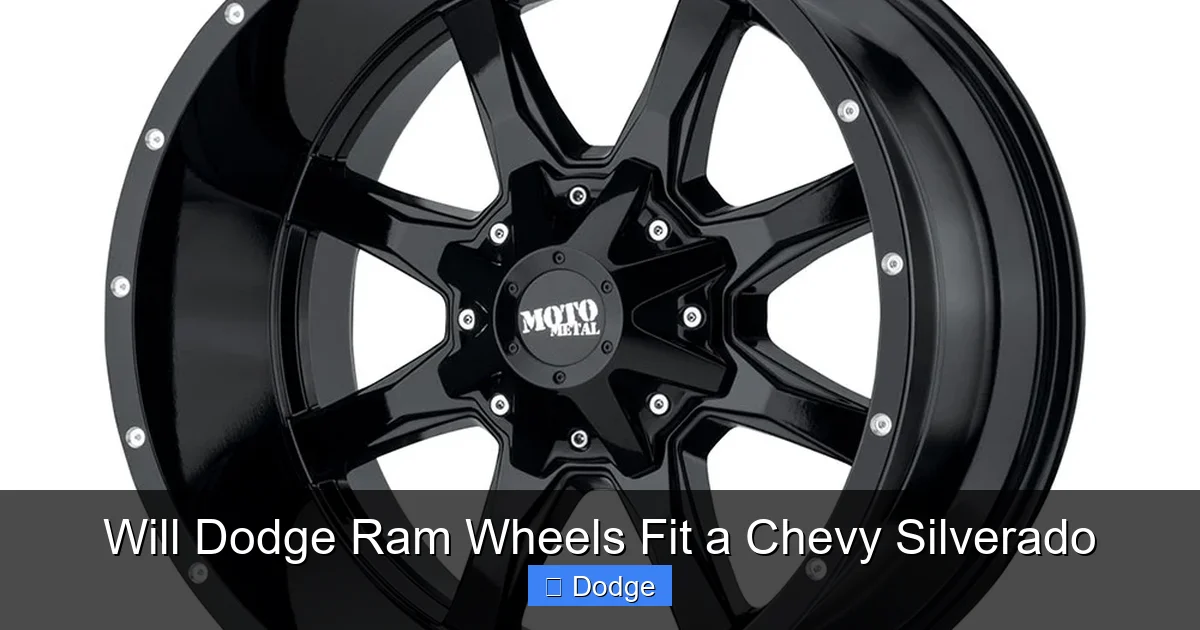
Visual guide about Will Dodge Ram Wheels Fit a Chevy Silverado
Image source: realtruck.com
To better understand the compatibility challenges, let’s compare the wheel specs of popular Dodge Ram and Chevy Silverado models. This will help you see where the gaps are—and where there might be overlap.
Bolt Pattern Comparison
| Vehicle | Model Years | Bolt Pattern |
|——–|————-|————–|
| Dodge Ram 1500 | 2009–2023 | 5×5.5″ (5×139.7mm) |
| Dodge Ram 2500/3500 | 2009–2023 | 8×6.5″ (8×165.1mm) |
| Chevy Silverado 1500 | 2007–2023 | 6×5.5″ (6×139.7mm) |
| Chevy Silverado 1500 | 1999–2006 | 5×5.5″ (5×139.7mm) *some models* |
| Chevy Silverado 2500/3500 | 2007–2023 | 8×6.5″ (8×165.1mm) |
As you can see, the 1500 models are where the biggest mismatch occurs. Modern Silverados use 6-lug patterns, while Rams use 5-lug. The 2500/3500 models are more compatible—both use 8×6.5″ patterns—but even then, hub size and offset can vary.
Center Bore and Hub Size
| Vehicle | Typical Center Bore |
|——–|———————|
| Dodge Ram 1500 | 77.8mm |
| Chevy Silverado 1500 | 78.1mm |
| Dodge Ram 2500/3500 | 130.0mm |
| Chevy Silverado 2500/3500 | 130.0mm |
Here, the 2500/3500 models are nearly identical in hub size, making them more compatible. But the 1500 models have that pesky 0.3mm difference. Again, this might not seem like much, but it’s enough to prevent proper seating.
Offset and Wheel Width
Dodge Ram wheels often come in widths ranging from 8 to 10 inches, with offsets between +12mm and +25mm. Chevy Silverado wheels are similar, but tend to have slightly higher offsets—around +15mm to +30mm. This means Dodge wheels may sit slightly more outward, which could cause rubbing on a Silverado unless you have a lift or leveling kit.
For example, a 2015 Dodge Ram with 20×9 wheels at +18mm offset might fit a 2015 Silverado 1500 with minor trimming, but a 2008 Ram with 17×8 wheels at +12mm could stick out too far and require fender modifications.
Can You Make Dodge Ram Wheels Fit a Chevy Silverado?
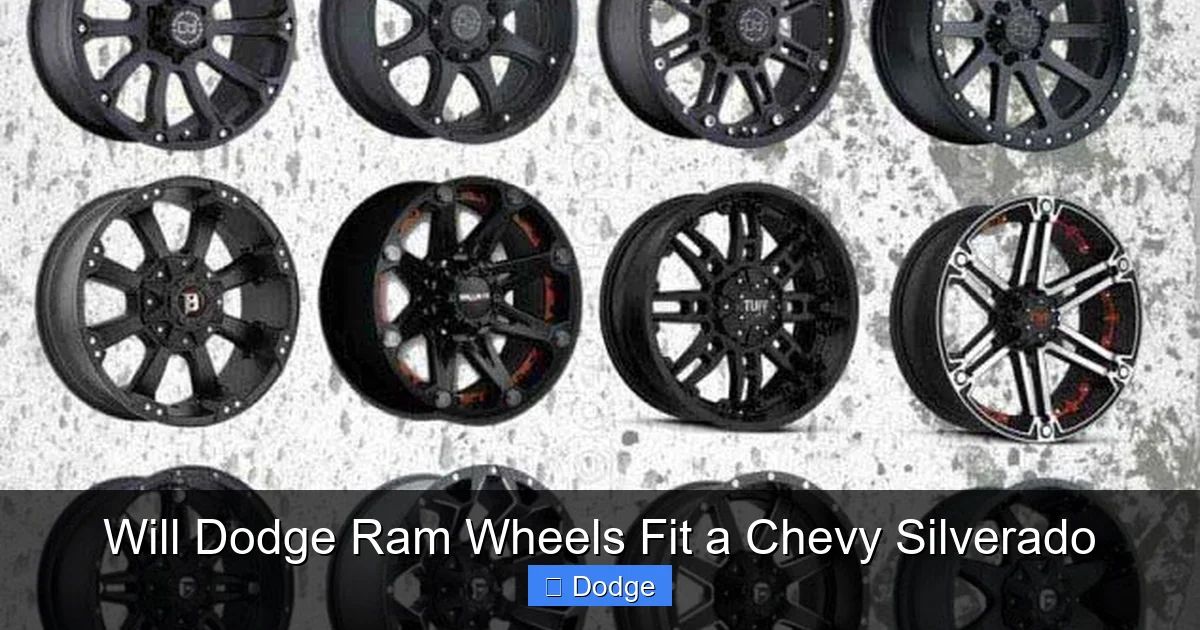
Visual guide about Will Dodge Ram Wheels Fit a Chevy Silverado
Image source: autocraze.com.au
Now that we’ve covered the technical challenges, let’s address the real question: **Is it possible to fit Dodge Ram wheels on a Chevy Silverado?** The answer is: **Yes, but with caveats.**
There are a few ways to make it work, but each comes with trade-offs. Let’s explore the most common methods.
Using Wheel Adapters
The most popular solution is to use **wheel adapters** (also called hub centric spacers). These are metal plates that bolt onto your Silverado’s hub and provide a new mounting surface with the correct bolt pattern for the Dodge wheels.
For example, a 6×5.5″ to 5×5.5″ adapter would allow you to mount 5-lug Dodge wheels on a 6-lug Silverado. These adapters are widely available online and at auto parts stores, often ranging from $100 to $300 per set.
But here’s the catch: **adapters add stress to your wheel bearings and suspension.** Every time you add a spacer or adapter, you’re increasing the leverage on the hub, which can lead to premature wear, vibration, or even failure. Some manufacturers even void warranties if adapters are used.
Additionally, adapters must be **hub-centric**—meaning they have a precise center bore that matches both the hub and the wheel. If they’re not, you’ll get vibration at high speeds. Always buy high-quality adapters from reputable brands like Spidertrax, Bora, or Quality Parts.
Using Wheel Spacers (Not Recommended)
Some people confuse adapters with spacers. Spacers simply push the wheel outward without changing the bolt pattern. They’re used to improve clearance or stance, but they don’t solve the bolt pattern mismatch.
Using spacers alone won’t let you fit Dodge wheels on a Chevy unless the bolt patterns already match. And even then, spacers add the same stress as adapters, so they’re not ideal for long-term use.
Re-drilling or Modifying Wheels (Risky)
In rare cases, you might find someone willing to re-drill Dodge wheels to fit a 6×5.5″ pattern. This involves machining the wheel to add a sixth lug hole and adjusting the bolt circle. While technically possible, it’s **not recommended.**
Re-drilling compromises the structural integrity of the wheel. Wheels are precision-engineered for specific loads and stresses. Altering them can lead to cracking, bending, or even catastrophic failure. Plus, it’s expensive—often costing more than just buying new wheels.
Finding Compatible Dodge Wheels
Your best bet might be to look for Dodge wheels that already have a 6×5.5″ bolt pattern. While rare, some aftermarket or custom Dodge wheels are drilled for multiple patterns, including 6×5.5″. These are sometimes called “dual-drilled” or “multi-pattern” wheels.
For example, certain Mopar performance wheels or aftermarket brands like Fuel Off-Road or XD Series offer wheels with both 5×5.5″ and 6×5.5″ patterns. If you can find a set like this, you might be able to bolt them directly onto your Silverado—provided the hub size and offset are compatible.
Real-World Examples and Case Studies
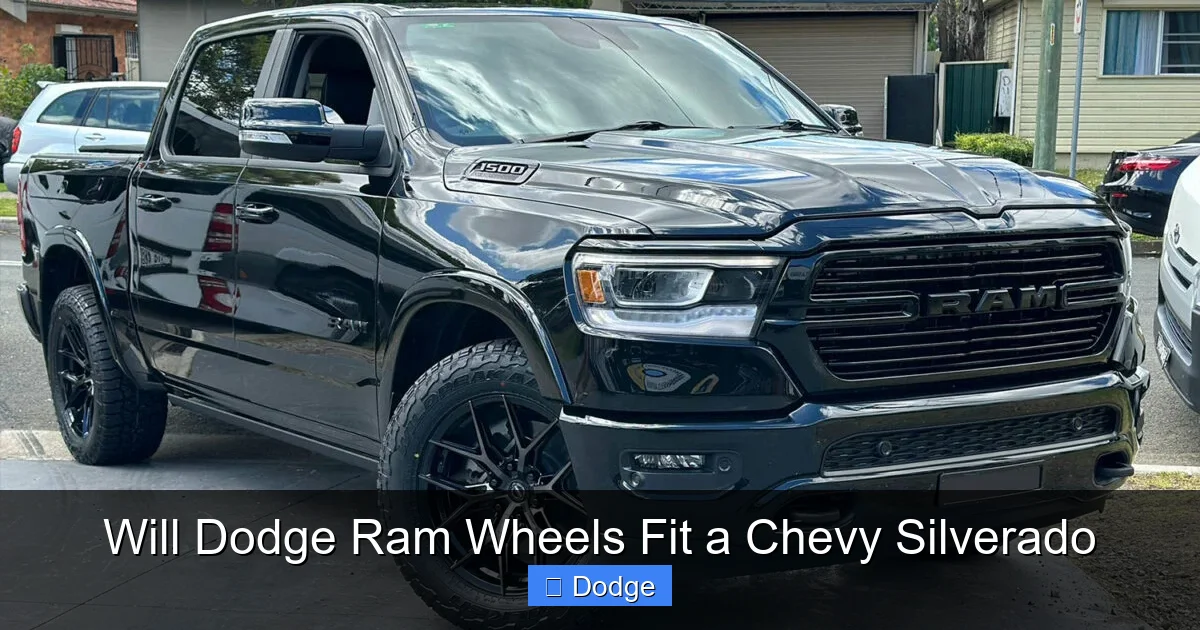
Visual guide about Will Dodge Ram Wheels Fit a Chevy Silverado
Image source: cncwheels.com.au
Let’s look at a few real-world scenarios to see how this plays out.
Case Study 1: 2015 Chevy Silverado 1500 with 2018 Dodge Ram Wheels
A Silverado owner wanted to use 20×9 Dodge Ram wheels with a +18mm offset. His truck had a 6×5.5″ bolt pattern and a 78.1mm hub.
He purchased 6×5.5″ to 5×5.5″ adapters with a 78.1mm center bore. The wheels fit, but he noticed slight vibration at highway speeds. After checking, he realized the adapters weren’t perfectly hub-centric. He replaced them with higher-quality ones, and the vibration disappeared.
However, the wheels stuck out about 1.5 inches beyond the fenders. He had to install fender flares to avoid rubbing and legal issues. Overall, it worked—but it wasn’t cheap or simple.
Case Study 2: 2005 Chevy Silverado 1500 with 2006 Dodge Ram Wheels
This older Silverado had a 5×5.5″ bolt pattern, matching the Dodge Ram. The owner swapped wheels directly, but the Dodge wheels had a 77.8mm center bore, while the Chevy hub was 78.1mm.
He used 78.1mm to 77.8mm hub-centric rings to fill the gap. The wheels fit perfectly, and there was no vibration. The offset was close enough that no rubbing occurred. This was one of the rare cases where a direct swap worked without major modifications.
Case Study 3: 2020 Chevy Silverado 2500 with 2021 Dodge Ram 2500 Wheels
Both trucks use 8×6.5″ bolt patterns and 130.0mm center bores. The owner swapped wheels directly and they fit like a glove. The offset was nearly identical, and no adapters were needed. This is the ideal scenario—same class, same specs, seamless fit.
Safety, Legality, and Long-Term Considerations
Even if you manage to fit Dodge Ram wheels on your Chevy Silverado, you need to think about safety, legality, and long-term reliability.
Safety First
Improperly fitted wheels can lead to:
– Wheel detachment while driving
– Loss of control
– Premature tire wear
– Suspension damage
Always torque lug nuts to the manufacturer’s specifications and use a torque wrench—not an impact gun. Check lug nuts after 50–100 miles and periodically thereafter.
Legal and Inspection Issues
In some states, modified wheels or adapters may fail vehicle inspections. If your wheels stick out too far or alter the vehicle’s original specifications, you could be ticketed or denied registration.
Check your local laws before making any modifications. Some states allow minor changes, while others are strict about OEM-equivalent parts.
Warranty and Insurance
Using adapters or non-OEM wheels may void your vehicle’s warranty, especially if a failure is linked to the modification. Insurance companies may also deny claims if they determine the modification contributed to an accident.
Always document your modifications and consult your insurer and dealer.
Alternatives to Swapping Dodge Wheels
If the hassle of adapters and modifications seems too much, consider these alternatives:
– **Buy Chevy-specific wheels with a Dodge-inspired look:** Many aftermarket brands make wheels that mimic the aggressive styling of Dodge Rams but are designed for Chevy bolt patterns.
– **Use wheel covers or center caps:** Swap out your Silverado’s center caps for Dodge-style ones to get the look without the fitment issues.
– **Custom paint or wraps:** Paint your existing wheels to match the color and style of Dodge wheels.
These options are safer, cheaper, and often just as effective in achieving the desired aesthetic.
Final Thoughts: Should You Do It?
So, will Dodge Ram wheels fit a Chevy Silverado? In some cases, yes—but it’s rarely a simple swap. You’ll likely need adapters, hub-centric rings, or both. And even then, you may face issues with offset, clearance, and safety.
If you’re determined to make it work, do your homework. Measure your hub, check your bolt pattern, and consult a professional. And always prioritize safety over style.
But if you’re looking for a bold new look without the headaches, consider Chevy-specific wheels that capture the spirit of the Dodge Ram. Sometimes, the best solution is the one that fits perfectly—right out of the box.
Frequently Asked Questions
Can I put Dodge Ram 1500 wheels on a Chevy Silverado 1500?
Only if the Silverado has a 5×5.5″ bolt pattern (common on pre-2007 models) and the hub size matches. Most modern Silverados use 6×5.5″, so adapters are required—but they come with risks.
Will 20-inch Dodge Ram wheels fit my Silverado?
It depends on the bolt pattern, offset, and hub size. If you use adapters and the offset is compatible, they may fit—but you might need fender flares or a lift to prevent rubbing.
Do I need hub-centric rings when swapping wheels?
Yes, if the center bore of the Dodge wheel is smaller than your Silverado’s hub. Hub-centric rings ensure a snug fit and prevent vibration at high speeds.
Are wheel adapters safe for daily driving?
High-quality adapters from reputable brands can be safe if installed correctly. However, they add stress to wheel bearings and may void warranties—use with caution.
Can I re-drill Dodge wheels to fit my Chevy?
Technically yes, but it’s not recommended. Re-drilling compromises wheel integrity and can lead to failure. It’s safer to buy wheels designed for your truck.
What’s the best way to get a Dodge look on my Silverado?
Buy aftermarket wheels made for Chevy that mimic Dodge styling, or use custom center caps and paint. This gives you the look without the fitment risks.


