

Will Dodge Ram Wheels Fit a Chevy Silverado?

Contents
- 1 Key Takeaways
- 2 📑 Table of Contents
- 3 Will Dodge Ram Wheels Fit a Chevy Silverado?
- 4 Understanding Wheel Compatibility Basics
- 5 Bolt Pattern Differences: The 5×139.7 vs. 6×139.7 Dilemma
- 6 Real-World Fitment Examples and Tips
- 7 Safety, Legality, and Long-Term Considerations
- 8 Alternatives to Using Dodge Wheels
- 9 Conclusion: Should You Put Dodge Ram Wheels on Your Chevy Silverado?
- 10 Frequently Asked Questions


Many truck owners wonder if Dodge Ram wheels can fit a Chevy Silverado. While both are full-size trucks, compatibility depends on several key factors like bolt pattern, offset, and center bore. With the right modifications or adapters, it’s often possible—but not always straightforward.
Key Takeaways
- Bolt pattern differences matter: Dodge Rams typically use a 5×139.7mm pattern, while Chevy Silverados use 6×139.7mm—meaning direct fitment is rare without adapters.
- Wheel offset and backspacing are critical: Even if the bolt pattern matches, incorrect offset can cause rubbing or handling issues.
- Center bore size must align: Dodge wheels often have a larger hub bore than Chevy, requiring hub-centric rings for a secure fit.
- Adapters and spacers can bridge gaps: Using quality 5×139.7 to 6×139.7 adapters allows Dodge wheels to fit Silverados safely.
- Not all model years are compatible: Older Dodge and Chevy trucks may have different specs, so always verify your specific year and trim.
- Tire size and suspension setup affect fitment: Larger tires or lifted suspensions may require additional clearance checks.
- Safety and legality come first: Always consult a professional and check local regulations before modifying wheel setups.
📑 Table of Contents
- Will Dodge Ram Wheels Fit a Chevy Silverado?
- Understanding Wheel Compatibility Basics
- Bolt Pattern Differences: The 5×139.7 vs. 6×139.7 Dilemma
- Real-World Fitment Examples and Tips
- Safety, Legality, and Long-Term Considerations
- Alternatives to Using Dodge Wheels
- Conclusion: Should You Put Dodge Ram Wheels on Your Chevy Silverado?
Will Dodge Ram Wheels Fit a Chevy Silverado?
If you’re a truck enthusiast or just looking to upgrade your Chevy Silverado’s look, you might have come across some stylish Dodge Ram wheels and wondered: *Can I put these on my Silverado?* It’s a common question, especially since both the Dodge Ram and Chevy Silverado are iconic American full-size trucks with strong followings. At first glance, they seem similar—same general size, same rugged appeal—but when it comes to wheels, things get a bit more complicated.
The short answer? **Sometimes, but not always.** Whether Dodge Ram wheels will fit your Chevy Silverado depends on several technical factors, including bolt pattern, wheel offset, center bore size, and overall wheel dimensions. While it’s technically possible to make them work—especially with the help of adapters or spacers—it’s not as simple as bolting them on and hitting the road. In this guide, we’ll break down everything you need to know about fitting Dodge Ram wheels on a Chevy Silverado, from the basics of wheel compatibility to real-world tips and safety considerations.
Whether you’re customizing your ride for style, performance, or off-road capability, understanding these details will help you make an informed decision. So, let’s dive in and explore the ins and outs of cross-brand wheel fitment.
Understanding Wheel Compatibility Basics
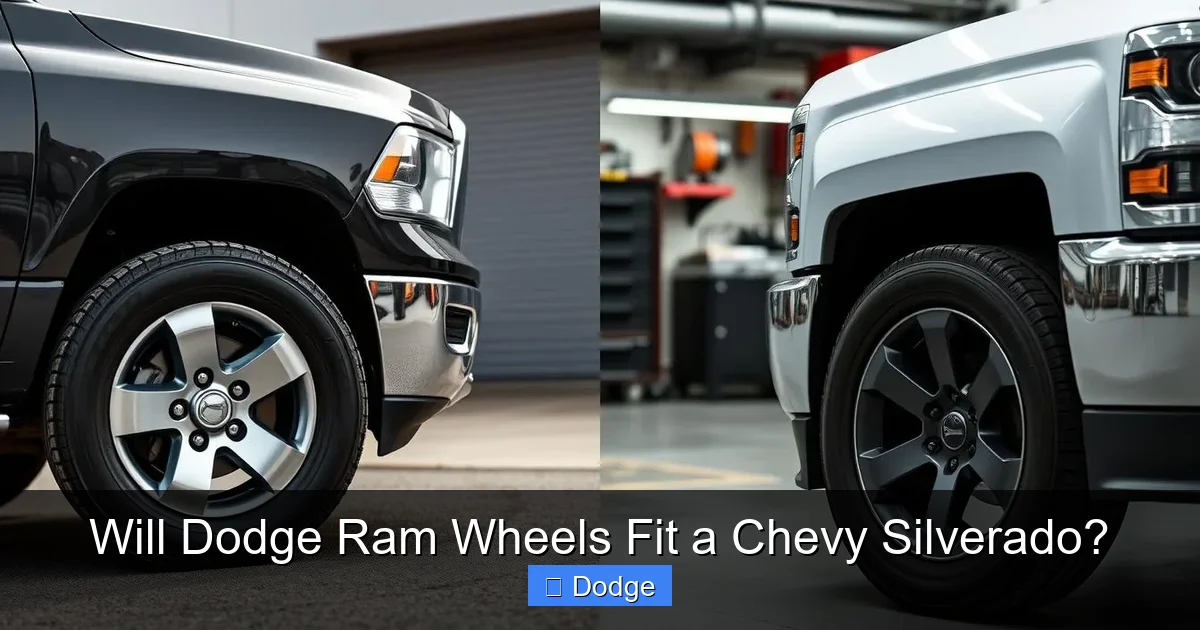
Visual guide about Will Dodge Ram Wheels Fit a Chevy Silverado?
Image source: vehiclerides.com
Before we get into the specifics of Dodge and Chevy wheels, it’s important to understand what makes a wheel “fit” a vehicle. It’s not just about looks—there are engineering and safety considerations that go into every wheel setup. Think of it like trying to wear shoes from a different brand: they might look similar, but if the size or shape is off, they won’t be comfortable—or safe—to wear.
Bolt Pattern: The Foundation of Fitment
The most critical factor in wheel compatibility is the **bolt pattern**, also known as the lug pattern or PCD (Pitch Circle Diameter). This refers to the number of lug nuts and the diameter of the circle they form. For example, a 5×139.7mm bolt pattern means there are five lug nuts arranged in a circle with a diameter of 139.7 millimeters.
Here’s where the first major difference comes in:
– **Dodge Ram trucks** (most models from 1994 to present) typically use a **5×139.7mm** bolt pattern.
– **Chevy Silverados** (from 1999 to present, including 1500, 2500, and 3500 models) use a **6×139.7mm** bolt pattern.
That extra lug nut makes a big difference. A 5-lug wheel simply won’t bolt onto a 6-lug hub without some kind of adapter. So, if you’re eyeing a set of Dodge Ram wheels, you’ll need to account for this mismatch right from the start.
Offset and Backspacing: Clearance and Handling
Even if you solve the bolt pattern issue, **wheel offset** and **backspacing** play a huge role in fitment. Offset is the distance between the wheel’s mounting surface and its centerline. It’s measured in millimeters and can be positive, negative, or zero.
– **Positive offset** means the mounting surface is toward the front (outside) of the wheel—common on factory wheels.
– **Negative offset** pushes the wheel outward, giving a more aggressive stance.
– **Zero offset** means the mounting surface is exactly in the center.
Backspacing is similar but measures the distance from the mounting surface to the inner edge of the wheel. Both offset and backspacing affect how the wheel sits in the wheel well. If the offset is too positive, the wheel may rub against suspension components. If it’s too negative, it could stick out too far, causing tire wear or legal issues.
Dodge Ram wheels often have a different offset than Chevy Silverado wheels. For example, many Dodge wheels have a +12mm to +25mm offset, while Silverados often use +18mm to +35mm. This small difference can lead to rubbing, especially if you have a lifted or leveled truck.
Center Bore: Hub-Centric Fit
Another often-overlooked factor is the **center bore**—the hole in the center of the wheel that fits over the vehicle’s hub. This ensures the wheel is perfectly centered, reducing vibration and stress on the lug nuts.
– **Dodge Ram center bore**: Typically around **77.8mm**.
– **Chevy Silverado center bore**: Usually **78.1mm** or **78.3mm**, depending on the model year.
At first glance, that 0.3mm difference seems tiny—but it’s enough to cause issues. If the wheel’s center bore is smaller than the hub, it won’t fit at all. If it’s larger, the wheel will sit loosely on the hub, relying solely on the lug nuts to center it. This can lead to wobbling, vibration, and even wheel failure over time.
To fix this, you can use **hub-centric rings**—plastic or metal inserts that fill the gap between the wheel and hub. These are cheap, easy to install, and essential for a safe, vibration-free ride.
Bolt Pattern Differences: The 5×139.7 vs. 6×139.7 Dilemma
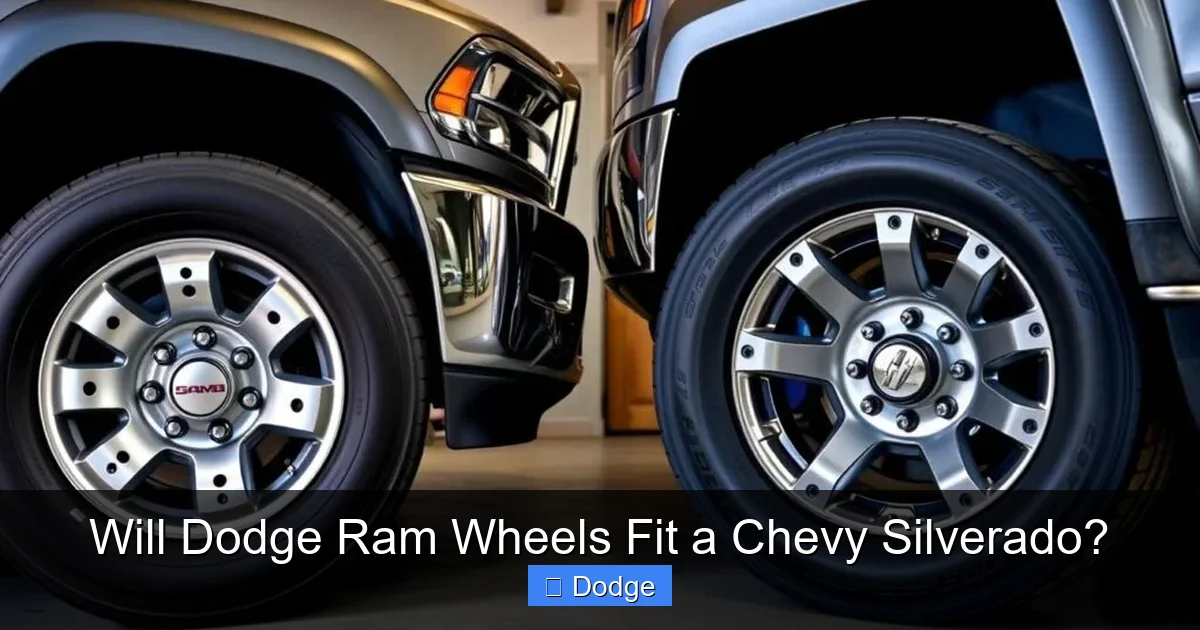
Visual guide about Will Dodge Ram Wheels Fit a Chevy Silverado?
Image source: vehiclerides.com
Now let’s get into the heart of the issue: the bolt pattern mismatch. As mentioned, Dodge Rams use a 5×139.7mm pattern, while Chevy Silverados use 6×139.7mm. That means you can’t simply bolt a Dodge wheel onto a Silverado hub—there’s an extra lug hole on the Chevy side.
Why the Difference Exists
You might wonder why two trucks from the same era and class have different bolt patterns. It comes down to design philosophy and engineering choices. Dodge (now Ram) has historically used a 5-lug setup for its light-duty trucks, while GM (Chevy’s parent company) standardized on a 6-lug pattern for better load distribution and strength, especially on heavier-duty models.
The 6-lug pattern offers more clamping force and is often preferred for towing, hauling, and off-road use. That’s why even the Chevy Silverado 1500 (a half-ton truck) uses six lugs, while many Dodge Rams stick with five.
Can You Make Them Fit?
So, does this mean Dodge wheels are completely incompatible? Not necessarily. With the right tools, you can make them work—but it requires **wheel adapters** or **spacers**.
Using Wheel Adapters
A **wheel adapter** is a metal plate that bolts onto your Silverado’s hub and provides a new mounting surface with the correct bolt pattern. For example, a 6×139.7 to 5×139.7 adapter would allow you to mount Dodge Ram wheels on your Chevy.
These adapters come in various thicknesses (usually 1 to 2 inches) and are made from high-strength steel or aluminum. They’re designed to handle the weight and stress of driving, but they must be installed correctly.
**Pros of adapters:**
– Allow you to use Dodge wheels on a Chevy.
– Can improve track width for better stability.
– Available in different offsets to fine-tune fitment.
**Cons of adapters:**
– Add weight and complexity.
– Must be hub-centric to avoid vibration.
– Can affect suspension geometry if too thick.
– May not be street-legal in some areas.
Always choose high-quality adapters from reputable brands like Spidertrax, Bora, or OMF Performance. Cheap adapters can fail under stress, leading to dangerous situations.
Using Wheel Spacers
Spacers are similar to adapters but don’t change the bolt pattern. Instead, they push the wheel outward to improve clearance or stance. You can’t use a spacer alone to fit a 5-lug wheel on a 6-lug hub—you’d still need an adapter. But spacers can be used in combination with adapters to fine-tune the fit.
For example, if your Dodge wheels have a positive offset and you want them to sit flush with the fenders, a 1-inch spacer might help. Just remember: spacers increase the leverage on wheel bearings, so don’t go overboard.
Real-World Fitment Examples and Tips

Visual guide about Will Dodge Ram Wheels Fit a Chevy Silverado?
Image source: carcarehacks.com
Let’s look at some real-world scenarios to help you understand how this works in practice.
Example 1: 2005 Dodge Ram 1500 Wheels on a 2010 Chevy Silverado 1500
– **Dodge wheels**: 17×8, 5×139.7 bolt pattern, +12mm offset, 77.8mm center bore.
– **Chevy hub**: 6×139.7 bolt pattern, 78.1mm center bore.
To make this work:
1. Use a **6×139.7 to 5×139.7 adapter** (1.25-inch thickness recommended).
2. Install **hub-centric rings** (77.8mm to 78.1mm) to center the wheel.
3. Check for clearance—especially with the suspension and fenders.
4. Test drive and check for vibration.
This setup should work well, especially if the Silverado has stock suspension. If the truck is lifted, you may need longer studs or a thicker adapter.
Example 2: 2019 Dodge Ram 2500 Wheels on a 2021 Chevy Silverado 2500
– **Dodge wheels**: 18×8, 5×139.7, +20mm offset, 77.8mm center bore.
– **Chevy hub**: 6×139.7, 78.3mm center bore.
Same process:
– Use adapters and hub-centric rings.
– Verify that the larger wheels don’t rub on the inner fender or suspension during full turn or compression.
Note: Heavy-duty trucks like the 2500 series have larger brakes and suspension components, so clearance is tighter. Always measure before installing.
Tips for a Successful Installation
1. **Measure twice, install once.** Use a tape measure or caliper to check bolt pattern, offset, and center bore.
2. **Use a torque wrench.** Lug nuts must be tightened to the manufacturer’s specs (usually 140 ft-lbs for Silverados).
3. **Check for rubbing.** Turn the wheels lock-to-lock and compress the suspension to ensure no contact.
4. **Balance the wheels.** Even with adapters, proper balancing is essential to avoid vibration.
5. **Inspect regularly.** Check adapters and lug nuts periodically for loosening or wear.
Safety, Legality, and Long-Term Considerations
While it’s technically possible to fit Dodge Ram wheels on a Chevy Silverado, you can’t ignore the safety and legal implications.
Safety First
Improperly installed wheels or low-quality adapters can lead to catastrophic failure. Imagine a wheel coming off at highway speeds—it’s not just dangerous, it’s potentially deadly. That’s why:
– Only use adapters rated for your vehicle’s weight.
– Avoid cheap, unbranded parts.
– Have the installation done by a professional if you’re unsure.
Legal and Warranty Issues
In some states, using wheel adapters may violate vehicle safety regulations. For example, California has strict rules about modified suspension and wheel setups. Always check your local laws.
Also, modifying your wheels could void your vehicle’s warranty—especially if it leads to damage. If you’re still under factory warranty, consult your dealer before making changes.
Long-Term Wear and Maintenance
Adapters add stress to wheel bearings and suspension components. Over time, this can lead to premature wear. If you plan to keep the setup long-term, consider:
– Upgrading to heavy-duty wheel bearings.
– Inspecting suspension parts regularly.
– Avoiding extreme off-road use unless the setup is specifically designed for it.
Alternatives to Using Dodge Wheels
If the hassle of adapters and potential risks seem too high, there are alternatives.
Buy Chevy-Compatible Wheels with a Similar Look
Many aftermarket wheel manufacturers make styles that mimic Dodge Ram wheels but are designed for Chevy bolt patterns. Brands like Fuel Off-Road, Method Race Wheels, and Black Rhino offer aggressive, Ram-inspired designs that bolt right onto your Silverado.
Use Wheel Simulators or Hub Caps
If you love the look of Dodge wheels but don’t want to modify your setup, consider wheel simulators—plastic or metal covers that snap onto your existing wheels to mimic the appearance of another style.
Trade or Sell Your Wheels
If you already have Dodge wheels, consider trading them with another truck owner or selling them online. You might get a better deal on a set that fits your Silverado natively.
Conclusion: Should You Put Dodge Ram Wheels on Your Chevy Silverado?
So, will Dodge Ram wheels fit a Chevy Silverado? The answer is: **yes, but with caveats.** Thanks to wheel adapters and hub-centric rings, it’s possible to make them work—especially if you’re willing to invest in quality parts and do your homework.
However, it’s not a simple bolt-on job. You’ll need to account for bolt pattern differences, offset, center bore, and clearance. And you’ll need to weigh the benefits against the potential risks, including safety concerns, legal issues, and long-term wear.
If you’re set on the look of Dodge wheels, go for it—but do it right. Use reputable adapters, install hub-centric rings, and have everything checked by a professional. Better yet, consider alternatives that offer the same style without the hassle.
At the end of the day, your truck is an extension of your personality. Whether you’re cruising the highway or tackling off-road trails, your wheels should look great—and perform safely. With the right knowledge and preparation, you can make almost any setup work. Just remember: when it comes to wheels, details matter.
Frequently Asked Questions
Can I put Dodge Ram wheels on a Chevy Silverado without adapters?
No, you cannot directly bolt Dodge Ram wheels onto a Chevy Silverado because of the different bolt patterns—Dodge uses 5×139.7mm, while Chevy uses 6×139.7mm. Adapters are required to make them fit.
What size hub-centric rings do I need for Dodge wheels on a Chevy?
Most Dodge wheels have a 77.8mm center bore, while Chevy hubs are typically 78.1mm or 78.3mm. You’ll need hub-centric rings that reduce the bore from 78.1mm to 77.8mm for a snug, vibration-free fit.
Are wheel adapters safe for daily driving?
Yes, high-quality wheel adapters from reputable brands are safe for daily driving when installed correctly. Always use torque specs, check for clearance, and inspect regularly for wear.
Will using adapters affect my truck’s warranty?
Using adapters could void your warranty if they cause damage to the suspension or drivetrain. Check with your dealer before making modifications, especially if your truck is still under factory warranty.
Can I use Dodge Ram wheels on a lifted Chevy Silverado?
Yes, but you’ll need to ensure the wheels have enough clearance. Lifted trucks often require larger wheels or spacers, so measure carefully and test for rubbing during full suspension travel.
Are there Chevy wheels that look like Dodge Ram wheels?
Absolutely. Many aftermarket brands offer wheels with aggressive, Ram-inspired designs that are made specifically for Chevy’s 6×139.7mm bolt pattern—no adapters needed.


