Why Won’t My Subaru Start?

Contents
- 1 Key Takeaways
- 2 📑 Table of Contents
- 3 Why Won’t My Subaru Start? A Complete Troubleshooting Guide
- 4 1. Dead or Weak Battery: The #1 Culprit
- 5 2. Faulty Starter Motor: When You Hear a Click But Nothing Happens
- 6 3. Fuel System Problems: No Gas, No Go
- 7 4. Ignition and Key Fob Problems: Modern Subarus Need Smart Keys
- 8 5. Alternator Failure: The Silent Battery Killer
- 9 6. Other Possible Causes: Sensors, Wiring, and More
- 10 When to Call a Professional
- 11 Conclusion: Stay Calm and Troubleshoot Step by Step
- 12 Frequently Asked Questions

OBD2 Scanner Tool

Car Sunshade for Windshield

LED Indicator Light
Car Inverter
If your Subaru won’t start, don’t panic—most issues are fixable. From a dead battery to a bad starter or fuel pump failure, understanding the root cause saves time and money. This guide walks you through the top reasons and practical solutions.
Key Takeaways
- Dead or weak battery: The most common cause of a no-start, especially in cold weather or after long periods of inactivity.
- Faulty starter motor: A clicking sound without engine turnover often points to a failing starter.
- Fuel system problems: Clogged fuel filters, bad fuel pumps, or empty tanks can prevent combustion.
- Ignition switch or key fob issues: Modern Subarus rely on electronic keys; a dead fob battery or faulty switch can block startup.
- Alternator failure: If the battery keeps dying, the alternator may not be charging it properly.
- Security system activation: The immobilizer might mistakenly prevent starting if it doesn’t recognize the key.
- Corroded or loose connections: Check battery terminals and ground wires—clean, tight connections are essential.
📑 Table of Contents
- Why Won’t My Subaru Start? A Complete Troubleshooting Guide
- 1. Dead or Weak Battery: The #1 Culprit
- 2. Faulty Starter Motor: When You Hear a Click But Nothing Happens
- 3. Fuel System Problems: No Gas, No Go
- 4. Ignition and Key Fob Problems: Modern Subarus Need Smart Keys
- 5. Alternator Failure: The Silent Battery Killer
- 6. Other Possible Causes: Sensors, Wiring, and More
- When to Call a Professional
- Conclusion: Stay Calm and Troubleshoot Step by Step
Why Won’t My Subaru Start? A Complete Troubleshooting Guide
You’re running late for work, you hop into your trusty Subaru Outback or Forester, turn the key—or press the start button—and… nothing. No engine cranking, no roar of life, just silence. Or maybe there’s a weak click, a sputter, or the dashboard lights up but the engine refuses to turn over. Frustrating? Absolutely. But before you call a tow truck or assume the worst, know this: most Subaru no-start issues have straightforward explanations—and often, simple fixes.
Subaru vehicles are known for their reliability, all-wheel drive capability, and rugged design. But like any machine, they’re not immune to problems. Whether you drive a compact Crosstrek, a sporty WRX, or a family-friendly Ascent, the underlying causes of a no-start condition are often similar across models. The good news? Many of these issues can be diagnosed at home with basic tools and a little patience.
In this guide, we’ll walk you through the most common reasons your Subaru won’t start—from the obvious (like a dead battery) to the less obvious (like a failing crankshaft position sensor). We’ll also share practical tips, real-world examples, and step-by-step checks so you can troubleshoot like a pro. Whether you’re a DIY enthusiast or just want to understand what your mechanic is talking about, this article has you covered.
1. Dead or Weak Battery: The #1 Culprit
If your Subaru won’t start, the battery should be your first suspect. It’s the heart of your vehicle’s electrical system, powering everything from the starter motor to the infotainment screen. When it’s weak or dead, nothing happens—or worse, you get that dreaded “click” with no engine turnover.
Signs of a Dead Battery
Look for these telltale signs:
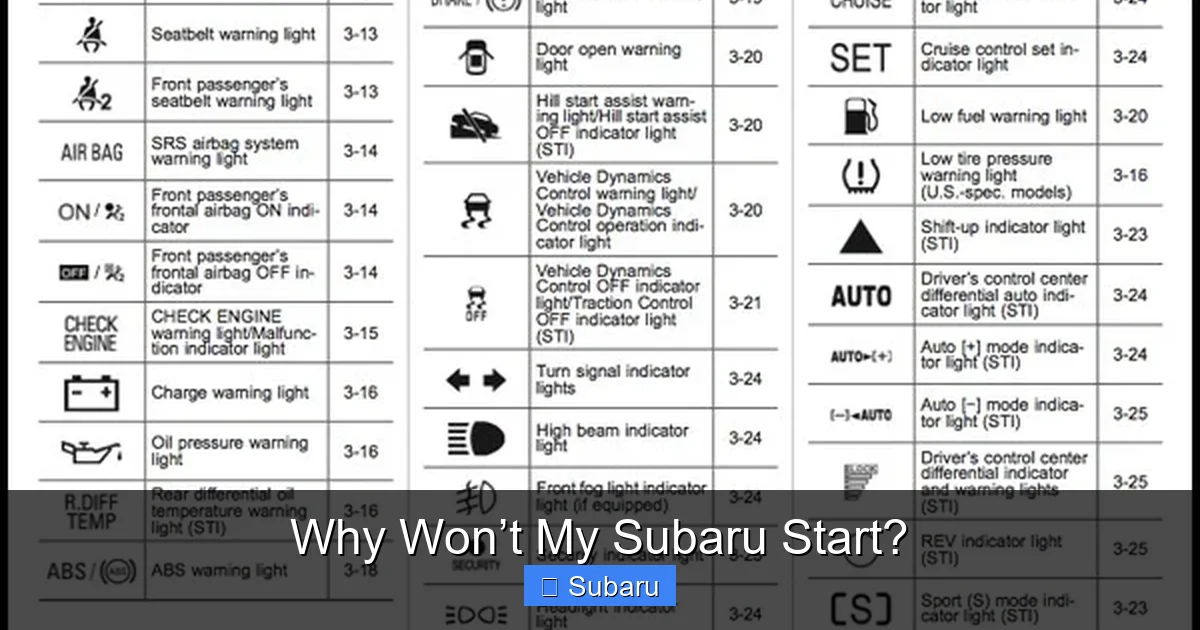
Visual guide about Why Won’t My Subaru Start?
Image source: pictures.dealer.com
- Dashboard lights dim or flicker when you turn the key.
- The engine doesn’t crank at all—just a single click or repeated clicking.
- Interior lights are unusually bright when off, then dim when you try to start.
- You hear a “whirring” sound but no engine turnover.
For example, imagine you left your headlights on overnight after a late drive. The next morning, your Subaru Forester won’t start—even though it ran perfectly the day before. That’s a classic case of a drained battery.
Why Subaru Batteries Fail
Subaru batteries, like all car batteries, have a lifespan of 3–5 years. But several factors can shorten that:
- Extreme temperatures: Cold weather slows chemical reactions in the battery, reducing its ability to deliver power. In winter, a weak battery may fail to start your car even if it worked fine in summer.
- Short trips: Frequent short drives don’t give the alternator enough time to fully recharge the battery.
- Parasitic drain: Something in your car—like a faulty glove box light or aftermarket alarm—is drawing power even when the engine is off.
- Age and wear: Over time, battery plates degrade, reducing capacity.
How to Test and Fix a Dead Battery
You don’t need a mechanic to check your battery. Here’s how:
- Use a multimeter: Set it to DC voltage. A healthy battery should read 12.6 volts or higher when the car is off. Below 12.4 volts means it’s weak; below 12 volts likely means it’s dead.
- Try a jump start: Connect jumper cables to another vehicle or a portable jump starter. If your Subaru starts, the battery was the issue—but you’ll need to drive for at least 20–30 minutes to recharge it.
- Check for corrosion: Look at the battery terminals. White, powdery buildup can prevent proper connection. Clean it with a baking soda and water solution and a wire brush.
Pro tip: If your Subaru starts after a jump but dies again soon after, the alternator might not be charging the battery. Have it tested at an auto parts store—many offer free diagnostics.
2. Faulty Starter Motor: When You Hear a Click But Nothing Happens
You turn the key, and instead of the engine roaring to life, you hear a loud click—maybe even a series of rapid clicks—but the engine doesn’t turn over. This is a classic sign of a failing starter motor.
What Does the Starter Do?
The starter motor is an electric motor that physically turns the engine over when you start the car. It’s activated by the ignition switch and draws power from the battery. If it fails, the engine can’t begin the combustion process—even if everything else is working.
Visual guide about Why Won’t My Subaru Start?
Image source: websitebuilderinsider.com
Common Symptoms of a Bad Starter
- A single loud click when you turn the key, but no engine cranking.
- Repeated clicking sounds without engine turnover.
- The engine cranks slowly or inconsistently.
- Grinding or whining noises during startup.
For instance, your Subaru Impreza starts fine in the morning but fails to crank in the afternoon. After a few attempts, you hear a grinding noise. That’s often a worn starter gear or solenoid.
Starter vs. Battery: How to Tell the Difference
It’s easy to confuse a bad starter with a dead battery. Here’s how to tell:
- If the dashboard lights are bright and the radio works, but the engine doesn’t crank, it’s likely the starter.
- If everything is dim or unresponsive, it’s probably the battery.
- If jump-starting works, the battery was weak—but if it still won’t start after a jump, suspect the starter.
Can You Fix a Starter Yourself?
In most Subarus, the starter is located under the engine, near the transmission. Replacing it requires lifting the car and removing components like the air intake or heat shield. While it’s doable for experienced DIYers, it’s often best left to professionals due to the complexity and safety risks.
Tip: Before replacing the starter, have it tested. Some auto parts stores can bench-test it for free. Also, check the starter relay in the fuse box—sometimes it’s just a cheap relay, not the entire motor.
3. Fuel System Problems: No Gas, No Go
Even with a good battery and working starter, your Subaru won’t start if fuel isn’t reaching the engine. The fuel system includes the fuel pump, fuel filter, fuel injectors, and fuel lines—all critical for combustion.
Signs of Fuel Delivery Issues
- The engine cranks but doesn’t start—especially after sitting for a while.
- It starts briefly then dies.
- You smell gas (could indicate a leak or flooded engine).
- The “Check Engine” light is on, with codes related to fuel pressure.
Imagine your Subaru Crosstrek cranks for 10 seconds before finally starting—then sputters and stalls. That’s often a weak fuel pump struggling to maintain pressure.
Visual guide about Why Won’t My Subaru Start?
Image source: hitechwork.com
Common Fuel System Failures
- Failing fuel pump: Located inside the fuel tank, the pump sends gas to the engine. Over time, it can wear out, especially if you frequently run the tank low (which causes overheating).
- Clogged fuel filter: This filter traps dirt and debris. If it’s blocked, fuel flow is restricted. Most Subarus have a filter that should be replaced every 30,000–60,000 miles.
- Empty fuel tank: Sounds obvious, but it happens! The fuel gauge can be inaccurate, especially in older models.
- Faulty fuel injectors: If injectors are clogged or stuck closed, fuel won’t spray into the cylinders.
How to Diagnose Fuel Issues
Here’s a simple test:
- Turn the key to “ON” (but don’t start the engine). Listen for a humming sound from the rear of the car—that’s the fuel pump priming. If you don’t hear it, the pump may be dead.
- Check fuel pressure with a gauge (available at auto parts stores). Most Subarus require 35–45 psi.
- Inspect the fuel filter for clogs or leaks.
Pro tip: If your Subaru won’t start after sitting overnight, try pressing the gas pedal slightly while cranking. This can help if the engine is flooded or if fuel pressure has dropped.
4. Ignition and Key Fob Problems: Modern Subarus Need Smart Keys
Starting in the mid-2000s, Subaru began using push-button ignition systems with keyless entry and immobilizer technology. While convenient, these systems can cause no-start issues if something goes wrong.
Key Fob Battery Died
Your key fob has a small battery that powers the electronic chip. When it dies, the car may not recognize the key—even if you’re holding it right next to the start button.
Symptoms:
- The “Key Not Detected” message appears on the dashboard.
- The car won’t start, even with the fob in the cabin.
- Remote locking/unlocking stops working.
Solution: Replace the fob battery (usually a CR2032 coin cell). Most Subarus allow you to start the car by placing the fob in a designated slot (often near the steering column) even with a dead battery—but only once.
Faulty Ignition Switch
The ignition switch sends power to the starter and other systems when you turn the key or press the button. If it fails, nothing happens—even with a good battery and fob.
Signs:
- No response when turning the key or pressing start.
- Intermittent starting—works sometimes, doesn’t others.
- Dashboard lights flicker or don’t come on.
Replacing an ignition switch can be complex and may require programming. It’s best handled by a professional.
Immobilizer System Activation
Subaru’s immobilizer system prevents the engine from starting unless it recognizes the key’s chip. If the system malfunctions, it may block startup even with a valid key.
What to do:
- Try a spare key if you have one.
- Reset the system by disconnecting the battery for 10 minutes.
- Visit a Subaru dealer—they can reprogram the immobilizer if needed.
5. Alternator Failure: The Silent Battery Killer
You jump-start your Subaru and it runs—but dies again after a short drive. That’s a red flag for alternator failure. The alternator charges the battery while the engine runs. If it’s not working, the battery drains quickly.
How to Spot Alternator Problems
- Battery keeps dying, even after replacement.
- Dim or flickering headlights, especially at idle.
- Battery warning light on the dashboard.
- Electrical issues—radio cutting out, power windows slow.
For example, your Subaru Legacy starts fine in the morning but dies at a stoplight. The lights get dim, and the car won’t restart. That’s a classic alternator failure.
Testing the Alternator
Use a multimeter:
- Start the engine and let it idle.
- Check voltage at the battery terminals. It should read 13.8–14.4 volts.
- If it’s below 13 volts, the alternator isn’t charging properly.
Most auto parts stores will test your alternator for free. If it’s bad, replacement is usually straightforward—but labor costs can add up.
6. Other Possible Causes: Sensors, Wiring, and More
Sometimes, the issue isn’t obvious. Here are a few less common but still possible causes:
Crankshaft Position Sensor Failure
This sensor tells the engine computer when to fire the spark plugs. If it fails, the engine may crank but not start. Look for a “Check Engine” light and diagnostic trouble codes (DTCs) like P0335.
Blown Fuses or Relays
Check the main fuse box (under the hood) and interior fuse panel. A blown fuse for the fuel pump, starter, or ignition system can prevent starting.
Corroded or Loose Wiring
Inspect battery cables, ground straps, and starter connections. Corrosion or loose bolts can interrupt power flow.
Transmission Not in Park or Neutral
Most Subarus won’t start unless the shifter is in Park or Neutral. If it’s stuck in Drive, the car won’t crank. Try wiggling the shifter or pressing the brake firmly.
When to Call a Professional
While many no-start issues can be diagnosed at home, some require expert help. Call a mechanic or Subaru dealer if:
- You’ve tried jump-starting and checking fuses, but the car still won’t start.
- You suspect electrical or computer issues (like immobilizer or sensor problems).
- The engine makes unusual noises (grinding, knocking) during cranking.
- You’re not comfortable working under the hood or with electrical systems.
Modern Subarus have complex electronics. A professional diagnostic scan can pinpoint the issue quickly—saving you time and money.
Conclusion: Stay Calm and Troubleshoot Step by Step
When your Subaru won’t start, it’s easy to feel frustrated or overwhelmed. But remember: most no-start problems have logical explanations. Start with the basics—check the battery, listen for clicks, and inspect fuses. Move on to fuel, ignition, and electrical systems if needed.
Keep a portable jump starter and basic tools in your trunk. Know where your spare fob battery is. And don’t ignore warning signs like dim lights or slow cranking—they’re clues that something’s wrong.
With this guide, you’re equipped to handle the most common causes of a Subaru no-start. Whether it’s a simple battery swap or a trip to the shop, you’ll know what to do—and why. Stay safe, stay informed, and keep your Subaru running strong.
Frequently Asked Questions
Why won’t my Subaru start even with a new battery?
If your Subaru won’t start despite a new battery, the issue could be the starter motor, alternator, or ignition system. A new battery doesn’t fix mechanical or electrical failures elsewhere in the starting circuit.
Can a bad key fob prevent my Subaru from starting?
Yes. If the key fob battery is dead or the immobilizer doesn’t recognize the key, your Subaru may display a “Key Not Detected” message and refuse to start—even if the fob is inside the car.
How do I know if it’s the starter or the battery?
If the dashboard lights are bright and the radio works but the engine doesn’t crank, it’s likely the starter. If everything is dim or unresponsive, suspect the battery.
Why does my Subaru crank but not start?
This usually points to fuel delivery issues (like a bad fuel pump), ignition problems (spark plugs or coils), or sensor failures (crankshaft position sensor). Check fuel pressure and scan for error codes.
Can cold weather cause my Subaru not to start?
Absolutely. Cold temperatures reduce battery efficiency and thicken engine oil, making it harder to crank. A weak battery may fail completely in freezing weather.
Should I replace my Subaru battery myself?
Yes, if you’re comfortable with basic tools. Disconnect the negative terminal first, then the positive. Install the new battery and reconnect in reverse order. Reset the clock and radio settings afterward.