Why Won’t My Bmw Start?

Contents
- 1 Key Takeaways
- 2 📑 Table of Contents
- 3 The Battery and Electrical System: The Most Common Starting Point
- 4 The Starter Motor and Solenoid: The “Click” or “Nothing” Scenario
- 5 Fuel Delivery: Is Gasoline Reaching the Engine?
- 6 Ignition System: The Spark That Lights the Fire
- 7 Security and Key Systems: The Electronic Gatekeeper
- 8 Other Mechanical and Environmental Culprits
- 9 When to Call a Professional: The Diagnostic Path
- 10 Conclusion: Patience and Process
- 11 Frequently Asked Questions

Magnetic Car Phone Mount
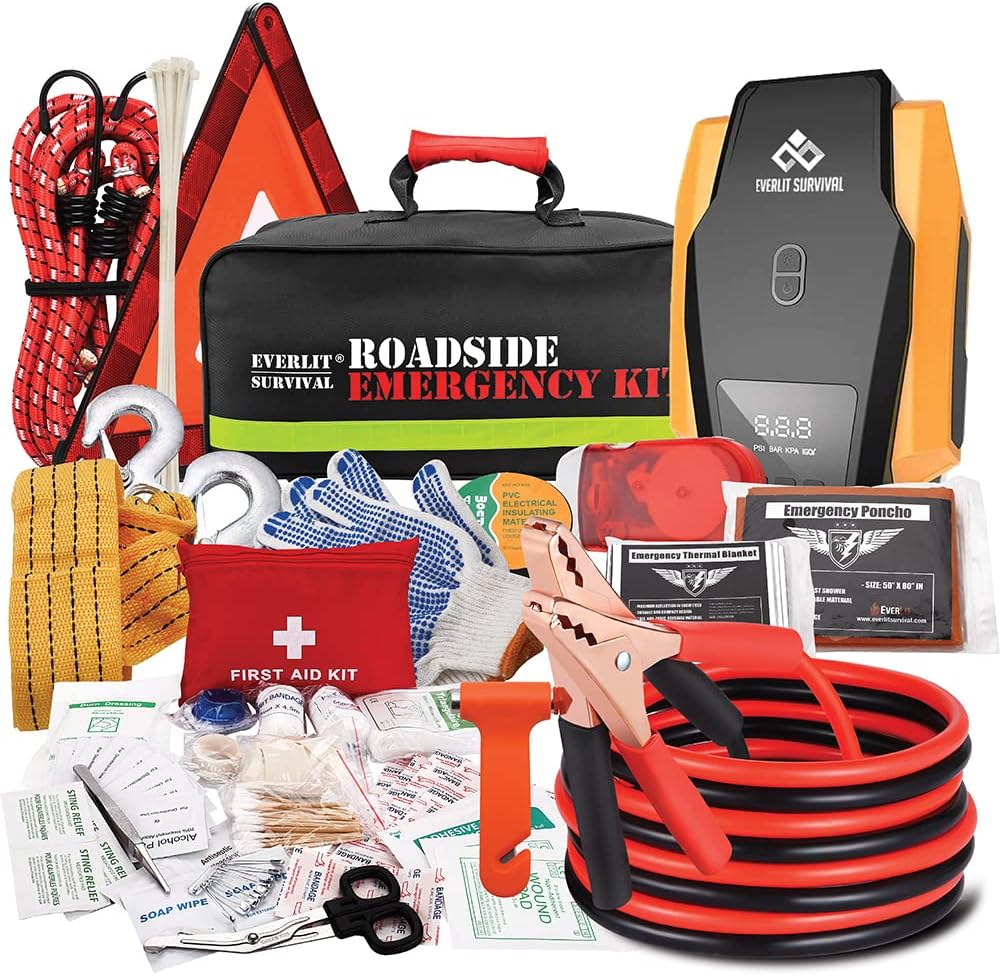
Car Emergency Roadside Kit

Car Wireless Charger Mount

Carburetor Cleaner
A BMW that won’t start can be incredibly frustrating, but the problem usually falls into a few key categories: the battery, the starter motor, the fuel system, or the ignition/security system. Many modern BMWs have complex electronics that can present unique challenges. This guide breaks down every possible cause, from a simple dead battery to a failing fuel pump or a glitch in the key system, providing clear diagnostic steps and solutions to help you identify and fix the issue.
You grab your keys, slide into the driver’s seat of your BMW, and press the start button. Or you turn the key. Instead of the familiar roar of the engine, you’re met with… nothing. Or maybe a disheartening click, or a slow, labored crank. That sinking feeling is universal. Your prestigious Bavarian machine has let you down. But before you panic and call for a costly tow, take a breath. “Why won’t my BMW start?” is a question with a surprisingly structured set of answers. Unlike some older, simpler cars, a BMW’s starting process involves a intricate dance between its advanced battery management system, electronic ignition, fuel delivery, and security protocols. This guide will walk you through every potential reason, from the blindingly obvious to the subtly complex, so you can diagnose the problem and get your BMW running again.
Key Takeaways
- Battery issues are the #1 culprit: A weak or dead battery is the most common reason for a no-start. Check voltage, connections, and consider age.
- Listen for the click: A single loud click usually points to the starter solenoid or a weak battery. No sound often means a dead battery or electrical safety switch.
- Fuel and spark are essential: If the engine cranks but won’t fire, you likely have a fuel delivery problem (pump, filter) or an ignition issue (coils, spark plugs).
- BMW’s security system is sophisticated: A faulty key fob, dead key battery, or a malfunctioning CAS/EWS module can prevent starting even with a good battery.
- Environmental factors matter: Extreme cold can sap battery power and thicken oil, making starting harder. A clogged air filter can also cause issues.
- Complex electronics need a pro: For intermittent problems or advanced diagnostic codes, a BMW-specific scan tool is often necessary to pinpoint the fault.
📑 Table of Contents
- The Battery and Electrical System: The Most Common Starting Point
- The Starter Motor and Solenoid: The “Click” or “Nothing” Scenario
- Fuel Delivery: Is Gasoline Reaching the Engine?
- Ignition System: The Spark That Lights the Fire
- Security and Key Systems: The Electronic Gatekeeper
- Other Mechanical and Environmental Culprits
- When to Call a Professional: The Diagnostic Path
- Conclusion: Patience and Process
The Battery and Electrical System: The Most Common Starting Point
Let’s start with the most frequent offender. Modern BMWs are power-hungry creatures. They have multiple computers, sophisticated lighting, and comfort features that draw energy even when the car is “off.” The battery is the heart of this system.
Is It Simply a Dead or Weak Battery?
This is the first thing to check. A healthy 12-volt car battery should read about 12.6 volts when the car is off. Turn the key to the “ON” position (before starting) and it should stay above 12.4 volts. If it drops below 10 volts when cranking, it’s weak. BMW-specific note: Many BMWs use an AGM (Absorbent Glass Mat) battery, which requires a specific charging profile. Using a standard charger can damage it. Also, the battery is often located in the trunk, but some models (like the E9x 3 Series) have it under the hood. A completely dead battery might not even power the dashboard lights or central locking.
What to do: Jump-start it properly. Connect the cables (positive to positive, negative to a clean metal ground on the engine block, NOT the negative battery terminal if it’s in the trunk). If it starts, drive for at least 30 minutes to recharge. If it won’t jump-start, the battery may be completely sulfated or there’s a major parasitic drain. If your car won’t start but the radio and lights work, the battery might still be too weak to turn the starter motor—this is a classic symptom. For more general scenarios, see our article on why a car won’t start but still has power.
Corroded or Loose Battery Terminals
Look at the battery terminals. Are they covered in a white, crusty substance? That’s corrosion. It creates high resistance, preventing the massive current the starter needs from flowing. Similarly, a loose connection has the same effect. This is a very common and easily fixable issue. BMW-specific tip: The main battery cable on some models runs from the trunk battery to the starter motor under the car. Check this entire run for damage or corrosion if you suspect an electrical issue.
What to do: Disconnect the negative terminal first, then the positive. Clean the terminals and cable ends with a battery terminal brush and a baking soda/water solution. Reconnect tightly, positive first, then negative. Apply a thin layer of dielectric grease to prevent future corrosion.
Faulty Alternator or Voltage Regulator
If your BMW started fine yesterday but won’t today, and the battery is new or fully charged, the alternator might have failed. Its job is to recharge the battery while the engine runs. If it dies, you’re running on battery reserve alone. You might have noticed dimming headlights or a flickering dashboard before it died completely. A failed voltage regulator can also overcharge and destroy the battery.
What to do: Once the car is running (or jump-started), measure voltage at the battery terminals with a multimeter. It should read between 13.8 and 14.4 volts. If it’s below 13.5V, the alternator isn’t charging. If it’s above 14.8V, the regulator is faulty. Replacing an alternator on a BMW often requires programming/registration for the new part via the vehicle’s computer system.
The Starter Motor and Solenoid: The “Click” or “Nothing” Scenario
If you have a good, charged battery and clean connections, the next link in the chain is the starter. This electric motor is what physically turns the engine over.

Visual guide about Why Won’t My Bmw Start?
Image source: newsilike.in
The Classic “Click” Sound
You turn the key and hear a single, solid CLICK from under the hood (or from the starter solenoid on the fender well). This is the solenoid engaging, but the starter motor itself isn’t turning. This usually means either the starter motor has failed (burned-out windings) or, more commonly, the battery is too weak to provide the starter’s immense starting current. A severely discharged battery can sometimes make the solenoid click but not have the “cranking amps” to spin the motor.
What to do: First, confirm battery strength with a load test. If the battery is strong (and the connections are perfect), the starter motor or its internal solenoid is likely faulty. Starter replacement on a BMW can be complex, often requiring removal of intake components or working in tight engine bay spaces.
Slow, Labored Cranking
The engine turns over very slowly, like it’s struggling. This is almost always a battery problem—either it’s old and can’t hold a charge, or there’s high resistance in the starting circuit (corroded cables, bad ground strap). The starter is trying to work, but it’s not getting enough juice. BMW-specific note: Some high-performance BMWs have a secondary “starter relay” or control module that can fail, causing intermittent slow cranking.
No Sound at All
Total silence when turning the key. This points to a complete break in the circuit before the starter. Check: Is the battery completely dead? Is the main fuse or starter fuse blown? (Check your owner’s manual for fuse box location). Is the ignition switch faulty? On key-start BMWs, the ignition lock cylinder can wear out. On push-button start models, is the key fob battery dead, or is the antenna ring that reads the key faulty? If your key won’t even turn in the ignition, that’s a separate but related issue you can read about here.
Fuel Delivery: Is Gasoline Reaching the Engine?
If your BMW cranks normally (sounds healthy and fast) but just won’t fire up and run, the problem is likely not the starter or battery. The engine is trying to start, but it’s missing one of the three essentials for combustion: fuel, spark, or air. Let’s assume air is fine (the engine would at least sputter). So we look at fuel and spark.
Visual guide about Why Won’t My Bmw Start?
Image source: image6.slideserve.com
Failed Fuel Pump
The fuel pump, located inside the gas tank, pressurizes the fuel system. When you turn the key to “ON,” you should hear a brief whirring or humming sound from the rear of the car (the fuel pump priming). No sound could mean a dead pump, a blown fuel pump fuse, or a faulty fuel pump relay. BMW-specific note: Many BMWs use an in-tank pump that is part of a module. If the pump fails, you often need to replace the entire module assembly. Also, BMWs are notorious for failing fuel pump relays, which are inexpensive and easy to swap for testing.
What to do: Listen carefully. Have a helper turn the key to ON while you listen at the gas filler door. No sound? Check the fuel pump fuse and relay first (location in manual). If those are good, the pump may be dead. You can test fuel pressure at the rail, but this requires specific tools.
Clogged Fuel Filter
If the fuel pump is working but the filter is severely clogged, not enough fuel can reach the injectors. This can cause hard starting, especially when hot, as the engine needs more fuel. BMW often integrates the filter into the fuel pump module or uses an inline filter that is less common on modern cars but still possible.
Faulty Fuel Injectors
If the injectors are clogged or electrically failed, they won’t spray the fine mist of fuel needed for combustion. This is less common as a single-point no-start cause but possible. A diagnostic scan tool can check for injector circuit faults.
Ignition System: The Spark That Lights the Fire
For a gasoline engine, you need a strong spark at the right time. If fuel is present but there’s no spark, the engine will crank and crank without starting.

Visual guide about Why Won’t My Bmw Start?
Image source: i.ytimg.com
Bad Spark Plugs or Ignition Coils
Worn-out spark plugs can fail to create a hot enough spark. On most modern BMWs (since the early 2000s), each cylinder has its own ignition coil (coil-on-plug design). A single failed coil will cause a misfire on that cylinder, but usually won’t prevent starting. However, if multiple coils fail simultaneously (rare), or if there’s a common power/ground issue for the coils, you can have a total no-spark situation. BMW-specific note: Some BMW engines, particularly the N54 twin-turbo, are known for coil pack failures. It’s a common maintenance item.
What to do: If you have a diagnostic trouble code (like P0300 for random misfires or P035x for coil circuit faults), that points to coils or plugs. You can also try swapping a suspect coil with a known good one and see if the problem moves.
Crankshaft or Camshaft Position Sensor Failure
These sensors tell the engine computer (DME/DDE) the exact position of the engine’s rotating parts. Without this signal, the computer doesn’t know when to fire the spark plugs or injectors. It will simply crank indefinitely. This is a very common cause of no-start conditions on many BMW models. The sensors can fail due to heat, age, or oil leaks. A scan tool is needed to confirm if the sensor signal is absent.
Security and Key Systems: The Electronic Gatekeeper
BMW takes security seriously. Their immobilizer systems (EWS on older models, CAS on newer ones) are designed to prevent the engine from starting unless the correct, coded key is present. This system can fail in ways that strand you.
Dead Key Fob Battery
If you have a keyless entry/start fob, it has a small internal battery. If this battery is dead, the key cannot communicate with the car’s antenna ring. The car might not recognize the key at all. You might see a key icon on the dashboard. Solution: Replace the coin cell battery in the fob (usually a CR2032). On many models, you can also hold the fob against the start button or key slot (check manual) to start via inductive coupling as a backup.
Faulty CAS/EWS Module or Antenna
The CAS (Car Access System) or EWS (Electronic immobilizer system) module is the brain. The antenna ring around the ignition switch or start button reads the key’s chip. If either fails, you get a no-start with all other systems working. You might see a security light on the dash. Diagnosing this requires a dealer-level scan tool to check communication between modules.
Key Lost Its Programming
Sometimes, a key can lose its synchronization with the car’s computer. This can happen after a battery disconnect or module replacement. The car sees the key physically but doesn’t get the correct coded signal. The solution is to have the key re-programmed to the vehicle, which requires a diagnostic tool and often a dealer or specialist.
Other Mechanical and Environmental Culprits
Not all no-start issues are electronic. Some good old-fashioned mechanical problems can occur.
Severe Oil Thickening (Extreme Cold)
In very cold climates, engine oil can become so thick that the starter motor cannot overcome the internal resistance to turn the engine over. This presents as a very slow, straining crank. Using the correct winter-weight oil (like 0W-30 or 5W-30 as recommended by BMW) is critical.
Hydrolock
This is rare but serious. If a significant amount of liquid (water from flooding, or excess fuel from a leaking injector) enters a cylinder, the piston cannot compress it. The engine will lock up solid and the starter will just grind or do nothing. Do not keep trying to start it; this can cause catastrophic damage.
Clogged Air Filter
While a clogged air filter typically causes performance issues, an extremely dirty filter can, in theory, restrict airflow so much that a cold engine cannot get the air it needs to fire. It’s an unlikely sole cause of a total no-start but worth checking during routine maintenance.
When to Call a Professional: The Diagnostic Path
You’ve checked the battery, listened for fuel pump noise, and maybe even checked fuses. The problem remains elusive. At this point, systematic diagnosis is key. The modern BMW is a network of computers (CAN bus). A problem in one module can prevent starting.
The Essential Tool: A proper OBD-II scan tool that speaks BMW’s proprietary language is invaluable. Generic auto parts store scanners will read generic engine codes (P-codes), but often cannot access BMW-specific systems like the CAS, DME, or key systems. A tool like BMW’s own ISTA, or high-end aftermarket tools (e.g., Foxwell, Carly with adapter), can read codes from all modules, view live data (like fuel pressure, cam/crank signals), and even perform activations (like priming the fuel pump).
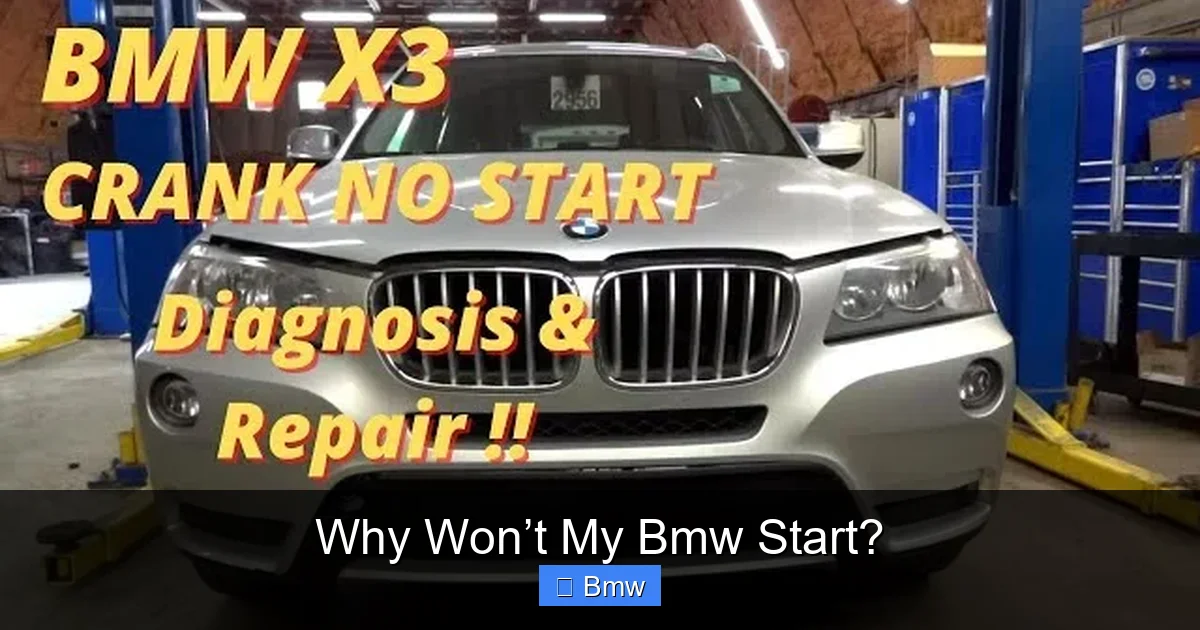
If you’re not comfortable with electrical diagnostics, or if the issue is intermittent and hard to catch, it’s time to call a BMW specialist. They have the experience with common BMW failure points and the correct software. For example, if your BMW cranks but won’t start, the issue could be in the fuel system, ignition, or security—a pro can narrow it down quickly. You can also explore general troubleshooting for a car that cranks but won’t start.
Conclusion: Patience and Process
A BMW that won’t start is almost never a mystery without a solution. The key is a methodical approach. Start with the simplest, most likely culprit: the battery and its connections. Move on to listening for fuel pump operation and checking for spark if you’re able. Understand that your BMW’s advanced security system is a common source of frustration that mimics other problems. While many fixes are within the capable DIYer’s reach—like battery replacement, fuse checks, and coil swaps—others, like fuel pump or CAS module replacement, often require specialized knowledge and tools. Don’t guess; diagnose. By understanding the starting sequence and the common failure points unique to BMW, you transform that feeling of helplessness into a clear action plan. Whether it’s a $10 fuse, a $200 battery, or a more involved repair, you’ll be back to enjoying the Ultimate Driving Machine sooner.
Frequently Asked Questions
My BMW won’t start in cold weather, but it’s fine when it’s warm. Why?
Cold weather drastically reduces a battery’s cranking power and thickens engine oil. An older or weak battery that can still start the car in summer may fail in winter. Ensure you have a fully charged, healthy battery with sufficient Cold Cranking Amps (CCA) and the correct winter-weight oil.
My BMW key fob battery is new, but the car still says ‘key not detected’ and won’t start.
This indicates a problem with the car’s side of the key system. The antenna ring around the start button or the CAS/EWS module may be faulty. Try holding the key fob directly against the start button (consult your manual for the exact spot). If it starts, the antenna is likely the issue. If not, you need a professional to diagnose the CAS system.
The engine cranks but won’t start, and I smell raw gas. What is it?
The smell of unburned fuel means the engine is getting gas but there’s no spark to ignite it. This points strongly to an ignition system failure—likely the crankshaft position sensor, camshaft sensor, or a major ignition coil/power issue. A diagnostic scan is needed to confirm which sensor or circuit has failed.
My BMW’s battery is new, but it still won’t start. Now what?
If a new battery is installed but the car won’t start or even crank, check for a major parasitic drain that killed the new battery, or a blown main fuse/ fusible link. Also, ensure the battery terminals are clean and tight. If it cranks slowly with a new battery, the starter motor may be failing. If it cranks normally but won’t fire, the issue is fuel, spark, or security—not the battery.
Why does my BMW sometimes start and sometimes not? It’s very intermittent.
Intermittent no-starts are often the trickiest. Common causes include: a failing crankshaft position sensor that works when cold/ hot, a loose electrical connection (especially at the starter or battery), a failing fuel pump relay that works sometimes, or a weak key fob battery with marginal signal. Tracking it down requires careful observation of conditions (temp, after driving?) and often a scan tool to capture live data during a no-start event.
I turned the key and heard a terrible grinding sound, then nothing. What broke?
A grinding noise during a start attempt usually means the starter motor’s pinion gear is not engaging properly with the engine’s flywheel/flexplate. The teeth could be worn on either the starter gear or the flywheel. It can also happen if the starter is mounted slightly out of alignment. This requires starter removal and inspection/replacement, and likely flywheel inspection.