
My Car Won’t Start but Has Power: Common Causes

If your car won’t start but still has power—lights, radio, and dashboard working—it’s likely not a dead battery. This frustrating issue often stems from ignition, fuel, or sensor problems that prevent the engine from cranking. Understanding the root cause can save you time, money, and a tow truck call.
You turn the key—or press the start button—and nothing happens. Well, not *nothing*. The dashboard lights up, the radio plays, the AC fan whirs… but the engine? Silent. No crank, no turnover, just a stubborn refusal to start. Sound familiar?
This is one of the most baffling car problems drivers face: your vehicle has power, but it won’t start. It’s not a dead battery—you can see that much. But why won’t the engine turn over? The good news? In most cases, this issue has a fixable cause. The bad news? It could be one of several components, and diagnosing it requires a bit of detective work.
Don’t panic. Whether you’re stranded in a parking lot or just worried about tomorrow’s commute, understanding the common reasons behind a no-start condition—despite having electrical power—can help you troubleshoot effectively. In this guide, we’ll walk through the most frequent culprits, explain how to identify them, and offer practical tips to get your car back on the road.
Key Takeaways
- Dead or weak battery connections: Even with power, corroded or loose terminals can prevent enough current from reaching the starter.
- Faulty starter motor: A clicking sound when turning the key often points to a failing starter that can’t engage the engine.
- Ignition switch issues: Worn internal contacts may send power to accessories but not the starter circuit.
- Bad fuel pump or clogged filter: No fuel delivery means the engine won’t fire, even if electrical systems are active.
- Malfunctioning crankshaft position sensor: This critical sensor tells the engine when to ignite; if it fails, the car won’t start despite having power.
- Security system or immobilizer glitch: Modern cars may refuse to start if the anti-theft system doesn’t recognize your key.
- Neutral safety switch failure (automatics): The car won’t crank if it doesn’t detect the transmission is in Park or Neutral.
📑 Table of Contents
- Why Does My Car Have Power But Won’t Start?
- 1. Battery and Electrical Connection Issues
- 2. Starter Motor or Solenoid Failure
- 3. Ignition Switch Problems
- 4. Fuel System Failures
- 5. Sensor and Computer Issues
- 6. Security and Immobilizer System Glitches
- 7. Transmission and Safety Switch Problems
- How to Diagnose the Problem Step by Step
- When to Call a Mechanic
- Prevention Tips
- Conclusion
Why Does My Car Have Power But Won’t Start?
When your car has power but won’t start, it means the electrical system is functioning—but something is blocking the engine from cranking or firing. Think of it like a light switch that turns on the lamp but not the ceiling fan. The power is there, but the connection to the motor is broken.
The starting process involves a precise sequence: the battery sends power to the starter motor, which turns the engine over. Once the engine is rotating, the fuel system injects gasoline, and the ignition system sparks the mixture to create combustion. If any part of this chain fails, the engine won’t start—even if the lights and radio work.
The key is to distinguish between *electrical power* and *starting power*. Your car’s accessories (like lights and infotainment) use relatively low current, so they can function even with a weak battery or poor connection. But the starter motor demands a huge surge of electricity—often 100–200 amps—to spin the engine. If that surge can’t get through, the engine won’t turn over.
So, what’s stopping it? Let’s dive into the most common causes.
1. Battery and Electrical Connection Issues
Visual guide about My Car Won’t Start but Has Power: Common Causes
Image source: i0.wp.com
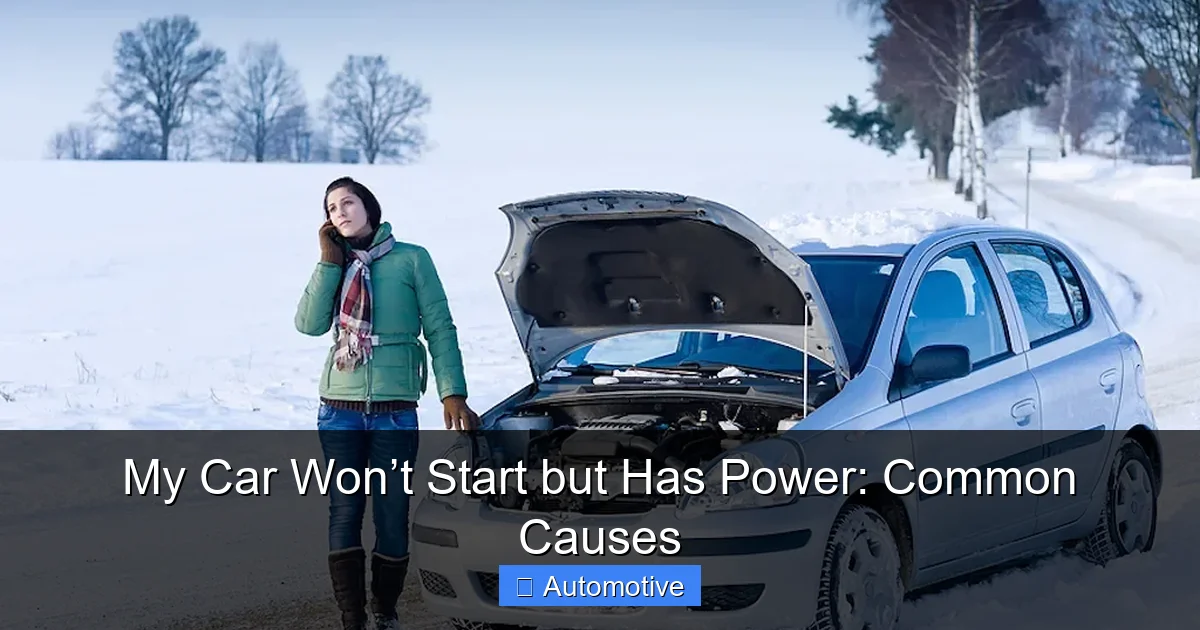
Even if your dashboard lights up, your battery might not be delivering enough power to the starter. This is especially true in older batteries or those with corroded or loose connections.
Corroded or Loose Battery Terminals
One of the first things to check is the battery terminals. Over time, corrosion—a white, powdery substance—can build up on the positive and negative posts. This crust acts like an insulator, blocking the flow of electricity.
You might notice:
– A green or white crust around the terminals
– Intermittent electrical issues
– Lights dimming when you try to start the car
How to fix it: Turn off the car and disconnect the negative terminal first (usually black), then the positive (red). Use a wire brush or battery terminal cleaner to scrub away corrosion. Reconnect tightly, applying a thin layer of dielectric grease to prevent future buildup.
Weak or Failing Battery
A battery can show voltage (12.4V or higher) but still fail under load. This is called a “surface charge”—the battery appears charged but can’t deliver the high current needed to start the engine.
Signs include:
– Slow cranking (if it cranks at all)
– Lights dim when turning the key
– Repeated no-start issues, especially in cold weather
How to test: Use a multimeter to check voltage with the engine off (should be 12.4–12.7V). Then, have the battery load-tested at an auto parts store—most do this for free.
Faulty Ground Connection
The battery’s negative terminal connects to the car’s chassis, creating a ground path for electricity. If this connection is loose or corroded, current can’t flow properly—even if the battery is fine.
Look for:
– A loose or rusted ground cable
– Paint or dirt under the ground strap
– Intermittent electrical problems
Tip: Clean the ground connection point on the engine block and tighten the bolt securely.
2. Starter Motor or Solenoid Failure

Visual guide about My Car Won’t Start but Has Power: Common Causes
Image source: i0.wp.com
The starter motor is the muscle that turns your engine over. If it’s broken, the engine won’t crank—no matter how much power the battery has.
Clicking Sound When Turning the Key
A single loud click (or rapid clicking) when you turn the key is a classic sign of a starter issue. The solenoid—a small electromagnet that engages the starter—may be receiving power, but the motor itself isn’t spinning.
This could mean:
– The starter motor is seized
– The solenoid is faulty
– The starter relay is bad
What to do: Tap the starter motor gently with a hammer while someone turns the key. If the car starts, the starter is likely failing and needs replacement. (Note: This is a temporary fix—don’t rely on it.)
No Sound at All
If there’s no click, the problem might be earlier in the circuit—like a blown fuse, bad ignition switch, or faulty relay.
Check:
– The starter relay in the fuse box
– The ignition switch (see next section)
– Wiring to the starter
Starter Motor Location and Access
The starter is usually mounted near the transmission, under the engine. It’s a cylindrical component with a large wire from the battery and a smaller control wire.
DIY Tip: If you’re comfortable under the car, you can test the starter by bypassing the ignition switch with a screwdriver (only if you know what you’re doing—safety first!). If the starter spins when directly powered, the issue is upstream.
3. Ignition Switch Problems
Visual guide about My Car Won’t Start but Has Power: Common Causes
Image source: shstreetcar.com
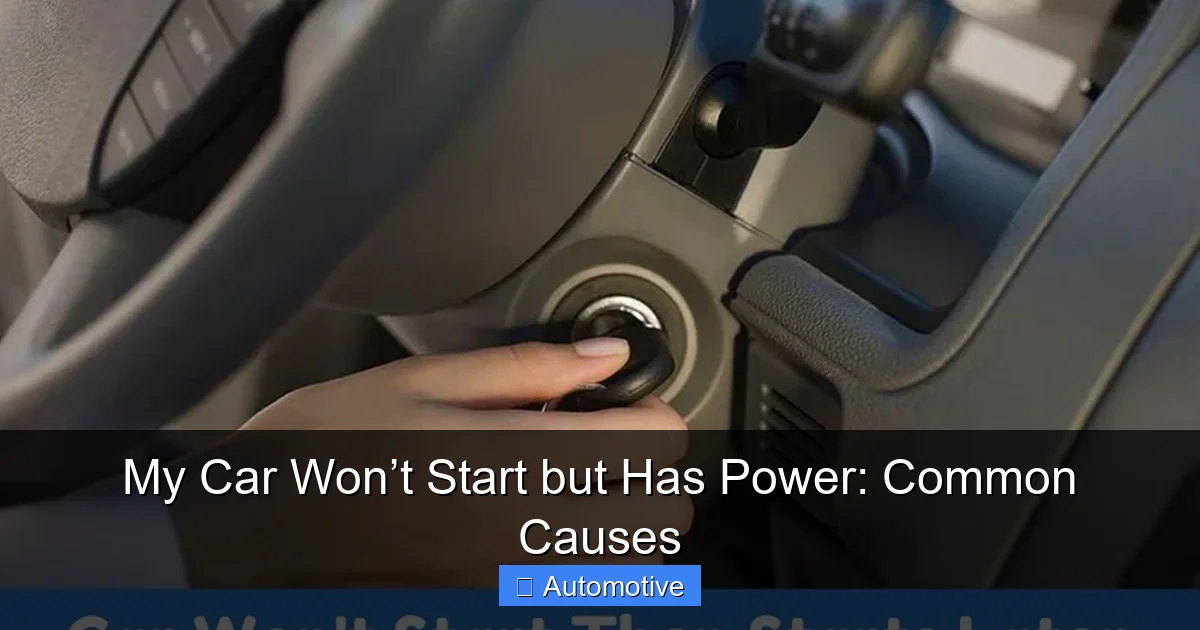
The ignition switch is the gateway between your key and the car’s electrical systems. When you turn the key, it sends signals to the starter, fuel pump, and ignition system.
Worn Internal Contacts
Over time, the contacts inside the ignition switch can wear out. They may still power the dashboard and accessories but fail to send the “start” signal to the starter.
Symptoms:
– Dashboard lights up, but nothing happens when you turn the key
– Intermittent starting issues
– Key feels loose or wobbly
How to test: Use a multimeter to check for voltage at the starter solenoid wire when the key is turned to “start.” If there’s no power, the ignition switch may be faulty.
Key Fob or Smart Key Issues
In modern cars with push-button start, a weak key fob battery or faulty antenna can prevent the car from recognizing the key.
Try:
– Holding the fob directly against the start button
– Using the physical key (if available) to unlock the door
– Replacing the fob battery
Steering Wheel Lock
Sometimes, the steering wheel locks when the car is turned off. If you turn the key while trying to move the wheel, it can prevent the ignition from engaging.
Fix: Gently wiggle the steering wheel left and right while turning the key.
4. Fuel System Failures
Even with a working starter, your engine needs fuel to run. If the fuel system fails, the engine won’t start—even if it cranks.
Failed Fuel Pump
The fuel pump sends gasoline from the tank to the engine. If it’s dead, no fuel reaches the injectors.
Signs:
– Engine cranks but doesn’t start
– No humming sound from the fuel tank when you turn the key to “on”
– Sudden loss of power while driving (in advanced cases)
How to check: Turn the key to “on” (don’t start) and listen near the fuel tank (usually under the rear seat or trunk). You should hear a brief hum. If not, the pump may be dead.
Tip: Some cars have a fuel pump reset button—check your owner’s manual.
Clogged Fuel Filter
A dirty fuel filter restricts fuel flow, starving the engine.
Symptoms:
– Hard starting, especially when cold
– Engine sputtering or stalling
– Reduced fuel efficiency
Solution: Replace the fuel filter every 30,000–60,000 miles, or as recommended.
Empty Fuel Tank or Bad Gauge
It sounds obvious, but sometimes the fuel gauge is wrong. You think you have gas, but the tank is empty.
Check: Use a dipstick or add a few gallons of fuel to test.
5. Sensor and Computer Issues
Modern cars rely on sensors and computers to manage engine operation. If a critical sensor fails, the engine control unit (ECU) may prevent starting.
Crankshaft Position Sensor Failure
This sensor tells the ECU when the pistons are moving. Without this signal, the engine won’t spark or inject fuel.
Symptoms:
– Engine cranks but doesn’t start
– No spark or fuel delivery
– Check Engine Light may be on
Diagnosis: Use an OBD2 scanner to check for trouble codes like P0335 (crankshaft sensor circuit malfunction).
Camshaft Position Sensor Issues
Similar to the crankshaft sensor, this tells the ECU when the valves are opening. A faulty sensor can disrupt ignition timing.
Faulty Engine Control Unit (ECU)
Rare, but possible. A damaged ECU may not send the right signals to start the engine.
Signs:
– Multiple electrical failures
– Erratic behavior
– No communication with OBD2 scanner
6. Security and Immobilizer System Glitches
Many modern cars have anti-theft systems that prevent starting unless the correct key is present.
Immobilizer Not Recognizing the Key
If the car’s computer doesn’t “see” your key, it won’t allow the engine to start—even if the battery and starter are fine.
Symptoms:
– Security light flashing on dashboard
– Engine cranks but won’t fire
– Key fob not working
Try:
– Using a spare key
– Replacing the key fob battery
– Reprogramming the key (may require a dealer or locksmith)
Faulty Antenna Ring
The antenna ring around the ignition cylinder reads the key’s chip. If it’s damaged, the car won’t recognize the key.
Solution: Repair or replace the antenna ring.
7. Transmission and Safety Switch Problems
In automatic cars, a safety switch prevents the engine from starting unless the transmission is in Park or Neutral.
Neutral Safety Switch Failure
If this switch is faulty, the car won’t crank—even if the shifter is in Park.
Symptoms:
– No crank in Park, but cranks in Neutral
– Shifter feels loose or misaligned
How to test: Try starting the car in Neutral. If it starts, the switch may need adjustment or replacement.
Shift Interlock System Issues
Some cars require you to press the brake to start. If the brake switch is bad, the car won’t start.
Check: Ensure the brake lights come on when you press the pedal. If not, the brake switch may be faulty.
How to Diagnose the Problem Step by Step
When your car won’t start but has power, follow this troubleshooting checklist:
1. Listen and observe: Do you hear a click? Does the engine crank? Are lights dimming?
2. Check battery connections: Look for corrosion, tightness, and clean terminals.
3. Test the battery: Use a multimeter or get a free test at an auto parts store.
4. Try starting in Neutral: Rules out neutral safety switch.
5. Listen for fuel pump: Turn key to “on” and listen for a hum from the rear.
6. Scan for trouble codes: Use an OBD2 scanner to check for sensor or ECU issues.
7. Check fuses and relays: Look for blown fuses related to the starter, fuel pump, or ignition.
When to Call a Mechanic
While many of these issues can be diagnosed at home, some require professional tools or expertise. Call a mechanic if:
– You’ve tried basic fixes and the car still won’t start
– You suspect internal engine or ECU damage
– The problem is intermittent or worsening
– You’re not comfortable working under the car or with electrical systems
Prevention Tips
Avoid future no-start issues with these habits:
– Clean battery terminals every 6 months
– Replace the battery every 3–5 years
– Use a fuel system cleaner periodically
– Keep your key fob battery fresh
– Address warning lights promptly
Conclusion
A car that won’t start but has power is frustrating—but rarely a death sentence for your vehicle. More often than not, the cause is a fixable electrical, fuel, or sensor issue. By methodically checking the battery, starter, ignition, fuel system, and safety switches, you can often pinpoint the problem without a tow.
Remember: just because the lights work doesn’t mean the battery is strong enough to start the engine. And just because the engine cranks doesn’t mean it’s getting fuel or spark. Understanding the full starting process empowers you to diagnose and resolve issues faster.
Keep this guide handy, and the next time your car refuses to start, you’ll know exactly where to look. Stay safe, stay informed, and keep rolling.
Frequently Asked Questions
Why does my car have power but won’t start?
Your car may have power to accessories like lights and radio, but not enough current to crank the engine. This is often due to a weak battery, corroded terminals, or a faulty starter motor.
What does it mean if I hear a clicking sound when I turn the key?
A clicking sound usually indicates a starter issue—either the solenoid is engaging but the motor isn’t spinning, or the battery can’t deliver enough power to turn the engine over.
Can a bad fuel pump prevent my car from starting?
Yes. If the fuel pump fails, no gasoline reaches the engine, so it won’t start—even if the engine cranks normally. Listen for a humming sound from the fuel tank when you turn the key to “on.”
Why won’t my car start even though the battery is new?
A new battery doesn’t rule out other issues like a bad starter, faulty ignition switch, or immobilizer problem. Also, poor connections or a bad ground can prevent proper current flow.
How do I know if my ignition switch is bad?
If the dashboard lights up but nothing happens when you turn the key, or if the key feels loose, the ignition switch may be worn. Use a multimeter to test for voltage at the starter circuit.
Can a car’s security system stop it from starting?
Yes. If the immobilizer doesn’t recognize your key, it will prevent the engine from starting—even with full power. Try using a spare key or replacing the fob battery.
