
What Is Shift Lock Release on a Hyundai?

The shift lock release on a Hyundai is a safety feature that prevents accidental gear shifting when the brake pedal isn’t pressed. It ensures your vehicle stays in Park until you’re ready to drive, enhancing safety and preventing damage.
Key Takeaways
- What It Is: The shift lock release is a mechanical override that allows you to shift out of Park when the electronic system fails or the brake pedal isn’t working.
- Why It Exists: It prevents unintended vehicle movement by locking the shifter until the brake is pressed, improving safety.
- When to Use It: Only use it in emergencies, such as a dead battery, faulty brake light switch, or malfunctioning shifter mechanism.
- Location Varies: The release button or lever is usually near the gear shifter, often under a small cover labeled “Shift Lock Release.”
- How to Use It: Press the brake (if possible), then press and hold the release button while moving the shifter out of Park.
- Common Causes of Activation: Dead battery, blown fuse, faulty brake switch, or electrical issues can trigger the need for manual override.
- Maintenance Tip: Regularly check brake lights and battery health to avoid unexpected shift lock issues.
📑 Table of Contents
- What Is Shift Lock Release on a Hyundai?
- Why Does Hyundai Include a Shift Lock Release?
- How the Shift Lock Release System Works
- When Do You Need to Use the Shift Lock Release?
- Where Is the Shift Lock Release Located?
- How to Use the Shift Lock Release on a Hyundai
- Common Problems and Troubleshooting
- Preventing Shift Lock Issues
- Conclusion
What Is Shift Lock Release on a Hyundai?
If you’ve ever sat in your Hyundai, turned the key, and found that the gear shifter won’t move out of Park—even though you’re pressing the brake—you’ve likely encountered the shift lock release system. It’s a common but often misunderstood feature designed to keep you and your vehicle safe. But what exactly is it, and why does your Hyundai have it?
The shift lock release is a built-in safety mechanism found in most modern Hyundai vehicles, including popular models like the Elantra, Sonata, Tucson, and Santa Fe. Its primary job is to prevent the transmission from being accidentally shifted out of Park unless the brake pedal is pressed. This helps avoid unintended vehicle movement, which could lead to accidents, especially in driveways or parking lots.
Think of it as a digital handshake between your brake pedal and the shifter. When you press the brake, a signal is sent to the transmission control module, which then unlocks the shifter so you can move it into Drive, Reverse, or another gear. If that signal doesn’t come through—because the brake lights are out, the battery is dead, or there’s an electrical glitch—the shifter stays locked. That’s when the shift lock release comes into play: it’s your emergency override.
Why Does Hyundai Include a Shift Lock Release?
Visual guide about What Is Shift Lock Release on a Hyundai?
Image source: paulstravelpictures.com
Hyundai, like most automakers, includes the shift lock release system to meet federal safety standards and reduce the risk of rollaway accidents. The National Highway Traffic Safety Administration (NHTSA) requires that all automatic transmission vehicles manufactured after 1992 have a brake-shift interlock system. This means the vehicle must prevent shifting out of Park unless the brake pedal is depressed.
But safety isn’t the only reason. The shift lock also protects your transmission. Shifting out of Park without pressing the brake—especially if the vehicle is on an incline or the engine isn’t running properly—can put unnecessary strain on the transmission components. Over time, this could lead to costly repairs.
Another benefit is theft deterrence. If a thief tries to hotwire your Hyundai or push-start it, they won’t be able to move the shifter without pressing the brake, making it harder to drive away unnoticed.
Safety First: Preventing Accidental Movement
Imagine parking your Hyundai on a slight hill, putting it in Park, and then accidentally bumping the shifter. Without a shift lock, the vehicle could lurch forward or backward, potentially hitting another car, a wall, or even a person. The shift lock release system eliminates this risk by ensuring the shifter can’t move unless the driver intentionally presses the brake.
This feature is especially important for families with children. Kids playing in the back seat might accidentally kick or play with the gear shifter. The shift lock acts as a safeguard, preventing any unintended gear changes.
Protecting the Transmission
Modern automatic transmissions are complex and sensitive. Forcing the shifter out of Park when the vehicle isn’t ready can damage internal components like the park pawl—a small but critical part that locks the transmission when in Park. If this part breaks, your car could roll even when shifted into Park.
The shift lock ensures that the transmission is only disengaged when the vehicle is in the correct state to move. This not only protects the transmission but also extends the overall lifespan of your Hyundai’s drivetrain.
How the Shift Lock Release System Works
Visual guide about What Is Shift Lock Release on a Hyundai?
Image source: paulstravelpictures.com
The shift lock release system in a Hyundai operates through a combination of mechanical and electronic components. It’s designed to be seamless under normal conditions but accessible in emergencies.
When you press the brake pedal, a brake light switch sends an electrical signal to the transmission control module (TCM). The TCM then sends a command to a solenoid or actuator located near the shifter. This solenoid releases a physical lock that holds the shifter in place, allowing you to move it freely.
If the brake pedal isn’t pressed, or if the signal is interrupted, the solenoid remains engaged, locking the shifter in Park. This is why you can’t shift out of Park unless you press the brake—even if the car is running.
The Role of the Brake Light Switch
The brake light switch is a small but crucial component. It’s usually located above the brake pedal and activates both the brake lights and the shift lock system. If this switch fails, your brake lights may not come on, and the shifter will remain locked—even if you’re pressing the brake.
A faulty brake light switch is one of the most common reasons drivers need to use the shift lock release. It’s a relatively inexpensive part to replace, but it’s often overlooked during routine maintenance.
Electrical Signals and the Transmission Control Module
The transmission control module (TCM) is the brain behind the shift lock system. It monitors input from the brake switch, ignition system, and other sensors to determine when it’s safe to unlock the shifter. If the TCM detects a problem—such as a dead battery or a blown fuse—it may keep the shifter locked as a precaution.
In some Hyundai models, the TCM is integrated with the engine control unit (ECU), making diagnostics more complex. If you’re experiencing persistent shift lock issues, a professional scan tool may be needed to read error codes and identify the root cause.
When Do You Need to Use the Shift Lock Release?
Visual guide about What Is Shift Lock Release on a Hyundai?
Image source: paulstravelpictures.com
Under normal circumstances, you should never need to manually activate the shift lock release. The system is designed to work automatically whenever you press the brake. However, there are several situations where it becomes necessary.
Dead or Weak Battery
One of the most common reasons for using the shift lock release is a dead or weak battery. If your Hyundai’s battery doesn’t have enough power to send the signal from the brake switch to the TCM, the shifter will remain locked—even if you press the brake.
This often happens when the car has been sitting for a long time, the battery is old, or accessories were left on overnight. In such cases, jump-starting the vehicle may restore power and allow normal shifting. But if the battery is completely dead, you’ll need to use the shift lock release to move the car out of the way so you can access the battery or call for assistance.
Faulty Brake Light Switch
As mentioned earlier, a malfunctioning brake light switch can prevent the shift lock from disengaging. If your brake lights aren’t working, there’s a good chance the shift lock system isn’t receiving the signal it needs.
You can test this by having someone stand behind the car while you press the brake. If the lights don’t come on, the switch may be faulty. Replacing it usually resolves the issue, but until then, the shift lock release is your only option.
Blown Fuse or Electrical Issue
The shift lock system relies on several fuses to function properly. If one of these fuses blows—due to a power surge, short circuit, or aging wiring—the system may fail. A quick check of the fuse box (usually located under the dashboard or in the engine compartment) can reveal if this is the problem.
Other electrical issues, such as corroded connectors or damaged wiring, can also interfere with the shift lock signal. These problems may require professional diagnosis and repair.
Shifter Mechanism Malfunction
In rare cases, the mechanical components of the shifter itself may fail. This could include a broken solenoid, worn linkage, or debris blocking the shifter’s movement. If the shifter is physically stuck, the shift lock release allows you to bypass the electronic system and move the gear selector manually.
Where Is the Shift Lock Release Located?
The location of the shift lock release varies slightly depending on your Hyundai model and year, but it’s typically found near the gear shifter. Here’s where to look:
Console-Mounted Shifters
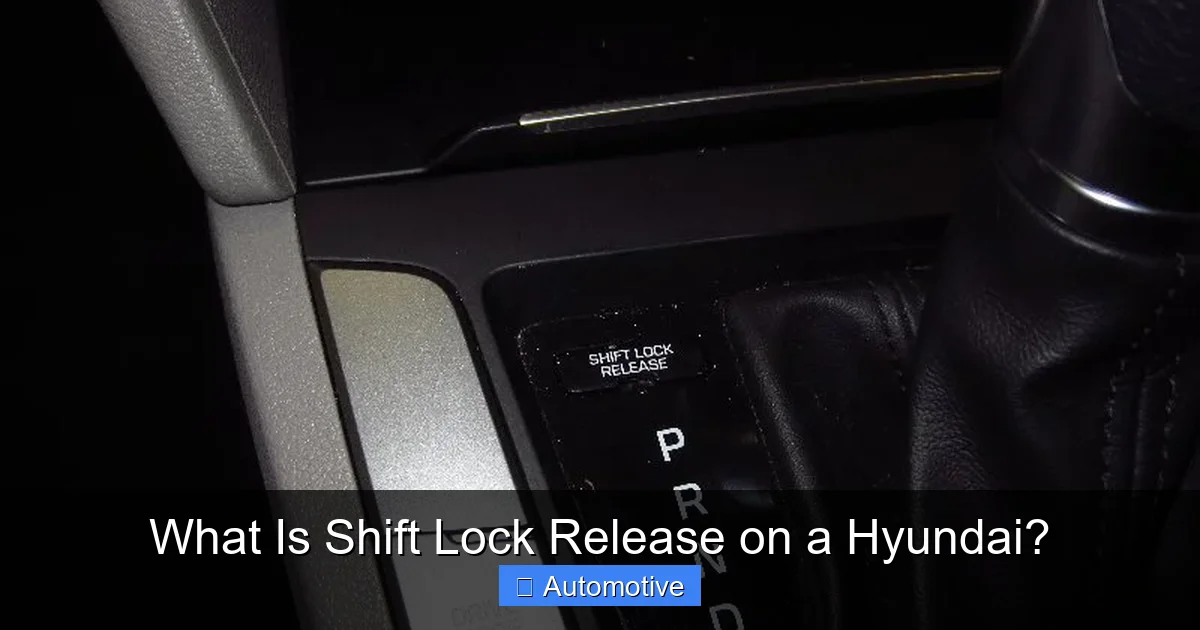
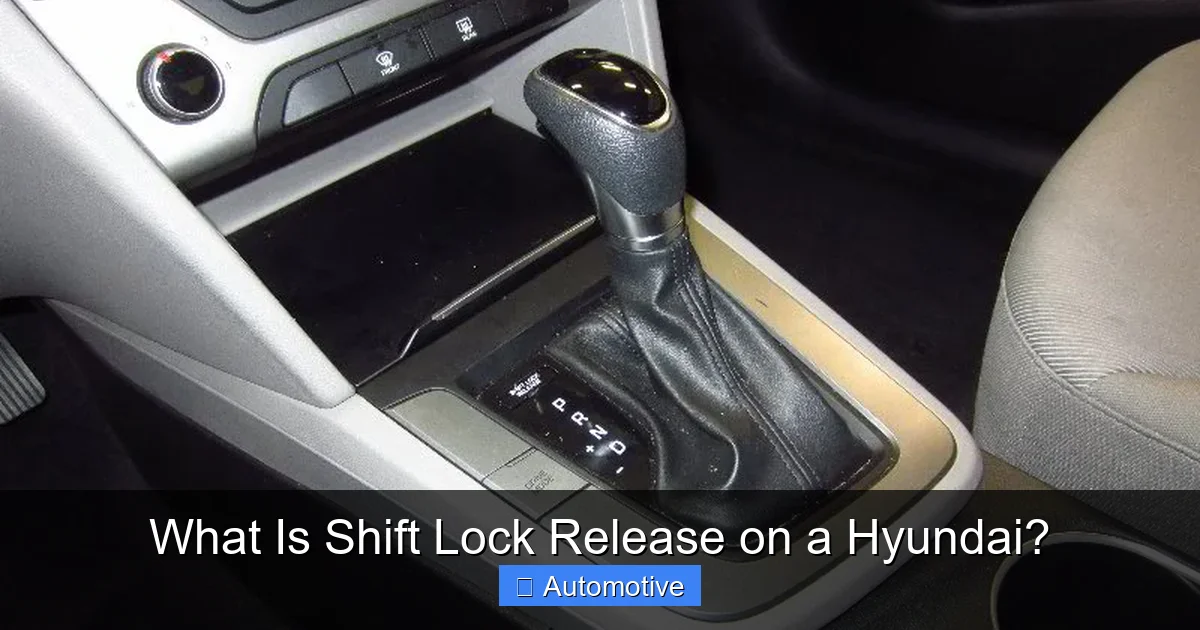
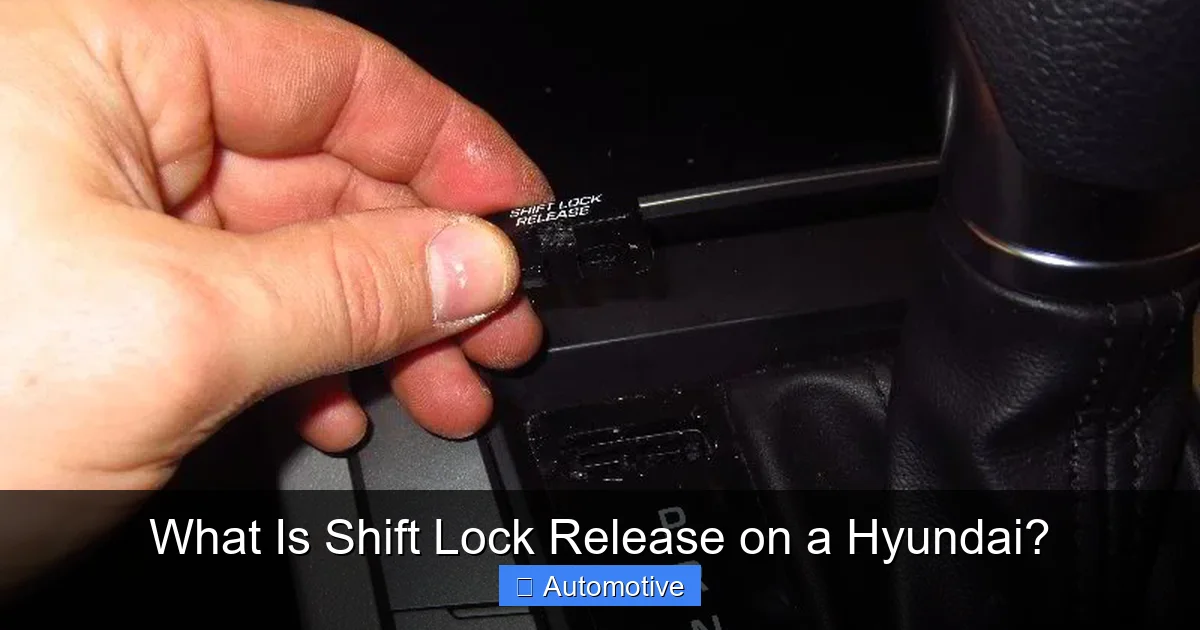
In most Hyundai sedans and SUVs with a center console shifter (like the Sonata or Tucson), the shift lock release is a small button or slot located just above or beside the shifter. It’s often covered by a small plastic cap labeled “Shift Lock Release” or marked with a symbol resembling a shifter with an arrow.
To access it, gently pry off the cap using a flathead screwdriver or your fingernail. Underneath, you’ll find a small button or slot where you can insert a key, screwdriver, or paperclip.
Column-Mounted Shifters
Older Hyundai models, such as the early 2000s Elantra, may have a column-mounted shifter. In these vehicles, the shift lock release is usually located on the side of the steering column, near the shifter lever. It’s often a small button that you press while moving the shifter.
Push-Button or Rotary Shifters
Newer Hyundai models, like the Palisade or Ioniq 5, use push-button or rotary shifters instead of a traditional lever. In these cases, the shift lock release may be a hidden button near the shifter or accessed through a small panel. Consult your owner’s manual for the exact location.
Tip: Check Your Owner’s Manual
The best way to find the shift lock release on your specific Hyundai is to consult the owner’s manual. Hyundai provides detailed diagrams and instructions for each model. If you don’t have a physical copy, you can usually download a PDF version from Hyundai’s official website.
How to Use the Shift Lock Release on a Hyundai
Using the shift lock release is simple, but it’s important to do it correctly to avoid damage or injury. Follow these steps:
Step 1: Ensure the Vehicle Is Secure
Before using the shift lock release, make sure your Hyundai is on level ground and the parking brake is fully engaged. This prevents the vehicle from rolling when you shift out of Park.
Step 2: Locate the Release Button
Find the shift lock release button or slot near the shifter. Remove any cover if present.
Step 3: Insert a Tool (If Needed)
If the release requires a tool (like a key or screwdriver), insert it into the slot. Some models have a button you can press directly with your finger.
Step 4: Press the Button and Shift
While pressing the shift lock release button, gently move the shifter out of Park and into Neutral or Drive. You may need to apply slight pressure, but avoid forcing it.
Step 5: Start the Engine (If Possible)
If the battery has enough charge, try starting the engine. Once running, the shift lock system should reset, and you can shift normally.
Step 6: Seek Professional Help
After using the shift lock release, have your Hyundai inspected by a certified technician. The underlying issue—whether it’s a dead battery, faulty switch, or electrical problem—should be diagnosed and repaired to prevent future occurrences.
Safety Tip: Never Force the Shifter
If the shifter doesn’t move easily, don’t force it. Forcing the shifter can damage the transmission or shifter mechanism. Double-check that you’re pressing the release button correctly and that the vehicle is in the correct state (e.g., ignition on, parking brake engaged).
Common Problems and Troubleshooting
Even with proper use, shift lock issues can persist. Here are some common problems and how to address them:
Brake Lights Not Working
If your brake lights are out, the shift lock system won’t receive the signal to unlock. Check the brake light bulbs first—they’re inexpensive and easy to replace. If the bulbs are fine, test the brake light switch with a multimeter or have it inspected by a mechanic.
Battery Issues
A weak or dead battery is a frequent culprit. Use a battery tester to check the voltage. A healthy battery should read around 12.6 volts when the car is off and 13.7–14.7 volts when running. If the battery is old (over 3–5 years), consider replacing it.
Blown Fuses
Check the fuse box for any blown fuses related to the brake lights, ignition, or transmission. Replace any damaged fuses with the correct amperage rating. Keep spare fuses in your glove compartment for emergencies.
Software Glitches
In some Hyundai models, a software update may be needed to resolve shift lock issues. Visit a Hyundai dealership to check if a TCM or ECU update is available for your vehicle.
Preventing Shift Lock Issues
The best way to avoid needing the shift lock release is through regular maintenance and awareness.
Check Your Brake Lights Regularly
Make it a habit to test your brake lights weekly. Have a friend stand behind the car while you press the brake, or use a reflective surface like a garage door to see the lights.
Maintain Your Battery
Keep your battery terminals clean and free of corrosion. Have the battery tested annually, especially before winter. Consider replacing it every 3–5 years, depending on climate and usage.
Inspect Fuses and Wiring
During routine service, ask your mechanic to inspect the fuses and wiring related to the brake and transmission systems. Early detection of electrical issues can prevent bigger problems.
Use the Parking Brake
Always engage the parking brake when parking, especially on hills. This reduces stress on the transmission’s park pawl and adds an extra layer of safety.
Conclusion
The shift lock release on a Hyundai is more than just a backup feature—it’s a critical safety system designed to protect you, your passengers, and your vehicle. By preventing accidental gear shifts, it reduces the risk of rollaway accidents and transmission damage. While you should rarely need to use it, knowing how and when to activate it can save you from being stranded or causing further damage.
Understanding how the system works—from the brake light switch to the transmission control module—empowers you to troubleshoot issues and maintain your Hyundai properly. Regular checks of your brake lights, battery, and fuses can prevent most shift lock problems before they occur.
If you do find yourself needing to use the shift lock release, remember to stay calm, follow the steps carefully, and seek professional help afterward. Your Hyundai is designed to keep you safe, and the shift lock release is just one of the many features that make driving it a reliable and secure experience.
Frequently Asked Questions
What is the shift lock release on a Hyundai?
The shift lock release is a manual override that allows you to move the gear shifter out of Park when the electronic system fails. It’s a safety feature found in most Hyundai vehicles.
Why won’t my Hyundai shifter move out of Park?
This is usually due to a dead battery, faulty brake light switch, or electrical issue. The shift lock prevents shifting unless the brake is pressed and the system receives the correct signal.
Where is the shift lock release button on a Hyundai?
It’s typically located near the gear shifter, often under a small cover labeled “Shift Lock Release.” Check your owner’s manual for the exact location on your model.
Can I drive my Hyundai after using the shift lock release?
Yes, but only if the engine starts and the vehicle operates normally. However, you should have the underlying issue diagnosed and repaired as soon as possible.
Is it safe to use the shift lock release frequently?
No. It’s meant for emergencies only. Frequent use may indicate a deeper problem that needs professional attention to avoid damage or safety risks.
How do I reset the shift lock system on a Hyundai?
Once the issue is fixed—like replacing a dead battery or faulty switch—the system usually resets automatically when you start the car and press the brake.