Why Is the Tire Pressure Light on in My Toyota Sienna?

Contents
- 1 Key Takeaways
- 2 📑 Table of Contents
- 3 Understanding Your Toyota Sienna’s Tire Pressure Monitoring System (TPMS)
- 4 Common Reasons Your Toyota Sienna’s Tire Pressure Light Comes On
- 5 Immediate Action Steps: What to Do When the Light Comes On
- 6 How to Diagnose and Reset the Light
- 7 Preventative Maintenance and Best Practices
- 8 When to Seek Professional Help
- 9 Conclusion: Stay Safe and Informed
- 10 Frequently Asked Questions

Car Shampoo Concentrate

Dashboard Polish

Car Bumper Protector

Car Floor Mats (Universal)
The tire pressure light in your Toyota Sienna is a critical safety warning from the Tire Pressure Monitoring System (TPMS). It typically illuminates due to low tire pressure, drastic temperature changes, a faulty sensor, or after tire service. Driving with it on is unsafe and reduces fuel efficiency. The immediate step is to manually check all tires, including the spare, with a gauge. Often, simply inflating tires to the correct PSI and resetting the system will turn off the light, but persistent illumination requires professional diagnosis.
Key Takeaways
- The TPMS is a safety system: It warns you when tire pressure is significantly low, which can cause poor handling, increased wear, and blowouts.
- Common triggers include: Actual air loss, seasonal temperature drops (about 1 PSI per 10°F drop), recent tire rotation or replacement, and faulty TPMS sensors or batteries.
- Never ignore the light: Driving with underinflated tires is dangerous, reduces fuel economy, and causes uneven tire wear, costing you money.
- Your action plan: First, find a safe spot and manually check all tire pressures with a reliable gauge, including the spare. Inflate them to the manufacturer’s recommended PSI found on the driver’s door jamb sticker.
- Resetting is often simple: After correcting the pressure, the light may turn off automatically after a short drive. If not, a manual reset procedure using the vehicle’s settings is required.
- Persistent light means a problem: If the light stays on after proper inflation and reset, you likely have a damaged sensor, dead sensor battery, or a system malfunction needing a technician.
- Regular maintenance prevents surprises: Check tire pressures monthly and before long trips, especially with temperature swings, to keep your Sienna safe and efficient.
📑 Table of Contents
- Understanding Your Toyota Sienna’s Tire Pressure Monitoring System (TPMS)
- Common Reasons Your Toyota Sienna’s Tire Pressure Light Comes On
- Immediate Action Steps: What to Do When the Light Comes On
- How to Diagnose and Reset the Light
- Preventative Maintenance and Best Practices
- When to Seek Professional Help
- Conclusion: Stay Safe and Informed
Understanding Your Toyota Sienna’s Tire Pressure Monitoring System (TPMS)
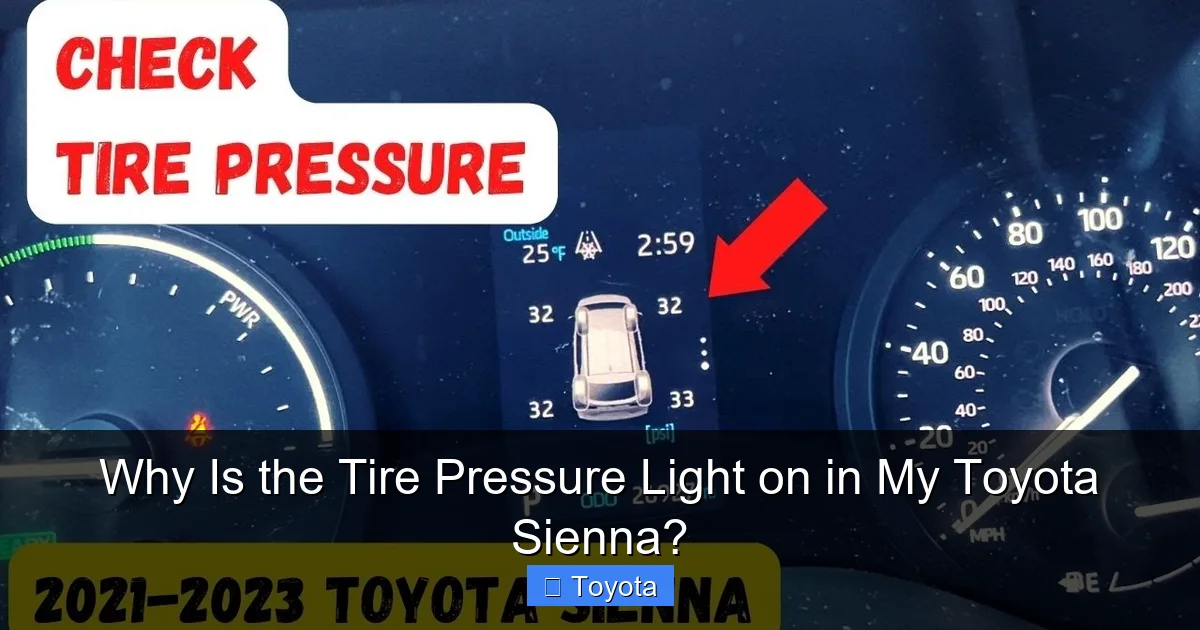
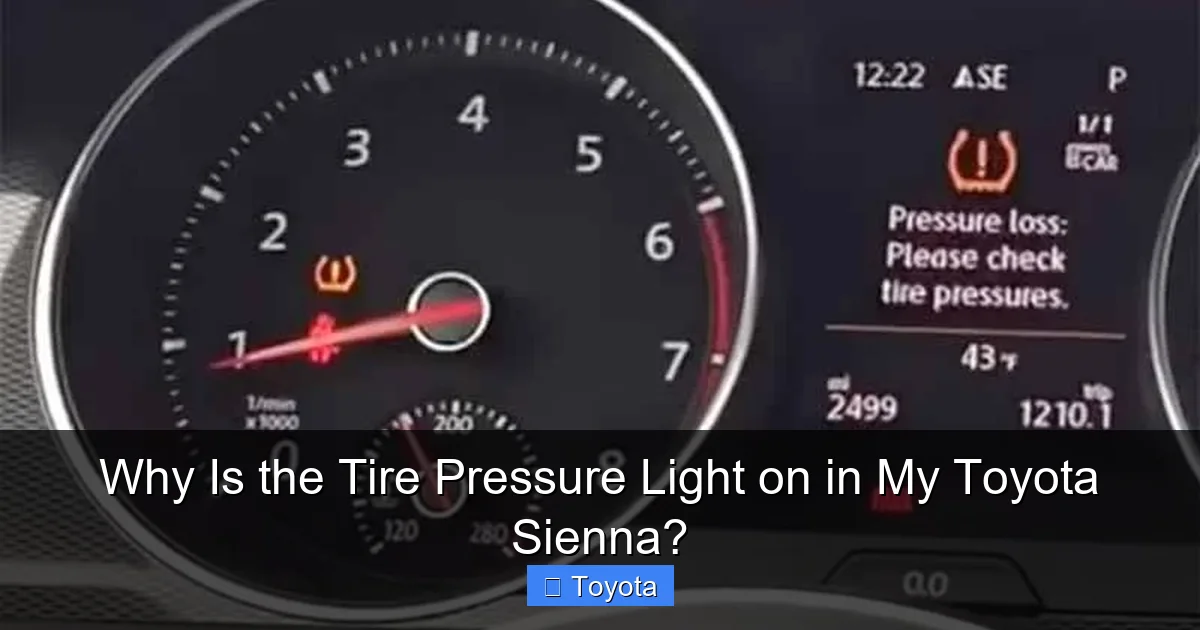
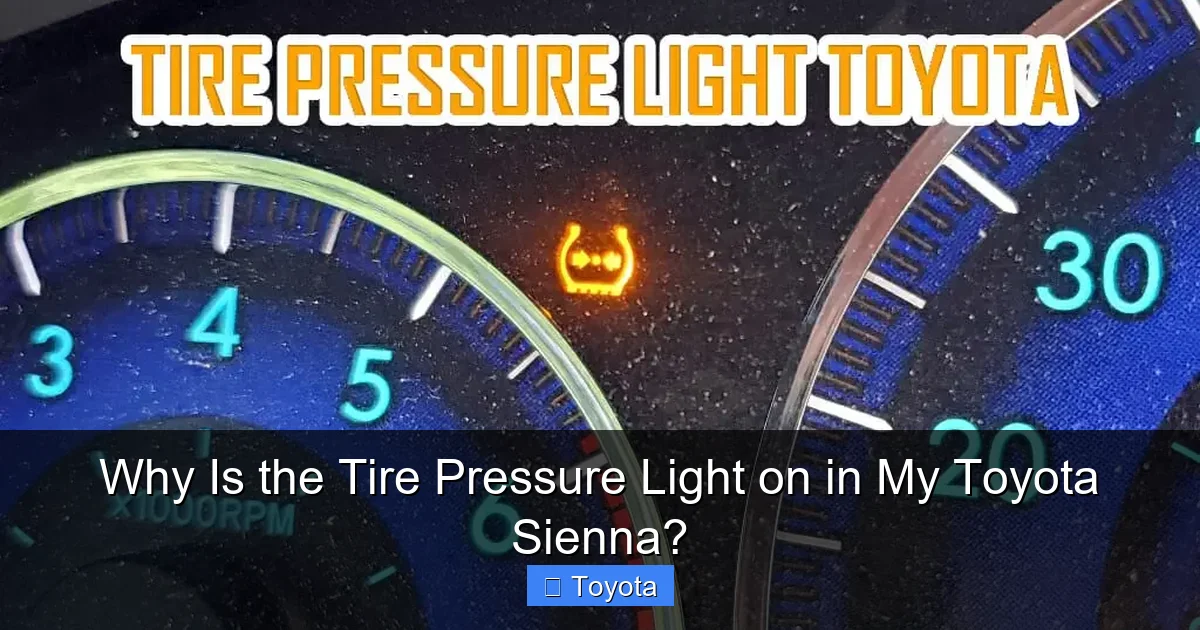
That little yellow exclamation point inside a tire cross-section on your dashboard isn’t just a nuisance—it’s your Toyota Sienna’s Tire Pressure Monitoring System (TPMS) sending a vital message. This federally mandated safety system is designed to alert you when the air pressure in one or more tires falls 25% or more below the recommended level. For a vehicle like the Sienna, which is often packed with family, cargo, or both, maintaining proper tire pressure is even more crucial for safety, handling, and fuel economy. When the light comes on, it’s your cue to take immediate action. But what exactly does it mean, and what should you do about it? Let’s break it down.
How Direct TPMS Works in Your Sienna
Your Toyota Sienna uses a “direct” TPMS. This means each wheel has a small, battery-powered sensor mounted inside the valve stem. These sensors constantly monitor the air pressure and temperature inside each tire and transmit that data wirelessly to the vehicle’s computer. When the pressure in any tire drops below the threshold, the computer triggers the warning light on your dash. Some newer Sienna models may also display individual tire pressures on the multi-information display, which is incredibly helpful for pinpointing the problem.
Common Reasons Your Toyota Sienna’s Tire Pressure Light Comes On
While the most obvious reason is a simple air leak, the cause can be more varied. Understanding these common triggers will help you diagnose the issue faster.
Visual guide about Why Is the Tire Pressure Light on in My Toyota Sienna?
Image source: tiregrades.com
1. Actual Tire Air Loss (The Usual Suspect)
This is the most frequent cause. A tire can lose air due to:
- Puncture: A nail, screw, or piece of debris lodged in the tread.
- Valve Stem Failure: The valve core can become worn or damaged, causing a slow leak.
- Bead Leak: A poor seal between the tire and the wheel rim.
- Damaged or Cracked Wheel: A bent rim from a pothole or curb can break the seal.
Pro Tip: Always check the spare tire! Your Sienna’s TPMS may also monitor the spare if it’s a full-size, matching wheel with a sensor. A flat or low spare can also trigger the light.
2. Temperature and Weather Fluctuations
Air is a gas, and it expands when heated and contracts when cooled. This is a perfectly normal, often seasonal cause for the light to come on. As temperatures drop overnight or across seasons, tire pressure can decrease enough to trigger the TPMS. For every 10°F (5.5°C) drop in temperature, your tire pressure can decrease by about 1-2 PSI. The light might come on in the morning after a cold snap but then turn off as you drive and the tires warm up. If this happens, simply check and inflate your tires to the correct pressure. You can learn more about the specific correct tire pressure for your Toyota Sienna based on your model year and trim.
3. Recent Tire Service
Have you just had your tires rotated, replaced, or repaired? This is a very common trigger. Here’s why:
- Sensor Disturbance: During a tire rotation, the technician removes and remounts the wheels. This can sometimes jostle a TPMS sensor, cause a slight leak at the sensor’s sealing washer, or reset its learning ID.
- New Sensor Installation: If a new sensor was installed, it must be “learned” or programmed by your Sienna’s computer. Until this is done, the system may not recognize it properly, causing a light or a “sensor not detected” message.
- Tire Pressure Adjustment: If the shop inflated the tires to a different pressure than your Sienna’s spec, the light will come on.
In these cases, the solution is often a simple reset after the tires are properly inflated. Our detailed guide on how to reset the tire pressure light on a Toyota Sienna walks you through the exact steps for your specific model year.
4. Faulty or Failing TPMS Sensor
Like any electronic component, TPMS sensors have a limited lifespan (typically 7-10 years, as they are powered by an internal, non-replaceable battery). When the battery dies, the sensor stops transmitting, and the TPMS light will typically blink for a minute or so upon startup before staying solid—a common diagnostic clue. Sensors can also fail due to physical damage during tire service, corrosion on the valve stem, or internal component failure. A failed sensor will need to be replaced. Since sensors are part of the valve stem assembly, replacement usually requires demounting the tire, which is a job for a professional tire shop.
5. Other System Issues
Less commonly, the problem lies elsewhere:
- Faulty TPMS Control Module: The vehicle’s computer that receives the sensor signals can malfunction.
- Damaged Wiring: In rare cases, wiring to the antenna modules (which read the sensor signals) can be damaged.
- Aftermarket Wheires/Tires: If you’ve installed aftermarket wheels or tires that don’t have compatible TPMS sensors or have sensor-damaging sealants inside, the system won’t work correctly.
Diagnosing these issues requires professional scan tools that can communicate with the TPMS module and individual sensors.
Immediate Action Steps: What to Do When the Light Comes On
Safety first! When the TPMS light illuminates, follow this sequence:
Visual guide about Why Is the Tire Pressure Light on in My Toyota Sienna?
Image source: hondatheotherside.com
Step 1: Find a Safe Place and Stop
If the light comes on while driving, signal and pull over to a safe, level area as soon as possible. Do not panic, but reduce your speed and avoid sudden maneuvers. A severely underinflated tire can fail catastrophically.
Step 2: Perform a Visual Inspection
Once stopped, visually inspect all four tires and the spare. Look for:
- Obvious punctures or objects embedded in the tread.
- Significant sidewall damage, cuts, or bulges.
- One tire that appears visibly lower than the others.
Do not rely on visual inspection alone. A tire can look fine but be 10+ PSI low.
Step 3: Check Pressures Manually
This is the most critical step. You need a reliable, high-quality tire pressure gauge (digital or high-quality dial).
- Locate the recommended pressure. Look for the sticker on the driver’s side door jamb or the owner’s manual. Do not use the pressure printed on the tire sidewall—that’s the maximum pressure, not the recommended operating pressure for your Sienna.
- Check each tire when cold. “Cold” means the vehicle hasn’t been driven for at least three hours or has been driven less than a mile. Driving heats the tires and gives falsely high readings.
- Remove the valve cap, press the gauge on firmly, and read the pressure. Record the reading for each tire.
- Compare to the spec. If any tire is 5 PSI or more below the recommended pressure, it needs air.
If you find one or more tires low, carefully drive (if safe) to the nearest gas station with an air pump and inflate them to the exact recommended PSI. After driving a few miles, the TPMS light should turn off on its own as the system re-evaluates the pressures. If it doesn’t, proceed to a reset.
How to Diagnose and Reset the Light
Once you’ve confirmed all tires are properly inflated to the correct cold pressure, the next step is to address the light itself.
Visual guide about Why Is the Tire Pressure Light on in My Toyota Sienna?
Image source: tirehubz.com
The Automatic Reset (Drive Cycle)
Your Sienna’s TPMS is designed to reset itself after the correct pressure is restored. You typically need to drive at speeds above 25-30 mph for 5-10 minutes. The system needs time to “see” that all sensors are reporting pressures within the acceptable range. Be patient; sometimes the light lingers for a short drive.
The Manual Reset Procedure
If the light remains solid after a proper drive cycle, you’ll need to perform a manual reset. The exact steps vary slightly by model year, but the general process is:
- Ensure the ignition is ON (engine off).
- Locate the “TPMS” or “Set” button, usually near the steering wheel on the dash or under the climate controls.
- Press and hold the button until the TPMS indicator blinks three times, then release.
- Start the engine and drive. The light should blink and then turn off after the system confirms all pressures are good.
Important: If your Sienna has a multi-information display, you may need to navigate to the TPMS settings menu to initiate a “Relearn” or “Initialize” process. Always consult your owner’s manual for the precise instructions for your specific year and trim. For a model-specific walkthrough, our article on how to reset the tire pressure light on a Toyota Sienna is an invaluable resource.
When the Light Blinks Before Staying On
A blinking TPMS light for 30-60 seconds upon startup, followed by it staying solid, is a key diagnostic code. This pattern almost always indicates a communication failure with one or more TPMS sensors, most commonly due to a dead sensor battery. This means you need to have the system scanned to identify which sensor(s) have failed and require replacement.
Preventative Maintenance and Best Practices
The best way to deal with a TPMS light is to prevent it from coming on unexpectedly. Incorporate these habits into your routine:
Monthly Pressure Checks
Don’t wait for the light. Check all tire pressures, including the spare, at least once a month with your own gauge. This is the single most effective way to catch a slow leak early and maintain optimal safety and fuel efficiency. Properly inflated tires wear evenly and can improve gas mileage by up to 3.3%.
Adjust for Seasonal Changes
Be proactive with temperature swings. As winter approaches, check and adjust pressures more frequently. As temperatures rise in spring and summer, re-check them, as overinflation can also be problematic (though it won’t trigger the low-pressure light).
After Tire Services, Verify
Whenever you have tires rotated, replaced, or repaired, ask the technician to:
- Set the pressures to your Sienna’s factory specification.
- Perform a TPMS relearn procedure if sensors were disturbed.
- Verify the TPMS light is off before you leave.
If the light comes on after such a service, take it back—it’s likely a simple oversight they can fix.
Consider Sensor Replacement with Tire Purchases
If you’re buying a new set of tires, it’s often wise to replace the TPMS sensors (or at least their valve stems) at the same time, especially if your current sensors are over 7 years old. The labor is already being done, and it prevents a future breakdown and a second service visit. The cost is an investment in long-term reliability.
When to Seek Professional Help
Not all TPMS issues are DIY fixes. You should consult a professional tire technician or your Toyota dealer if:
- You’ve manually checked and inflated all tires to the correct pressure, but the light remains on after a proper drive cycle and manual reset.
- The light blinks on startup and then stays solid (indicating a likely sensor failure).
- You cannot locate the source of a slow leak after a visual inspection.
- Your Sienna displays a “sensor failure” or “check TPMS” message instead of just the light.
- You need to replace a sensor, which requires tire dismounting, sensor programming, and system relearning.
Professionals have specialized scan tools that can read the individual pressure and status of each sensor, identify faulty units, and perform the necessary programming and relearn procedures. They can also perform a leak test by submerging the tire/wheel assembly in a water bath to find slow leaks.
Conclusion: Stay Safe and Informed
Your Toyota Sienna’s tire pressure light is a powerful ally in maintaining your family’s safety on the road. It’s a direct line of communication from your tires to your brain, telling you when something is amiss. By understanding the common causes—from simple temperature changes to failing sensors—and following a disciplined routine of manual checks and proper maintenance, you can confidently address this warning. Remember the golden rule: never ignore the light. A few minutes spent checking and inflating your tires can prevent a dangerous blowout, save you hundreds in wasted fuel and premature tire wear, and ensure your Sienna is always ready for the next adventure. When in doubt, consult your owner’s manual or seek the help of a trusted professional who can diagnose and fix the underlying issue, keeping your TPMS and your peace of mind in perfect working order.
Frequently Asked Questions
Can I drive my Toyota Sienna with the tire pressure light on?
You can drive a short distance at reduced speed to a safe location for inspection, but you should not drive long distances or at highway speeds with the light on. Underinflated tires are dangerous, prone to overheating and failure, and cause poor handling and increased wear.
Why did my tire pressure light come on after I got new tires?
This is very common. The process of removing and remounting tires can disturb the TPMS sensor seals, cause a slow leak, or reset the sensor’s learning ID to the vehicle’s computer. The light should go off after the tires are inflated to the correct pressure and the system undergoes a reset/relearn procedure.
How long do TPMS sensor batteries last in a Toyota Sienna?
The lithium-ion batteries inside TPMS sensors are sealed and typically last between 7 to 10 years. When the battery dies, the sensor stops transmitting, which will cause the TPMS light to blink on startup and then remain on. The entire sensor unit must be replaced.
Will the tire pressure light turn off by itself?
Yes, if the underlying cause is resolved (e.g., you add air to a low tire). After inflating to the correct pressure, you usually need to drive for 5-10 minutes at speeds above 25 mph for the system to re-check and turn the light off automatically. If it doesn’t, a manual reset is needed.
My tire pressure is fine, but the light is still on. What’s wrong?
This is a classic sign of a faulty TPMS sensor (often a dead battery), a damaged sensor, or a problem with the vehicle’s TPMS control module. Since the system isn’t receiving a good signal from one or more sensors, it illuminates the warning. A professional scan is required to identify the bad component.
Do I need a special tool to reset the tire pressure light?
For most Toyota Sienna models, you can perform a manual reset using the dedicated “TPMS” or “Set” button on the dash without special tools. However, if sensors have been replaced or the system needs a full relearn after tire rotation, a professional scan tool is often required to program the new sensor IDs into the vehicle’s computer.