Why Is My Toyota Camry Showing Maintenance Required?

Contents
- 1 Key Takeaways
- 2 📑 Table of Contents
- 3 Understanding Your Camry’s “Maintenance Required” Light
- 4 Common Reasons Your Camry’s Maintenance Light Comes On
- 5 How to Reset the “Maintenance Required” Light on Your Toyota Camry
- 6 What Happens If You Ignore the Light?
- 7 Your Camry’s Factory Maintenance Schedule: A Roadmap
- 8 When the Light Might Indicate a Real Problem
- 9 Conclusion: Embracing the Reminder for Long-Term Camry Health
- 10 Frequently Asked Questions


The “Maintenance Required” light on your Toyota Camry is a helpful, pre-programmed reminder that your vehicle is due for its regularly scheduled service based on mileage or time intervals. It is not an emergency warning like the check engine light, but a prompt to check your owner’s manual for the specific service needed (often an oil change, tire rotation, or multi-point inspection). Ignoring it can lead to decreased performance, reduced fuel economy, and potential long-term damage. Resetting the light is a simple procedure you can often do yourself after the maintenance is performed.
Key Takeaways
- It’s a Reminder, Not an Emergency: The “Maintenance Required” light is a mileage/time-based reminder for scheduled service, distinct from the “Check Engine” light which indicates a detected fault.
- Common Triggers Include: Oil change intervals, tire rotation schedules, air filter replacements, and other factory-prescribed maintenance items from your owner’s manual.
- Resetting Requires a Specific Procedure: You must reset the light manually via the odometer display and trip meter buttons after the required maintenance is completed. It does not reset itself.
- Ignoring It Has Consequences: Prolonged neglect can lead to engine wear from old oil, uneven tire wear, clogged filters affecting performance, and may void aspects of your warranty.
- Consult Your Owner’s Manual: Your manual is the ultimate authority on what specific maintenance is due at the mileage/interval that triggered the light for your specific model year.
- Basic Checks Are First Steps: Before assuming the worst, check simple items like oil level, tire pressure, and air filter condition, as these are frequent causes.
- Professional Diagnosis is Key for Complex Issues: If the light comes on immediately after a reset or alongside other warnings, a professional scan with a Toyota-specific diagnostic tool is necessary.
📑 Table of Contents
- Understanding Your Camry’s “Maintenance Required” Light
- Common Reasons Your Camry’s Maintenance Light Comes On
- How to Reset the “Maintenance Required” Light on Your Toyota Camry
- What Happens If You Ignore the Light?
- Your Camry’s Factory Maintenance Schedule: A Roadmap
- When the Light Might Indicate a Real Problem
- Conclusion: Embracing the Reminder for Long-Term Camry Health
Understanding Your Camry’s “Maintenance Required” Light
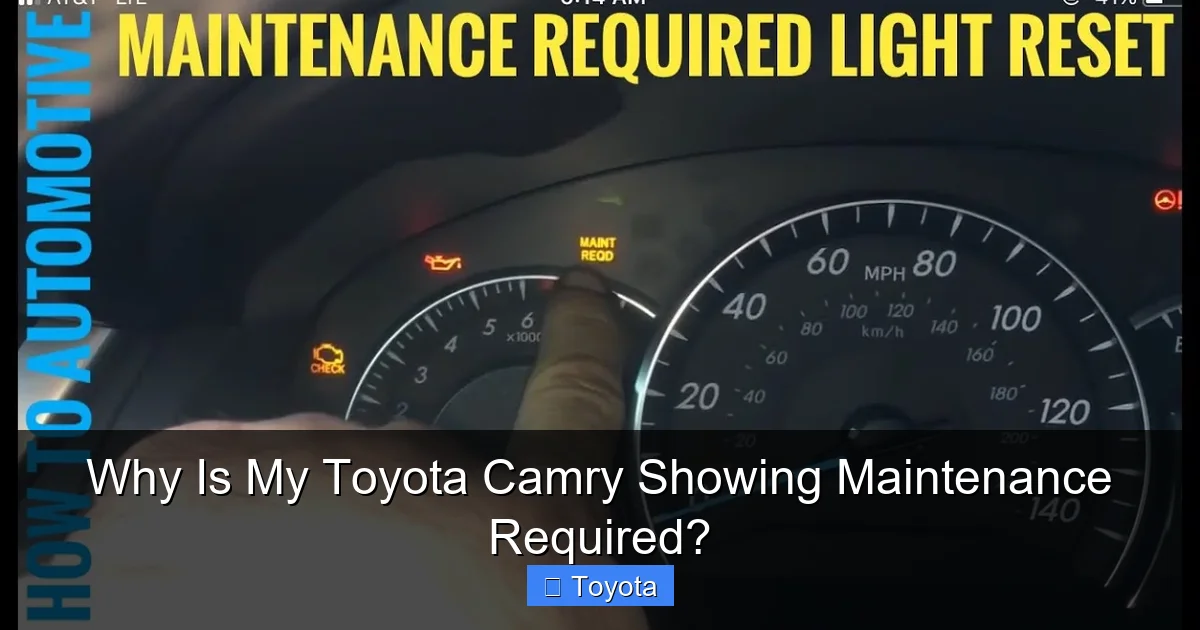
That little icon of a wrench or the words “MAINT REQD” glowing on your Toyota Camry’s dashboard can be a moment of mild panic or a simple “oh, right” moment. To understand it, you first need to know that this light is fundamentally different from the more ominous “Check Engine” light. Think of it as your car’s built-in calendar alert. Toyota’s engineering team programmed it to illuminate after a set number of miles or months have passed since your last service, based on the factory maintenance schedule. It’s a proactive nudge, not a reactive scream about a current failure. This system is a core part of Toyota’s philosophy on reliability and longevity, encouraging owners to stay on top of preventative care. When this light activates, your Camry is essentially saying, “Hey, I’ve driven X thousand miles. It’s time to look at my oil, filters, brakes, and fluids according to the plan.”
The Difference Between “Maintenance Required” and “Check Engine”
This is the most critical distinction. The “Maintenance Required” light is a simple, pre-set timer. It knows nothing about your engine’s real-time health. The “Check Engine” light (MIL – Malfunction Indicator Light) is connected to a network of sensors and the Engine Control Unit (ECU). It illuminates when a sensor detects a parameter outside its normal range, storing a diagnostic trouble code (DTC). A “Check Engine” light could mean anything from a loose gas cap to a failing catalytic converter. In short: one is a calendar (Maintenance Required), the other is a doctor’s diagnostic tool (Check Engine). They serve completely different purposes, and confusing them can lead to unnecessary worry or, worse, ignoring a real problem.
Common Reasons Your Camry’s Maintenance Light Comes On
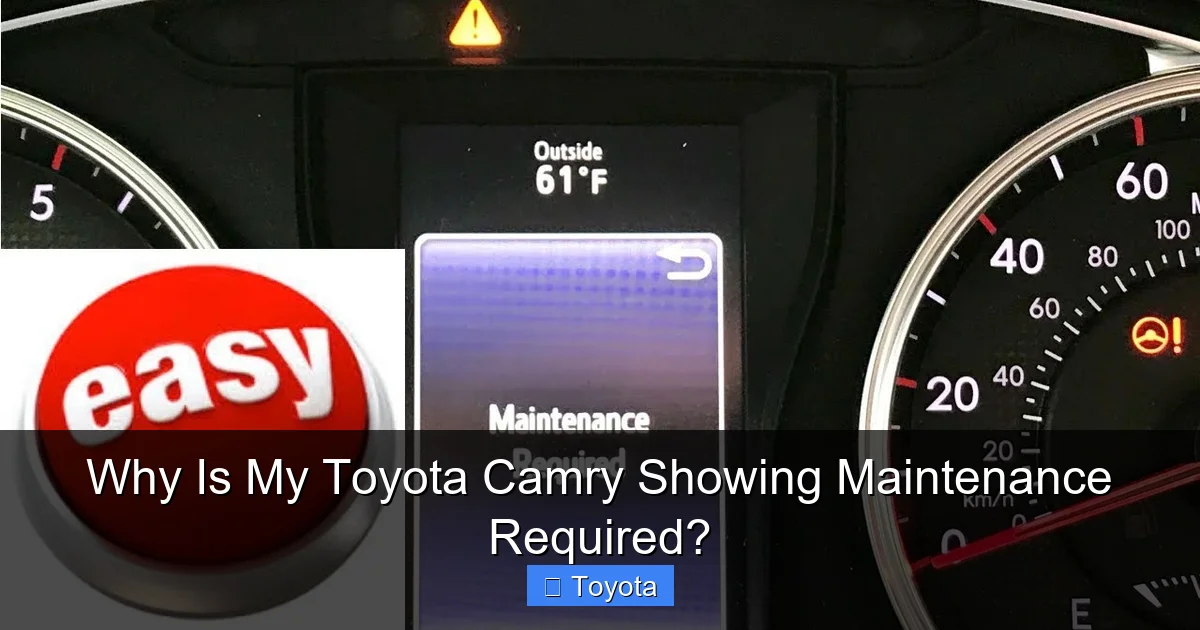
For most Camry owners, the trigger is beautifully straightforward: the oil change interval. Modern Toyota maintenance schedules often use a 5,000 to 10,000-mile interval for oil and filter changes, depending on your driving conditions (normal vs. severe). The system counts down from your last reset. Once you hit the predetermined mileage, the light comes on. But it’s not just oil. The reminder often encompasses a list of items due at that specific mileage mark. Here’s a breakdown of the usual suspects:
Visual guide about Why Is My Toyota Camry Showing Maintenance Required?
Image source: i.ytimg.com
1. Scheduled Oil & Filter Change
This is the #1 culprit. The maintenance reminder system is heavily tied to oil life. Even if you change your oil a little early or late, the system needs to be manually reset at the time of the service. If you forget to reset it, it will illuminate exactly at the mileage point it was programmed for. Using the correct oil grade and viscosity is crucial for your Camry’s engine health and for the system to function as intended.
2. Tire Rotation
Tire rotations are typically recommended every 5,000 to 7,500 miles, often coinciding with an oil change. The maintenance light serves as a combined reminder for these common, paired services. Uneven tire wear can lead to poor handling, reduced fuel efficiency, and the need for premature tire replacement. Rotating them ensures even wear and maximizes their lifespan.
3. Cabin Air Filter & Engine Air Filter
These filters are your vehicle’s lungs. The cabin air filter keeps pollen and dust out of your HVAC system, affecting air quality inside the car. The engine air filter prevents debris from entering your engine. A clogged engine air filter starves your engine of clean air, reducing power and fuel economy. Both are standard items on most Camry maintenance schedules and will trigger the reminder when due.
4. Multi-Point Inspection & Other Fluids
The “MAINT REQD” signal is often a blanket reminder for a comprehensive service. This includes checking and topping off all fluids (coolant, brake fluid, power steering, windshield washer), inspecting belts and hoses, checking brake pad thickness, and examining battery health. It’s your mechanic’s checklist to ensure all systems are go. For more complex electrical issues, like a problematic key fob, you might see a different light, but the maintenance light covers the basics.
5. Severe Driving Conditions
Your owner’s manual defines “severe” driving (frequent short trips, extremely hot/cold climates, dusty roads, heavy loads, stop-and-go traffic). If you operate your Camry under these conditions, your maintenance intervals are shorter. The system doesn’t know your driving habits, so if you fall into the severe category, you might need to perform the scheduled service *before* the light even comes on. The light is based on the standard “normal” schedule.
How to Reset the “Maintenance Required” Light on Your Toyota Camry
This is the moment you’ve been waiting for. Once the required service is completed—whether you did it yourself or had a professional do it—the light must be reset. It will not turn off on its own. The procedure is simple and requires no tools, just your ignition and the trip meter/odometer buttons. The exact steps can vary slightly by model year (2012-2024 models have minor differences), so consult your owner’s manual for the definitive guide. Here is the most common process for recent model years:
Visual guide about Why Is My Toyota Camry Showing Maintenance Required?
Image source: i.ytimg.com
Step-by-Step Reset Procedure (For Most 2012+ Models)
- Turn the ignition ON. Do not start the engine. Press the “Start” button twice without touching the brake pedal (for push-button start) or turn the key to the “ON” position (run/accessory position).
- Display the Odometer. Use the arrow buttons on your steering wheel or the dash to cycle the display until you see the total odometer reading (Trip A or Trip B will not work).
- Turn the Ignition OFF. Press the “Start” button once to turn the car completely off (or turn the key to “OFF”).
- Press and Hold the Trip Meter Reset Button. While holding down the button (usually the one with a tripometer icon), turn the ignition back to the “ON” position (the dash lights come on).
- Continue Holding and Watch. Hold the button. The odometer display will change. It will show a series of dashes “—–” that count down, or it will show “MAINT REQD” blinking. After a few seconds, it should reset to just show the odometer reading, and the wrench light on the dash will go out.
- Release the Button. Turn the ignition off and then start the engine to confirm the light is off.
Important: If the light comes back on within a very short distance (e.g., 100 miles), it may not have reset correctly, or there could be an underlying electrical issue. Try the procedure again carefully. For older models (pre-2012), the process often involves turning the key to “ON” and then to “OFF” while pressing the odometer button. Always defer to your manual. If you’re unsure, a quick video search for “reset maintenance light [Your Camry Year]” can provide a visual guide.
What Happens If You Ignore the Light?
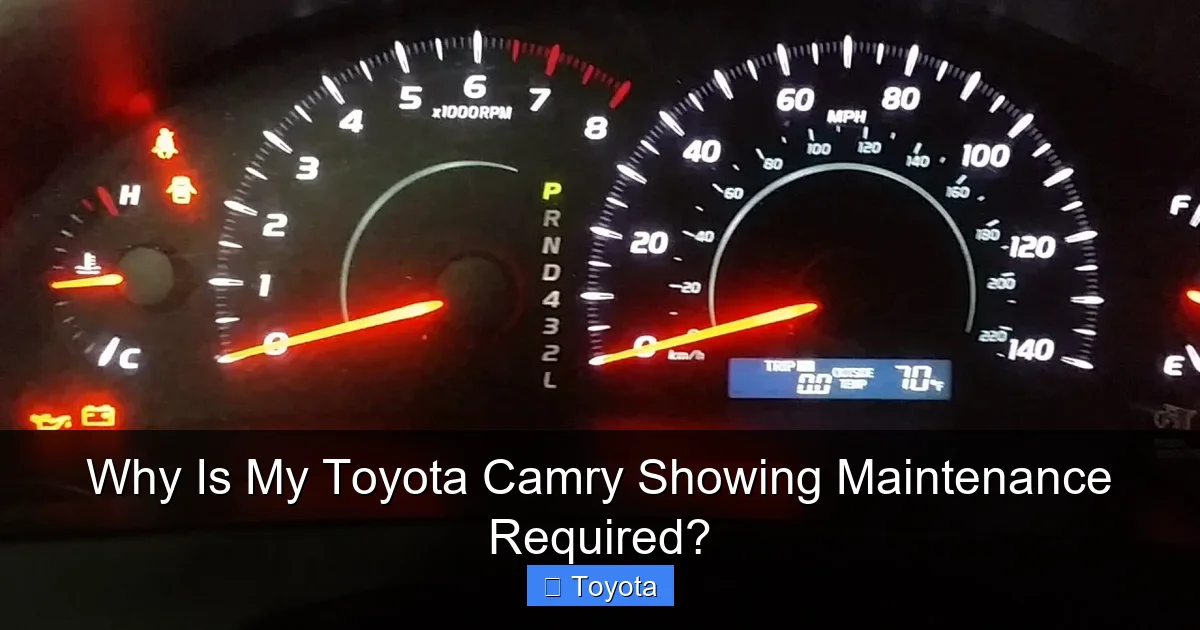
Ignoring the “Maintenance Required” light is like ignoring the “change oil” sticker your mechanic puts on your windshield. In the short term, your car will keep driving. But you’re knowingly deferring factory-recommended service, and the risks accumulate over time.
Visual guide about Why Is My Toyota Camry Showing Maintenance Required?
Image source: i.ytimg.com
Short-Term vs. Long-Term Neglect
Short-Term (1,000-2,000 miles over): You’re likely just running on old oil. Engine wear increases slightly. Fuel economy might dip by 1-2%. Your tires are past their rotation point, beginning to wear unevenly. Air filters are getting clogged, making your engine and cabin air system work harder. The cost? Potentially $500-$1,500 in premature wear and tear down the line.
Long-Term (5,000+ miles over): The damage becomes significant. Oil can turn to sludge, leading to catastrophic engine failure (thousands in repairs). Uneven tire wear becomes irreversible, requiring a full set of new tires. A clogged engine air filter can cause the engine to run “rich,” fouling spark plugs and damaging the oxygen sensor. You’re also gambling with your warranty; failing to adhere to the maintenance schedule can give a dealership grounds to deny a warranty claim for a related component.
Impact on Performance and Fuel Economy
A well-maintained Camry is known for its smooth, efficient ride. Neglecting service disrupts this. Old, degraded oil increases internal friction, making the engine work harder and reducing power. A dirty air filter restricts airflow, hurting combustion efficiency. Under-inflated or unevenly worn tires increase rolling resistance. The combined effect is a car that feels sluggish, consumes more gasoline, and may develop rough idling or poor acceleration. That “Maintenance Required” light is literally your dashboard’s fuel economy warning system.
Your Camry’s Factory Maintenance Schedule: A Roadmap
To truly understand what your light means, you must consult your owner’s manual. It contains the detailed maintenance schedule chart for your specific model year and engine (2.5L 4-cylinder vs. 3.5L V6, for example). These schedules are meticulously designed by Toyota engineers. A typical schedule for a “normal” driving Camry looks like this:
- Every 5,000-10,000 miles / 6 months: Oil & filter change, tire rotation, multi-point inspection, fluid top-off.
- Every 15,000-20,000 miles: Cabin air filter replacement, engine air filter inspection/replacement.
- Every 30,000 miles: Spark plug inspection/replacement (on some models), drive belts inspection.
- Every 60,000 miles: Major service including coolant flush, transmission fluid inspection (or change on some models), brake fluid inspection, and a very thorough inspection of all major components.
“Severe” service schedules compress these intervals. The light is programmed to come on at the first major interval (usually the oil change/tire rotation point). After you reset it, the countdown begins again for the next interval. This is why the light alone doesn’t tell you *what* is due—it only tells you that *something* on the schedule is due. You must look at your current mileage against the manual’s chart to know if it’s an oil change, a 30k service, or something else.
When the Light Might Indicate a Real Problem
While rare, there are scenarios where the “Maintenance Required” light’s behavior points to an issue beyond a simple service reminder:
Light Comes On Immediately After Reset
If you reset the light and it illuminates again within a few hundred miles, the system likely did not reset properly. Repeat the procedure carefully. If it persists, there could be a fault in the wiring to the dash cluster, a blown fuse related to the maintenance reminder circuit, or a problem with the instrument cluster itself. This requires a dealer or specialist to diagnose with a proper scan tool that can access the body control module.
Light Flashes or Behaves Erratically
A steady, solid “MAINT REQD” is normal. A flashing light is not standard for this system and suggests an electrical glitch. Additionally, if the light comes on but your odometer reading is clearly far below any service interval in the manual, it’s a false positive. Something is causing the reminder timer to trigger incorrectly. This is uncommon but warrants a professional check.
Accompanied by Other Warnings
If the “Maintenance Required” light appears alongside a “Check Engine” light, a low oil pressure warning, or any other red/yellow indicator, you must address those primary warnings first. The maintenance light is likely just coincidentally on, but the other lights indicate active faults that need immediate diagnosis. For instance, a persistent check engine light could be caused by something that also affects your maintenance schedule calculations, like a faulty crankshaft position sensor. In such cases, a diagnostic scan is essential. You might also wonder, “Why Is My Toyota Camry Check Engine Light On?” which is a separate but sometimes related issue.
Conclusion: Embracing the Reminder for Long-Term Camry Health
Your Toyota Camry’s “Maintenance Required” light is a feature, not a bug. It’s a legacy of Toyota’s commitment to building durable, low-cost-to-own vehicles. This simple system embodies the principle that an ounce of prevention is worth a pound of cure. By promptly addressing the reminder—by checking your manual, performing the scheduled service, and resetting the light—you are actively investing in your car’s longevity, reliability, safety, and resale value. You’re ensuring that your Camry continues to deliver the smooth, efficient, and trouble-free driving experience it was designed for. Remember, a well-maintained Camry can easily surpass 200,000 miles. That glowing wrench is your friendly reminder to keep it on that path. For a deeper dive into what makes these vehicles so robust, exploring “Why Toyota Is So Reliable“ provides fascinating context. Ultimately, heeding this small light today saves you from dealing with big, expensive problems tomorrow.
Frequently Asked Questions
Is it safe to drive my Camry with the Maintenance Required light on?
Yes, it is generally safe to drive for a short period (a few hundred miles) to schedule your service. However, you should not ignore it long-term. The light indicates you are operating past a factory-prescribed service interval, which increases wear and risks damage. If the light is flashing or accompanied by other warnings like low oil pressure, stop driving and seek immediate help.
Can I reset the Maintenance Required light without performing the maintenance?
Technically, yes, you can follow the reset procedure without actually doing the service. However, this is strongly discouraged. You are effectively erasing your car’s reminder system and programming it to forget that service is due. This leads to you forgetting the service entirely, which can cause the neglect and damage described above. Always perform the required maintenance first, then reset.
What’s the difference between the Maintenance Required light and the Check Engine light?
The Maintenance Required light is a simple mileage/time counter for scheduled service (oil change, tire rotation). It illuminates predictably based on your last reset. The Check Engine light is triggered by a fault detected by the car’s computer (ECU) from one of its many sensors. It indicates an active problem with the engine, emissions, or transmission system that needs diagnosis. One is a calendar alert; the other is a diagnostic trouble alert.
My oil life monitor is still at 30%, but the Maintenance Required light is on. Why?
>This is a common point of confusion. The “Maintenance Required” light is not the same as an “Oil Life” monitor. The maintenance light is a broader reminder that often includes the oil change but also other items (tire rotation, filter changes). Your oil life percentage is a separate calculation based on engine algorithms. If the maintenance light is on, it means the *overall service interval* has been reached, regardless of the oil life percentage. You should perform the full service due at that mileage and then reset the light.
Does the Maintenance Required light have anything to do with the TPMS (Tire Pressure) system?
No. The TPMS has its own separate warning light, typically an exclamation point inside a tire cross-section. The “Maintenance Required” light does not monitor tire pressure. However, a tire rotation (which is often part of the service reminder) requires a TPMS relearn procedure on some models, which a professional will handle. If your TPMS light is on, you need to check your tire pressures and may need to reset the TPMS system separately.
What if I lost my owner’s manual? How do I know what service is due?
You can find digital copies of your owner’s manual on the Toyota owners website (toyota.com/owners) by entering your VIN. Alternatively, you can call a Toyota dealership’s service department with your VIN and they can look up your vehicle’s specific maintenance schedule and tell you what is due at your current mileage. A trusted independent mechanic familiar with Toyotas will also have access to this schedule information.