Why Is My Tire Pressure Light Still on After Filling Tires on My Toyota Rav4?

Contents
- 1 Key Takeaways
- 2 📑 Table of Contents
- 3 Introduction: That Frustrating Glow on Your Dashboard
- 4 How the Toyota RAV4 TPMS Actually Works
- 5 Reason 1: You Haven’t Reset the System (The Most Common Cause)
- 6 Reason 2: The Spare Tire is the Culprit
- 7 Reason 3: A Faulty or Dying TPMS Sensor
- 8 Reason 4: There’s an Actual Slow Leak or Damage
- 9 Reason 5: Extreme Temperature Changes
- 10 Step-by-Step Guide: “My Light is Still On, Now What?”
- 11 Conclusion: Don’t Ignore the Light, But Don’t Panic
- 12 Frequently Asked Questions


Filling your RAV4’s tires is only the first step. The Tire Pressure Monitoring System (TPMS) light often stays on because the system needs a manual reset to recognize the new pressure, or due to a faulty sensor, dead battery, or slow leak. Simply adding air doesn’t always clear the warning; you must follow the specific reset procedure for your model year, or diagnose a deeper issue like a damaged sensor or a problem with the spare tire.
Key Takeaways
- Filling Tires ≠ Resetting TPMS: Adding air corrects the pressure but does not automatically turn off the warning light; the system must be reset to recognize the new readings.
- Spare Tire Matters: Many RAV4s include a spare tire with its own sensor. If the spare is low or not monitored, it can trigger the light even after all four tires are filled.
- Sensor Failure is Common: TPMS sensors have batteries that last 7-10 years. A dead or failing sensor is a primary reason the light persists after inflation.
- Resetting Varies by Year: The reset procedure differs between older button-based systems and newer touchscreen/audio menu systems. Consult your owner’s manual.
- Check for Slow Leaks: A puncture or faulty valve stem can cause pressure to drop again quickly, making it seem like the reset failed when there’s an actual leak.
- Cold Weather Affects Pressure: Temperature drops naturally reduce tire pressure. A light that comes on in winter may simply need a top-off, not a reset.
- Professional Help is Sometimes Needed: If resets fail and sensors are faulty, a tire shop can diagnose and replace sensors, often including new valve stems and seals.
📑 Table of Contents
- Introduction: That Frustrating Glow on Your Dashboard
- How the Toyota RAV4 TPMS Actually Works
- Reason 1: You Haven’t Reset the System (The Most Common Cause)
- Reason 2: The Spare Tire is the Culprit
- Reason 3: A Faulty or Dying TPMS Sensor
- Reason 4: There’s an Actual Slow Leak or Damage
- Reason 5: Extreme Temperature Changes
- Step-by-Step Guide: “My Light is Still On, Now What?”
- Conclusion: Don’t Ignore the Light, But Don’t Panic
Introduction: That Frustrating Glow on Your Dashboard
You did the responsible thing. You pulled into the gas station, checked your Toyota RAV4’s tire pressure with your gauge, and filled each tire to the recommended PSI listed on the driver’s door jamb sticker. You even checked the spare. You get back in, start the engine, and… the little tire pressure warning light is still shining brightly on your dashboard. That familiar, nagging glow. It’s enough to make you want to throw your gauge in the trunk and ignore it forever.
But you shouldn’t ignore it. That light is your car’s way of saying something isn’t right with its Tire Pressure Monitoring System (TPMS). The system is a critical safety feature. Proper tire pressure affects handling, braking, fuel economy, and tire wear. So why, after doing the right thing, does it persist? The answer is almost always one of a few specific things, and none of them mean your RAV4 is broken beyond repair. In this complete guide, we’ll walk through exactly how your RAV4’s TPMS works, the most common reasons that light stays on after you fill the tires, and detailed steps to finally make it go away for good.
How the Toyota RAV4 TPMS Actually Works
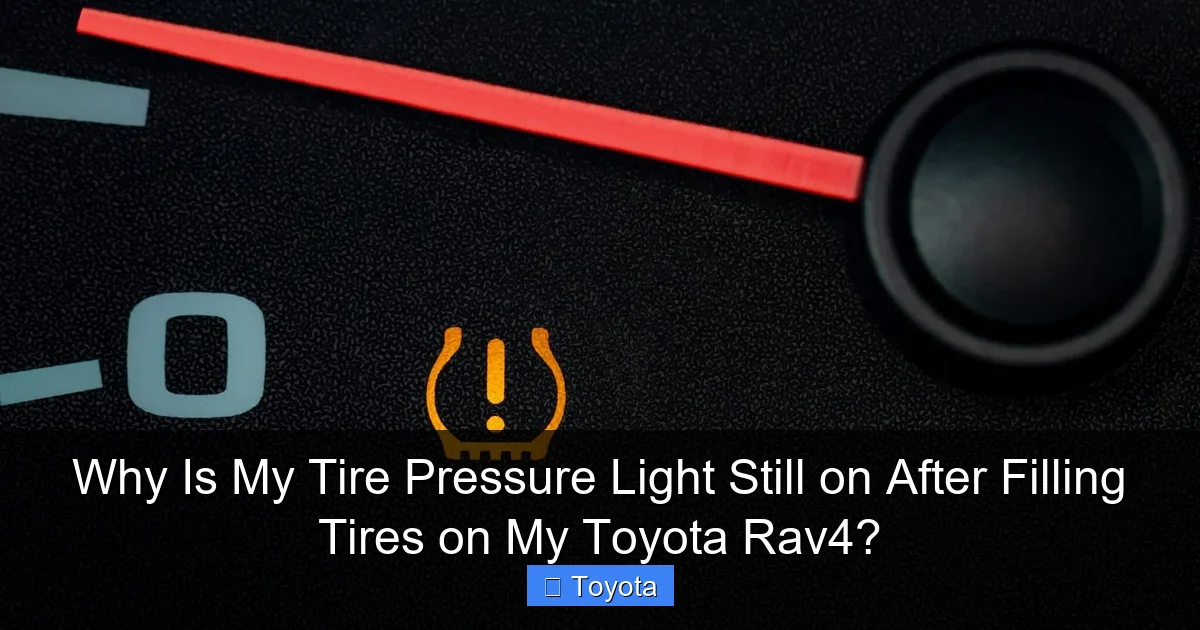
Before we troubleshoot, we need to understand the system we’re dealing with. Your Toyota RAV4 uses a direct TPMS. This means there is a small, battery-powered sensor physically mounted inside each valve stem on all four wheels (and often the spare). These sensors constantly radio the tire’s pressure and temperature data to your vehicle’s computer, the Body Control Module (BCM).
Visual guide about Why Is My Tire Pressure Light Still on After Filling Tires on My Toyota Rav4?
Image source: tiresreviewed.com
The “Low Pressure” Alert vs. The “Malfunction” Alert
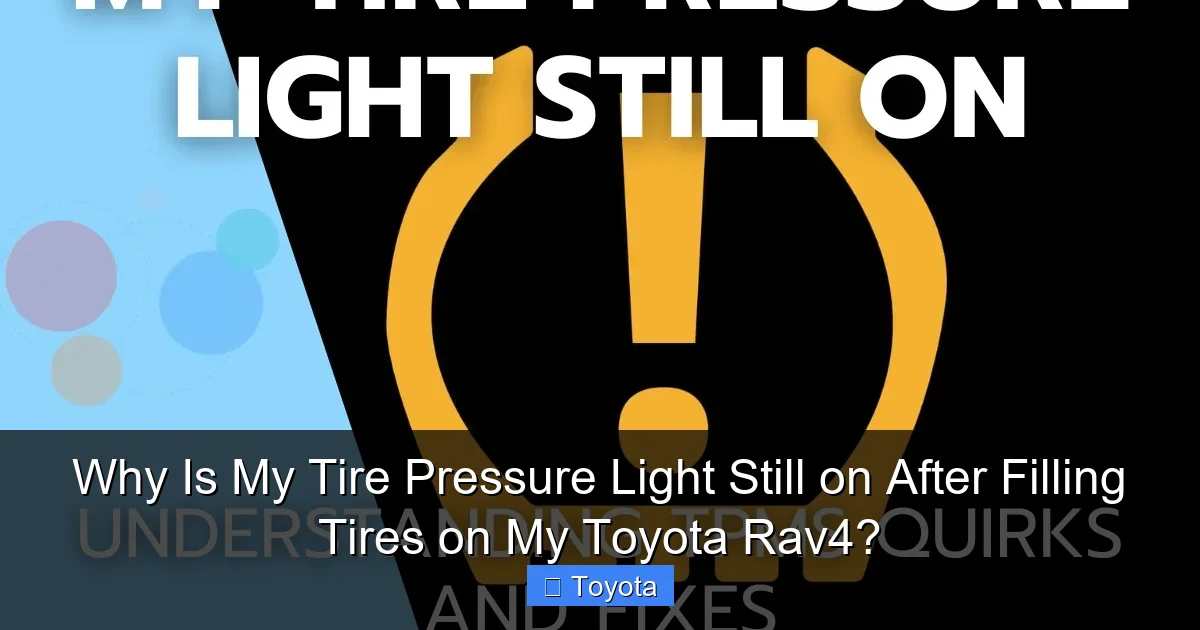
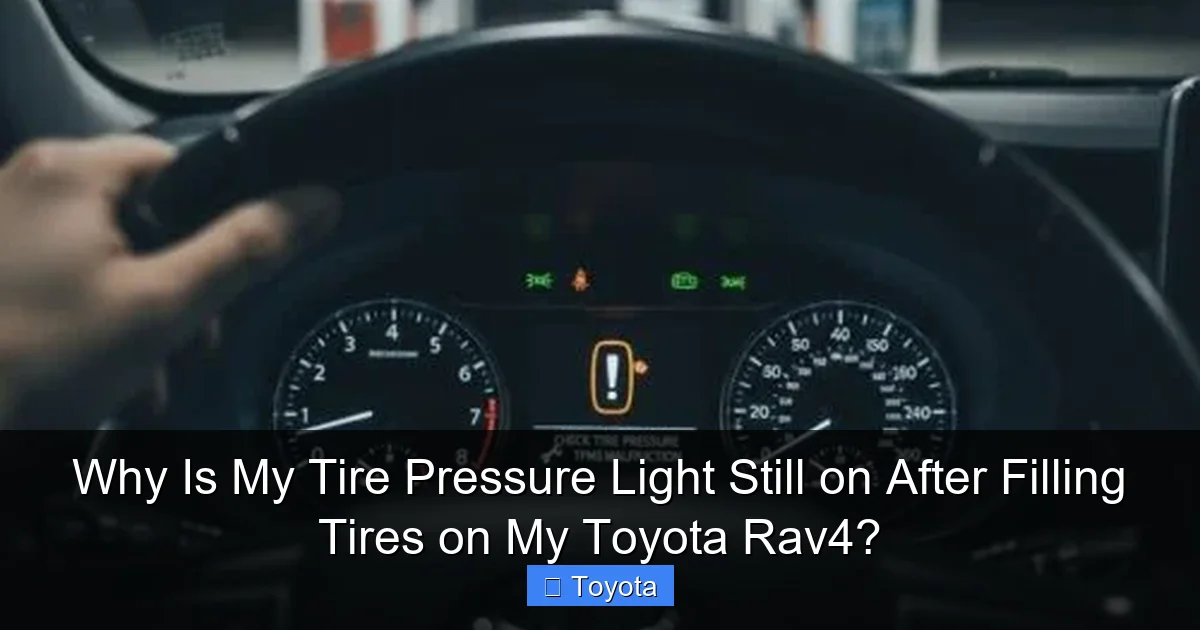
It’s important to distinguish what the light is telling you. A solid, steady tire pressure light usually means one or more tires is 25% or more below the recommended pressure. A flashing light for 60-90 seconds when you start the car, followed by a solid light, typically indicates a system malfunction—like a dead sensor battery or a communication error. If you filled the tires and the light is still solid, it’s likely still seeing a low-pressure reading somewhere. If it’s flashing, the system itself has a problem.
The Critical Reset Step
Here’s the most common oversight: the TPMS does not automatically re-learn the new pressure after you fill the tires. Once a low-pressure threshold is breached, the system stores a “low pressure” flag. You must manually tell the computer, “Hey, the tires are now properly inflated. Clear that flag and start monitoring fresh data.” This is the reset procedure. Without performing this specific sequence, the light will remain on as a reminder of the *past* low pressure, even though the current pressure is correct.
Reason 1: You Haven’t Reset the System (The Most Common Cause)
This is the culprit 80% of the time. You filled the tires to 33 PSI (or whatever your sticker says), but you didn’t initiate the reset. The procedure changed dramatically over the years.
Visual guide about Why Is My Tire Pressure Light Still on After Filling Tires on My Toyota Rav4?
Image source: castlehammotcentre.co.uk
How to Reset on Older RAV4s (Pre-2019, Button-Based)
If your RAV4 has a physical “SET” button (usually located under the steering wheel on the lower dash panel or near the TPMS light), here’s the classic procedure:
- Ensure all tires are inflated to the exact recommended PSI. Don’t guess.
- Turn the ignition to the “ON” position (engine off, but dashboard lights on).
- Press and hold the “SET” button. You’ll often hear a beep, and the TPMS light will blink three times, then turn off.
- Release the button. The system is now resetting and will begin monitoring. It may take a few minutes of driving for the light to fully go out as the sensors communicate.
Pro Tip: If the light comes back on immediately after this, you have a different problem (like a flat spare or a bad sensor).
How to Reset on Newer RAV4s (2019+, Touchscreen/Audio Menu)
For models without a physical button, you use the vehicle settings in the infotainment system. The exact menu path varies slightly:
- Go to Settings on the main touchscreen.
- Navigate to Vehicle or Vehicle Settings.
- Find Tire Pressure or TPMS.
- Select Initialize or Register ID or Calibrate.
- The screen will confirm “TPMS initialization started” or similar. Drive the vehicle for 20-30 minutes at speeds above 28 mph (45 km/h) for the system to learn the sensor positions and pressures.
Consulting your owner’s manual for the exact steps for your specific model year is always the best practice. You can also find guides online for your particular trim (LE, XLE, Limited, etc.).
Reason 2: The Spare Tire is the Culprit
This is a classic gotcha. Many RAV4 owners forget their full-size or temporary spare is also equipped with a TPMS sensor. If that spare is low—which it often is, as it’s rarely checked—the system will see a low-pressure reading and illuminate the light, even if all four driven tires are perfect.
Visual guide about Why Is My Tire Pressure Light Still on After Filling Tires on My Toyota Rav4?
Image source: yourautovision.com
- Check the spare: Remove it from the cargo area and check its pressure with a gauge. The recommended pressure for the spare is usually printed on the tire sidewall or in your manual. For a “T-type” temporary spare (the small donut), it’s often 60 PSI.
- Reset after filling the spare: If you add air to the spare, you must perform the TPMS reset procedure again. The system treats the spare as the fifth tire and needs to verify its new pressure.
If your RAV4 doesn’t have a sensor in the spare (some base models may not), then a severely under-inflated spare might not trigger the light, but it’s still unsafe. Always check it.
Reason 3: A Faulty or Dying TPMS Sensor
TPMS sensors are not lifetime parts. They are electronic devices with an internal battery sealed inside the sensor. These batteries typically last 7-10 years. As your RAV4 ages, sensor failure becomes increasingly likely.
Symptoms of a Bad Sensor
- The light flashes on startup then stays solid. This is the classic “TPMS malfunction” code.
- The light won’t reset no matter how many times you inflate the tires correctly.
- Your scan tool or a professional diagnostic shows one or more sensors as “no data” or “low battery.”
- You recently had new tires or a wheel service and the sensor was damaged during mounting/dismounting.
Diagnosing a Bad Sensor
You need a TPMS scan tool to diagnose which sensor is failing. Many tire shops (like Discount Tire, Tire Kingdom, or local independents) will check your system for free. They use a tool that can read each sensor’s battery life and ID. If a sensor is dead, it must be replaced. Replacing a sensor involves removing the tire from the wheel, swapping the sensor, and remounting/balancing the tire. It’s not a simple DIY for most people. The cost per sensor varies but is typically $50-$150 for the part, plus labor. Since you’re already paying for labor, it’s smart to replace the valve stem seal at the same time.
Reason 4: There’s an Actual Slow Leak or Damage
Sometimes, the light comes on because a tire is slowly losing air. You fill it, the pressure is correct, the light goes out temporarily. But a few days later, the pressure drops again below the threshold, and the light comes back on. It might seem like the reset didn’t work, but the real issue is the leak.
- Common Causes: A nail or screw in the tread, a damaged wheel rim (curb rash), a faulty valve stem, or a bead seal issue (where the tire meets the wheel).
- The Soapy Water Test: This is the easiest DIY check. Mix a little dish soap with water in a spray bottle. With the tire fully inflated, spray liberally on the tread, sidewalls, and especially the valve stem. Look for bubbles forming. That’s where air is escaping.
- Don’t Forget the Valve Stem: The valve stem itself is part of the TPMS sensor assembly on modern cars. The rubber seal can degrade and leak. A hissing sound near the valve is a dead giveaway.
If you find a leak, repair it (a patch/plug for a nail) or replace the tire/valve stem as needed. After the repair, fill the tire to proper pressure and perform the reset procedure.
Reason 5: Extreme Temperature Changes
Physics is at play here. For every 10°F (about 5.5°C) drop in temperature, tire pressure decreases by about 1-2 PSI. This is perfectly normal. If you fill your tires on a warm afternoon and then experience a cold front overnight, the pressure in all four tires will drop. The TPMS will see this drop and illuminate the light.
- What to do: Simply add air to bring the pressure back up to the recommended level (measured when tires are cold). After filling, you will still need to reset the system to clear the light.
- Seasonal Check: It’s a great habit to check and adjust tire pressure with every major seasonal change, especially in fall and spring.
- Relevant Reading: Understanding this phenomenon is key. You can learn more about the relationship between temperature and tire pressure in our article, Can Tire Pressure Light Come On When Cold?.
Step-by-Step Guide: “My Light is Still On, Now What?”
Let’s turn this into an actionable flowchart. Follow these steps in order.
Step 1: Verify All Pressures Are Correct
Use a reliable, digital tire pressure gauge. Check all four tires when they are cold (driven less than 2-3 miles). Inflate each to the exact PSI on the driver’s door jamb sticker. Do not use the “max pressure” on the tire sidewall. Check and fill the spare if equipped with a sensor.
Step 2: Perform the Correct Reset Procedure
Follow the exact steps for your model year as outlined in Section 3. Use the physical “SET” button or the infotainment menu. Drive the car for 15-30 minutes at highway speeds. The light should go out. If it doesn’t, proceed to Step 3.
Step 3: Check for an Obvious Leak
Perform the soapy water test on all four tires and valve stems. Also, visually inspect the tire sidewalls for any bubbles or damage. If you find a leak, repair it, refill, and reset.
Step 4: Consider the Sensor Battery
If your RAV4 is over 7-8 years old and you’ve ruled out leaks and improper resetting, sensor failure is the most likely culprit. You can sometimes get a rough idea by seeing if one tire’s pressure reading is wildly different from the others on a scan tool, or if the light flashes on startup.
Step 5: Seek Professional Diagnosis
Take your RAV4 to a reputable tire shop or your Toyota dealer. Tell them: “I’ve filled the tires to spec and performed the reset, but the light is still on. Please diagnose the TPMS.” They will plug in a scan tool that can read each sensor individually. This will tell you if a sensor is dead, if there’s a communication fault, or if the system needs re-programming (rare). They can also perform a “learn” procedure if a new sensor is installed. If you’re having other dashboard issues, it might be related. For example, persistent warning lights can sometimes be linked to deeper electrical problems, which you can read about in our piece on why the battery light comes on.
Conclusion: Don’t Ignore the Light, But Don’t Panic
That stubborn tire pressure light on your Toyota RAV4 is almost always a fixable issue. The vast majority of the time, it simply means you need to complete the manual reset process after adjusting air. It’s a user-error step, not a catastrophic failure. However, it’s crucial to systematically rule out the other possibilities: a low spare tire, a slow leak from damage, or the inevitable death of an aging TPMS sensor battery.
Remember, your TPMS is a vital safety net. Driving with significantly under-inflated tires compromises your RAV4’s stability, increases stopping distances, causes uneven and premature tire wear, and hurts your fuel economy. By understanding how your system works and following the troubleshooting steps above, you can confidently diagnose and resolve the issue. Start with the simple reset. Check the spare. Look for leaks. If those don’t work, a quick, often free, diagnostic at a tire shop will point you to the exact failing component. Get that light off, and drive with the confidence that your RAV4 is rolling on properly inflated, safe tires.
Frequently Asked Questions
Can I just disconnect the battery to reset the tire pressure light?
Disconnecting the battery will reset many dashboard warning lights, but it is not the recommended method for TPMS. It will also reset other systems like your radio presets and clock. The proper TPMS reset procedure (using the button or menu) is designed specifically for the tire monitoring system and is much simpler and more effective.
How much does it cost to fix a persistent TPMS light on a RAV4?
The cost varies wildly by the cause. A reset is free. Replacing a single TPMS sensor typically costs $100-$250 including labor. If multiple sensors fail (common on older vehicles), the cost multiplies. A simple puncture repair is much cheaper. Always get a diagnosis first to know what you’re paying for.
Is it safe to drive with the tire pressure light on?
It depends on why it’s on. If you recently filled the tires and just haven’t reset it yet, driving is safe. However, if the light indicates genuinely low pressure, it is unsafe to drive. Under-inflated tires can overheat and fail, cause poor handling, and increase braking distances. If the light is flashing (malfunction), the system isn’t working, and you should have it checked soon. You should not drive long distances with a flashing TPMS light.
Why does my TPMS light keep coming back on after I reset it?
This is a clear sign of an ongoing problem. The most likely reasons are: 1) There is a slow leak (from a nail, damaged rim, or bad valve stem) causing pressure to drop again. 2) One of the TPMS sensors, most likely in the spare tire, is dead or failing. 3) A sensor was damaged during a recent tire service. You need a professional scan to identify which sensor is causing the fault.
Does the Toyota app show tire pressure and help with the light?
Yes, on newer RAV4 models with connected services (like Toyota Safety Sense 3.0 or with a subscription), the Toyota app can display real-time tire pressures for each wheel. This is incredibly helpful for diagnosis. If the app shows one tire as significantly lower than the others after you’ve filled them, you have a leak. If it shows all tires at correct pressure but the dash light is on, it points to a sensor communication or system fault. You can learn more about using the Toyota app to check tire pressure.
My RAV4’s TPMS light flashes for a few seconds when I start the car, then goes off. Is that normal?
Yes, that is completely normal. When you turn the ignition on, the TPMS performs a self-check. The light will illuminate for a few seconds as it “pings” all the sensors to ensure they are communicating. If the system finds no faults, the light will turn off. If it flashes for an extended period (more than 5-10 seconds) and then stays solid, that indicates a system malfunction that needs diagnosis.