Why Is My Jeep Leaking Oil

Contents
- 1 Key Takeaways
- 2 📑 Table of Contents
- 3 Why Is My Jeep Leaking Oil More Than a Sedan?
- 4 The Usual Suspects: Top 5 Places Your Jeep Might Be Leaking Oil
- 5 How to Diagnose the Source of Your Jeep’s Oil Leak
- 6 Fixing the Leak: DIY vs. Professional Repair
- 7 Preventive Maintenance: Keeping Your Jeep Oil-Tight
- 8 When to Worry: The Real Costs of an Ignored Leak
- 9 Conclusion: Don’t Let the Drip Define Your Jeep
- 10 Frequently Asked Questions

Digital Tire Pressure Gauge

Torque Wrench Set

Car Battery Tester
Car Inverter
An oil leak in your Jeep is more than just a messy nuisance—it’s a serious warning sign that can lead to engine damage, costly repairs, and safety hazards if ignored. The most common culprits are worn gaskets and seals, especially around the valve cover and oil pan, but issues can range from a loose drain plug to a cracked engine block. Diagnosing the exact source is crucial, as the repair approach varies from a simple DIY fix to a major professional job. Addressing the leak promptly saves money, protects your Jeep’s longevity, and ensures safe, reliable performance on and off the road.
You pull out of your driveway or your favorite trailhead, and there it is: a fresh, dark puddle or a steady drip beneath your beloved Jeep. Your heart sinks a little. A Jeep leaking oil is one of the most common—and most frustrating—issues for Wrangler, Cherokee, Grand Cherokee, and Gladiator owners. It’s not just about keeping your driveway clean; it’s about protecting one of your most valuable assets from silent, destructive damage. This guide will walk you through everything you need to know, from the most likely culprits to how to fix them, so you can get back to adventure with confidence.
Key Takeaways
- Jeeps are prone to oil leaks due to design and use: The high ground clearance and rugged use of Jeeps put unique stress on components like the oil pan and seals, making leaks more common than in standard cars.
- Common leak sources are often gaskets and seals: The valve cover gasket, oil pan gasket, and crankshaft seals are the #1 failure points, especially as your Jeep ages or accumulates high mileage.
- The color and location of the leak tell the story: Amber/brown fluid points to engine oil. A leak near the front usually means a front main seal, while a central drip often comes from the oil pan. A rainbow sheen suggests a more serious issue.
- Ignoring a leak is a false economy: A small drip can lead to critically low oil levels, causing catastrophic engine wear or failure. The cost of fixing a gasket is far less than an engine rebuild.
- Diagnosis requires cleaning and observation: The most reliable method is to thoroughly clean the engine, drive the Jeep, and then inspect for fresh oil to pinpoint the exact origin.
- Not all leaks are DIY projects: While replacing a drain plug or valve cover gasket can be a weekend task, leaks from the rear main seal or a cracked block require professional mechanic intervention.
- Preventive maintenance is key: Regular oil changes with the correct oil type, using quality filters, and avoiding prolonged severe driving conditions can significantly extend the life of your Jeep’s seals and gaskets.
📑 Table of Contents
- Why Is My Jeep Leaking Oil More Than a Sedan?
- The Usual Suspects: Top 5 Places Your Jeep Might Be Leaking Oil
- How to Diagnose the Source of Your Jeep’s Oil Leak
- Fixing the Leak: DIY vs. Professional Repair
- Preventive Maintenance: Keeping Your Jeep Oil-Tight
- When to Worry: The Real Costs of an Ignored Leak
- Conclusion: Don’t Let the Drip Define Your Jeep
Why Is My Jeep Leaking Oil More Than a Sedan?
Before we dive into the “where,” let’s talk about the “why Jeeps?” It’s a fair question. Your neighbor’s Honda might run for years without a drop, yet your Jeep seems to leave a trail. It’s not just bad luck; it’s often by design and use.
Design and Accessibility Factors
Jeeps are built for capability, not just commuting. Their high ground clearance means the engine and drivetrain components are more exposed to debris, impacts, and extreme angles during off-roading. That oil pan hanging down low? It’s a prime target for rock strikes that can dent or crack it. The skid plates that protect it can sometimes trap heat, aging seals faster. Additionally, the engine layouts in many Jeeps (like the iconic Pentastar V6 or Hemi V8) have components packed tightly, making certain gaskets harder to access and more prone to stress.
The Nature of the Beast: Severe Service
Many Jeeps are used for towing, off-roading, and harsh conditions—what manufacturers call “severe service.” This means the engine runs hotter and under more load than a car used for grocery trips. High heat is the number one enemy of rubber seals and gaskets, causing them to harden, shrink, and crack prematurely. If you’re consistently asking your Jeep to haul a trailer up a mountain in the summer, you’re asking a lot of its sealing materials.
So, while a car leaking oil might be a simple gasket issue, a Jeep leaking oil often has the added factors of impact and extreme operating conditions. Understanding this helps you appreciate why preventative steps are so critical.
The Usual Suspects: Top 5 Places Your Jeep Might Be Leaking Oil
Now for the detective work. When you see a puddle, your first job is to guess its origin. Here are the five most common sources of a Jeep leaking oil, in roughly descending order of frequency.
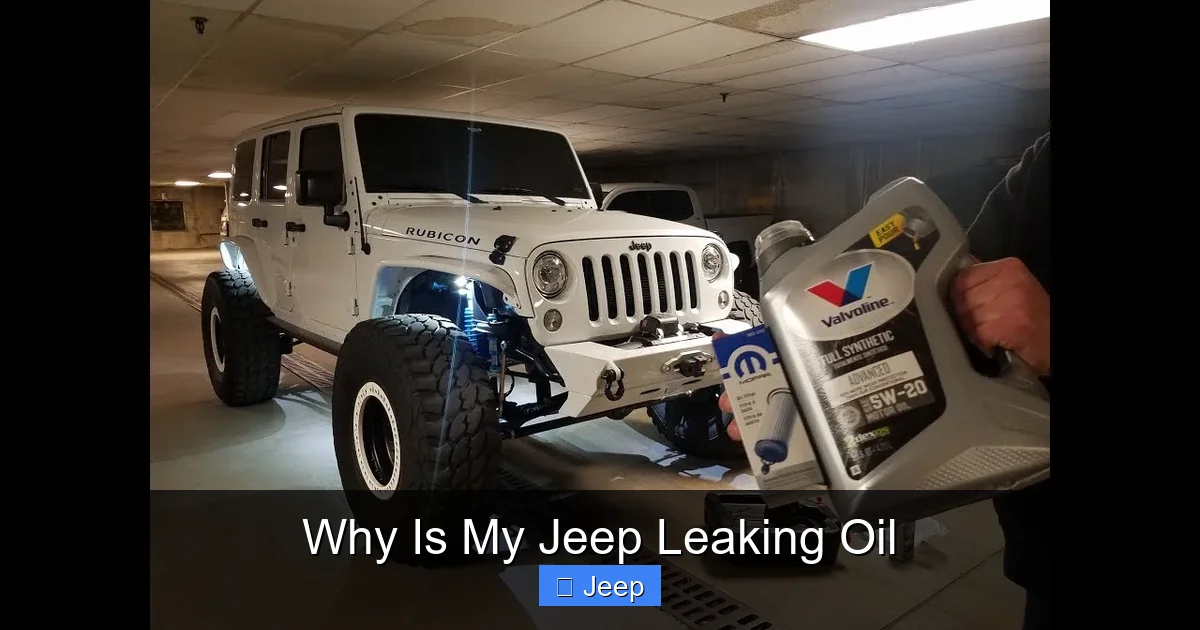
Visual guide about Why Is My Jeep Leaking Oil
Image source: i.ytimg.com
1. Valve Cover Gasket
This is the #1 suspect, especially on Jeeps with the 3.6L Pentastar V6 or 5.7L Hemi V8 engines. The valve cover is the large, plastic (or metal) lid on top of the engine. Its gasket seals the top of the cylinder head. Over time, the rubber gasket dries out, shrinks, and loses its seal. The leak often drips down the side of the engine, making it look like it’s coming from the middle or rear, but it starts at the top. You might also notice oil in the spark plug wells, which can cause misfires. Replacing this gasket is a common and relatively straightforward repair for a competent DIYer with the right tools.
2. Oil Pan Gasket (or Drain Plug)
The oil pan sits at the very bottom of the engine, holding your oil supply. Its gasket can fail due to age, thermal cycling, or—in a Jeep’s case—a dent or impact from an off-road obstacle. A common and often-overlooked source is the oil drain plug. If it’s not torqued to specification after an oil change, or if its crush washer fails, it will drip steadily. Check here first if the drip is right from the center-bottom of the engine. A stripped drain plug threads can also cause a major leak requiring professional repair.
3. Crankshaft Seals (Front & Rear Main Seals)
These seals sit where the crankshaft exits the engine block—one at the front (behind the harmonic balancer) and one at the rear (next to the transmission). The rear main seal is notorious for being a difficult and expensive repair because it requires separating the transmission from the engine. A leak here often spins the oil onto the clutch (in manuals) or the flexplate/flywheel, creating a massive mess that can be hard to trace. The front main seal can leak too, often dripping onto the front of the engine and potentially onto the serpentine belt.
4. Oil Filter Adapter / Oil Cooler Lines
Many modern Jeeps, especially those with the 3.6L engine, have an external oil cooler with lines running to it. The adapter where the oil filter screws on (which also houses the cooler) or the rubber/plastic oil cooler lines themselves can develop leaks. These leaks are often more active when the engine is running and under pressure. Look for oil spraying around the driver’s side of the engine block near the oil filter housing. This is a common issue and a good example of a leak that might be covered under a service bulletin.
5. Camshaft & Other Internal Seals
Less common but possible are leaks from seals deeper in the engine, like the camshaft seals. These can leak oil into the timing cover area. If you see oil accumulating around the timing cover bolts or the front of the cylinder head, this could be the source. Diagnosing these often requires significant disassembly.
How to Diagnose the Source of Your Jeep’s Oil Leak
Guessing is fun, but finding the truth is better. Here is a systematic, practical method to pinpoint the exact leak source.

Visual guide about Why Is My Jeep Leaking Oil
Image source: cdn.myjeepcar.com
The Clean-and-Observe Method (The Gold Standard)
This is the most reliable technique, used by professional mechanics.
- Clean the Engine: With the engine cool, use a degreaser (like Simple Green or a dedicated engine cleaner) and a stiff brush (not wire on aluminum parts!) to thoroughly wash the entire engine bay. Rinse thoroughly with a low-pressure hose. Let it dry completely. This step is crucial—you’re removing years of grime that obscure leak paths.
- Add a Dye (Optional but Helpful):strong> Add a small bottle of fluorescent oil leak detection dye to your engine oil. Run the engine for 15-20 minutes to circulate the dye.
- Drive Normally: Drive your Jeep for a short distance (10-15 minutes) under normal conditions, including some highway speeds.
- Inspect with a Blacklight: After the Jeep has been parked for a little while, use a UV/blacklight flashlight in a dark garage. Any fresh oil containing the dye will glow a bright yellow/green. This will show you the exact path and origin of the leak.
- Follow the Trail: Trace the glowing oil back to its highest point on the engine. That’s your leak source. Even without dye, a clean engine will show fresh, clean oil against the old, caked-on grime, making the trail obvious.
Using Cardboard and Common Sense
If you can’t clean the engine, place large pieces of clean cardboard under the Jeep overnight, positioned under different engine sections. The next morning, the pattern of drips on the cardboard will give you a rough location (front, center, rear, driver side, passenger side). Combine this with visual inspection of the most likely culprits listed above.
Remember, oil travels. A leak at the top of the valve cover can drip all the way down to the oil pan. You must find the source, not just the lowest point of the drip.
Fixing the Leak: DIY vs. Professional Repair
Once you know the source, the big question is: can you fix it yourself? The answer depends entirely on the leak location and your mechanical skill.
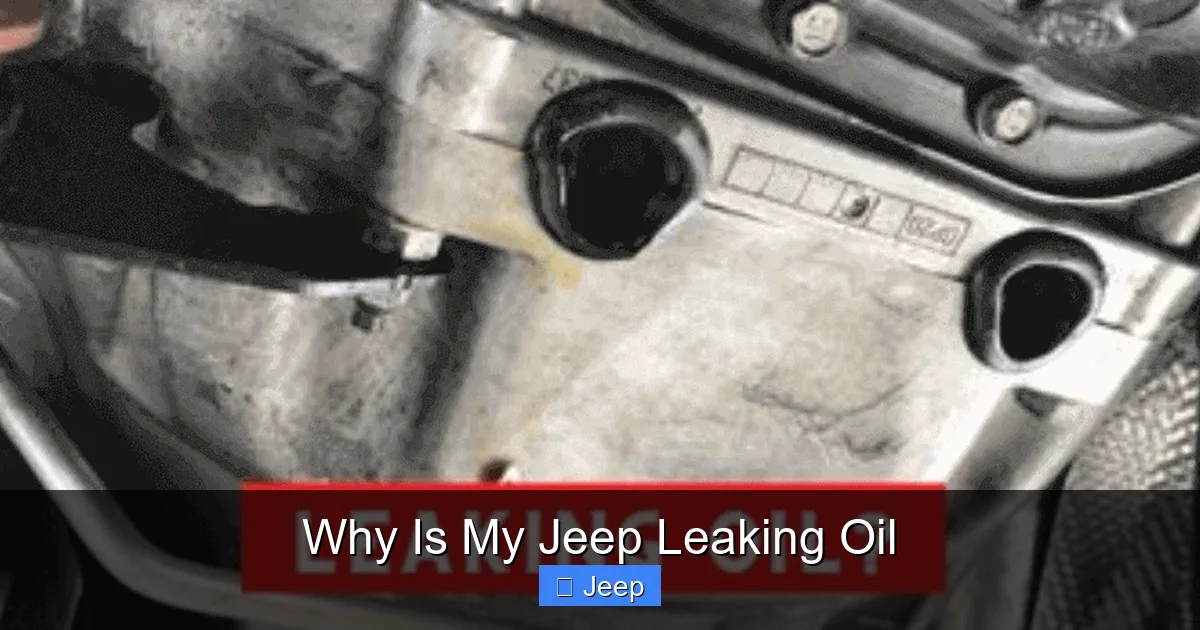
Visual guide about Why Is My Jeep Leaking Oil
Image source: smartvehiclecare.com
DIY-Friendly Repairs
These are jobs a motivated owner with basic tools can tackle in a weekend:
- Oil Drain Plug: Simply replace the crush washer and torque the plug to spec (usually 20-25 ft-lbs). Clean the threads.
- Oil Filter: Always ensure the old gasket is removed from the engine block and the new filter is lubed and tightened properly.
- Valve Cover Gasket (on some models): On many Jeeps, this involves removing the coil packs and spark plugs, but the gasket itself is accessible. It’s a matter of unbolting the cover, cleaning the surfaces, installing the new gasket (often with RTV sealant in specific corners as per the service manual), and reinstalling.
- Oil Cooler Lines/Adapter: Replacing the rubber lines or the adapter O-rings is often a simple task. Just have a drain pan ready!
Leave It to the Pros
These repairs are complex, time-consuming, or require specialized knowledge:
- Rear Main Seal: As mentioned, this requires transmission removal. It’s a major job with a high labor cost. If your Jeep has high miles, it might be wise to consider a remanufactured transmission or a clutch replacement at the same time if it’s a manual.
- Cracked Engine Block or Oil Pan: This is catastrophic failure, often from a severe impact. The oil pan may be repairable with a sealant for a very small crack, but a block crack usually means engine replacement or a very expensive welding/insert repair.
- Internal Seals (Camshaft, etc.): These require deep engine disassembly, often needing a machine shop’s involvement.
- Any leak you are unsure about: Misdiagnosis can waste time and money. A professional diagnostic fee is cheap insurance.
Pro Tip: Before committing to a major repair like a rear main seal, get a second opinion. A leak from a valve cover gasket can sometimes mimic a rear main leak if it drips down the back of the block.
Preventive Maintenance: Keeping Your Jeep Oil-Tight
An ounce of prevention is worth a pound of cure (and a thousand dollars in repairs). Here’s how to treat your Jeep’s lubrication system right.
Use the Right Oil and Filter, Every Time
This is non-negotiable. Use the exact viscosity (e.g., 0W-20, 5W-30) and specification (API SP, Chrysler MS-6395, etc.) listed in your owner’s manual. Using a “cheaper” oil or a low-quality filter can lead to accelerated seal wear. A high-quality filter with a proper anti-drain back valve is worth the extra few dollars. For Jeeps with the infamous “Multi-Displacement System” (MDS) Hemi engines, using the correct oil is critical for the hydraulic lifters and related seals.
Don’t Neglect Oil Changes
Dirty oil is abrasive and can degrade seals from the inside out. Stick to the recommended intervals, and if you do a lot of severe driving (towing, dusty conditions, short trips in cold weather), shorten that interval. A clean system is a happy system.
Be Mindful of Heat and Impact
If you’re an avid off-roader, consider a skid plate with a built-in oil pan protector or a afterguard. It’s a relatively inexpensive piece of insurance against a dented pan. Also, after a hard run—especially towing or rock crawling—let your engine idle for a minute before shutting off. This allows hot oil to circulate back to the pan instead of pooling and cooking seals in place.
Inspect Regularly
Make it a habit to check your oil level at least once a month and always before long trips. While you’re at it, do a quick visual inspection of the engine bay and the ground beneath your parked Jeep. Catching a slow seep early is far better than facing a sudden, major loss of oil.
When to Worry: The Real Costs of an Ignored Leak
Let’s be clear: a Jeep leaking oil is not a “wait and see” situation. The consequences escalate quickly.
The Slow Drain: Low Oil Level
The most obvious result is a low oil level. Modern engines run with very tight tolerances. Running even a quart low increases friction, heat, and wear on bearings, piston rings, and cam lobes. This wear is silent and permanent. You won’t hear it until it’s too late.
The Environmental and Safety Hazard
Oil on your driveway is bad. Oil on the road is dangerous. It creates a slick, slippery surface that is a major hazard for motorcycles and other vehicles, especially when wet. You could be liable for an accident. It’s also an environmental pollutant that washes into storm drains.
The Catastrophic Failure
This is the nightmare scenario. A sudden, major leak (like a ruptured oil pan from a rock) can drain your oil in minutes. Without lubrication, the engine seizes within a very short distance. This is a total loss, requiring a full engine replacement or a rebuild—costs that can exceed $5,000-$10,000 for a Jeep V6 or V8.
The cost to replace a valve cover gasket might be $300-$600 at a shop. The cost to replace an engine is an order of magnitude higher. The math is simple: fix the leak now.
Conclusion: Don’t Let the Drip Define Your Jeep
Your Jeep is a tool for adventure, a symbol of freedom, and probably a source of great pride. A Jeep leaking oil doesn’t have to be the end of that story. By understanding the common causes—the valve cover gasket, oil pan, and seals—you can approach the problem with confidence. Take the time for a proper diagnosis using the clean-and-observe method. Honestly assess your skills and the leak’s severity to decide between a rewarding DIY fix and a necessary professional repair. And above all, commit to a rigorous preventive maintenance schedule. Keep your Jeep full of clean, high-quality oil, and it will reward you with years of reliable, leak-free (or at least leak-managed) service. The open road, the mountain trail, and the job site are waiting. Don’t let a preventable oil leak keep you from them.
Frequently Asked Questions
How much does it typically cost to fix an oil leak on a Jeep?
The cost varies wildly. A simple drain plug washer replacement might cost $20 if you do it yourself. A valve cover gasket replacement at a shop typically runs $300-$700. A rear main seal repair, due to the labor-intensive nature of the job, can cost $800 to over $1,500. Always get a specific diagnosis and quote for your Jeep’s year, model, and engine.
Is it safe to drive my Jeep with a small oil leak?
It depends. If the leak is very minor (a few drops a day) and you are checking your oil level at least once a week and topping it off, short-distance driving may be acceptable. However, any leak has the potential to worsen suddenly. The safest practice is to fix the leak before driving regularly. Never ignore a leak that is leaving a steady drip or puddle.
Can I use a “stop leak” product in my Jeep’s oil to fix the leak?
We strongly advise against it. Oil “stop leak” or “high mileage” additives contain seal conditioners that can sometimes swell old seals, but they are not a reliable fix for an active leak. They can also clog oil passages, damage sensors, and void warranties. They are a temporary band-aid at best and can cause expensive damage at worst. Fix the mechanical seal instead.
My Jeep is leaking oil only when it’s parked after a drive. Is that normal?
Yes, that’s actually very common and a key diagnostic clue. When the engine is running, oil is under pressure and can be forced through tiny gaps. When you shut off the engine, pressure drops, and oil that has pooled above a seal will then seep out slowly. A leak that only happens when hot and parked is still a leak that needs fixing, as it will continue to lower your oil level over time.
Why is my Jeep leaking oil from the front of the engine?
A front-engine oil leak typically points to the front main crankshaft seal (where the crankshaft exits the block and connects to the harmonic balancer) or the camshaft seal(s). It could also be from the oil filter adapter housing or a leak that has traveled from higher up (like a valve cover) down to the front. A clean engine inspection is essential to trace it back to the true source.
Are certain Jeep models more prone to oil leaks?
Yes. The 3.6L Pentastar V6 (used in Wranglers, Cherokees, Grand Cherokees from 2011 onward) is well-known for valve cover gasket leaks as it ages. The 5.7L Hemi V8 (in Grand Cherokees and older Wranglers) also has known issues with valve cover gaskets and the rear main seal, especially in models with the Multi-Displacement System (MDS). Always research TSBs (Technical Service Bulletins) for your specific Jeep year and engine, as manufacturers sometimes issue extended warranties or revised parts for common failures.