

Why Is My Dodge Challenger Overheating?

Contents
- 1 Key Takeaways
- 2 📑 Table of Contents
- 3 Why Is My Dodge Challenger Overheating?
- 4 Understanding the Cooling System in Your Dodge Challenger
- 5 Top 6 Causes of Overheating in the Dodge Challenger
- 6 Warning Signs Your Challenger Is Overheating
- 7 How to Diagnose and Fix Overheating Issues
- 8 Preventing Overheating in Your Dodge Challenger
- 9 When to Call a Mechanic
- 10 Conclusion
- 11 Frequently Asked Questions



If your Dodge Challenger is overheating, it’s often due to coolant leaks, a failing radiator, or a bad thermostat. Ignoring the problem can lead to serious engine damage, so early diagnosis and repair are crucial. This guide covers the top causes, symptoms, and solutions to keep your muscle car running cool.
Key Takeaways
- Low coolant levels are the #1 cause of overheating: Check your coolant reservoir regularly and top off as needed to maintain proper levels.
- A malfunctioning thermostat can trap heat: If the thermostat sticks closed, coolant won’t circulate, causing the engine to overheat quickly.
- Radiator issues block heat dissipation: Clogged fins, leaks, or a failing radiator fan prevent proper cooling, especially in stop-and-go traffic.
- Water pump failure stops coolant flow: A worn or leaking water pump won’t circulate coolant, leading to rapid temperature spikes.
- Head gasket failure is a serious concern: If you see white smoke or milky oil, your head gasket may be blown, allowing combustion gases into the cooling system.
- Electrical problems affect cooling fans: Faulty relays, fuses, or sensors can prevent radiator fans from turning on when needed.
- Regular maintenance prevents most overheating issues: Flushing coolant, inspecting hoses, and servicing the cooling system every 30,000–50,000 miles helps avoid breakdowns.
📑 Table of Contents
- Why Is My Dodge Challenger Overheating?
- Understanding the Cooling System in Your Dodge Challenger
- Top 6 Causes of Overheating in the Dodge Challenger
- Warning Signs Your Challenger Is Overheating
- How to Diagnose and Fix Overheating Issues
- Preventing Overheating in Your Dodge Challenger
- When to Call a Mechanic
- Conclusion
Why Is My Dodge Challenger Overheating?
There’s nothing quite like the roar of a Dodge Challenger’s engine—especially when it’s a V8. But when that powerful machine starts running hot, the thrill turns to worry. Overheating isn’t just an inconvenience; it’s a red flag that something serious could be wrong under the hood. Whether you’re cruising down the highway or idling at a stoplight, an overheating engine can leave you stranded—or worse, cause irreversible damage.
The good news? Most overheating issues in the Dodge Challenger are preventable and fixable—if you know what to look for. From simple coolant leaks to more complex mechanical failures, understanding the root cause is the first step toward getting back on the road safely. In this guide, we’ll walk you through the most common reasons your Challenger might be running hot, how to spot the warning signs early, and what you can do to fix it—whether you’re a DIY enthusiast or planning to visit a trusted mechanic.
Understanding the Cooling System in Your Dodge Challenger
Visual guide about Why Is My Dodge Challenger Overheating?
Image source: images.platforum.cloud
Before diving into the causes of overheating, it helps to understand how your Challenger’s cooling system works. Think of it as the car’s air conditioning system—but for the engine. The engine generates intense heat during combustion, and without proper cooling, metal parts can warp, seize, or even melt.
The cooling system uses a mix of coolant (also called antifreeze) and water to absorb heat from the engine and transfer it to the radiator, where it’s released into the air. A water pump circulates this coolant through hoses and passages in the engine block and cylinder head. The thermostat regulates the flow, opening only when the engine reaches operating temperature. Meanwhile, electric fans kick in when the car is idling or moving slowly, helping pull air through the radiator to enhance cooling.
In the Dodge Challenger, especially models with the 3.6L V6, 5.7L HEMI V8, or 6.4L SRT HEMI, the cooling system is designed to handle high performance. But even the most robust systems can fail if neglected. Regular maintenance—like checking coolant levels, inspecting hoses, and replacing the thermostat—is essential to keep everything running smoothly.
How the Cooling System Keeps Your Engine Safe
The cooling system doesn’t just prevent overheating—it maintains optimal engine temperature for efficiency and longevity. When coolant flows properly, it keeps metal components from expanding too much, which could lead to piston seizure or head gasket failure. The radiator fan, controlled by temperature sensors and relays, activates when needed to boost airflow. If any part of this system fails, the engine can overheat in minutes.
For example, if you’re stuck in traffic on a hot summer day, the radiator fan should turn on to keep coolant temperatures in check. But if the fan isn’t working, heat builds up fast. Similarly, a clogged radiator can’t release heat efficiently, even at highway speeds. Understanding these components helps you diagnose problems faster and communicate better with your mechanic.
Top 6 Causes of Overheating in the Dodge Challenger
Visual guide about Why Is My Dodge Challenger Overheating?
Image source: motortrend.com
Now that you know how the cooling system works, let’s look at the most common reasons your Dodge Challenger might be overheating. Some are easy fixes; others require professional attention. But all of them start with one thing: heat that isn’t being managed properly.
1. Low Coolant Level
This is the number one cause of overheating—and often the easiest to fix. Coolant levels drop over time due to evaporation, minor leaks, or improper maintenance. If the reservoir is low, there’s not enough fluid to circulate through the engine, leading to rapid temperature spikes.
Check your coolant reservoir regularly—ideally once a month. Look for the “Full” and “Low” markings on the side. If it’s below the minimum line, top it off with the correct 50/50 mix of coolant and distilled water. Never open the radiator cap when the engine is hot—it’s under pressure and can cause severe burns.
A sudden drop in coolant without visible leaks could indicate a hidden problem, like a cracked reservoir or internal leak. In that case, have a mechanic perform a pressure test to find the source.
2. Faulty Thermostat
The thermostat is a small but critical component. It acts like a gatekeeper, opening and closing to regulate coolant flow based on engine temperature. When the engine is cold, the thermostat stays closed, allowing it to warm up quickly. Once it reaches operating temperature (usually around 195°F), the thermostat opens, letting coolant flow to the radiator.
But if the thermostat gets stuck closed, coolant can’t circulate. The engine heats up fast—especially at idle or low speeds. You might notice the temperature gauge climbing rapidly, even if the coolant level is fine.
Replacing a thermostat is relatively inexpensive and straightforward. Most Challengers use a replaceable thermostat housing, making it a common DIY job. Use an OEM or high-quality aftermarket part to ensure reliability.
3. Radiator Problems
The radiator is the heart of the cooling system. It’s a network of thin tubes and fins that dissipate heat from the coolant as air passes through. But over time, radiators can become clogged with debris, rust, or mineral deposits—especially if you’ve used tap water instead of distilled water in your coolant mix.
A clogged radiator restricts coolant flow and reduces heat exchange. You might notice overheating during highway driving, where airflow should be strongest. External blockages—like bugs, leaves, or dirt—can also reduce efficiency. Clean the radiator fins gently with compressed air or a soft brush.
Radiator leaks are another issue. Look for green, orange, or pink fluid under your car, or white streaks on the radiator itself. Small leaks can often be repaired with epoxy or sealant, but larger ones may require a replacement.
4. Water Pump Failure
The water pump is responsible for circulating coolant throughout the engine. It’s driven by a belt (or chain, in some models) and contains an impeller that pushes fluid through the system. If the pump fails—due to a worn bearing, broken impeller, or leaking seal—coolant stops moving.
Signs of water pump failure include coolant leaks near the front of the engine, a whining noise from the pump area, or overheating even with full coolant. In some cases, you might see coolant dripping from the weep hole under the pump—a telltale sign of internal wear.
Replacing a water pump is more involved than a thermostat swap, as it often requires removing the serpentine belt and other components. But it’s a job many experienced DIYers can handle with the right tools and a service manual.
5. Cooling Fan Malfunction
The radiator fan(s) are essential for cooling when the car is moving slowly or stopped. In the Challenger, electric fans are controlled by the engine control module (ECM) based on coolant temperature and air conditioning use. If the fan doesn’t turn on, heat builds up quickly in traffic.
Common causes include a blown fuse, faulty relay, bad temperature sensor, or a burned-out motor. You can test the fan by turning on the A/C—if it doesn’t kick on, there’s likely an electrical issue.
Check the fuse box first. The cooling fan fuse is usually labeled and located in the under-hood fuse panel. If it’s blown, replace it and see if the fan works. If it blows again, there’s likely a short circuit.
Replacing a fan motor or relay is usually straightforward, but diagnosing sensor issues may require a scan tool to read live data from the ECM.
6. Head Gasket Failure
This is the most serious cause of overheating—and one that requires immediate attention. The head gasket seals the cylinder head to the engine block, preventing coolant, oil, and combustion gases from mixing. If it fails, combustion pressure can enter the cooling system, causing overheating, white exhaust smoke, and milky oil on the dipstick.
Other signs include bubbling in the coolant reservoir, loss of coolant with no visible leaks, and poor engine performance. In severe cases, the engine may overheat within minutes of starting.
Head gasket repair is complex and expensive, often requiring engine disassembly. But catching it early can prevent catastrophic damage. If you suspect a blown head gasket, stop driving immediately and have the car towed to a mechanic.
Warning Signs Your Challenger Is Overheating

Visual guide about Why Is My Dodge Challenger Overheating?
Image source: dodgeforum.com
Overheating doesn’t always happen suddenly. Often, there are warning signs you can catch early—if you know what to look for. Ignoring these signals can lead to engine damage, costly repairs, or even a fire.
Dashboard Warning Lights
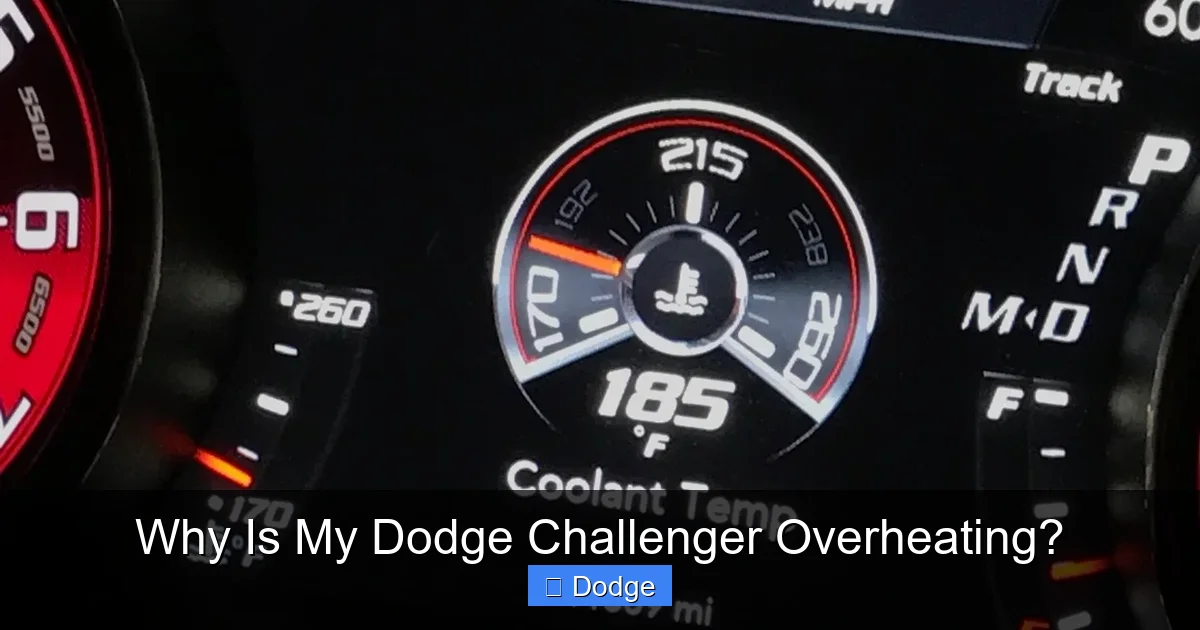
The most obvious sign is the temperature warning light on your dashboard. It usually looks like a thermometer in water or says “TEMP.” If it comes on, pull over safely and turn off the engine. Continuing to drive can warp the cylinder head or crack the engine block.
Some Challengers also have a “Check Gauges” light that illuminates when the temperature gauge enters the red zone. Don’t ignore it—even if the engine seems to be running fine.
Steam or Smoke from Under the Hood
If you see steam or smoke rising from the engine bay, coolant is likely boiling over. This happens when pressure builds in the cooling system due to excessive heat. Turn off the engine immediately and let it cool before opening the hood.
Never open the radiator cap when hot—steam and boiling coolant can spray out, causing serious burns.
Sweet Smell or Coolant Leaks
Coolant has a distinct sweet smell, similar to maple syrup. If you notice this odor inside the car or under the hood, you may have a leak. Check the ground for puddles of green, orange, or pink fluid.
Leaks can come from hoses, the radiator, water pump, or heater core. Even small leaks can lead to low coolant and overheating over time.
Reduced Engine Performance
An overheating engine may run rough, hesitate, or lose power. This happens because heat affects fuel combustion and sensor readings. You might also notice the engine knocking or pinging—a sign of pre-ignition caused by excessive heat.
If your Challenger feels sluggish or unresponsive, especially after driving in hot weather, check the temperature gauge.
Heater Blowing Cold Air
The heater in your car uses hot coolant from the engine to warm the cabin. If the heater suddenly blows cold air, it could mean the coolant isn’t circulating—possibly due to a stuck thermostat or air in the system.
This is especially noticeable in winter, but it’s a useful clue year-round.
How to Diagnose and Fix Overheating Issues
Diagnosing overheating starts with observation and basic checks. You don’t need to be a mechanic to spot common problems—just follow these steps.
Step 1: Check Coolant Level and Condition
Pop the hood and locate the coolant reservoir. Check the level—it should be between the “Min” and “Max” lines. If it’s low, top it off with the correct coolant mix (usually HOAT or OAT type for modern Challengers).
Also, inspect the coolant’s color and consistency. Fresh coolant is bright green, orange, or pink. If it’s brown, muddy, or has debris, it’s time for a flush.
Step 2: Inspect for Leaks
Look under the car for puddles. Check hoses for cracks, bulges, or soft spots. Squeeze them—they should feel firm but not brittle. Inspect the radiator, water pump, and heater core for signs of leakage.
Use a flashlight to check hard-to-see areas. A UV dye kit can help locate hidden leaks when added to the coolant.
Step 3: Test the Thermostat
Start the engine and let it warm up. Feel the upper radiator hose—it should stay cool for a few minutes, then get hot as the thermostat opens. If it heats up immediately, the thermostat may be stuck open. If it never gets hot, it’s likely stuck closed.
You can also remove the thermostat and test it in a pot of boiling water. It should open around 195°F.
Step 4: Check the Cooling Fans
With the engine running and the A/C on, watch the radiator fans. They should turn on within a few minutes. If not, check the fuses and relays. Swap the relay with a known good one (like the horn relay) to test.
Use a multimeter to check for power at the fan connector. If there’s power but the fan doesn’t run, the motor is likely bad.
Step 5: Pressure Test the System
If you suspect a leak but can’t find it, a pressure test can help. A mechanic can pressurize the cooling system to 15–20 psi and look for drops in pressure or visible leaks.
This test can also reveal internal leaks, like a blown head gasket, by checking for combustion gases in the coolant.
Step 6: Scan for Trouble Codes
Modern Challengers have onboard diagnostics that can detect cooling system issues. Use an OBD2 scanner to check for codes like P0128 (coolant thermostat), P0480 (fan control), or P0217 (engine overheating).
Even if no codes are present, live data can show coolant temperature, fan status, and sensor readings—helping pinpoint the problem.
Preventing Overheating in Your Dodge Challenger
The best way to deal with overheating is to stop it before it starts. Regular maintenance and smart driving habits can keep your Challenger cool and reliable for years.
Follow the Maintenance Schedule
Dodge recommends coolant flushes every 100,000 miles for most Challengers, but many experts suggest doing it every 30,000–50,000 miles—especially if you drive in hot climates or tow heavy loads.
Replace the thermostat every 60,000–100,000 miles, or if you notice temperature fluctuations. Inspect hoses and belts annually for wear.
Use the Right Coolant
Always use the coolant specified in your owner’s manual. Most newer Challengers require HOAT (Hybrid Organic Acid Technology) coolant, often dyed orange or pink. Never mix different types—it can cause sludge and corrosion.
Use distilled water when topping off. Tap water contains minerals that can clog the radiator and damage seals.
Keep the Radiator Clean
Regularly clean the front of the radiator to remove bugs, dirt, and debris. Use a soft brush or compressed air—don’t use high-pressure washers, which can bend the fins.
If you drive on dusty roads or off-road, consider a radiator guard or bug screen.
Monitor Temperature While Driving
Get familiar with your temperature gauge. The normal range is usually in the middle or slightly below. If it starts creeping up—especially in traffic—pull over and investigate.
Avoid pushing the engine hard when it’s hot. If you’re towing or driving uphill, consider installing an aftermarket oil cooler or auxiliary fan.
Upgrade for Performance Driving
If you track your Challenger or drive aggressively, consider performance cooling upgrades. High-flow radiators, electric water pumps, and dual fans can improve cooling under extreme conditions.
Just make sure any modifications are compatible with your engine and cooling system.
When to Call a Mechanic
While many overheating issues can be fixed at home, some require professional help. Don’t hesitate to call a mechanic if:
– You suspect a blown head gasket
– The engine overheats repeatedly after repairs
– You’re unsure about electrical or mechanical components
– The repair requires special tools or engine disassembly
A certified Dodge technician has the expertise and equipment to diagnose complex issues quickly and safely.
Conclusion
Overheating in your Dodge Challenger is never something to ignore. Whether it’s a simple coolant top-off or a major repair like a head gasket replacement, addressing the issue early can save you time, money, and stress. By understanding how your cooling system works, recognizing the warning signs, and performing regular maintenance, you can keep your muscle car running cool and strong.
Remember: a well-maintained Challenger isn’t just powerful—it’s reliable. So check that coolant level, listen for unusual noises, and don’t skip those service intervals. Your engine will thank you with years of thrilling drives.
Frequently Asked Questions
Why is my Dodge Challenger overheating when idling?
This is often due to a malfunctioning cooling fan, low coolant, or a stuck thermostat. At idle, the radiator fan must kick in to cool the engine—if it doesn’t, heat builds up quickly. Check the fan operation and coolant level first.
Can a bad thermostat cause overheating?
Yes. If the thermostat sticks closed, coolant can’t flow to the radiator, causing the engine to overheat rapidly. A stuck-open thermostat won’t cause overheating but may prevent the engine from reaching optimal temperature.
How often should I change the coolant in my Challenger?
Most Dodge Challengers require a coolant flush every 30,000 to 50,000 miles, or every 5 years. Check your owner’s manual for the exact interval, and use the recommended coolant type.
What does it mean if my coolant is bubbling?
Bubbling in the coolant reservoir can indicate a blown head gasket, allowing combustion gases to enter the cooling system. This is a serious issue that requires immediate attention to prevent engine damage.
Can I drive my Challenger if it’s overheating?
No. Driving while overheating can warp the cylinder head, crack the engine block, or destroy internal components. Pull over, turn off the engine, and let it cool before inspecting or calling for help.
How much does it cost to fix an overheating issue?
Costs vary widely. A thermostat replacement may cost $100–$300, while a head gasket repair can exceed $2,000. Simple fixes like topping off coolant are nearly free, but professional diagnosis is recommended for persistent issues.


