
Why Does My Subaru Make Noise When Turned Off

If your Subaru makes noise after you turn it off, don’t panic—it’s often normal. Common sounds like ticking, hissing, or clicking usually come from cooling systems, turbochargers, or fuel lines doing their job. However, loud or unusual noises could signal a problem that needs attention.
Key Takeaways
- Normal engine cooling: Ticking or clicking sounds are often from the engine contracting as it cools, especially in turbocharged models.
- Turbocharger cooldown: Subarus with turbo engines may run a coolant pump after shutdown to prevent oil coking.
- Fuel system activity: Hissing or whirring can come from the fuel pump or EVAP system purging vapors.
- Exhaust system contraction: Metal parts shrinking cause pops or pings—common and harmless.
- Electrical components: Relays, fans, or sensors may briefly activate after ignition off.
- When to worry: Grinding, knocking, or loud bangs may indicate mechanical issues needing inspection.
- Regular maintenance helps: Keeping up with service reduces the chance of abnormal noises.
📑 Table of Contents
Why Does My Subaru Make Noise When Turned Off?
You’ve just parked your Subaru, turned off the ignition, and stepped out—only to hear a strange ticking, hissing, or clicking sound coming from under the hood. Your first thought might be, “Is something wrong?” You’re not alone. Many Subaru owners experience this, and in most cases, the noises are completely normal.
Subaru vehicles—especially models like the WRX, Outback, Forester, and Legacy—are engineered with advanced systems that continue to operate briefly after the engine is shut down. These sounds are often the result of thermal changes, electronic controls, or mechanical components doing their final jobs before the car fully rests. While some noises are harmless, others might hint at underlying issues.
Understanding what’s normal and what’s not can save you stress and unnecessary repair bills. This guide will walk you through the most common reasons your Subaru makes noise when turned off, explain the science behind them, and help you decide when it’s time to visit a technician.
Common Noises and What They Mean
Visual guide about Why Does My Subaru Make Noise When Turned Off
Image source: i.ytimg.com
Not all post-shutdown sounds are the same. Some are brief and subtle, while others are louder and last longer. Let’s break down the most frequent noises you might hear and what they typically indicate.
Ticking or Clicking Sounds
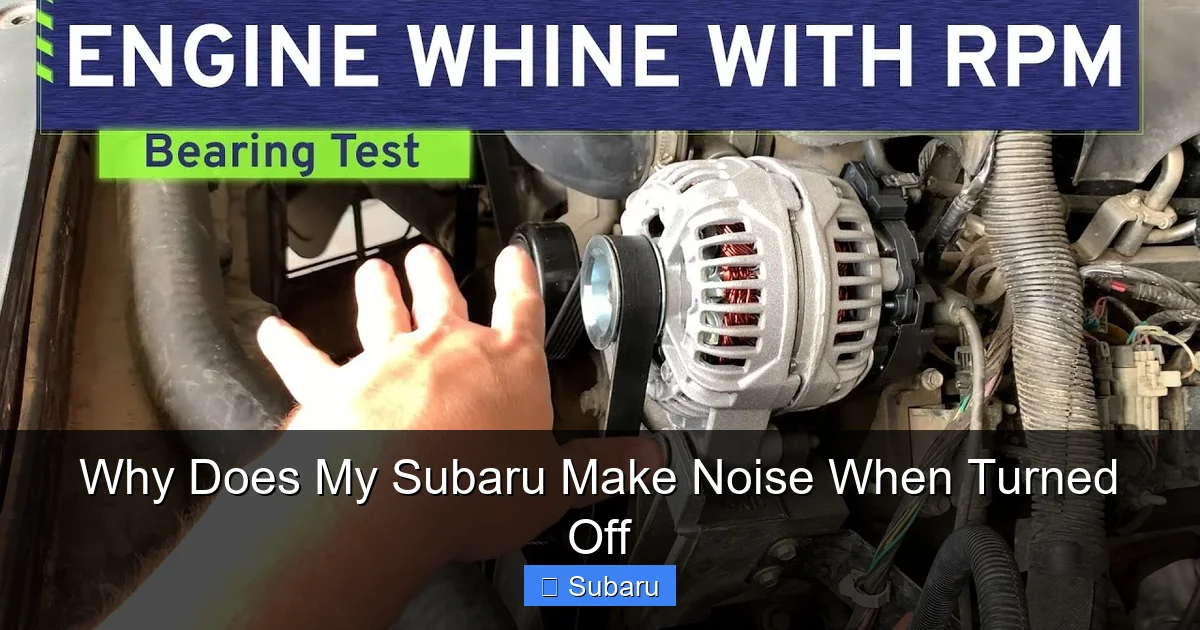
One of the most common sounds after turning off your Subaru is a rhythmic ticking or clicking, especially in the first few minutes. This is usually caused by the engine cooling down.
As the engine runs, metal components—like the cylinder head, exhaust manifold, and turbocharger (if equipped)—heat up to high temperatures. When you shut off the engine, these parts begin to cool and contract at different rates. This thermal contraction creates small movements in the metal, resulting in ticking or clicking noises. It’s similar to the sound you might hear from a radiator or hot water pipe in your home cooling overnight.
In turbocharged Subarus, such as the WRX or STI, this effect is more pronounced because the turbocharger reaches extremely high temperatures. The turbo spins at over 100,000 RPM and can get hotter than 1,800°F. As it cools, the metal housing and internal components shrink, producing noticeable ticks.
Example: After a spirited drive on a mountain road, you park your WRX and hear a steady tick-tick-tick from the front of the car. This is almost certainly the turbo and engine cooling—nothing to worry about.
Hissing or Whirring Noises
A soft hissing or whirring sound after shutdown often comes from the fuel system or evaporative emissions (EVAP) system.
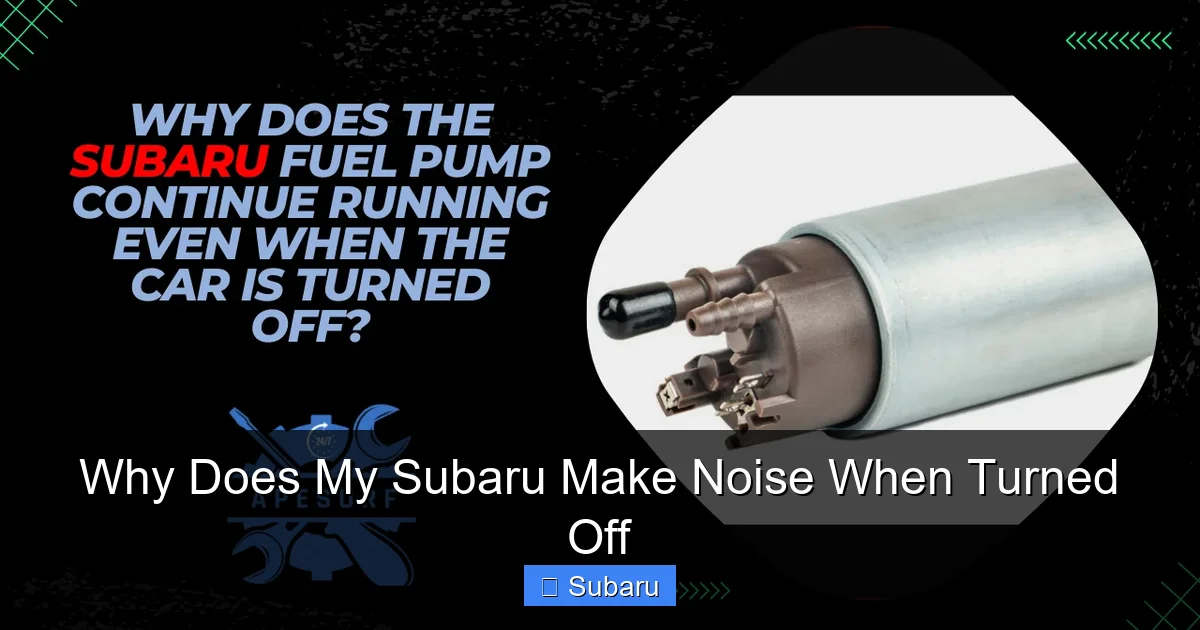
Modern Subarus use direct fuel injection and sophisticated emissions controls. After the engine stops, the fuel pump may briefly run to relieve pressure in the fuel lines. This prevents vapor lock and ensures smooth starts next time you turn the key. You might hear a low hum or whir from under the rear seat (where the fuel pump is often located) or near the fuel rail.
Additionally, the EVAP system may activate to purge fuel vapors from the charcoal canister into the engine for combustion. This process can create a faint hissing sound, especially if the system is performing a self-check.
Tip: If the hissing is loud, continuous, or smells like gasoline, it could indicate a fuel leak. In that case, stop driving and have it inspected immediately.
Popping or Pinging from the Exhaust
You might hear small pops or pings coming from the exhaust after turning off your Subaru. This is typically due to unburned fuel igniting in the hot exhaust system.
When the engine shuts off, a small amount of fuel can remain in the combustion chamber or exhaust ports. As the exhaust manifold and pipes cool, this residual fuel may ignite from the residual heat, causing a brief pop. This is more common in performance-oriented Subarus or after hard driving.
Another cause is thermal contraction of the exhaust system itself. The metal pipes and muffler shrink as they cool, creating small shifts that produce popping sounds.
Note: Occasional pops are normal. But if you hear loud, repeated bangs or the smell of unburned fuel, it could point to a misfire or rich fuel mixture—worth checking.
Fan or Pump Running After Shutdown
Some Subaru models, particularly those with turbocharged engines or advanced cooling systems, may keep the cooling fan or auxiliary pump running for a short time after the engine is off.
Turbocharged Subarus often have an electric coolant pump that continues to circulate coolant through the turbocharger even after the engine stops. This prevents “oil coking,” a condition where oil breaks down and forms sludge due to extreme heat. The pump runs for 30 seconds to several minutes, depending on engine temperature.
You might hear a low whirring or buzzing sound from the front of the car. This is a designed safety feature and is completely normal.
Example: After driving your turbocharged Forester in stop-and-go traffic on a hot day, you turn off the engine and hear a fan running under the hood. This is likely the turbo coolant pump doing its job.
Turbocharged Subarus: Special Considerations
Visual guide about Why Does My Subaru Make Noise When Turned Off
Image source: i.ytimg.com
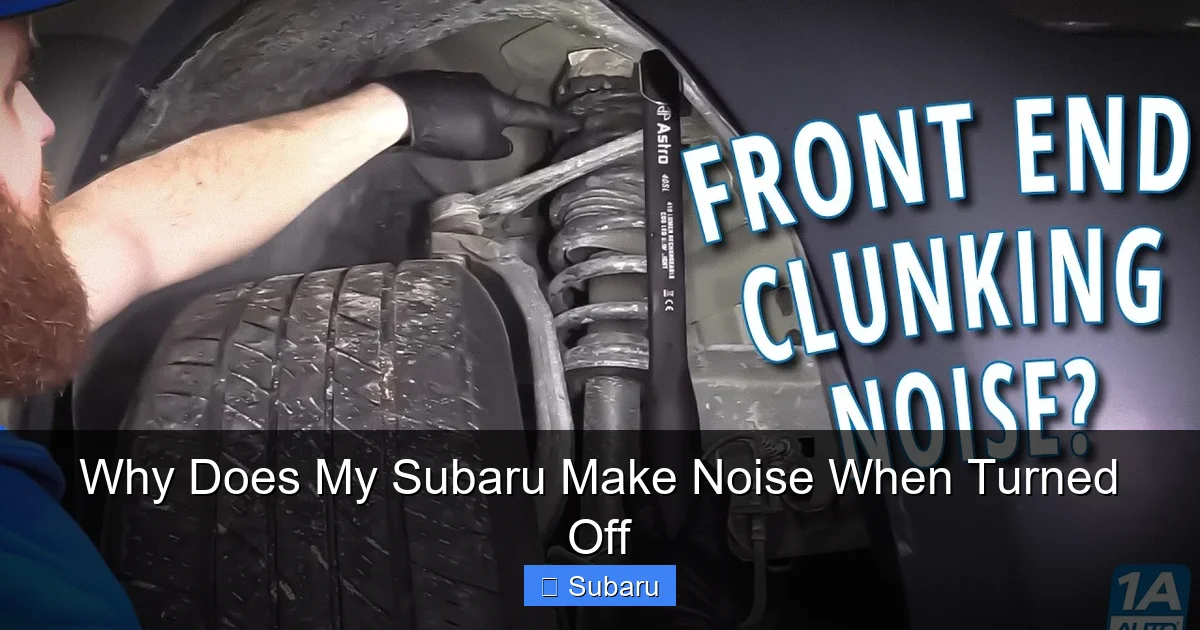
If you drive a Subaru with a turbocharger—such as the WRX, STI, or certain Outback and Legacy trims—you’re more likely to hear post-shutdown noises. That’s because turbo systems generate intense heat and require special cooling protocols.
Turbo Coolant Pump Operation
Turbocharged engines produce far more heat than naturally aspirated ones. The turbocharger sits in the exhaust stream and can reach temperatures over 1,800°F. If the engine is shut off immediately after hard driving, the oil inside the turbo can “coke” or burn, forming carbon deposits that damage bearings and seals.
To prevent this, many modern Subarus use an electric coolant pump that continues to circulate coolant through the turbo after the engine stops. This pump is controlled by the engine control unit (ECU) and runs based on coolant temperature and driving conditions.
You might hear this pump as a soft whirring or buzzing sound from the engine bay. It usually runs for 30 seconds to 2 minutes, depending on how hot the engine was.
Pro Tip: Avoid shutting off the engine immediately after high-speed or aggressive driving. Let the car idle for 30–60 seconds to allow the turbo to cool slightly. This reduces thermal stress and extends turbo life.
Wastegate and Blow-Off Valve Sounds
Turbocharged Subarus also have components like the wastegate and blow-off valve (BOV) that can make noise after shutdown.
The wastegate regulates boost pressure by diverting exhaust gases away from the turbine. When the engine stops, the wastegate may release residual pressure, causing a faint hiss or click.
The blow-off valve releases pressurized air from the intake when you lift off the throttle. After shutdown, you might hear a small “pssst” as the system equalizes pressure.
These sounds are normal and part of the turbo system’s operation. However, if the BOV is leaking or stuck open, you might hear a constant hiss or notice reduced performance—this would need attention.
Electrical and Sensor Activity
Visual guide about Why Does My Subaru Make Noise When Turned Off
Image source: blog.apesurf.com
Modern Subarus are packed with electronics, and many systems remain active for a short time after the key is turned off.
Relays and Control Modules
When you turn off the ignition, various relays and control modules may cycle through shutdown sequences. For example, the body control module (BCM) might power down windows, locks, or interior lights. You could hear a soft click as relays disengage.
Some Subarus also have active noise cancellation or sound enhancement systems that briefly power down, producing a faint tone or hum.
Cooling Fans and HVAC Systems
The radiator fan may continue to run if the engine or cabin is still hot. This is especially common in hot weather or after driving with the air conditioning on.
Additionally, the HVAC system might run a brief purge cycle to clear moisture from the evaporator, preventing mold and odors. This can produce a low whirring or gurgling sound from the dashboard area.
Sensors and Diagnostics
Subarus perform self-diagnostics even when the engine is off. Sensors may take final readings, and the ECU might log data or run a quick check on emissions systems. These processes are silent to most people, but in quiet environments, you might hear faint electronic clicks or whirs.
When to Worry: Abnormal Noises
While most post-shutdown noises are harmless, some sounds could indicate a problem. Here’s how to tell the difference.
Loud Knocking or Grinding
If you hear a loud knock, bang, or grinding noise after turning off the engine, it’s time to investigate. This could signal:
– A failing turbocharger (e.g., damaged bearings)
– Loose or broken engine mounts
– Timing belt or chain issues
– Internal engine damage
These noises are not normal and should be checked by a qualified technician immediately.
Continuous Hissing or Sizzling
A persistent hiss or sizzle—especially if it smells like coolant or oil—could indicate a leak. Possible causes include:
– A ruptured coolant hose
– A leaking radiator
– A blown head gasket (in severe cases)
Coolant leaks can lead to overheating and engine damage, so don’t ignore this.
Electrical Burning Smell
If you hear a buzzing sound accompanied by a burning smell, there may be an electrical issue—such as a short circuit, overheating relay, or damaged wiring. This is a fire hazard and requires immediate attention.
Unusual Vibrations or Shaking
If the car shakes or vibrates after shutdown, it could be due to:
– A misfiring engine that continues to run briefly (“dieseling”)
– A stuck fuel injector
– A failing alternator or starter motor
These issues can drain the battery or cause further damage.
Rule of Thumb: If a noise is new, loud, or accompanied by warning lights, smells, or performance issues, have it inspected.
How to Minimize Post-Shutdown Noises
While you can’t eliminate all noises, you can reduce their frequency and intensity with proper care.
Let the Engine Cool Before Shutting Off
After hard driving—especially with a turbocharged Subaru—let the engine idle for 30–60 seconds before turning it off. This allows the turbo and engine to cool gradually, reducing thermal stress and contraction noises.
Park in the Shade or Garage
Extreme heat increases the rate of thermal expansion and contraction. Parking in a shaded area or garage helps the engine cool more evenly, minimizing ticking and popping.
Use Quality Fluids
High-quality engine oil and coolant improve heat transfer and reduce the risk of oil coking or coolant boiling. Stick to Subaru-approved fluids and change them on schedule.
Keep the Cooling System Maintained
Regularly check coolant levels, inspect hoses for cracks, and replace the thermostat and water pump as recommended. A well-maintained cooling system runs more efficiently and produces fewer noises.
Avoid Short Trips When Possible
Frequent short trips prevent the engine from reaching optimal operating temperature, leading to incomplete combustion and carbon buildup. This can increase popping and hissing sounds. Combine errands when you can, or take occasional longer drives.
Conclusion
Hearing your Subaru make noise when turned off can be unsettling, but in most cases, it’s nothing to worry about. Ticking, hissing, popping, and whirring sounds are often the result of normal thermal changes, turbo cooling, fuel system activity, or electronic controls doing their job.
Turbocharged models are especially prone to these noises due to their high operating temperatures and advanced cooling systems. Features like the post-shutdown coolant pump are designed to protect your engine and extend its life.
However, it’s important to stay alert. Loud, unusual, or persistent noises—especially those accompanied by smells, vibrations, or warning lights—should never be ignored. When in doubt, have your Subaru inspected by a certified technician.
By understanding what’s normal and practicing good maintenance habits, you can enjoy peace of mind and keep your Subaru running smoothly for years to come.
Frequently Asked Questions
Is it normal for my Subaru to tick after turning it off?
Yes, ticking is very common and usually caused by the engine and turbocharger cooling and contracting. It’s especially noticeable in turbocharged models after hard driving.
Why does my Subaru keep running after I turn it off?
Your Subaru isn’t actually running—components like the cooling fan or turbo coolant pump may continue operating for a short time to protect the engine from heat damage.
Should I be worried about hissing sounds after shutdown?
Occasional hissing from the fuel or EVAP system is normal. But if it’s loud, continuous, or smells like fuel, it could indicate a leak and should be checked.
Can I stop my Subaru from making noise when turned off?
You can’t eliminate all noises, but letting the engine cool before shutdown, parking in shade, and using quality fluids can reduce them.
Why does my turbo Subaru make more noise than my friend’s non-turbo model?
Turbocharged engines generate more heat and have additional systems like coolant pumps and blow-off valves, which produce more post-shutdown sounds.
When should I take my Subaru to a mechanic for noise issues?
Visit a mechanic if you hear loud bangs, grinding, continuous hissing, or notice warning lights, smells, or performance problems after shutdown.
