Who Makes Toyota Motor Oil?

Contents
- 1 Key Takeaways
- 2 📑 Table of Contents
- 3 Who Makes Toyota Motor Oil?
- 4 Toyota’s Partnership with ExxonMobil
- 5 Idemitsu Kosan: A Trusted Japanese Partner
- 6 How Toyota Motor Oil Is Developed and Tested
- 7 Types of Toyota Motor Oil Available
- 8 Why Use Toyota Genuine Motor Oil?
- 9 Where to Buy Toyota Genuine Motor Oil
- 10 Conclusion
- 11 Frequently Asked Questions

LED Indicator Light

Reflective Stickers

Car Shampoo Concentrate

Car USB Charger
Toyota doesn’t manufacture its own motor oil—instead, it partners with top-tier lubricant producers like ExxonMobil and Idemitsu to create high-quality oils that meet strict Toyota specifications. These oils are engineered specifically for Toyota engines, ensuring optimal performance, fuel efficiency, and long-term reliability.
Key Takeaways
- Toyota does not produce motor oil in-house: Instead, it collaborates with leading global lubricant manufacturers to develop and supply its branded motor oils.
- ExxonMobil and Idemitsu are key partners: These companies formulate and bottle Toyota Genuine Motor Oil (TGMO) under strict quality and performance guidelines set by Toyota.
- TGMO meets or exceeds industry standards: Toyota motor oils are designed to meet ILSAC, API, and ACEA specifications, ensuring compatibility and protection across various engine types.
- Formulated specifically for Toyota engines: The oil is optimized for Toyota’s engineering, including fuel-efficient engines, hybrid systems, and turbocharged models.
- Available in multiple viscosities and types: From conventional to full synthetic, Toyota offers oils tailored to different climates, driving conditions, and vehicle models.
- Using genuine Toyota oil helps maintain warranty coverage: It ensures compliance with maintenance requirements and supports long-term engine health.
- Widely available through dealerships and authorized retailers: Toyota Genuine Motor Oil can be purchased at service centers, online, and select automotive stores.
📑 Table of Contents
Who Makes Toyota Motor Oil?
When you pop the hood of your Toyota Camry, Corolla, or RAV4, you might wonder—what’s in that bottle of oil labeled “Toyota Genuine Motor Oil”? It’s a smart question, especially when you’re trying to make the best choice for your vehicle’s engine. After all, motor oil is the lifeblood of your car, responsible for lubricating moving parts, reducing friction, cooling the engine, and preventing sludge buildup.
But here’s the surprising truth: Toyota doesn’t actually manufacture its own motor oil. Instead, the company partners with some of the world’s most respected lubricant producers to create oils that carry the Toyota name. These partnerships ensure that every drop of Toyota Genuine Motor Oil (TGMO) meets the high standards Toyota sets for performance, reliability, and engine protection.
So who are these behind-the-scenes experts? The primary manufacturers are global giants like ExxonMobil and Idemitsu Kosan. These companies don’t just fill bottles with off-the-shelf oil—they work closely with Toyota engineers to develop custom formulations that align perfectly with Toyota’s engine designs and performance goals. The result? A product that’s not just “good enough,” but truly optimized for your Toyota.
In this article, we’ll dive deep into who makes Toyota motor oil, how it’s developed, why it matters, and how you can make the best choice for your vehicle. Whether you’re a daily commuter, a weekend adventurer, or a proud owner of a hybrid Prius, understanding your oil options can help you keep your Toyota running smoothly for years to come.
Toyota’s Partnership with ExxonMobil
Visual guide about Who Makes Toyota Motor Oil?
Image source: toyota.com.la
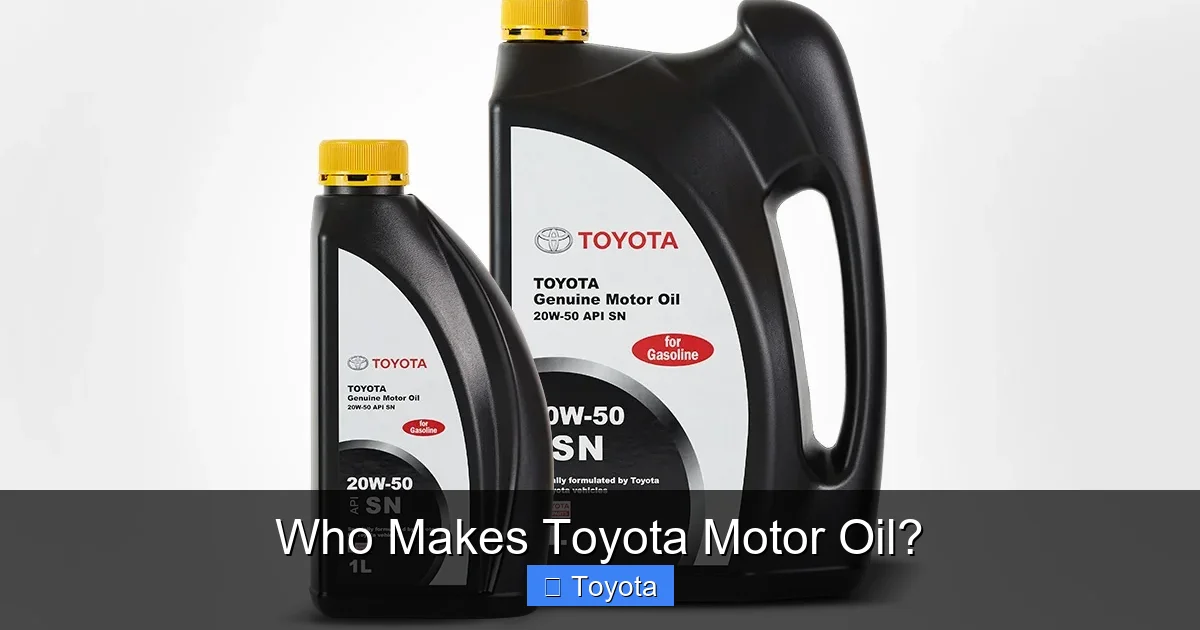
One of the most significant players in the production of Toyota Genuine Motor Oil is ExxonMobil, a global leader in the energy and lubricants industry. For decades, ExxonMobil has supplied high-performance motor oils to automakers around the world, and its collaboration with Toyota is one of the most trusted in the automotive sector.
The Role of ExxonMobil in TGMO Production
ExxonMobil doesn’t just bottle oil and slap a Toyota label on it. Instead, the company works hand-in-hand with Toyota’s engineering teams to develop formulations that meet or exceed Toyota’s stringent requirements. This includes testing under real-world conditions, simulating extreme temperatures, and evaluating performance across different engine types—from compact sedans to powerful SUVs.
The oil produced under this partnership is often based on ExxonMobil’s premium Mobil 1 synthetic technology, but it’s fine-tuned to match Toyota’s specifications. For example, Toyota may request a specific viscosity grade, additive package, or low-ash formulation to support emissions systems and fuel efficiency. ExxonMobil then adjusts its base oils and additives accordingly, ensuring the final product delivers optimal protection and performance.
Why ExxonMobil Was Chosen
Toyota selected ExxonMobil as a key partner due to the company’s proven track record in developing advanced lubricants. ExxonMobil invests heavily in research and development, operating state-of-the-art labs where scientists test new additive technologies and base oil formulations. This innovation ensures that Toyota Genuine Motor Oil stays ahead of evolving engine demands, such as those seen in turbocharged engines and hybrid powertrains.
Additionally, ExxonMobil’s global supply chain allows Toyota to distribute genuine oil efficiently across North America, Europe, Asia, and other markets. This consistency is crucial—whether you’re getting an oil change in Tokyo, Los Angeles, or Berlin, you can trust that the oil in your engine meets the same high standards.
Real-World Impact on Your Toyota
Using ExxonMobil-formulated TGMO means your engine benefits from advanced wear protection, improved fuel economy, and enhanced resistance to thermal breakdown. For instance, Mobil 1’s synthetic base oils maintain viscosity better under high heat, which is especially important in stop-and-go city driving or hot climates. This helps reduce engine wear and extends the life of critical components like pistons, camshafts, and bearings.
Moreover, the oil’s detergent and dispersant additives help keep your engine clean by preventing sludge and deposit formation. This is vital for maintaining peak performance and avoiding costly repairs down the road.
Idemitsu Kosan: A Trusted Japanese Partner
Visual guide about Who Makes Toyota Motor Oil?
Image source: shop.sclubricants.com
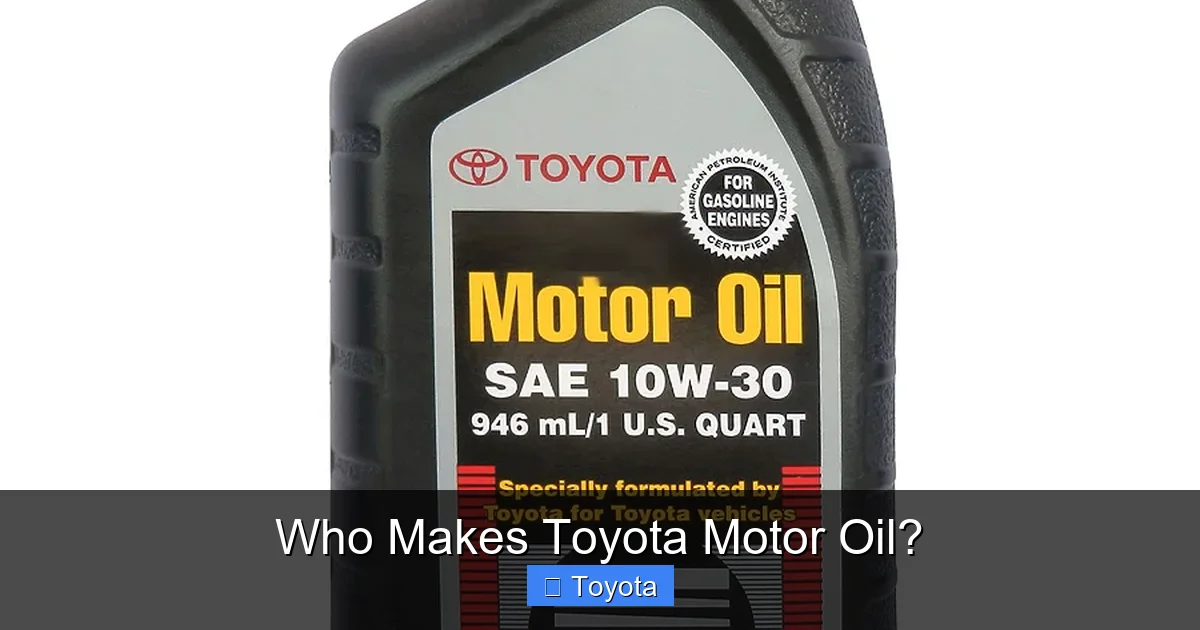
While ExxonMobil handles much of the production for North American and global markets, another major player in the Toyota motor oil story is Idemitsu Kosan, a Japanese petroleum and lubricants company with deep roots in Asia.
Idemitsu’s Longstanding Relationship with Toyota
Idemitsu has been a supplier to Toyota for decades, dating back to the early days of Japan’s automotive boom. As a homegrown Japanese company, Idemitsu understands the unique engineering philosophies and environmental conditions that shape Toyota’s vehicle designs. This cultural and technical alignment makes Idemitsu an ideal partner for developing oils tailored to Japanese-market Toyotas.
Like ExxonMobil, Idemitsu doesn’t just produce generic oil. It collaborates with Toyota engineers to create formulations that meet specific performance benchmarks. These include low-viscosity oils for improved fuel efficiency, high-temperature stability for turbocharged engines, and compatibility with hybrid systems like those found in the Prius and Corolla Hybrid.
Innovation in Hybrid and Eco-Friendly Oils
One area where Idemitsu shines is in developing oils for hybrid vehicles. Toyota’s hybrid engines operate differently than traditional gasoline engines—they frequently start and stop, run at variable speeds, and experience unique thermal cycles. Standard motor oils may not provide adequate protection under these conditions.
Idemitsu has responded by creating specialized low-viscosity, low-friction oils that reduce internal engine drag and improve fuel economy. These oils also feature enhanced oxidation resistance to handle the frequent temperature fluctuations common in hybrid operation. As a result, Toyota hybrids benefit from smoother performance, longer engine life, and better overall efficiency.
Commitment to Sustainability
Idemitsu is also known for its commitment to sustainability, which aligns with Toyota’s broader environmental goals. The company invests in bio-based lubricants, recycling programs, and energy-efficient manufacturing processes. This focus on green innovation ensures that Toyota Genuine Motor Oil not only protects your engine but also supports a cleaner planet.
How Toyota Motor Oil Is Developed and Tested
Visual guide about Who Makes Toyota Motor Oil?
Image source: mir-s3-cdn-cf.behance.net
You might be wondering: if Toyota doesn’t make the oil itself, how does it ensure quality and consistency? The answer lies in a rigorous development and testing process that involves close collaboration between Toyota engineers and its lubricant partners.
Setting the Specifications
Before any oil is produced, Toyota defines a detailed set of performance requirements. These specifications cover everything from viscosity and volatility to wear protection, deposit control, and compatibility with emissions systems. For example, Toyota may require an oil that maintains its protective properties for 10,000 miles under normal driving conditions, or one that flows easily in sub-zero temperatures.
These specs are based on extensive testing of Toyota engines in labs and real-world environments. Engineers simulate everything from highway cruising to extreme mountain driving, ensuring the oil can handle the full range of conditions your vehicle might encounter.
Formulation and Blending
Once the specs are finalized, ExxonMobil, Idemitsu, or another partner begins formulating the oil. This involves selecting the right base oils (often a blend of conventional and synthetic stocks) and adding a custom package of additives. These additives include:
– Anti-wear agents (like zinc dialkyldithiophosphate, or ZDDP) to protect metal surfaces
– Detergents and dispersants to keep the engine clean
– Viscosity index improvers to maintain oil thickness across temperature ranges
– Anti-foaming agents to prevent air bubbles that can reduce lubrication
– Friction modifiers to improve fuel economy
Each additive is carefully balanced to deliver the desired performance without compromising other aspects of oil function.
Rigorous Testing and Certification
After formulation, the oil undergoes a battery of tests to ensure it meets Toyota’s standards. These tests include:
– **Engine dynamometer testing:** The oil is used in a running engine under controlled conditions to measure wear, deposit formation, and oil consumption.
– **Cold-start simulation:** The oil is tested at low temperatures to ensure it flows quickly and protects the engine during startup.
– **Thermal stability tests:** The oil is heated to extreme temperatures to check for breakdown and sludge formation.
– **Field testing:** Prototype oils are used in real Toyota vehicles driven by consumers in various climates and driving styles.
Only after passing all these tests does the oil receive Toyota’s official approval. It’s then bottled and distributed under the Toyota Genuine Motor Oil label.
Continuous Improvement
Toyota doesn’t stop at initial approval. The company continuously monitors oil performance through customer feedback, warranty claims, and fleet testing. If a new engine design or fuel type emerges—like a more efficient hybrid or a hydrogen-powered vehicle—Toyota works with its partners to develop updated oil formulations.
This ongoing innovation ensures that Toyota motor oil evolves alongside the vehicles it serves, maintaining peak performance and protection.
Types of Toyota Motor Oil Available
Not all Toyota motor oils are the same. Depending on your vehicle, driving habits, and climate, you’ll need to choose the right type and viscosity. Toyota offers a range of options to meet these needs.
Conventional vs. Synthetic Oil
Toyota Genuine Motor Oil is available in both conventional and full synthetic formulations.
– **Conventional oil** is derived from crude oil and is suitable for older Toyota models or vehicles with simple engine designs. It’s more affordable but requires more frequent changes (typically every 3,000 to 5,000 miles).
– **Full synthetic oil** is engineered for high performance and long drain intervals. It offers better protection under extreme conditions, improved fuel economy, and longer engine life. Most newer Toyotas, especially hybrids and turbocharged models, recommend or require synthetic oil.
Viscosity Grades
Viscosity refers to how thick or thin the oil is. Toyota recommends specific viscosity grades based on your vehicle and climate. Common grades include:
– **0W-20:** Ideal for cold climates and fuel-efficient engines. Used in most modern Toyotas, including the Camry, Corolla, and RAV4.
– **5W-30:** A versatile grade suitable for moderate climates and older models.
– **10W-30:** Better for warmer temperatures and high-mileage engines.
Always check your owner’s manual for the recommended viscosity. Using the wrong grade can lead to poor lubrication, increased wear, and reduced fuel efficiency.
Specialty Oils for Hybrids and Turbocharged Engines
Toyota also offers specialized oils for unique engine types:
– **Hybrid-specific oils:** Low-viscosity, low-friction formulations designed for frequent start-stop cycles and variable engine loads.
– **High-performance oils:** Enhanced with extra anti-wear additives for turbocharged engines like those in the GR Supra or performance-tuned TRD models.
These oils are engineered to handle the specific demands of advanced powertrains, ensuring smooth operation and long-term reliability.
Why Use Toyota Genuine Motor Oil?
With so many motor oil brands on the market, you might wonder: why choose Toyota Genuine Motor Oil over a generic or aftermarket brand? The answer comes down to precision, protection, and peace of mind.
Engineered for Your Specific Toyota
TGMO is not a one-size-fits-all product. It’s designed specifically for Toyota engines, taking into account factors like piston design, valve train geometry, and emissions system requirements. This tailored approach ensures optimal lubrication, cooling, and cleanliness.
For example, Toyota’s Variable Valve Timing (VVT-i) systems rely on precise oil flow and pressure to function correctly. Using the wrong oil can lead to timing issues, reduced performance, and even engine damage. TGMO is formulated to support these systems, ensuring smooth and reliable operation.
Supports Warranty and Resale Value
Using Toyota Genuine Motor Oil helps maintain your vehicle’s warranty coverage. Most Toyota warranties require that you use oil that meets Toyota’s specifications. If you use an incompatible oil and experience engine problems, the manufacturer may deny warranty claims.
Additionally, using genuine parts and fluids can boost your car’s resale value. Buyers often prefer vehicles with documented maintenance using OEM (Original Equipment Manufacturer) products, as it signals proper care and attention.
Consistent Quality and Availability
Because TGMO is produced by trusted partners under strict guidelines, you can count on consistent quality every time you buy a bottle. Whether you’re at a dealership, an authorized service center, or shopping online, you’re getting the same high-standard product.
This consistency is especially important for long-term engine health. Inconsistent oil quality can lead to sludge buildup, increased wear, and reduced performance over time.
Environmental and Efficiency Benefits
Modern TGMO formulations are designed to improve fuel economy and reduce emissions. Low-viscosity oils reduce internal engine friction, allowing the engine to run more efficiently. This not only saves you money at the pump but also lowers your carbon footprint.
Additionally, many TGMO products are formulated to be compatible with catalytic converters and particulate filters, helping your vehicle meet emissions standards and pass inspections.
Where to Buy Toyota Genuine Motor Oil
Finding Toyota Genuine Motor Oil is easier than you might think. It’s widely available through several channels, ensuring you can get the right oil when you need it.
Toyota Dealerships and Service Centers
The most reliable source for TGMO is your local Toyota dealership. Service centers stock a full range of viscosities and types, and technicians can recommend the best oil for your specific model and driving conditions. Plus, purchasing oil during an oil change ensures it’s installed correctly and your maintenance records are updated.
Authorized Online Retailers
Many online retailers, including Toyota’s official parts website, Amazon, and automotive specialty stores, sell genuine TGMO. When shopping online, look for the Toyota logo and verify the seller’s authenticity to avoid counterfeit products.
Select Auto Parts Stores
Some large auto parts chains, such as AutoZone, O’Reilly Auto Parts, and Advance Auto Parts, carry Toyota Genuine Motor Oil in select locations. Availability may vary, so it’s best to call ahead or check online inventory.
Tips for Buying and Storing
– Always check the label for the correct viscosity and certification (e.g., “Meets Toyota Specifications”).
– Store oil in a cool, dry place away from direct sunlight to prevent degradation.
– Check the expiration date—motor oil doesn’t last forever, even in sealed containers.
Conclusion
So, who makes Toyota motor oil? The answer is a team of world-class lubricant experts from companies like ExxonMobil and Idemitsu, working in close partnership with Toyota engineers to create oils that are truly optimized for Toyota vehicles. While Toyota doesn’t manufacture the oil itself, it plays a central role in defining the specifications, testing performance, and ensuring quality.
Using Toyota Genuine Motor Oil isn’t just about brand loyalty—it’s about giving your engine the best possible protection. From improved fuel efficiency and reduced wear to warranty compliance and environmental benefits, the advantages are clear. Whether you drive a compact Corolla or a rugged Tacoma, choosing the right oil is a simple yet powerful way to keep your Toyota running like new.
Next time you’re due for an oil change, consider reaching for that bottle with the Toyota logo. Your engine will thank you.
Frequently Asked Questions
Does Toyota manufacture its own motor oil?
No, Toyota does not manufacture motor oil in-house. Instead, it partners with leading lubricant producers like ExxonMobil and Idemitsu to create Toyota Genuine Motor Oil under strict quality and performance guidelines.
Is Toyota Genuine Motor Oil synthetic?
Yes, most Toyota Genuine Motor Oils are full synthetic, especially for newer models. However, conventional options are also available for older vehicles. Always check your owner’s manual for the recommended type.
Can I use non-Toyota oil in my Toyota?
You can, as long as the oil meets Toyota’s specifications (e.g., ILSAC GF-6, API SP). However, using Toyota Genuine Motor Oil ensures optimal performance and helps maintain warranty coverage.
How often should I change my Toyota’s oil?
Most modern Toyotas recommend oil changes every 5,000 to 10,000 miles, depending on driving conditions. Check your owner’s manual or use Toyota’s maintenance schedule for guidance.
Is Toyota motor oil more expensive than other brands?
TGMO is competitively priced and often comparable to other premium synthetic oils. The added value comes from its tailored formulation and reliability, making it a worthwhile investment.
Where can I buy Toyota Genuine Motor Oil online?
You can purchase it from Toyota’s official parts website, Amazon, and authorized automotive retailers. Always verify the seller’s authenticity to avoid counterfeit products.