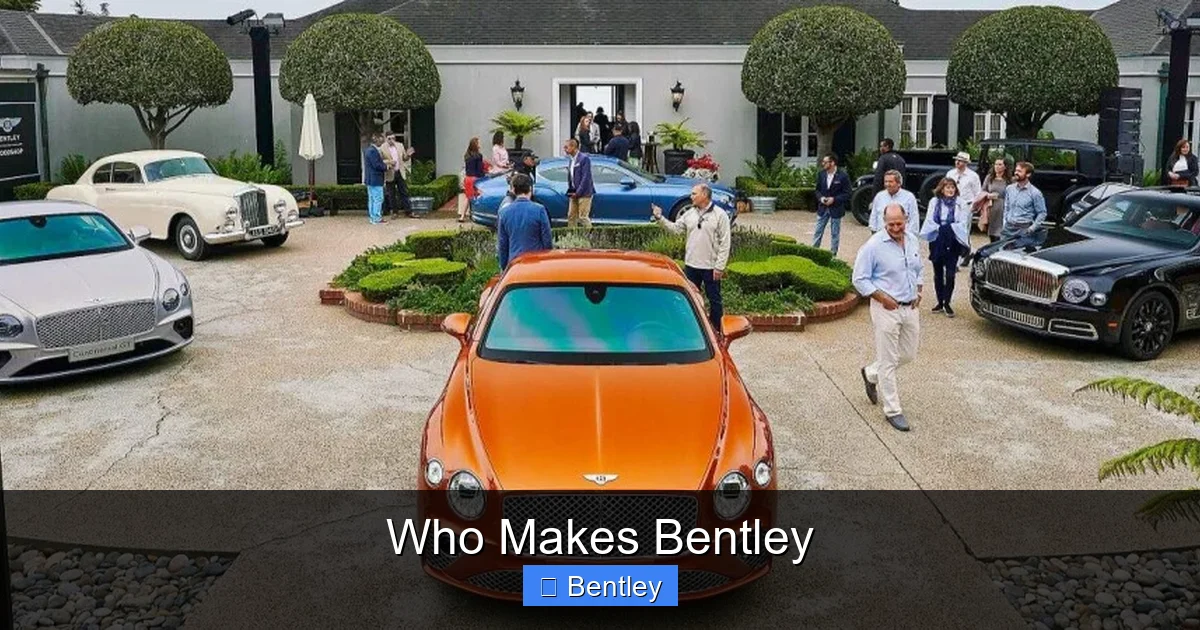
Who Makes Bentley

Contents
- 1 Key Takeaways
- 2 📑 Table of Contents
- 3 Who Makes Bentley? A Deep Dive Into the Iconic Luxury Automaker
- 4 The Origins of Bentley: From Humble Beginnings to Racing Glory
- 5 Ownership Changes: From Rolls-Royce to Volkswagen
- 6 The People Behind the Brand: Craftsmanship and Innovation
- 7 Key Models and Their Legacy
- 8 Bentley’s Global Impact and Market Position
- 9 Future Outlook: Electric Dreams and Sustainable Luxury
- 10 Conclusion: The Legacy of Bentley
- 11 Frequently Asked Questions

Phone Mount for Bike
Car Phone Holder

Windshield Washer Fluid

Car LED Headlight Bulb
Bentley Motors is a British luxury automotive manufacturer owned by the Volkswagen Group since 1998. Known for crafting ultra-luxurious, high-performance vehicles, Bentley combines hand-built craftsmanship with cutting-edge technology at its Crewe, England headquarters. As a crown jewel of Volkswagen’s premium brand portfolio, Bentley continues to define opulence and engineering excellence in the global luxury car market.
Key Takeaways
- Bentley is made by Bentley Motors, a British luxury automaker with over a century of heritage.
- Owned by Volkswagen Group since 1998, Bentley benefits from German engineering and global resources.
- Handcrafted in Crewe, England, each Bentley reflects meticulous attention to detail and bespoke craftsmanship.
- Focus on luxury and performance defines every model, from sedans to SUVs and limited editions.
- Electric future planned, with Bentley targeting full electrification by 2030.
- Customization is key, offering buyers extensive personalization through Mulliner, the in-house bespoke division.
📑 Table of Contents
- Who Makes Bentley? A Deep Dive Into the Iconic Luxury Automaker
- The Origins of Bentley: From Humble Beginnings to Racing Glory
- Ownership Changes: From Rolls-Royce to Volkswagen
- The People Behind the Brand: Craftsmanship and Innovation
- Key Models and Their Legacy
- Bentley’s Global Impact and Market Position
- Future Outlook: Electric Dreams and Sustainable Luxury
- Conclusion: The Legacy of Bentley
Who Makes Bentley? A Deep Dive Into the Iconic Luxury Automaker
Imagine pulling up to a gala in a car that turns heads not just for its sleek design, but for the legacy it carries. That’s the experience of driving a Bentley. From the moment you step inside, you’re enveloped in hand-stitched leather, polished wood veneers, and a quiet cabin that feels more like a private lounge than a vehicle. But behind this aura of opulence lies a fascinating story—one of heritage, innovation, and ownership. So, who makes Bentley? The answer isn’t just about a name on a badge; it’s about a century-long journey shaped by passion, engineering excellence, and global influence.
When most people think of Bentley, they picture luxury, performance, and exclusivity. But few realize that the brand’s identity has evolved dramatically over the years. Founded in 1919 by W.O. Bentley, the company began as a small British workshop dedicated to building high-performance engines and race cars. Over the decades, Bentley has changed hands multiple times, survived financial turmoil, and ultimately found a home under one of the world’s largest automotive conglomerates. Today, Bentley is not just a car—it’s a symbol of British craftsmanship with a global footprint. In this post, we’ll explore the origins of Bentley, its ownership history, the people behind the brand, and what makes it one of the most respected names in luxury motoring.
The Origins of Bentley: From Humble Beginnings to Racing Glory
The Vision of W.O. Bentley
Bentley’s story begins with one man: Walter Owen Bentley, affectionately known as W.O. Born in 1888, W.O. had a lifelong fascination with engines and speed. After serving in World War I as an aeronautical engineer, he returned to England with a dream—to build cars that combined power, reliability, and elegance. In 1919, he founded Bentley Motors in a small workshop in Cricklewood, North London. His first engine, the 3-liter, was designed to be both lightweight and durable—a radical idea at the time.

Visual guide about Who Makes Bentley
Image source: hips.hearstapps.com
W.O. believed that a car should be more than just a mode of transport; it should be an extension of the driver’s will. This philosophy quickly gained attention. By the early 1920s, Bentley cars were dominating the racetrack, particularly at the 24 Hours of Le Mans. In fact, Bentley won the prestigious endurance race five times between 1924 and 1930, earning a reputation for speed and endurance that still resonates today.
The Bentley Boys and the Golden Era
Much of Bentley’s early success can be attributed to a group of wealthy, daring drivers known as the “Bentley Boys.” These were aristocrats, aviators, and entrepreneurs who shared W.O.’s passion for speed and adventure. Names like Sir Henry “Tim” Birkin, Woolf Barnato, and Glen Kidston became synonymous with Bentley’s racing legacy. They didn’t just drive the cars—they helped refine them, pushing engineers to innovate under pressure.
One of the most iconic models from this era was the Bentley Speed Six, which won Le Mans in 1929 and 1930. These victories weren’t just about speed; they showcased Bentley’s engineering prowess. The cars were built to last, often outlasting competitors in grueling conditions. This reputation for durability and performance laid the foundation for Bentley’s identity as a maker of “the best car in the world.”
Ownership Changes: From Rolls-Royce to Volkswagen
The Rolls-Royce Era (1931–1998)
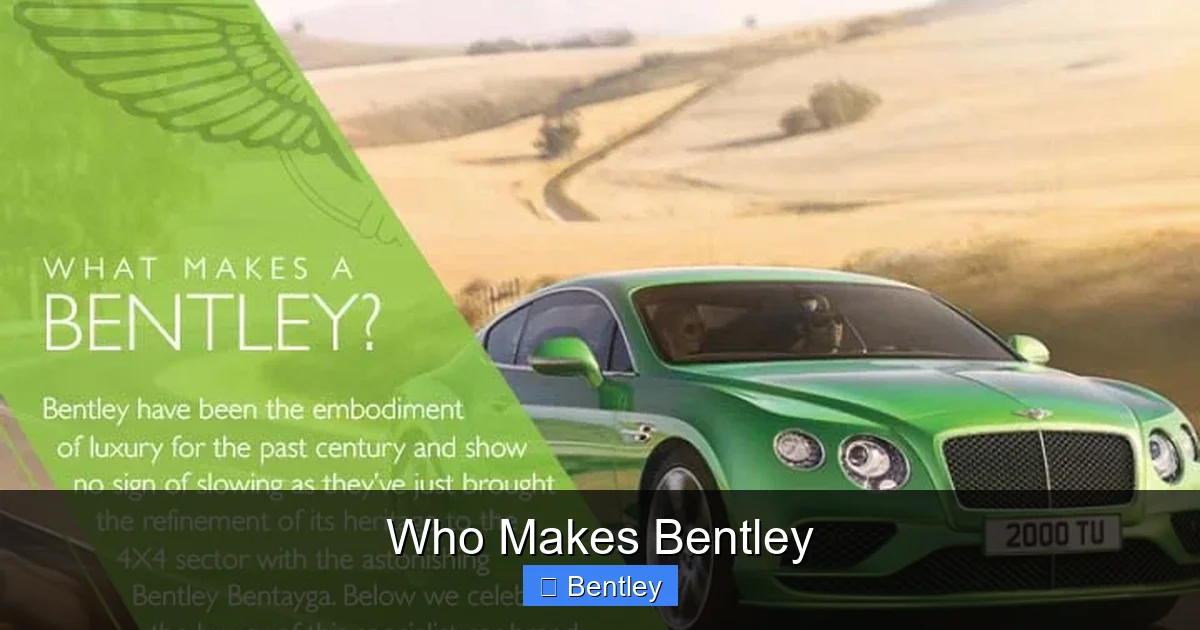
Despite its racing success, Bentley faced financial difficulties in the late 1920s. The Great Depression hit hard, and by 1931, the company was forced into receivership. It was at this critical moment that Rolls-Royce stepped in and acquired Bentley Motors. This merger marked the beginning of a new chapter—one that would shape Bentley’s identity for decades.
Visual guide about Who Makes Bentley
Image source: infographicjournal.com
Under Rolls-Royce, Bentley became the “performance” counterpart to Rolls-Royce’s ultra-luxury image. While Rolls-Royce focused on quiet refinement and chauffeur-driven elegance, Bentley emphasized driving dynamics and power. Models like the Bentley T-Series and later the Mulsanne were built on shared platforms but tuned for a more spirited driving experience. However, this partnership also led to criticism that Bentley had lost some of its original character, becoming too similar to its more conservative sibling.
The BMW and Volkswagen Split (1998–2003)
The late 1990s brought another dramatic shift. In 1998, both BMW and Volkswagen Group placed bids to acquire Rolls-Royce Motors. The situation became complicated because Rolls-Royce plc (the aerospace company) owned the rights to the Rolls-Royce name and logo, while Rolls-Royce Motors held the car manufacturing assets. In a surprising twist, BMW secured the rights to the Rolls-Royce brand, while Volkswagen acquired Bentley Motors and the Crewe factory.
This split led to a transitional period. From 2000 to 2002, BMW supplied engines and components to Bentley under a licensing agreement. During this time, Volkswagen invested heavily in modernizing the Crewe plant and developing new models. The result? A renaissance for Bentley, with a renewed focus on performance, luxury, and British heritage.
Bentley Under Volkswagen Group (2003–Present)
Since 2003, Bentley has been a wholly-owned subsidiary of the Volkswagen Group. This ownership has provided stability, resources, and access to cutting-edge technology. Under Volkswagen, Bentley has launched some of its most successful models, including the Continental GT, the Bentayga SUV, and the Flying Spur sedan. The brand has also embraced sustainability, announcing plans to go fully electric by 2030.
Volkswagen’s influence is evident in Bentley’s engineering and manufacturing processes. Shared platforms with Audi (like the MSB platform used in the Continental GT) allow for cost efficiencies without compromising quality. Yet, Bentley maintains its distinct identity through handcrafted interiors, bespoke customization, and a commitment to British craftsmanship. Today, Bentley operates as a premium brand within the Volkswagen Group, alongside Porsche, Lamborghini, and Audi.
The People Behind the Brand: Craftsmanship and Innovation
Master Craftsmen at the Crewe Factory
While ownership and technology play a role, the soul of Bentley lies in its people. The company’s headquarters and main production facility are located in Crewe, England—a town that has become synonymous with luxury car manufacturing. Here, over 4,000 employees work in a facility that blends tradition with modernity.
Visual guide about Who Makes Bentley
Image source: static.euronews.com
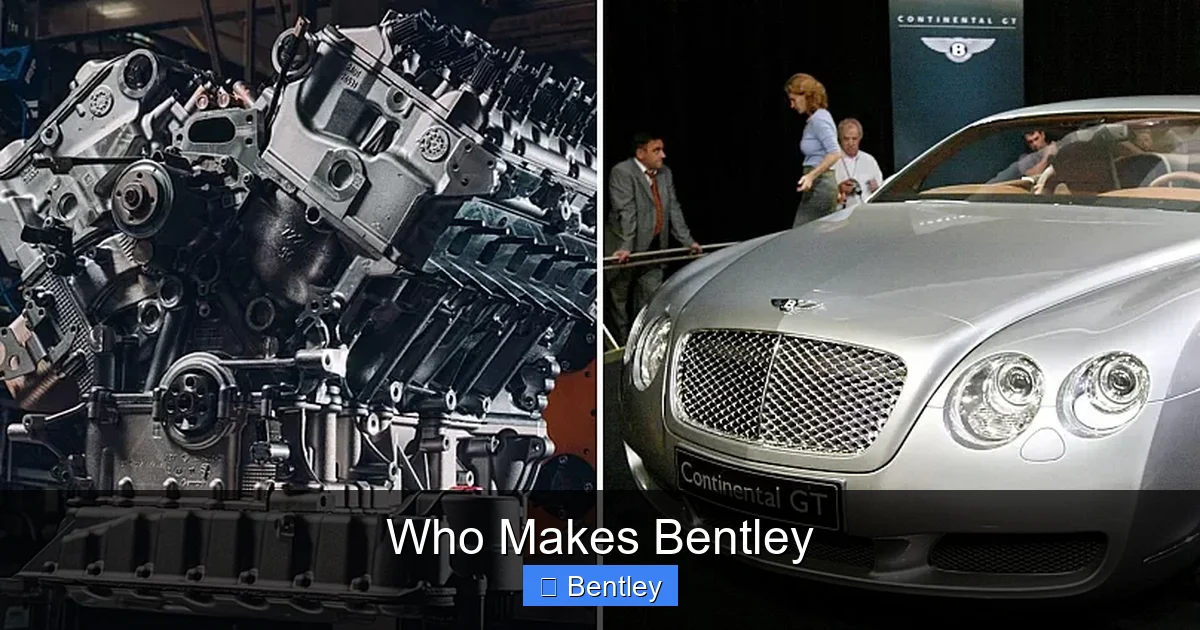
One of the most striking aspects of Bentley’s production process is the level of handcrafting involved. Each car can take up to 130 hours to build, with tasks like leather stitching, wood veneer matching, and paint finishing done by skilled artisans. For example, the interior of a Bentley Continental GT features over 10 square meters of leather, all hand-stitched by experts who undergo years of training.
Take the Mulliner division, Bentley’s personal commissioning arm. Mulliner offers bespoke options that allow customers to create truly one-of-a-kind vehicles. Want a dashboard inlaid with mother-of-pearl? A custom scent for the cabin? A monogrammed headliner? Mulliner can make it happen. This level of personalization is rare in the automotive world and reflects Bentley’s commitment to individuality.
Engineers and Designers Shaping the Future
Beyond craftsmanship, Bentley invests heavily in engineering and design. The brand’s engineering team focuses on performance, efficiency, and sustainability. The W12 engine, for instance, is a marvel of engineering—a 6.0-liter twin-turbocharged powerhouse that delivers over 600 horsepower while meeting strict emissions standards.
Designers, meanwhile, balance heritage with innovation. The current design language, led by Director of Design Andreas Mindt, emphasizes clean lines, muscular proportions, and a sense of motion even at rest. The 2023 Continental GT Speed, for example, features a bold front grille, LED matrix headlights, and a sleek fastback profile—all while paying homage to classic Bentley models.
Bentley also collaborates with external partners to stay ahead of trends. In 2022, the brand partnered with British audio company Naim to develop a premium sound system for the Bentayga. The result? A 1,920-watt, 20-speaker setup that delivers concert-hall-quality audio—perfect for long drives through the countryside.
Key Models and Their Legacy
The Continental GT: The Modern Icon
Introduced in 2003, the Continental GT revolutionized Bentley’s lineup. It was the first new model developed entirely under Volkswagen ownership and quickly became the brand’s best-selling vehicle. With its sleek coupe design, powerful W12 engine, and luxurious interior, the Continental GT appealed to a new generation of buyers—younger, more dynamic, and tech-savvy.
Over the years, the Continental GT has evolved through multiple generations. The latest version, launched in 2023, features a 650-horsepower engine, all-wheel steering, and a digital cockpit with a 12.3-inch touchscreen. It’s also available in a convertible (GTC) and a high-performance Speed variant. The Continental GT isn’t just a car—it’s a statement of success and style.
The Bentayga: Luxury Meets Utility
When Bentley launched the Bentayga in 2015, it entered the ultra-luxury SUV market—a segment once dominated by brands like Range Rover and Lamborghini. The Bentayga combined Bentley’s signature luxury with practicality, offering three rows of seating, advanced off-road capabilities, and a towing capacity of up to 3.5 tons.
The Bentayga has been a commercial success, accounting for nearly half of Bentley’s global sales. It’s available with a range of powertrains, including a 4.0-liter V8, a 6.0-liter W12, and a plug-in hybrid variant. The hybrid model, introduced in 2018, delivers 449 horsepower and can travel up to 31 miles on electric power alone—making it one of the most efficient luxury SUVs on the market.
The Flying Spur: The Ultimate Grand Tourer
The Flying Spur is Bentley’s flagship sedan, designed for those who want the comfort of a limousine with the performance of a sports car. First introduced in 2005, the Flying Spur has undergone several redesigns, with the latest model featuring a 626-horsepower W12 engine and a top speed of 207 mph.
What sets the Flying Spur apart is its attention to detail. The interior includes features like massaging seats, a refrigerated center console, and a rotating display that hides the infotainment screen when not in use. It’s also available in a hybrid version, offering a balance of power and efficiency. For executives and dignitaries, the Flying Spur is the ultimate expression of status and sophistication.
Bentley’s Global Impact and Market Position
Sales and Market Trends
Bentley has seen steady growth in recent years, despite economic challenges. In 2022, the company delivered 14,655 vehicles worldwide—a record high. The Bentayga was the top-selling model, followed by the Continental GT and Flying Spur. Key markets include the United States, China, and the United Kingdom, with emerging interest from the Middle East and Southeast Asia.
The brand’s success can be attributed to several factors: a strong product lineup, effective marketing, and a focus on sustainability. Bentley’s “Beyond100” strategy aims to make the company carbon-neutral by 2030, with all models offering hybrid or electric powertrains. This commitment resonates with environmentally conscious luxury buyers.
Competition in the Luxury Segment
Bentley operates in a highly competitive market. Its main rivals include Rolls-Royce, Mercedes-Maybach, and Aston Martin. Each brand has a distinct identity: Rolls-Royce emphasizes ultra-luxury and exclusivity, Maybach focuses on comfort and technology, and Aston Martin blends performance with British elegance.
What sets Bentley apart is its balance of performance and luxury. While Rolls-Royce cars are often chauffeur-driven, Bentley models are designed to be driven. The Continental GT, for example, offers a more engaging driving experience than the Rolls-Royce Wraith, with sharper handling and a more responsive engine. This makes Bentley a favorite among enthusiasts who want both speed and sophistication.
Future Outlook: Electric Dreams and Sustainable Luxury
The Road to Electrification
Bentley’s future is electric. Under the “Beyond100” plan, the company aims to launch its first fully electric vehicle by 2025 and transition to an all-electric lineup by 2030. This shift is driven by environmental concerns, regulatory pressures, and changing consumer preferences.
The first electric Bentley is expected to be a high-performance SUV, built on a dedicated electric platform. It will likely feature advanced battery technology, fast-charging capabilities, and a range of over 300 miles. Bentley has also announced plans to invest £2.5 billion in electrification and sustainability initiatives over the next decade.
Challenges and Opportunities
Transitioning to electric vehicles presents challenges. Luxury buyers expect performance, range, and charging convenience—all of which require significant investment. Bentley must also maintain its reputation for craftsmanship while adopting new manufacturing techniques.
However, the shift also offers opportunities. Electric powertrains can deliver instant torque and near-silent operation—perfect for a luxury brand. Bentley can also leverage its heritage to create a unique electric identity, blending tradition with innovation. For example, the brand could offer handcrafted interiors in electric models, ensuring that the soul of Bentley remains intact.
Conclusion: The Legacy of Bentley
So, who makes Bentley? The answer is both simple and complex. Bentley is made by a global team of engineers, designers, and craftsmen, guided by a century-old legacy and backed by the resources of the Volkswagen Group. It’s a brand that honors its racing roots while embracing the future of mobility.
From W.O. Bentley’s vision to the hand-stitched leather of today’s Continental GT, Bentley represents the pinnacle of British engineering and luxury. It’s not just about owning a car—it’s about being part of a story. Whether you’re driving through the Alps in a Flying Spur or cruising the coastline in a Bentayga, you’re experiencing more than performance and comfort. You’re experiencing history, craftsmanship, and the enduring spirit of innovation.
As Bentley moves toward an electric future, one thing remains certain: the brand will continue to set the standard for luxury, performance, and exclusivity. For those who appreciate the finer things in life, Bentley isn’t just a car—it’s a legacy on wheels.
Frequently Asked Questions
Who makes Bentley cars?
Bentley Motors is a British luxury car manufacturer owned by the Volkswagen Group since 1998. The company designs, engineers, and produces high-end vehicles at its headquarters in Crewe, England.
Is Bentley made by Rolls-Royce?
No, Bentley is not currently made by Rolls-Royce. While the two brands were historically linked and shared production facilities in the past, they have been separate entities since the 1990s, with Bentley owned by Volkswagen and Rolls-Royce by BMW.
Where are Bentley vehicles manufactured?
Bentley vehicles are primarily manufactured at the company’s headquarters in Crewe, England. This facility handles the entire production process, from design to final assembly, ensuring the brand’s signature craftsmanship and quality.
What company owns Bentley Motors?
Bentley Motors is owned by the Volkswagen Group, a German automotive giant. Volkswagen acquired Bentley in 1998, integrating it into its portfolio of luxury and performance brands.
Who makes Bentley engines?
Bentley engines are designed and built in-house by Bentley’s engineering team, often in collaboration with Volkswagen Group resources. Many models use high-performance W12 and V8 engines developed specifically for luxury and power.
Are Bentley cars handmade?
Yes, Bentley cars are largely hand-assembled by skilled craftspeople at the Crewe factory. While modern technology aids production, much of the interior and finishing work is done by hand, emphasizing the brand’s commitment to luxury and attention to detail.