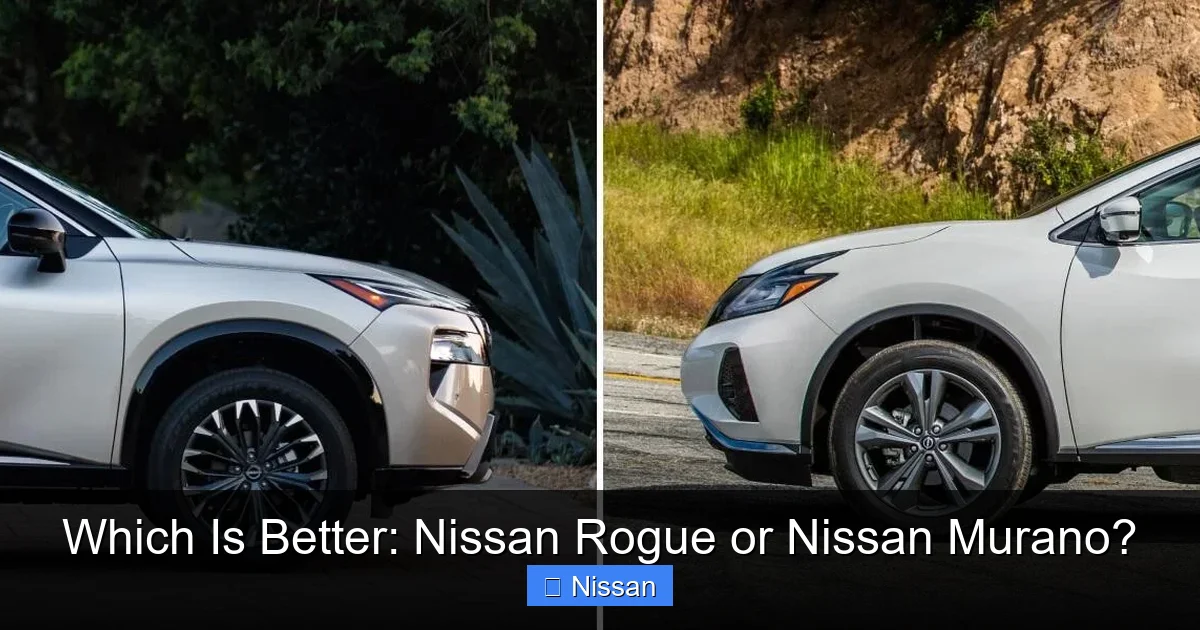
Which Is Better: Nissan Rogue or Nissan Murano?

Contents
- 1 Key Takeaways
- 2 📑 Table of Contents
- 3 Which Is Better: Nissan Rogue or Nissan Murano?
- 4 Size and Interior Space: Room to Grow
- 5 Performance and Driving Experience: Power vs. Efficiency
- 6 Technology and Infotainment: Staying Connected
- 7 Safety Ratings and Reliability: Peace of Mind
- 8 Price and Value: What You Get for Your Money
- 9 Which One Should You Choose?
- 10 Frequently Asked Questions



The Nissan Rogue and Nissan Murano both offer comfort and reliability, but they cater to different needs. The Rogue is ideal for city driving and families wanting efficiency, while the Murano suits those who want more power, space, and a premium feel.
Key Takeaways
- Size and Space: The Murano is larger with more cargo and passenger room, making it better for long trips or growing families.
- Fuel Efficiency: The Rogue wins in fuel economy, offering up to 35 mpg on the highway, ideal for daily commuting.
- Performance: The Murano has a stronger V6 engine, while the Rogue uses a fuel-efficient 4-cylinder with optional all-wheel drive.
- Technology and Safety: Both come with Nissan Safety Shield 360, but higher Murano trims offer more premium tech features.
- Price and Value: The Rogue is more affordable, starting around $28,000, while the Murano starts near $34,000.
- Driving Experience: The Rogue feels agile and easy to park; the Murano offers a smoother, more luxurious ride.
- Best For: Choose the Rogue for efficiency and budget-friendliness; pick the Murano for comfort and power.
📑 Table of Contents
- Which Is Better: Nissan Rogue or Nissan Murano?
- Size and Interior Space: Room to Grow
- Performance and Driving Experience: Power vs. Efficiency
- Technology and Infotainment: Staying Connected
- Safety Ratings and Reliability: Peace of Mind
- Price and Value: What You Get for Your Money
- Which One Should You Choose?
Which Is Better: Nissan Rogue or Nissan Murano?
Choosing the right SUV can feel like navigating a maze of options, especially when two models come from the same brand. If you’re eyeing Nissan, you’ve probably come across the Nissan Rogue and the Nissan Murano. Both are popular, reliable, and packed with features—but which one is truly better for you?
It’s not just about looks or brand loyalty. The real answer depends on your lifestyle, budget, and what you value most in a vehicle. Are you a city commuter who needs something fuel-efficient and easy to park? Or are you a road-trip lover who wants extra space, power, and a more refined ride? The Rogue and Murano each shine in different areas, and understanding those differences is key to making the right choice.
In this guide, we’ll break down every important aspect—from size and performance to tech, safety, and cost—so you can confidently decide which Nissan SUV fits your needs. Whether you’re buying new or used, this comparison will help you avoid buyer’s remorse and drive away happy.
Size and Interior Space: Room to Grow
One of the first things you’ll notice when comparing the Rogue and Murano is size. The Nissan Murano is the larger of the two, sitting in the midsize SUV category, while the Nissan Rogue is a compact crossover. This difference plays a big role in comfort, cargo capacity, and overall usability.
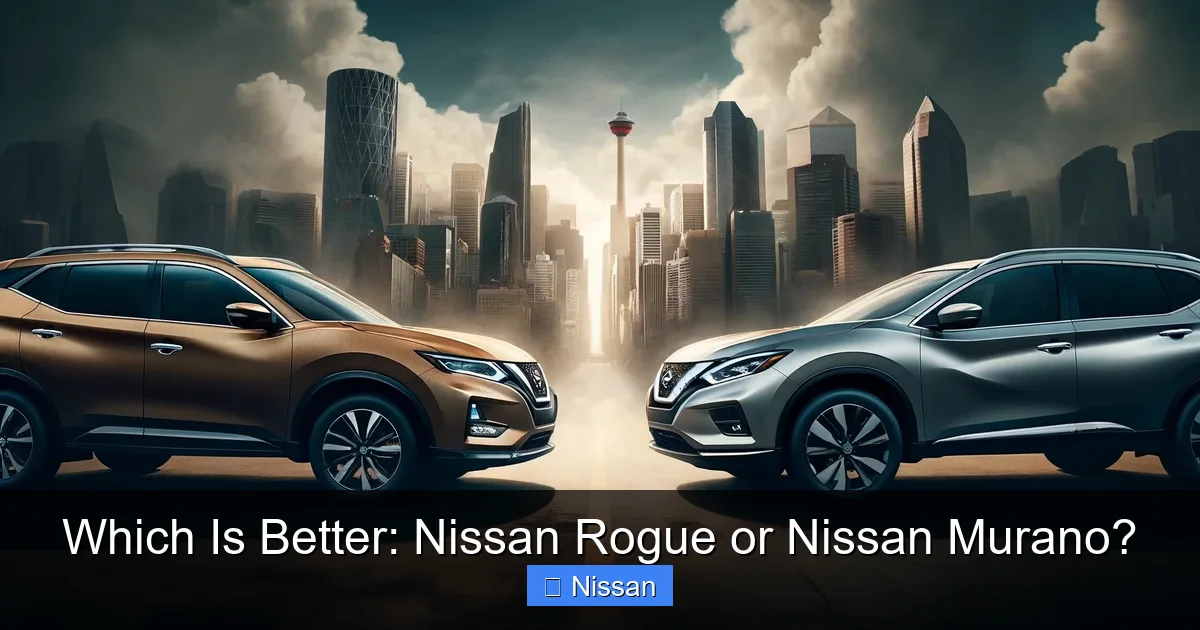
Visual guide about Which Is Better: Nissan Rogue or Nissan Murano?
Image source: ncitadvantage-com.cdn-convertus.com
Passenger Comfort and Seating
The Murano offers more legroom and shoulder room in both the front and rear seats. If you often carry passengers—especially adults—on long drives, the Murano’s extra space makes a noticeable difference. The seats are also more plush, with available leather upholstery and heated front and rear seats on higher trims.
The Rogue, while smaller, still provides comfortable seating for five. It’s perfectly adequate for most families, but taller passengers might feel a bit cramped in the back. That said, the Rogue’s cabin is well-designed, with smart storage compartments and user-friendly controls.
Cargo Capacity: Trunk Space Matters
When it comes to hauling gear, the Murano pulls ahead. With the rear seats up, the Murano offers about 39.6 cubic feet of cargo space. Fold the seats down, and you get up to 67 cubic feet. That’s enough room for luggage, camping equipment, or even a small couch.
The Rogue isn’t far behind, but it’s still smaller. It provides 36.5 cubic feet behind the second row and 70 cubic feet with the seats folded. While the total is slightly higher, the Murano’s wider opening and lower load floor make loading bulky items easier.
For example, if you’re a weekend warrior who loves outdoor adventures—think kayaks, coolers, and folding chairs—the Murano’s extra width and ease of access give it an edge. But if you mostly need space for groceries, strollers, or weekend bags, the Rogue handles it just fine.
Interior Design and Materials
The Murano’s interior feels more upscale. Higher trims feature soft-touch materials, woodgrain accents, and ambient lighting. It’s designed to compete with luxury brands, offering a quiet, refined cabin that makes long drives more enjoyable.
The Rogue’s interior is practical and modern, with clean lines and intuitive tech placement. While it doesn’t have the same premium feel as the Murano, it’s still well-built and durable. The available panoramic sunroof and dual-zone climate control add comfort without breaking the bank.
In short, if you prioritize space and a more luxurious cabin, the Murano is the clear winner. But if you’re okay with a cozier ride and want to save money, the Rogue delivers solid value.
Performance and Driving Experience: Power vs. Efficiency
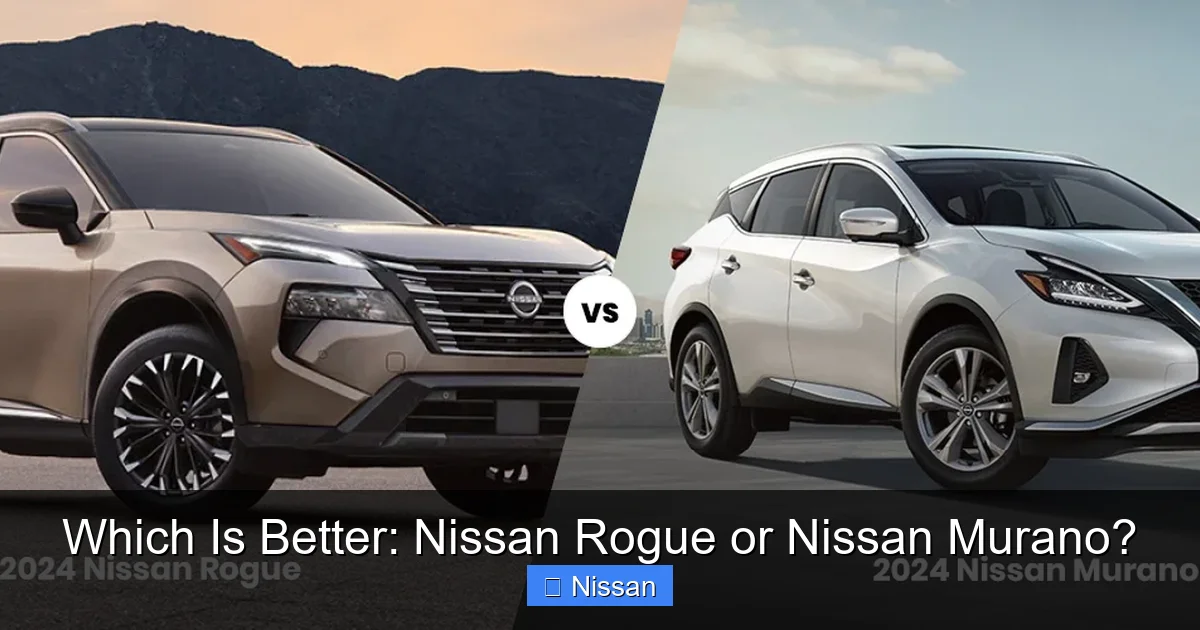
Under the hood, the Rogue and Murano take different approaches. The Rogue focuses on fuel efficiency and smooth handling, while the Murano emphasizes power and a more commanding driving experience.
Visual guide about Which Is Better: Nissan Rogue or Nissan Murano?
Image source: dealerinspire-image-library-prod.s3.us-east-1.amazonaws.com
Engine and Power Output
The Nissan Rogue comes with a 1.5-liter turbocharged 3-cylinder engine that produces 201 horsepower and 225 lb-ft of torque. It’s paired with a continuously variable transmission (CVT) that prioritizes smoothness over sportiness. While it’s not the most thrilling engine, it’s responsive enough for city driving and highway merging.
The Nissan Murano, on the other hand, uses a 3.5-liter V6 engine that delivers 260 horsepower and 240 lb-ft of torque. This engine gives the Murano a stronger pull, especially when accelerating from a stop or passing on the highway. It also comes with a CVT, but it’s tuned to feel more like a traditional automatic.
For example, if you live in a hilly area or frequently tow small trailers, the Murano’s extra power makes a big difference. The Rogue can handle light towing (up to 1,500 pounds), but the Murano can manage up to 1,500 pounds as well—though its stronger engine makes it feel more capable.
Fuel Economy: Saving at the Pump
Here’s where the Rogue shines. Thanks to its smaller, turbocharged engine, the Rogue achieves impressive fuel efficiency. The front-wheel-drive model gets up to 27 mpg in the city and 35 mpg on the highway. Even with all-wheel drive, it still manages 26/33 mpg.
The Murano, with its larger V6, is less efficient. It averages around 20 mpg in the city and 28 mpg on the highway. That’s still decent for a midsize SUV, but it’s noticeably lower than the Rogue. If you drive a lot—say, 15,000 miles a year—the difference in fuel costs can add up quickly.
Let’s do the math: At $3.50 per gallon and 15,000 miles driven annually, the Rogue (FWD) would cost about $1,500 in fuel. The Murano would cost around $1,875. That’s a $375 difference per year—money that could go toward insurance, maintenance, or even a vacation.
Handling and Ride Quality
The Rogue feels nimble and easy to maneuver, especially in tight city streets or crowded parking lots. Its lighter weight and compact size make it a great choice for urban drivers. The suspension is tuned for comfort, absorbing bumps well without feeling floaty.
The Murano offers a smoother, more planted ride. It feels more substantial on the road, with better noise insulation and a quieter cabin. The steering is a bit heavier, which some drivers prefer for highway stability. If you spend a lot of time on the road, the Murano’s ride quality can reduce fatigue.
Both models offer optional all-wheel drive, which improves traction in rain, snow, or light off-road conditions. However, neither is designed for serious off-roading. They’re both best suited for paved roads and light gravel.
In summary, the Rogue wins for efficiency and agility, while the Murano delivers more power and a more refined ride. Your choice depends on how you use your vehicle most.
Technology and Infotainment: Staying Connected
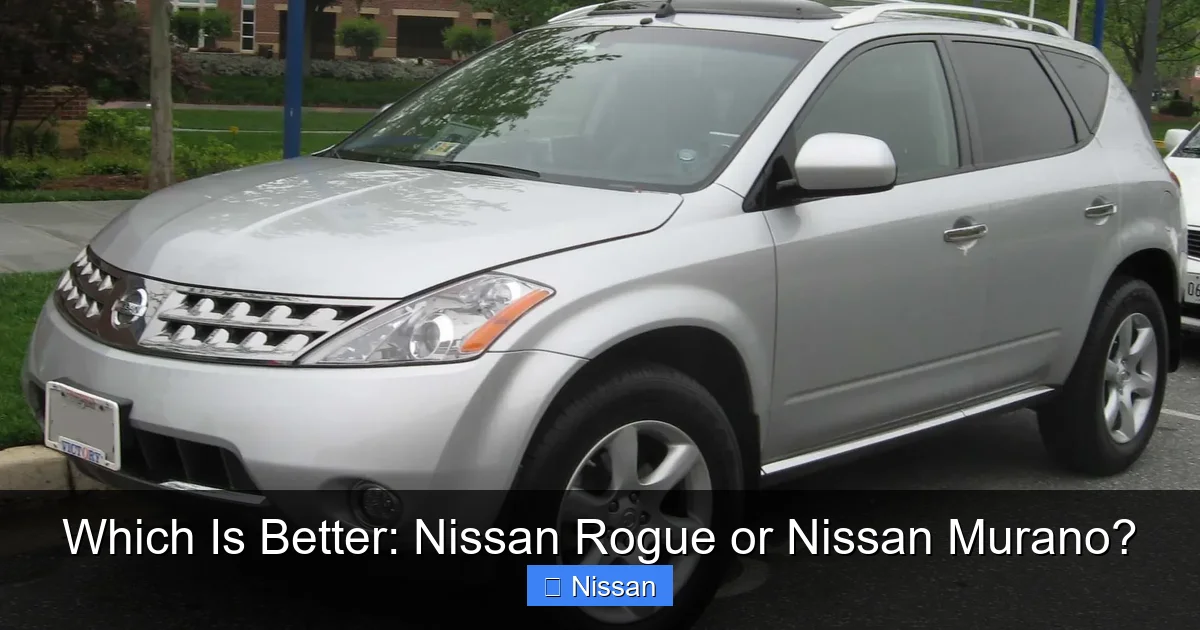
Modern drivers expect more than just a reliable engine—they want seamless tech integration. Both the Rogue and Murano come well-equipped, but there are differences in screen size, connectivity, and available features.
Visual guide about Which Is Better: Nissan Rogue or Nissan Murano?
Image source: betterparts.org
Infotainment Systems
The Rogue comes standard with an 8-inch touchscreen, Apple CarPlay, Android Auto, and a six-speaker audio system. Higher trims add navigation, a premium Bose sound system, and a 9-inch display. The interface is intuitive, with large icons and quick response times.
The Murano also starts with an 8-inch screen and includes Apple CarPlay and Android Auto. But on higher trims, it upgrades to a 9-inch display with built-in navigation and a 13-speaker Bose audio system. The graphics are sharper, and the system feels more premium overall.
For example, if you’re someone who relies on GPS frequently—say, for work or travel—the Murano’s larger screen and clearer maps can make navigation easier. But if you mostly use your phone for directions via CarPlay or Android Auto, the Rogue’s system is more than sufficient.
Driver Assistance and Convenience Features
Both SUVs come with Nissan Safety Shield 360, a suite of advanced driver aids that includes automatic emergency braking, blind-spot warning, rear cross-traffic alert, lane departure warning, and high beam assist. These features help prevent accidents and reduce driver stress.
The Rogue adds available ProPILOT Assist, which combines adaptive cruise control and lane centering for semi-autonomous highway driving. It’s great for long commutes or traffic jams, keeping the car centered and maintaining a safe distance from the vehicle ahead.
The Murano also offers ProPILOT Assist on higher trims, along with additional features like a 360-degree camera, traffic sign recognition, and rear automatic braking. These extras enhance safety and convenience, especially in tight parking situations.
Connectivity and Charging
Both models include USB ports, Bluetooth, and available wireless charging. The Rogue offers up to four USB ports (two in front, two in back), while the Murano has similar connectivity but with more premium finishes around the ports and controls.
If you have a family with multiple devices, the Rogue’s rear USB ports are a nice touch. But if you want a more luxurious tech experience—think ambient lighting, upgraded materials, and a quieter cabin—the Murano delivers.
Overall, the tech gap isn’t huge, but the Murano offers more premium options. The Rogue keeps things simple and functional, which is perfect for buyers who want reliability without the frills.
Safety Ratings and Reliability: Peace of Mind
Safety is a top priority for most SUV buyers, and both the Rogue and Murano perform well in this area. They’ve earned high marks from major safety organizations and come with strong warranties.
Crash Test Ratings
The Nissan Rogue received a 5-star overall safety rating from the National Highway Traffic Safety Administration (NHTSA). It also earned a “Top Safety Pick” award from the Insurance Institute for Highway Safety (IIHS), with “Good” ratings in all crash tests and superior front crash prevention.
The Nissan Murano also earned a 5-star NHTSA rating and a “Top Safety Pick” from the IIHS. It scored “Good” in most categories, though its headlights were rated “Acceptable” on some trims. Still, it’s one of the safest midsize SUVs on the market.
Both models perform well in real-world scenarios, thanks to their robust structures and advanced safety tech. Whether you’re driving in heavy traffic or on a quiet country road, these SUVs are designed to protect you and your passengers.
Reliability and Long-Term Value
Nissan has improved its reliability in recent years, and both the Rogue and Murano benefit from this. According to J.D. Power, the Rogue scores above average in dependability, while the Murano holds its own in the midsize SUV segment.
The Rogue’s simpler engine and proven CVT contribute to its strong reliability record. It’s also cheaper to maintain, with lower repair costs and better fuel economy. If you plan to keep your vehicle for 10+ years, the Rogue is a smart long-term investment.
The Murano, while reliable, has a more complex V6 engine that may require more maintenance over time. However, Nissan’s 5-year/60,000-mile basic warranty and 10-year/100,000-mile powertrain warranty provide solid coverage for both models.
In terms of resale value, the Rogue tends to hold its value better due to its popularity and lower depreciation. The Murano depreciates faster, but its premium features can attract buyers in the used market.
For peace of mind, both are excellent choices—but the Rogue edges ahead in long-term affordability and reliability.
Price and Value: What You Get for Your Money
Let’s talk dollars and cents. The Rogue and Murano are priced differently, and that affects what you get—and what you give up.
Starting Prices
The Nissan Rogue starts at around $28,000 for the base S trim. The mid-level SV trim is about $30,500, and the top SL trim reaches $36,000. All-wheel drive adds roughly $1,500.
The Nissan Murano starts at approximately $34,000 for the base S trim. The SV trim is around $37,000, and the Platinum trim tops out near $43,000. All-wheel drive is standard on most trims.
That’s a $6,000 difference at the base level—enough to cover a year of insurance or several months of car payments.
What You Get for the Price
The Rogue offers excellent value for budget-conscious buyers. Even the base model includes modern safety features, a user-friendly infotainment system, and decent fuel economy. Upgrading to the SV or SL trim adds comfort and tech without a huge jump in price.
The Murano, while more expensive, delivers a more premium experience. You get a stronger engine, a quieter cabin, more space, and upscale materials. It’s designed to compete with luxury brands like the Honda Passport or Toyota Highlander.
For example, if you’re comparing the Rogue SL AWD ($37,500) to the Murano SV AWD ($38,500), the price gap narrows. But the Murano still offers more power, better sound insulation, and a more refined ride.
Financing and Incentives
Nissan often offers competitive financing deals, especially on the Rogue. You might find 0.9% APR for 36 months or cashback offers. The Murano also sees incentives, but they’re usually smaller due to its higher starting price.
If you’re leasing, the Rogue typically has lower monthly payments. But the Murano’s higher residual value can make it a better long-term lease option.
In the end, the Rogue wins on affordability, while the Murano offers more luxury for the price. Your budget will likely be the deciding factor.
Which One Should You Choose?
So, which is better: the Nissan Rogue or the Nissan Murano? The answer isn’t one-size-fits-all. It depends on your priorities.
If you’re a daily commuter, a small family, or someone who values fuel efficiency and low running costs, the Nissan Rogue is the better choice. It’s practical, reliable, and packed with features for the price. You’ll save money at the pump and enjoy a smooth, easy-to-drive SUV that handles city life with ease.
But if you want more space, power, and a premium feel—especially for long trips or growing families—the Nissan Murano is worth the extra cost. It offers a more luxurious ride, stronger performance, and a quieter cabin. It’s ideal for those who want a bit more comfort and don’t mind paying for it.
Ultimately, both are excellent SUVs with strong safety records, modern tech, and Nissan’s reputation for reliability. Take a test drive in both, compare your must-have features, and let your lifestyle guide your decision.
Frequently Asked Questions
Which SUV is more fuel-efficient: Rogue or Murano?
The Nissan Rogue is significantly more fuel-efficient, achieving up to 35 mpg on the highway, while the Murano averages 28 mpg. The Rogue’s smaller turbocharged engine makes it the better choice for saving on gas.
Does the Nissan Murano have more cargo space than the Rogue?
Yes, the Murano offers slightly more cargo space with the rear seats up (39.6 vs. 36.5 cubic feet), and its wider opening makes loading easier. However, both SUVs provide ample room for most needs.
Can the Nissan Rogue or Murano tow a trailer?
Both can tow up to 1,500 pounds when properly equipped. The Murano’s stronger V6 engine makes towing feel easier, but neither is designed for heavy trailers or boats.
Which model has better safety ratings?
Both the Rogue and Murano have earned 5-star NHTSA ratings and IIHS Top Safety Pick awards. They come standard with Nissan Safety Shield 360, making them equally safe choices.
Is the Nissan Murano worth the higher price?
If you value a more powerful engine, extra space, and a premium interior, the Murano is worth the cost. But if you prioritize affordability and fuel economy, the Rogue offers better value.
Do both SUVs offer all-wheel drive?
Yes, both the Rogue and Murano offer optional all-wheel drive, which improves traction in wet or snowy conditions. AWD is standard on most Murano trims and available on all Rogue models.