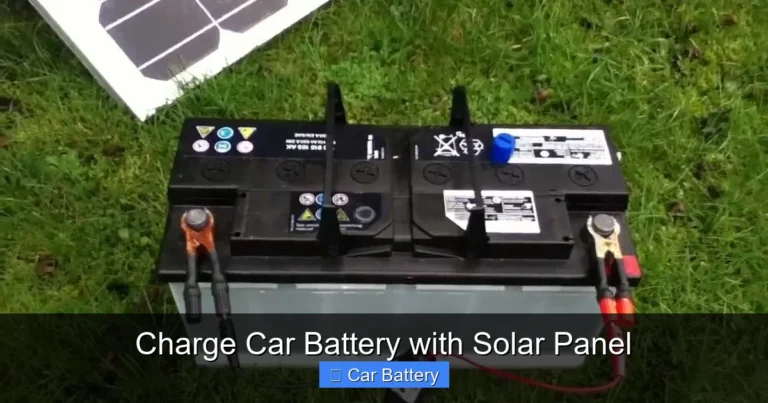
Where to Connect Ground Wire Car Battery
Properly connecting the ground wire to your car battery is essential for safe electrical function and vehicle performance. This guide explains exactly where to connect the ground wire, why it matters, and how to do it right—whether you’re replacing a battery, upgrading your system, or troubleshooting electrical issues.
In This Article
- 1 Key Takeaways
- 2 📑 Table of Contents
- 3 Understanding the Role of the Ground Wire in Your Car Battery
- 4 Where Exactly Should You Connect the Ground Wire?
- 5 Step-by-Step Guide: How to Connect the Ground Wire Safely
- 6 Signs of a Bad Ground Connection
- 7 Upgrading Your Ground Wire for Better Performance
- 8 Common Mistakes to Avoid When Connecting the Ground Wire
- 9 Maintenance Tips to Keep Your Ground Connection Strong
- 10 Conclusion
- 11 Frequently Asked Questions
- 11.1 Can I connect the ground wire to any metal part of the car?
- 11.2 What happens if I don’t connect the ground wire?
- 11.3 How do I know if my ground wire is bad?
- 11.4 Can I use a smaller gauge wire for the ground?
- 11.5 Do I need to disconnect the battery when connecting the ground wire?
- 11.6 Is it okay to have multiple ground wires?
Key Takeaways
- Ground wire connects the negative terminal to the chassis: The ground wire links the battery’s negative terminal to the car’s metal frame or engine block, completing the electrical circuit.
- Use a clean, rust-free mounting point: Always attach the ground wire to a bare metal surface free of paint, grease, or corrosion to ensure solid conductivity.
- Chassis or engine block are ideal locations: Common grounding points include the engine block, transmission housing, or a dedicated grounding bolt on the chassis near the battery.
- Avoid grounding to plastic or painted surfaces: These materials are insulators and will prevent proper current flow, leading to electrical problems.
- Check and tighten connections regularly: Loose or corroded ground wires are a leading cause of starting issues and electrical malfunctions.
- Upgrade ground wires for high-performance systems: Vehicles with aftermarket audio, lighting, or ignition systems may benefit from thicker or additional ground wires.
- Safety first—always disconnect the negative terminal first: When working on the battery, remove the negative cable first to prevent short circuits or sparks.
📑 Table of Contents
- Understanding the Role of the Ground Wire in Your Car Battery
- Where Exactly Should You Connect the Ground Wire?
- Step-by-Step Guide: How to Connect the Ground Wire Safely
- Signs of a Bad Ground Connection
- Upgrading Your Ground Wire for Better Performance
- Common Mistakes to Avoid When Connecting the Ground Wire
- Maintenance Tips to Keep Your Ground Connection Strong
- Conclusion
Understanding the Role of the Ground Wire in Your Car Battery
When it comes to your car’s electrical system, the ground wire plays a quiet but crucial role. You might not see it often, but without a properly connected ground wire, your vehicle simply won’t run. Think of it as the return path for electrical current—just like water needs a pipe to flow back to its source, electricity needs a path to return to the battery.
The ground wire connects the negative terminal of your car battery to the vehicle’s chassis or engine block. This creates a complete circuit, allowing current to flow from the battery, through the electrical components (like the starter, lights, or radio), and back to the battery via the metal frame. Without this return path, the circuit is broken, and nothing works.
Many people assume that because the battery has two terminals—positive and negative—the negative side is just “grounded” automatically. But that’s not quite right. The negative terminal must be physically connected to the car’s metal structure using a dedicated ground wire. This wire is usually thick, black, and bolted directly to the engine or frame. It’s not optional—it’s essential.
Understanding this basic principle helps you appreciate why grounding matters. A poor or missing ground connection can cause all sorts of problems: dim lights, slow cranking, erratic sensor readings, or even a completely dead vehicle. In fact, electrical issues are often traced back to a faulty ground rather than a bad battery or alternator.
So, whether you’re installing a new battery, troubleshooting a no-start condition, or upgrading your car’s electrical system, knowing where to connect the ground wire is step one. Let’s dive into the specifics.
Where Exactly Should You Connect the Ground Wire?
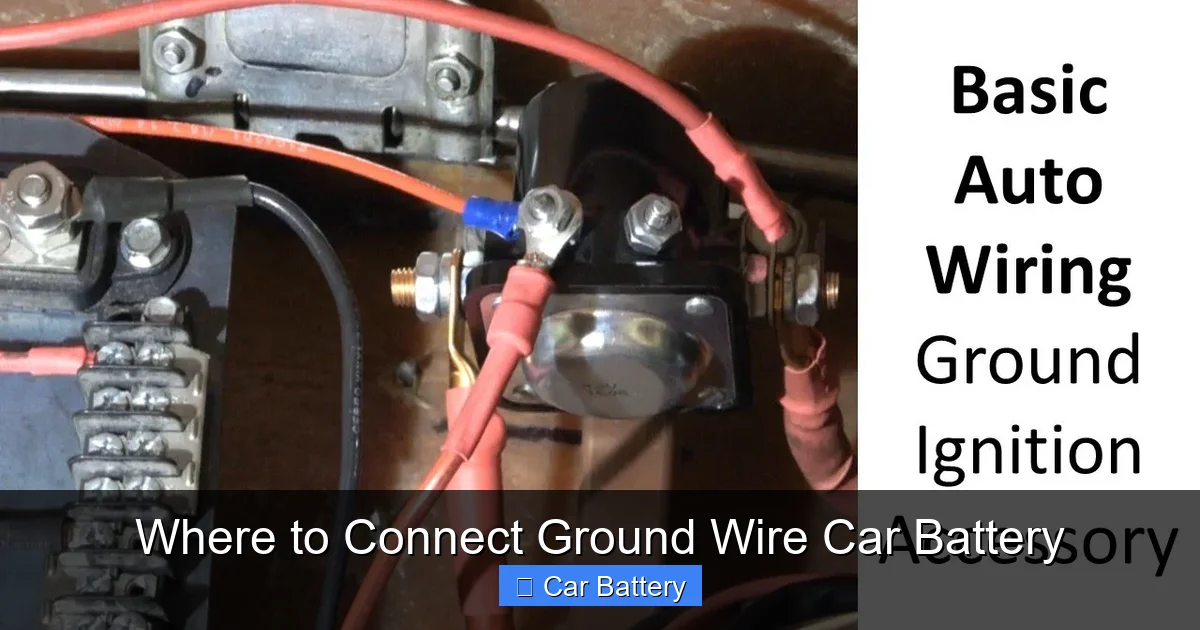
Visual guide about Where to Connect Ground Wire Car Battery
Image source: carnewsbox.com
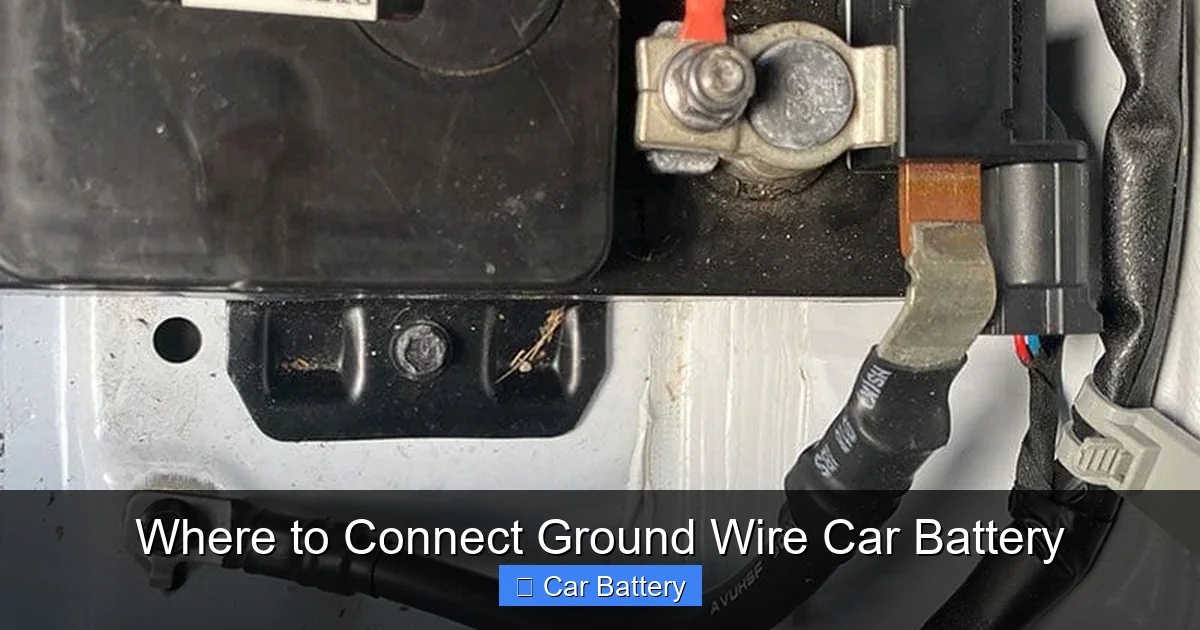
Now that you know the ground wire is vital, the next question is: where do you actually attach it? The short answer is: to a clean, solid metal part of the vehicle’s chassis or engine. But let’s break that down.
The most common and recommended location is the engine block. Most cars come from the factory with a thick ground cable running from the negative battery terminal directly to a bolt on the engine. This makes sense because the engine is a large, grounded metal component that’s electrically connected to the chassis through engine mounts and other cables.
Another popular spot is the transmission housing, especially in vehicles where the engine and transmission are tightly integrated. Some cars also have a dedicated grounding point on the chassis near the battery—often marked with a grounding symbol or labeled in the owner’s manual.
You might also see smaller ground wires connecting components like the alternator, starter, or intake manifold to the chassis. These are supplemental grounds that ensure high-current devices have a solid return path.
But here’s the key: the connection point must be bare metal. That means no paint, no rust, no grease. If the bolt is painted over or covered in corrosion, the electrical connection will be weak or nonexistent. Always clean the surface with sandpaper or a wire brush before attaching the ground wire.
For example, if you’re replacing a battery and notice the ground cable is loose or corroded, don’t just tighten it—clean the bolt and the surrounding area. Use a small wire brush to scrub away any oxidation, then reattach the cable securely. This simple step can solve a surprising number of electrical issues.
Common Grounding Points by Vehicle Type
Different vehicles may have slightly different grounding setups, but the principles remain the same. Here’s a quick breakdown:
– **Front-engine, rear-wheel-drive cars:** Ground wire typically runs from the negative terminal to a bolt on the engine block or transmission bell housing.
– **Front-wheel-drive cars:** Often grounded to the engine block or a chassis point near the firewall.
– **Trucks and SUVs:** May have multiple ground points due to larger electrical demands. Look for grounding straps between the engine and chassis, and from the body to the frame.
– **Older vehicles:** Some classic cars use a “body ground” system, where the ground wire connects to the firewall or inner fender. These may need extra attention due to aging components.
Always consult your vehicle’s service manual if you’re unsure. It will show the exact grounding points and torque specifications for the bolts.
Step-by-Step Guide: How to Connect the Ground Wire Safely
Visual guide about Where to Connect Ground Wire Car Battery
Image source: car-horizon.com
Connecting the ground wire might seem straightforward, but doing it wrong can lead to safety hazards or electrical problems. Follow these steps to ensure a safe and effective installation.
Step 1: Safety First—Disconnect the Battery
Before touching anything, disconnect the battery. Always remove the negative terminal first. This prevents accidental short circuits if your tool touches both terminals or a grounded metal part. Use a wrench that fits the terminal nut snugly—don’t force it.
Once the negative cable is off, you can safely work on the grounding point. If you’re replacing the ground wire entirely, now is the time to remove the old one.
Step 2: Locate the Grounding Point
Look for the existing ground cable. It’s usually a thick black wire bolted to the engine or chassis. If you’re installing a new one, choose a solid metal surface near the battery. Avoid plastic covers, rubber mounts, or painted areas.
If the original grounding point is damaged or inaccessible, you can drill a new hole—but only if necessary. Use a drill bit slightly smaller than the bolt size, and tap the hole for a secure fit. Always seal the area with anti-corrosion spray to prevent rust.
Step 3: Clean the Connection Surface
This step is critical. Use sandpaper, a wire brush, or a scraper to remove any paint, rust, or debris from the bolt and the surrounding metal. The goal is to expose shiny, bare metal. A poor connection here can cause voltage drops and overheating.
For extra protection, apply a thin layer of dielectric grease after cleaning. This prevents future corrosion without interfering with conductivity.
Step 4: Attach the Ground Wire
Slide the ring terminal of the ground wire over the bolt. Make sure it sits flat and secure. Tighten the bolt to the manufacturer’s torque specification—usually between 8 and 15 ft-lbs. Over-tightening can strip the threads; under-tightening can lead to a loose connection.
If you’re using a new ground wire, ensure it’s the correct gauge. Most cars use 4-gauge or 6-gauge wire for the main ground. For high-performance systems, consider upgrading to 2-gauge or even 0-gauge wire.
Step 5: Reconnect the Battery
Once the ground wire is secure, reconnect the negative terminal to the battery. Tighten it firmly, but don’t overtighten. Then reconnect the positive terminal.
Step 6: Test the System
Turn on the ignition and check that all electrical components work: lights, radio, dashboard indicators, and the starter. If everything powers up smoothly, you’ve done it right.
If you notice flickering lights or slow cranking, double-check the ground connection. A loose or dirty ground is often the culprit.
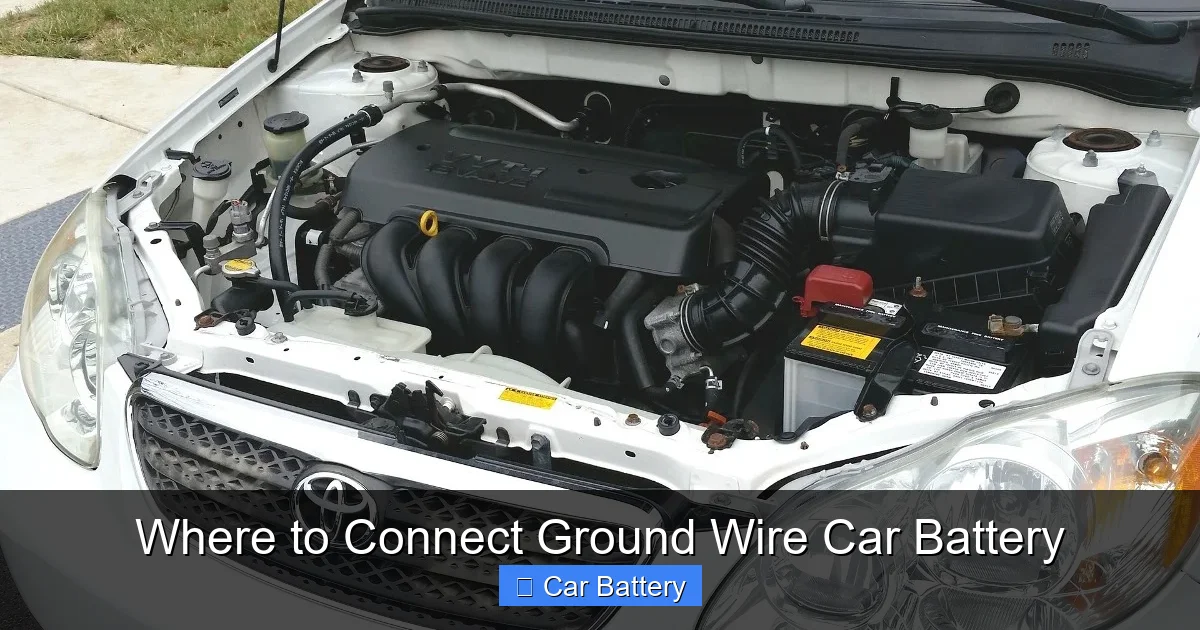
Signs of a Bad Ground Connection
Visual guide about Where to Connect Ground Wire Car Battery
Image source: car-horizon.com
Even if you’ve connected the ground wire correctly, problems can develop over time. Corrosion, vibration, and wear can weaken the connection. Here are common signs that your ground wire isn’t doing its job:
– **Dim or flickering lights:** Especially when you turn on the headlights or use the turn signal.
– **Slow engine cranking:** The starter motor doesn’t get enough power to turn the engine over quickly.
– **Electrical components acting erratically:** Radio resets, dashboard warning lights flicker, or power windows move slowly.
– **Battery drains overnight:** A poor ground can cause parasitic drain, even when the car is off.
– **Burning smell near the battery:** This could indicate overheating due to high resistance in the ground circuit.
If you notice any of these symptoms, inspect the ground wire and its connection point. Look for corrosion, loose bolts, or frayed wires. Cleaning and tightening the connection often solves the problem.
In some cases, the ground wire itself may be damaged. Check for cracks, brittleness, or exposed copper. If the wire is compromised, replace it with a new one of the same or larger gauge.
DIY Ground Wire Inspection Tips
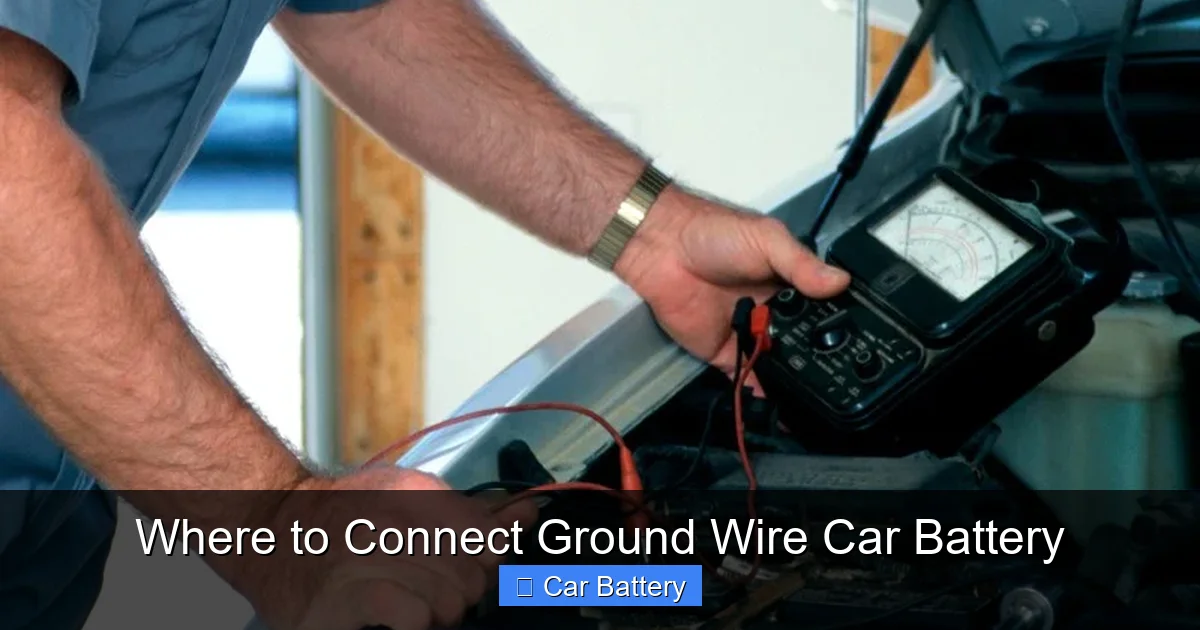
– Use a multimeter to test continuity between the negative terminal and the grounding point. There should be little to no resistance.
– Wiggle the ground wire while the car is running. If lights flicker or the engine stumbles, the connection is loose.
– Inspect all grounding points, not just the main one. Components like the alternator and starter also need solid grounds.
Upgrading Your Ground Wire for Better Performance
If you’ve added aftermarket electronics—like a powerful sound system, LED light bars, or a high-output alternator—your stock ground wire might not be enough. Upgrading your grounding system can improve performance and prevent electrical issues.
Why Upgrade?
Stock ground wires are designed for factory electrical loads. When you add high-draw components, the increased current needs a lower-resistance path. A thicker ground wire reduces resistance, minimizes voltage drop, and ensures consistent power delivery.
For example, a car with a 2000-watt amplifier can draw over 150 amps of current. If the ground wire is too thin, it acts like a bottleneck, causing the amplifier to underperform or overheat.
How to Upgrade
Start by replacing the main ground wire from the battery to the engine or chassis with a heavier gauge—such as 2-gauge or 0-gauge. Use high-quality copper wire with durable insulation.
Next, add supplemental ground wires (also called “ground straps”) between key components:
– Engine to chassis
– Alternator to battery negative
– Amplifier to chassis
– Head unit to chassis
These additional paths ensure that high-current devices have a direct return route to the battery.
Professional vs. DIY Installation
While upgrading ground wires is a DIY-friendly project, it requires careful planning. Route wires away from moving parts, heat sources, and sharp edges. Use zip ties or loom to secure them.
If you’re unsure, consult a professional installer—especially for complex systems. A poorly installed ground can cause more harm than good.
Common Mistakes to Avoid When Connecting the Ground Wire
Even experienced DIYers can make mistakes when working with ground wires. Here are some common pitfalls and how to avoid them:
– **Grounding to painted or rusty metal:** This creates high resistance and poor conductivity. Always clean the surface to bare metal.
– **Using the wrong wire gauge:** A thin wire can overheat under high current. Match the wire size to the electrical load.
– **Loose connections:** Vibration can loosen bolts over time. Check and tighten ground connections regularly.
– **Grounding to plastic or rubber:** These materials don’t conduct electricity. Always use metal-to-metal contact.
– **Ignoring supplemental grounds:** High-performance systems need multiple ground points, not just one.
– **Reversing polarity:** Never connect the ground wire to the positive terminal. This can damage electronics and cause sparks.
Taking the time to do it right the first time saves headaches later.
Maintenance Tips to Keep Your Ground Connection Strong
A good ground connection doesn’t last forever. Regular maintenance ensures it stays reliable:
– **Inspect every 6 months:** Check the ground wire and bolt for corrosion, looseness, or damage.
– **Clean annually:** Use a wire brush and contact cleaner to remove buildup.
– **Apply dielectric grease:** This prevents moisture and oxidation.
– **Check after repairs:** If you’ve worked on the engine or electrical system, verify all grounds are secure.
– **Listen for symptoms:** If your car starts acting electrically “weird,” check the ground first.
A little prevention goes a long way.
Conclusion
Knowing where to connect the ground wire car battery is more than a technical detail—it’s a fundamental part of keeping your vehicle running safely and efficiently. The ground wire completes the electrical circuit, allowing power to flow from the battery to your car’s systems and back again. Without a solid connection, even a brand-new battery won’t help.
From the engine block to the chassis, the key is a clean, tight, metal-to-metal connection. Whether you’re replacing a battery, troubleshooting electrical issues, or upgrading your system, always prioritize proper grounding. Avoid common mistakes, inspect regularly, and don’t hesitate to upgrade when needed.
By following the steps and tips in this guide, you’ll ensure your car’s electrical system performs at its best. A well-grounded vehicle is a reliable vehicle—and that’s something every driver can appreciate.
Frequently Asked Questions
Can I connect the ground wire to any metal part of the car?
No, you should only connect the ground wire to a clean, unpainted metal surface on the chassis or engine block. Painted, rusted, or greasy surfaces won’t conduct electricity properly and can cause electrical issues.
What happens if I don’t connect the ground wire?
Without a ground wire, the electrical circuit is incomplete. Your car won’t start, lights won’t work, and electronic components may fail. The ground wire is essential for returning current to the battery.
How do I know if my ground wire is bad?
Signs include dim lights, slow cranking, flickering electronics, or a burning smell near the battery. Use a multimeter to test resistance—high resistance indicates a poor ground.
Can I use a smaller gauge wire for the ground?
No, using a wire that’s too thin can cause overheating and voltage drop. Match the wire gauge to the electrical load—typically 4 to 6 gauge for most cars, and heavier for high-performance systems.
Do I need to disconnect the battery when connecting the ground wire?
Yes, always disconnect the negative terminal first before working on the ground wire. This prevents short circuits, sparks, or damage to electrical components.
Is it okay to have multiple ground wires?
Yes, especially in vehicles with aftermarket electronics. Multiple ground wires (or ground straps) improve conductivity and reduce resistance, ensuring stable power delivery to all components.