Where Is the Vsc Button on a Lexus Es 350?

Contents
- 1 Key Takeaways
- 2 📑 Table of Contents
- 3 Understanding the VSC System in Your Lexus ES 350
- 4 Where Is the VSC Button on a Lexus ES 350?
- 5 How to Use the VSC Button: When and Why
- 6 Common Issues and Troubleshooting the VSC System
- 7 VSC vs. TRAC: Understanding the Difference
- 8 Model Year Variations and Design Changes
- 9 Safety Tips and Best Practices
- 10 Conclusion
- 11 Frequently Asked Questions



Locating the VSC button on a Lexus ES 350 is simple once you know where to look. This essential safety feature helps maintain traction and control, especially in slippery conditions. Understanding how and when to use it can enhance your driving confidence and safety.
Key Takeaways
- VSC stands for Vehicle Stability Control: It’s a critical safety system that helps prevent skidding and loss of control by automatically adjusting engine power and applying brakes to individual wheels.
- The VSC button is typically located on the dashboard or center console: In most Lexus ES 350 models (2007–2023), it’s found near the gear shifter or below the climate controls.
- You can temporarily disable VSC using the button: This is useful in situations like deep snow or mud, but it should be re-enabled for normal driving.
- The VSC light on the dashboard indicates system status: A flashing light means the system is actively working; a steady light may signal a malfunction.
- Disabling VSC also turns off TRAC (Traction Control): Both systems are linked, so turning off one affects the other.
- Always re-enable VSC after off-road or low-traction driving: Keeping it off increases the risk of losing vehicle control on wet or icy roads.
- Consult your owner’s manual for model-specific details: Slight variations exist between model years, so your manual is the most accurate guide.
📑 Table of Contents
- Understanding the VSC System in Your Lexus ES 350
- Where Is the VSC Button on a Lexus ES 350?
- How to Use the VSC Button: When and Why
- Common Issues and Troubleshooting the VSC System
- VSC vs. TRAC: Understanding the Difference
- Model Year Variations and Design Changes
- Safety Tips and Best Practices
- Conclusion
Understanding the VSC System in Your Lexus ES 350
If you’ve ever driven in rain, snow, or on a winding mountain road, you’ve likely benefited from your Lexus ES 350’s Vehicle Stability Control (VSC) system—even if you didn’t realize it. This advanced safety feature is designed to help keep your car stable and on course when traction is compromised. But what exactly is VSC, and why is it so important?
Vehicle Stability Control is an electronic system that works alongside your car’s anti-lock braking system (ABS) and traction control (TRAC). When sensors detect that your vehicle is starting to lose grip—such as when a wheel begins to slip or the car starts to understeer or oversteer—the VSC system automatically intervenes. It can reduce engine power and apply braking force to specific wheels to help bring the vehicle back in line with your intended direction.
Think of it like a co-pilot that steps in during moments of instability. For example, if you’re driving around a sharp corner on a wet road and the rear wheels start to slide outward, the VSC system will detect the loss of control and gently apply the brakes to the outer front wheel while reducing engine output. This helps prevent a spinout and keeps you safely on your path.
In the Lexus ES 350, the VSC system is standard across all model years from 2007 to the present. It’s part of Lexus’s commitment to safety and driver confidence, especially in a luxury sedan that’s often used for daily commuting, family travel, and long-distance driving. Whether you’re navigating city streets during a downpour or cruising on a foggy highway, VSC is quietly working in the background to keep you safe.
But while the system is automatic, there may be times when you need to interact with it directly—like when you want to temporarily disable it. That’s where the VSC button comes in. Knowing where it is and how to use it properly can make a big difference in your driving experience.
Where Is the VSC Button on a Lexus ES 350?
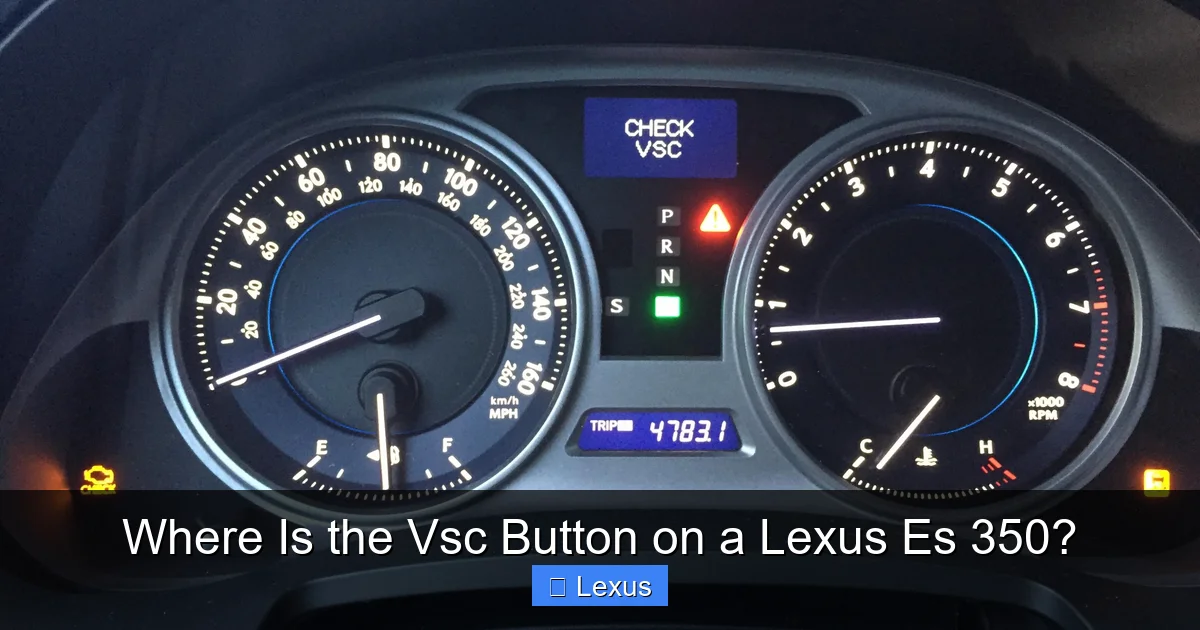
Visual guide about Where Is the Vsc Button on a Lexus Es 350?
Image source: clublexus.com
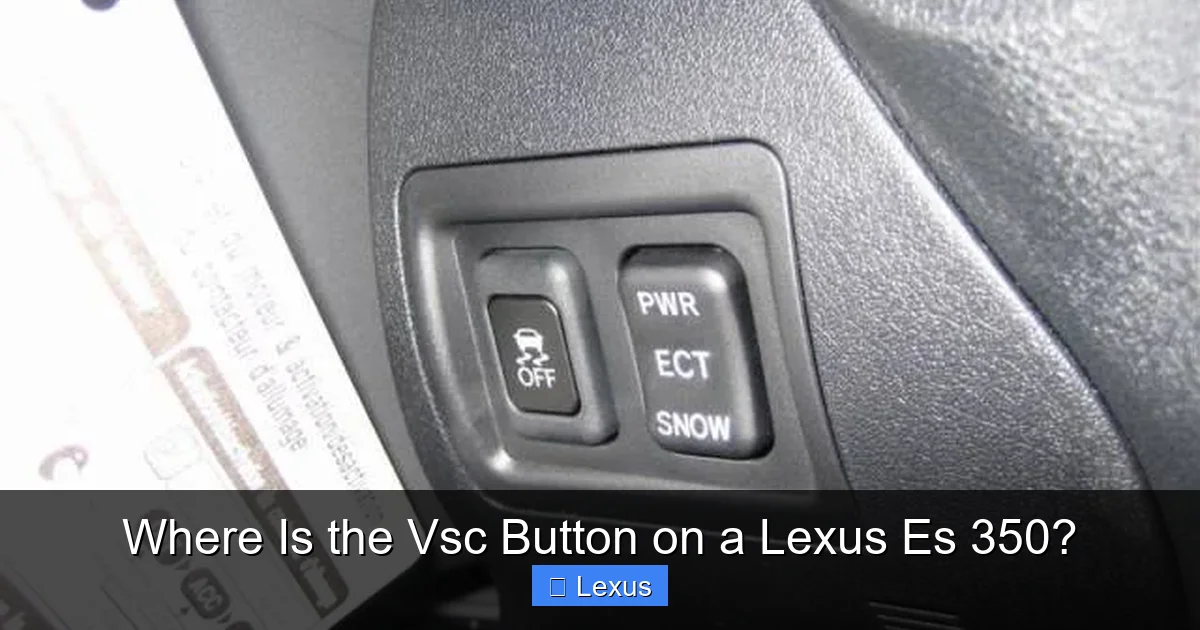
Now that you understand what VSC does, let’s answer the main question: Where is the VSC button on a Lexus ES 350?
The location of the VSC button can vary slightly depending on the model year, but in most Lexus ES 350 vehicles—especially those from 2007 to 2023—you’ll find it on the dashboard or center console area. It’s typically positioned within easy reach of the driver, often near the gear shifter or just below the climate control panel.
In many models, the button is labeled “VSC OFF” and may have a small icon resembling a car with squiggly lines underneath it, symbolizing skidding or loss of traction. The button is usually black or gray and blends in with the surrounding trim, so it’s not always immediately obvious—especially if you’re looking for it for the first time.
For example, in the 2013–2018 Lexus ES 350, the VSC button is commonly located on the lower left side of the center console, just above the floor mat and to the left of the steering wheel. It’s positioned near other vehicle control buttons, such as those for the heated seats or rear defroster. In newer models like the 2019–2023 ES 350, the button may be slightly repositioned due to updated interior designs, but it’s still typically found in the same general area.
If you’re having trouble finding it, try looking just below the climate controls or near the gear selector. Some drivers mistake the traction control (TRAC) button for the VSC button, but they’re actually the same switch—pressing it toggles both systems on or off.
A quick tip: If you press the button and see a warning light on your dashboard that says “VSC OFF” or shows a car with skid marks, that’s your confirmation that the system has been disabled. The light will usually appear in the instrument cluster near the speedometer.
How to Use the VSC Button: When and Why
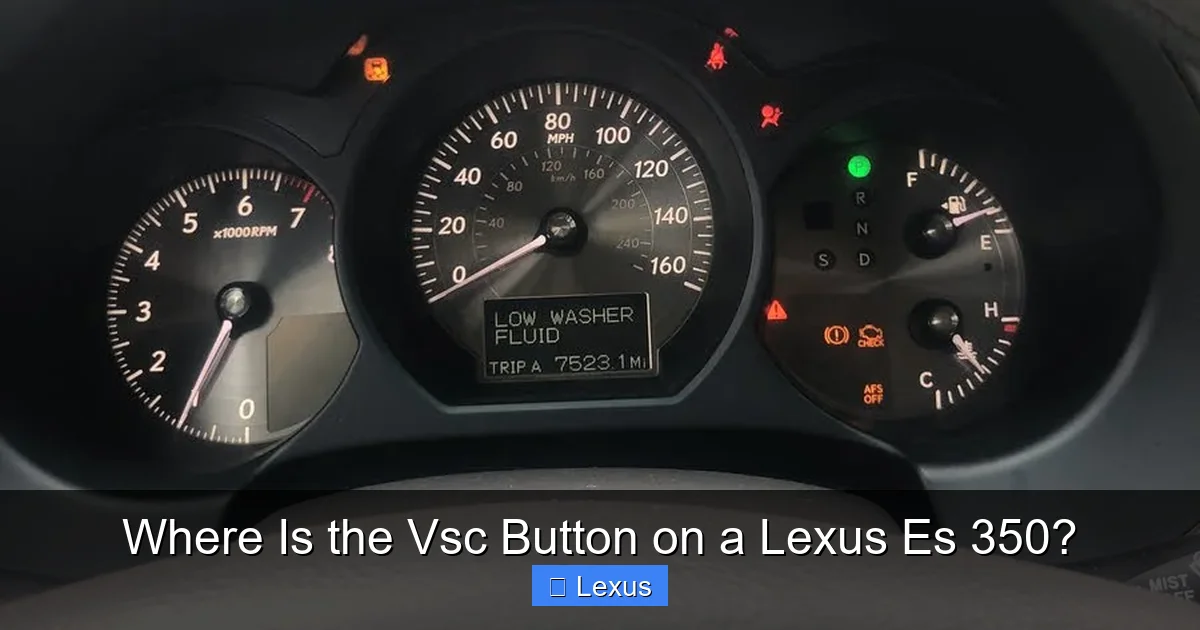
Visual guide about Where Is the Vsc Button on a Lexus Es 350?
Image source: static.cargurus.com
Now that you know where the VSC button is, the next question is: When should you use it?
In most everyday driving situations, you’ll want to keep the VSC system enabled. It’s designed to enhance safety, and disabling it unnecessarily can increase your risk of losing control, especially in adverse weather conditions.
However, there are specific scenarios where temporarily turning off VSC can be helpful. One common example is when your vehicle is stuck in deep snow, mud, or sand. In these situations, the VSC system may interpret wheel spin as a loss of control and reduce engine power or apply brakes, making it harder to get unstuck. By pressing the VSC OFF button, you allow the wheels to spin more freely, which can help you gain traction and move forward.
Another situation where you might disable VSC is during performance driving on a track or during off-road adventures (though the ES 350 is not an off-road vehicle, some drivers may take it on light trails). In these cases, drivers may prefer more direct control over the vehicle without electronic interventions.
To disable VSC, simply press and hold the VSC OFF button for a few seconds. You’ll usually hear a beep, and the “VSC OFF” light will illuminate on the dashboard. To re-enable the system, press the button again. It’s important to remember that turning off VSC also disables the traction control (TRAC) system, as they are interconnected.
Always re-enable VSC as soon as you’re back on normal roads. Driving with VSC off on wet, icy, or slippery surfaces significantly increases the risk of skidding or losing control. The system is there to protect you, so use it wisely.
Common Issues and Troubleshooting the VSC System
Visual guide about Where Is the Vsc Button on a Lexus Es 350?
Image source: clublexus.com
While the VSC system in the Lexus ES 350 is highly reliable, there are times when it may not function as expected. If you notice the VSC warning light staying on, flashing, or coming on unexpectedly, it could indicate a problem that needs attention.
One of the most common issues is a faulty wheel speed sensor. These sensors monitor how fast each wheel is spinning and send data to the VSC system. If one becomes dirty, damaged, or malfunctions, the system may not work properly, triggering a warning light.
Another potential cause is low tire pressure. Since the VSC system relies on consistent wheel speeds, uneven tire pressure can confuse the sensors and cause the system to activate unnecessarily or fail to engage when needed. Always check your tire pressure regularly, especially before long trips or in changing weather conditions.
Electrical issues, such as a weak battery or corroded wiring, can also affect the VSC system. If your car has recently had a dead battery or electrical work done, it’s worth having the system checked to ensure everything is functioning correctly.
In some cases, the VSC light may come on after driving through deep water or over rough terrain. This could be due to moisture or debris affecting the sensors. Drying the area and cleaning the sensors may resolve the issue.
If the VSC light remains on, it’s best to have your vehicle inspected by a certified Lexus technician. They can use diagnostic tools to read error codes and determine the exact cause of the problem. Ignoring a persistent VSC warning could compromise your safety and lead to more serious issues down the road.
VSC vs. TRAC: Understanding the Difference
Many drivers confuse VSC with traction control (TRAC), but while they’re related, they serve slightly different purposes.
Traction control focuses on preventing wheel spin during acceleration. If you press the gas pedal and one or more wheels start to slip—like when pulling away from a stop on a slick road—the TRAC system will reduce engine power or apply brakes to the spinning wheel to help regain grip.
Vehicle Stability Control, on the other hand, is more comprehensive. It monitors the vehicle’s direction and compares it to your steering input. If the car begins to slide or drift (understeer or oversteer), VSC steps in to correct the trajectory by selectively braking individual wheels and adjusting engine output.
In the Lexus ES 350, the VSC and TRAC systems are linked. Pressing the VSC OFF button disables both systems simultaneously. This is why you’ll often see “VSC OFF” and “TRAC OFF” lights appear together on the dashboard.
Understanding the difference helps you make informed decisions about when to disable these systems. For example, if you’re stuck in snow, turning off both VSC and TRAC can help you get moving. But once you’re back on clear roads, re-enabling them restores full safety functionality.
Model Year Variations and Design Changes
While the basic function of the VSC system remains consistent across Lexus ES 350 models, there are some design changes over the years that affect the button’s location and appearance.
In earlier models (2007–2012), the VSC button is often located on the lower dashboard, near the driver’s left knee. It’s a small, unmarked button that may require a bit of searching to find. Some drivers have reported that it’s easy to miss, especially if the interior is dark.
From 2013 to 2018, Lexus updated the interior design of the ES 350, moving the VSC button to a more centralized location on the console, often near the climate controls or gear shifter. This made it more accessible and easier to identify.
In the latest models (2019–2023), the button may be integrated into a cluster of other vehicle controls, sometimes with backlighting for better visibility at night. The labeling may also be more prominent, with clear “VSC OFF” text or icons.
Despite these changes, the function remains the same. Always refer to your owner’s manual for the most accurate information about your specific model year. The manual will include a diagram of the dashboard and console, making it easy to locate the VSC button.
Safety Tips and Best Practices
Using the VSC system correctly is about more than just knowing where the button is—it’s about understanding how to drive safely in all conditions.
First, always keep VSC enabled during normal driving. It’s one of the most effective safety features in your vehicle, and disabling it unnecessarily puts you at risk.
Second, if you do need to turn it off—such as when stuck in snow—remember to turn it back on as soon as you’re back on paved roads. Make it a habit to check the dashboard light after pressing the button to confirm the system is reactivated.
Third, maintain your vehicle regularly. Keep tires properly inflated, replace worn brake pads, and have sensors inspected during routine service. A well-maintained car is less likely to trigger false VSC warnings.
Finally, drive according to conditions. Even with VSC, speeding in the rain or taking corners too fast can overwhelm the system. Use VSC as a backup, not a substitute for safe driving habits.
Conclusion
The VSC button on your Lexus ES 350 is a small but powerful tool that gives you control over one of your car’s most important safety systems. While it’s designed to work automatically, knowing where it is and how to use it can make a big difference in challenging driving situations.
Whether you’re navigating a snowy driveway or simply want to understand your vehicle better, taking the time to learn about VSC empowers you to drive with confidence. Remember: the button is usually near the gear shifter or climate controls, pressing it disables both VSC and TRAC, and it should only be turned off when necessary.
By keeping VSC enabled during normal driving and using it wisely when needed, you’ll get the most out of your Lexus ES 350’s advanced safety technology. Stay safe, stay informed, and enjoy the smooth, confident ride that Lexus is known for.
Frequently Asked Questions
Where is the VSC button located on a 2015 Lexus ES 350?
The VSC button on a 2015 Lexus ES 350 is typically located on the lower left side of the center console, just above the floor mat and to the left of the steering wheel. It’s near other control buttons and may be labeled “VSC OFF.”
Can I drive with the VSC light on?
You can drive with the VSC light on, but it indicates a potential issue with the stability or traction control system. It’s best to have your vehicle inspected by a technician to ensure safety and prevent further problems.
Does turning off VSC improve fuel economy?
No, turning off VSC does not significantly improve fuel economy. The system only activates when needed, so disabling it won’t save fuel and may reduce safety in slippery conditions.
Why does my VSC light come on when I accelerate?
If the VSC light comes on during acceleration, it may be due to wheel slip detected by the traction control system. This is normal in low-traction conditions, but if it happens frequently, check tire pressure or have the sensors inspected.
Is it safe to disable VSC permanently?
No, it’s not safe to disable VSC permanently. The system helps prevent skidding and loss of control. Only disable it temporarily in specific situations like being stuck in snow, and re-enable it afterward.
How do I reset the VSC system in my Lexus ES 350?
To reset the VSC system, turn the ignition off and wait 30 seconds, then restart the vehicle. If the light remains on, there may be an underlying issue that requires professional diagnosis.