
Where Is the Oil Filter on a Toyota Tacoma?

Knowing where the oil filter is on your Toyota Tacoma is essential for routine maintenance and engine longevity. This guide breaks down the exact location for every major model year and engine, plus step-by-step replacement tips to save time and money.
If you’re a Toyota Tacoma owner, you already know this truck is built to last. Whether you’re hauling gear to the job site, tackling off-road trails, or just commuting daily, your Tacoma’s engine works hard—and keeping it well-lubricated is key. One of the most important parts of engine care is regular oil changes, and that means knowing exactly where the oil filter is located. But here’s the thing: the oil filter location on a Toyota Tacoma isn’t the same across all model years or engine types. It’s changed over time, and if you’re not familiar with your specific setup, you might waste time searching under the hood—or worse, damage something trying to reach it.
So, where is the oil filter on a Toyota Tacoma? The short answer: it depends. On newer models (2016 and later), it’s usually right on top of the engine, easy to spot and reach. But older Tacomas, especially those from the late ’90s to mid-2000s, often have the filter mounted on the side of the engine block, which means you’ll need to get under the truck or use a creeper to access it. Even within the same generation, different engines—like the 2.7L inline-four versus the 3.5L V6—can have slightly different placements. That’s why it’s crucial to know your engine type and model year before diving in.
This guide will walk you through everything you need to know about locating, accessing, and replacing the oil filter on your Toyota Tacoma. Whether you’re a DIY enthusiast or just trying to understand what your mechanic is doing, we’ll cover the essentials with clear, practical advice. You’ll learn how to identify your engine, where to look for the filter, what tools you’ll need, and how to avoid common mistakes. By the end, you’ll feel confident tackling this routine maintenance task—and maybe even save a few bucks by doing it yourself.
Key Takeaways
- Oil filter location varies by engine: The 2.7L 4-cylinder, 3.5L V6, and newer 2.4L turbo engines each have slightly different placements, so always confirm your engine type first.
- Most filters are top-mounted: On recent Tacoma models (2016–2023), the oil filter is typically located on the top of the engine, near the front, making it easier to access than older side-mounted designs.
- Early models had side-mounted filters: Tacomas from 1995–2004 often feature the oil filter on the side of the engine block, requiring more under-vehicle access or a creeper.
- Use the right tools: A quality oil filter wrench, drain pan, and socket set make the job faster and cleaner—especially important when space is tight.
- Always replace the O-ring: Installing a new O-ring during each oil change prevents leaks and ensures a proper seal.
- Check your owner’s manual: Toyota provides model-specific diagrams and torque specs—don’t skip this resource for accuracy.
- Consider professional help if unsure: If you’re uncomfortable with under-hood work, a certified mechanic can complete the job safely and efficiently.
📑 Table of Contents
Understanding the Toyota Tacoma Oil Filter: Why Location Matters
When it comes to engine maintenance, the oil filter plays a quiet but critical role. It traps dirt, metal shavings, and other contaminants that can wear down engine components over time. Without a functioning filter, your engine oil loses its effectiveness, leading to increased friction, overheating, and potentially costly repairs. That’s why changing the oil filter with every oil change is a best practice—and why knowing where it’s located is so important.
On a Toyota Tacoma, the oil filter’s location isn’t just a matter of convenience—it affects how easy (or difficult) it is to perform regular maintenance. In older models, the side-mounted design meant you had to crawl under the truck, remove skid plates, or use ramps just to reach the filter. This discouraged some owners from doing their own oil changes, leading to skipped maintenance or reliance on expensive shop visits. But Toyota listened to feedback and made a significant design change in 2016, moving the filter to the top of the engine for easier access.
This shift wasn’t just about user-friendliness—it also improved serviceability and reduced the risk of cross-threading or improper installation. Top-mounted filters are less prone to damage from road debris and are easier to inspect during routine checks. Plus, they allow mechanics and DIYers alike to replace the filter without draining the oil pan first, saving time and reducing mess.
But here’s the catch: not all Tacomas have the same setup. If you own a 2005–2015 model with the 4.0L V6, for example, you might still be dealing with a side-mounted filter. And even within the newer generation, the 2.7L four-cylinder and 3.5L V6 engines have subtle differences in filter placement. That’s why it’s essential to understand your specific configuration before attempting any work.
How the Oil Filter Protects Your Engine
Think of the oil filter as your engine’s kidney—it filters out the waste so the rest of the system can function cleanly. Engine oil circulates through tight spaces, lubricating moving parts like pistons, crankshafts, and camshafts. But as it does its job, it picks up microscopic debris from normal wear and combustion byproducts. Over time, this contamination builds up, reducing the oil’s ability to protect your engine.
The oil filter catches these particles before they can cause damage. Most Tacoma filters use a pleated paper element inside a metal canister. As oil flows through the filter, the media traps contaminants while allowing clean oil to pass through. Modern filters also include a bypass valve that opens if the filter becomes clogged, ensuring oil still reaches critical components—even if it’s not perfectly clean.
Replacing the filter regularly (typically every 5,000 to 7,500 miles, or as recommended in your owner’s manual) ensures your engine stays protected. A clogged or old filter can restrict oil flow, leading to increased engine wear, reduced fuel efficiency, and even overheating. In extreme cases, it can cause oil starvation, which may result in seized components or complete engine failure.
Why Location Affects Maintenance Frequency
If the oil filter is hard to reach, you’re less likely to change it on schedule. That’s a simple truth of human behavior—and one Toyota clearly considered when redesigning the Tacoma’s engine layout. By moving the filter to the top of the engine, they made it visible and accessible without removing body panels or crawling under the vehicle. This small change encourages more frequent maintenance, which translates to longer engine life and better performance.
For example, on a 2020 Tacoma with the 3.5L V6, you can see the oil filter cap from the driver’s side of the engine bay—just lift the hood and look near the front. Compare that to a 2003 Tacoma with the 2.7L engine, where the filter is tucked behind the exhaust manifold and accessible only from underneath. The difference in effort is huge, and it shows in owner maintenance habits.
This is especially important for off-road enthusiasts or those who drive in dusty or dirty conditions. These environments accelerate oil contamination, making regular filter changes even more critical. If your filter is hard to reach, you might delay the change—putting your engine at risk.
Locating the Oil Filter by Model Year and Engine Type

Visual guide about Where Is the Oil Filter on a Toyota Tacoma?
Image source: s3.amazonaws.com
Now that you understand why the oil filter location matters, let’s get specific. The best way to find your Tacoma’s oil filter is to match your model year and engine type. Below is a breakdown of the most common configurations, so you can quickly identify where to look.
1995–2004 Toyota Tacoma (First and Second Generation)
These early Tacomas came with either a 2.4L or 2.7L inline-four engine, and later models offered a 3.4L V6. In all cases, the oil filter is mounted on the side of the engine block, typically on the driver’s side. This means you’ll need to access it from underneath the vehicle.
To locate it, look for a cylindrical canister (about the size of a soda can) screwed into the engine block, usually near the oil pan. On the 2.7L engine, it’s often positioned just behind the exhaust manifold, which can make it tricky to reach. You’ll likely need a creeper, jack stands, or ramps to get under the truck safely.
One tip: use a flashlight and mirror to inspect the area before starting. The filter may be partially hidden by wiring harnesses or brackets. Also, be careful not to confuse it with the oil pressure sensor, which is nearby and has a small electrical connector.
2005–2015 Toyota Tacoma (Second Generation Refresh)
This generation introduced the 4.0L V6 engine, which became the standard for most trims. The oil filter on these models is also side-mounted, but its exact position varies slightly depending on the engine.
On the 4.0L V6, the filter is located on the driver’s side of the engine block, near the front. It’s easier to access than earlier models but still requires under-vehicle work. Some owners report that the filter can be reached from the top with a long extension and swivel socket, but this is hit-or-miss depending on aftermarket parts or modifications.
The 2.7L four-cylinder in this era also uses a side-mounted filter, similar to earlier versions. However, some 2012–2015 models with the 2.7L engine began using a cartridge-style filter housed in a metal cap—still side-mounted, but with a different removal method.
2016–2023 Toyota Tacoma (Third Generation)
This is where things get much easier. Starting in 2016, Toyota redesigned the Tacoma’s engine layout and moved the oil filter to the top of the engine. This change applies to both the 3.5L V6 and the 2.7L four-cylinder engines.
On the 3.5L V6, the oil filter is located on the driver’s side of the engine, near the front. It’s housed in a black plastic cap with a 14mm hex fitting. You can see it clearly when you open the hood—no need to get under the truck. Simply remove the cap, pull out the old filter element, insert a new one, and reinstall the cap with the correct torque.
The 2.7L four-cylinder also uses a top-mounted filter, but it’s positioned slightly more toward the center of the engine. It’s still easy to access, though you may need a socket wrench with a short extension to reach it comfortably.
2024 Toyota Tacoma (Fourth Generation)
The all-new 2024 Tacoma features a complete redesign, including a new 2.4L turbocharged four-cylinder engine (replacing the older 3.5L V6). This engine also uses a top-mounted oil filter, continuing Toyota’s trend toward easier maintenance.
The filter is located on the driver’s side of the engine, near the front, and is housed in a metal cap with a 14mm hex. It’s very similar in design to the 2016–2023 models, making it straightforward for owners familiar with recent Tacomas.
One advantage of the new design is improved clearance around the filter, reducing the risk of over-tightening or cross-threading. Toyota also recommends using a torque wrench to tighten the cap to 18 ft-lbs—something we’ll cover in the replacement section.
Step-by-Step Guide to Replacing the Oil Filter on a Toyota Tacoma
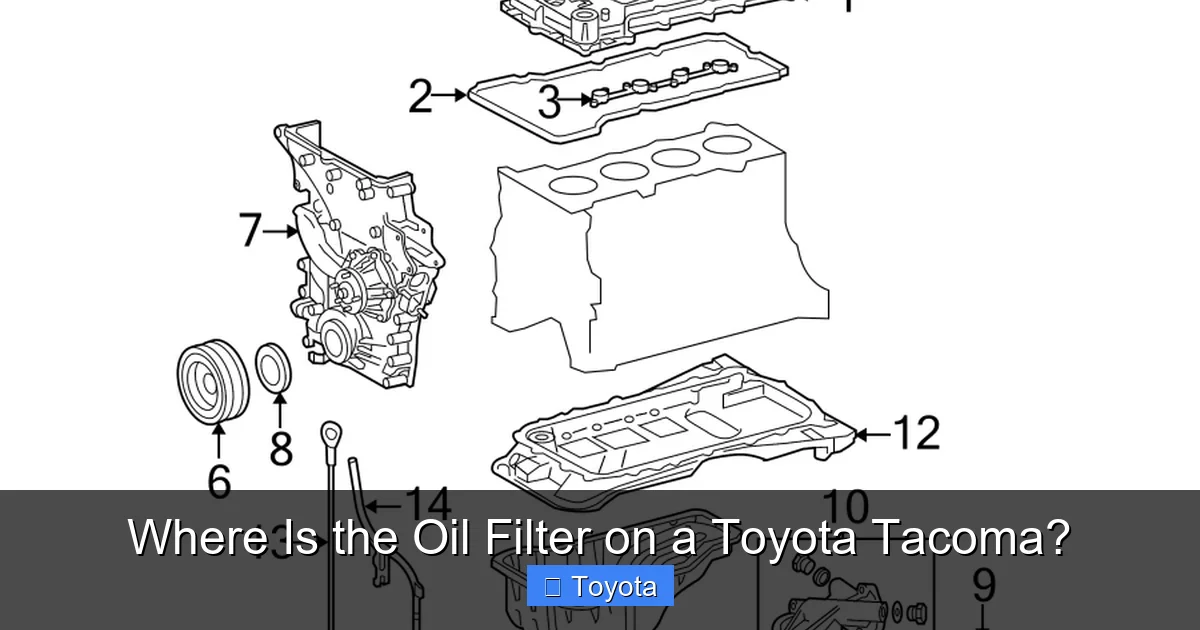
Visual guide about Where Is the Oil Filter on a Toyota Tacoma?
Image source: images.simplepart.com
Now that you know where to find the oil filter, let’s walk through the replacement process. Whether you’re doing a full oil change or just swapping the filter, these steps will help you get the job done safely and correctly.
Gather Your Tools and Supplies
Before you start, make sure you have everything you need:
– New oil filter (or filter element, if using a cartridge-style system)
– New O-ring (usually included with the filter)
– Oil filter wrench (if needed)
– Socket set with 14mm socket and extension
– Oil drain pan
– Funnel
– Clean rags or paper towels
– Torque wrench (recommended)
– Safety glasses and gloves
Always consult your owner’s manual for the correct filter part number. Using the wrong filter can lead to leaks or poor performance.
Warm Up the Engine
Start your Tacoma and let it run for a few minutes. Warm oil flows more easily, so it will drain faster and more completely. Just don’t let the engine get too hot—you don’t want to burn yourself on hot components.
Drain the Old Oil
Place the drain pan under the oil pan (located under the engine). Use a socket to remove the drain plug, allowing the oil to drain completely. This usually takes 5–10 minutes. While it’s draining, you can move on to the filter.
Remove the Old Oil Filter
For top-mounted filters (2016 and later):
– Locate the filter cap on top of the engine.
– Use a 14mm socket and extension to loosen the cap.
– Once loose, unscrew it by hand and carefully remove it.
– Pull out the old filter element and inspect it for debris or metal shavings.
For side-mounted filters (older models):
– Position the drain pan under the filter.
– Use an oil filter wrench to loosen the canister.
– Unscrew it by hand, being careful not to spill oil everywhere.
– Remove the old filter and discard it properly.
Install the New Oil Filter
For cartridge-style filters (most modern Tacomas):
– Take the new filter element and lubricate the O-ring with fresh engine oil.
– Insert the new element into the cap.
– Screw the cap back onto the engine by hand, then tighten with a torque wrench to 18 ft-lbs (as specified by Toyota).
For spin-on filters (older models):
– Lightly coat the rubber gasket on the new filter with oil.
– Screw it onto the engine by hand until it seats, then give it a quarter-turn more.
– Do not overtighten—this can damage the gasket or make future removal difficult.
Refill with Fresh Oil
Once the new filter is installed, reinstall the drain plug and tighten it to the specified torque (usually around 30 ft-lbs). Use a funnel to add the recommended amount of oil—typically 6.5 quarts for the 3.5L V6 or 5.5 quarts for the 2.7L engine. Check the dipstick to ensure the level is correct.
Start the engine and let it run for a minute, then check for leaks around the filter and drain plug. Turn off the engine and recheck the oil level, topping off if necessary.
Common Mistakes to Avoid When Changing the Oil Filter
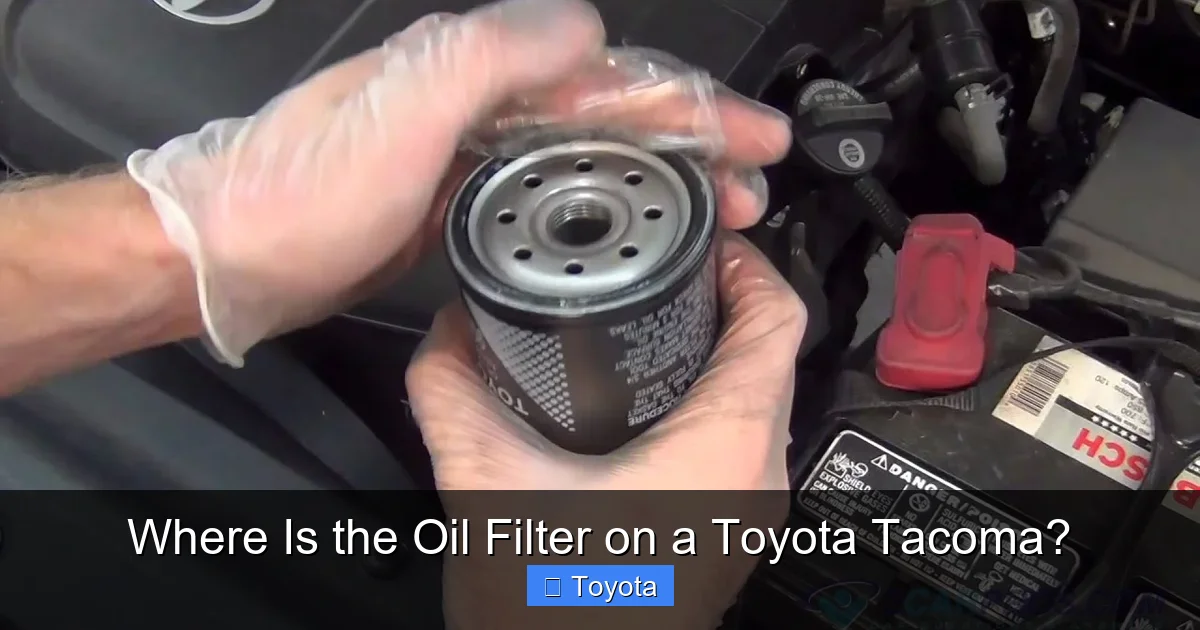
Visual guide about Where Is the Oil Filter on a Toyota Tacoma?
Image source: i.ytimg.com
Even experienced DIYers can make mistakes when replacing the oil filter. Here are some common pitfalls and how to avoid them.
Using the Wrong Filter
Always double-check the part number. A filter that’s too small won’t seal properly; one that’s too large won’t fit. Toyota recommends genuine OEM filters, but high-quality aftermarket options (like WIX, Fram, or Mobil 1) are also reliable if they meet OEM specs.
Forgetting the O-Ring
When replacing a cartridge-style filter, always install a new O-ring. Reusing the old one can cause leaks. Lubricate it with fresh oil before installation to ensure a smooth seal.
Over-Tightening the Filter Cap
This is a big one. Over-tightening can crack the filter housing or damage the O-ring. Always use a torque wrench and follow Toyota’s specification (18 ft-lbs for most recent models). If you don’t have a torque wrench, tighten it snugly by hand—don’t force it.
Not Draining the Oil First
On side-mounted filters, oil will spill out when you remove the old filter. Always drain the oil pan first to minimize mess. For top-mounted filters, some oil may still drain when you remove the cap, so keep a rag handy.
Ignoring Leaks After Installation
After starting the engine, always check for leaks. A small drip might seem harmless, but it can worsen over time. If you see oil around the filter, shut off the engine and recheck the installation.
Tips for Maintaining Your Tacoma’s Engine Health
Replacing the oil filter is just one part of engine care. To keep your Tacoma running strong, follow these best practices:
– Change the oil and filter every 5,000 to 7,500 miles, or as recommended in your owner’s manual.
– Use high-quality synthetic oil for better protection, especially in extreme temperatures or off-road conditions.
– Inspect the filter during each change for signs of metal debris, which could indicate internal engine wear.
– Keep a maintenance log to track oil changes, mileage, and any issues.
– Consider using an oil analysis kit (like Blackstone Labs) to monitor engine health over time.
Conclusion
Knowing where the oil filter is on your Toyota Tacoma isn’t just about convenience—it’s about protecting your investment. Whether you’re driving a rugged 2001 model with a side-mounted filter or a sleek 2024 with a top-mounted design, regular maintenance is key to long-term reliability. By understanding your specific setup and following the right steps, you can keep your engine clean, efficient, and ready for whatever the road throws at it.
With the right tools, a little patience, and this guide, you’re well-equipped to handle oil filter changes like a pro. And who knows? You might just discover that DIY maintenance is easier—and more rewarding—than you thought.
Frequently Asked Questions
Where is the oil filter on a 2020 Toyota Tacoma?
The oil filter on a 2020 Toyota Tacoma with the 3.5L V6 engine is located on the top of the engine, on the driver’s side near the front. It’s housed in a black plastic cap with a 14mm hex fitting and is easily accessible from under the hood.
Do I need to get under my Tacoma to change the oil filter?
It depends on your model year. On Tacomas from 2016 and later, the oil filter is top-mounted and can be reached from above. Older models (1995–2015) often have side-mounted filters that require under-vehicle access.
What size socket do I need to remove the oil filter cap?
Most modern Toyota Tacomas (2016 and later) use a 14mm socket to remove the oil filter cap. Always use a socket with an extension for better leverage and control.
Can I reuse the O-ring when changing the oil filter?
No, you should always replace the O-ring with a new one. Reusing the old O-ring can lead to leaks and improper sealing, especially on cartridge-style filters.
How often should I change the oil filter on my Tacoma?
Toyota recommends changing the oil filter with every oil change, typically every 5,000 to 7,500 miles. If you drive in severe conditions (dusty, towing, short trips), consider changing it more frequently.
What happens if I over-tighten the oil filter?
Over-tightening can damage the filter housing, crack the O-ring, or make future removal difficult. Always use a torque wrench and tighten to the manufacturer’s specification (usually 18 ft-lbs for recent models).
