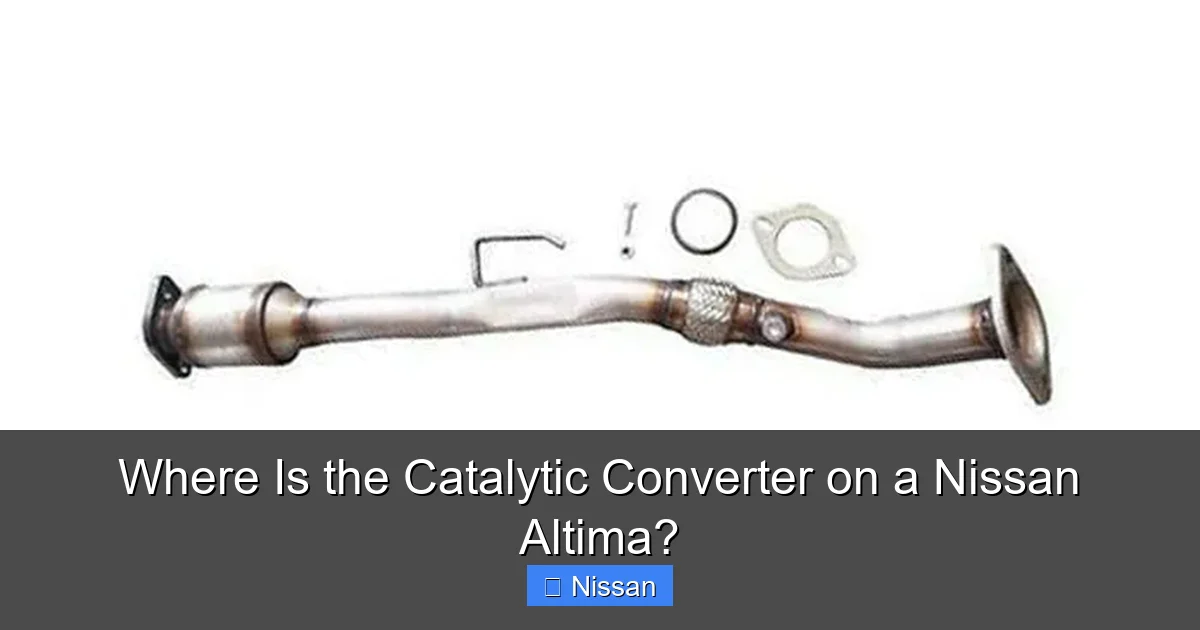
Where Is the Catalytic Converter on a Nissan Altima?

Contents
- 1 Key Takeaways
- 2 Understanding the Catalytic Converter: Why It Matters in Your Nissan Altima
- 3 Where Is the Catalytic Converter Located on a Nissan Altima?
- 4 Why the Catalytic Converter’s Location Matters
- 5 Signs Your Nissan Altima’s Catalytic Converter May Be Failing
- 6 How to Maintain and Protect Your Nissan Altima’s Catalytic Converter
- 7 Replacing the Catalytic Converter on a Nissan Altima: What You Need to Know
- 8 Conclusion: Know Your Altima’s Catalytic Converter
- 9 Frequently Asked Questions




The catalytic converter on a Nissan Altima is typically located underneath the vehicle, near the engine and exhaust manifold. It plays a vital role in reducing harmful emissions and must be properly maintained to avoid performance issues or costly repairs.
This is a comprehensive guide about Where Is the Catalytic Converter on a Nissan Altima?.
Key Takeaways
- Location varies by model year and engine type: Most Nissan Altimas have one or two catalytic converters, positioned between the engine and muffler, often close to the exhaust manifold or under the passenger compartment.
- Front catalytic converter is near the engine: The primary (or “pre-cat”) converter is usually mounted directly to the exhaust manifold, making it the hottest and most efficient part of the system.
- Rear catalytic converter is further down the exhaust line: Found closer to the rear of the car, this secondary converter helps further clean emissions and is often part of the mid-pipe or Y-pipe assembly.
- V6 models may have dual converters: Nissan Altima models with V6 engines (like the 3.5L) often feature dual exhaust systems, meaning two catalytic converters—one for each bank of cylinders.
- Easy to access for inspection but vulnerable to theft: Due to its undercarriage location and precious metal content, the catalytic converter is a common target for thieves, especially on higher-trim or older Altimas.
- Signs of failure include reduced performance and check engine light: A clogged or failing converter can cause poor acceleration, reduced fuel economy, and illuminated dashboard warnings.
- Regular maintenance helps prevent issues: Keeping the engine tuned, using quality fuel, and avoiding short trips can extend the life of your catalytic converter.
[FEATURED_IMAGE_PLACEHOLDER]
Understanding the Catalytic Converter: Why It Matters in Your Nissan Altima
If you own a Nissan Altima, you’ve likely heard the term “catalytic converter” thrown around during routine maintenance or when diagnosing a check engine light. But what exactly is it, and why does its location matter? Simply put, the catalytic converter is one of the most important emissions control devices in your vehicle. It’s designed to convert harmful pollutants like carbon monoxide, nitrogen oxides, and unburned hydrocarbons into less harmful substances such as carbon dioxide, nitrogen, and water vapor before they exit the exhaust system.
For Nissan Altima owners, understanding where this component is located can save time, money, and frustration—especially if you’re dealing with performance issues, strange noises, or even theft. The catalytic converter isn’t just a random part tucked away under your car; it’s strategically placed to work efficiently with the engine and exhaust system. Its position affects how quickly it heats up, how well it cleans emissions, and how accessible it is for inspection or replacement.
In this guide, we’ll walk you through exactly where to find the catalytic converter on various Nissan Altima models, explain how its location impacts performance, and offer practical tips for maintenance and protection. Whether you’re a DIY mechanic, a first-time car owner, or just curious about your vehicle’s undercarriage, this article will give you the knowledge you need to keep your Altima running clean and smooth.
Where Is the Catalytic Converter Located on a Nissan Altima?
The location of the catalytic converter on a Nissan Altima depends on the model year, engine size, and drivetrain configuration. However, there are consistent patterns across most generations of the Altima that make it easier to identify where to look.
In the majority of Nissan Altima models—especially those from 2002 to 2024—the catalytic converter is mounted underneath the vehicle, integrated into the exhaust system. It’s typically positioned between the engine and the muffler, acting as a bridge that treats exhaust gases before they’re released into the atmosphere.
Primary (Front) Catalytic Converter Location
The primary catalytic converter—also known as the “pre-cat” or “manifold converter”—is usually located very close to the engine. On most 4-cylinder Nissan Altimas (like the 2.5L QR25DE engine), this converter is bolted directly to the exhaust manifold. This placement allows it to heat up quickly after the engine starts, which is crucial for efficient emissions reduction. Because it’s exposed to high temperatures and direct exhaust flow, this front converter is often the first to show signs of wear or failure.
You can typically spot it by looking under the front passenger side of the vehicle (on front-wheel-drive models), near where the exhaust manifold exits the engine block. It looks like a small, cylindrical or oval-shaped metal canister, often wrapped in heat shielding. On some models, it may be integrated into a larger exhaust manifold assembly, making it less visible but still accessible with the right tools.
Secondary (Rear) Catalytic Converter Location
Many Nissan Altimas—especially those with higher performance or stricter emissions standards—feature a second catalytic converter located further down the exhaust line. This rear converter is usually found under the passenger compartment or near the rear axle, integrated into the mid-pipe or Y-pipe section of the exhaust system.
This secondary converter acts as a “clean-up” unit, further reducing any remaining pollutants that weren’t fully processed by the front converter. It operates at lower temperatures and is generally more durable, but it can still fail due to contamination, physical damage, or clogging over time.
Dual Catalytic Converters in V6 Models
If you drive a Nissan Altima with a V6 engine—such as the 3.5L VQ35DE found in models from 2002 to 2013—you likely have a dual exhaust system with two catalytic converters. In these vehicles, each bank of cylinders has its own exhaust manifold and catalytic converter. This means you’ll find one converter on the driver’s side and another on the passenger side, both mounted near the engine.
This setup improves exhaust flow and emissions control but also increases complexity and cost if repairs are needed. Because there are two converters, diagnosing which one is faulty may require a scan tool or professional inspection.
Model Year Variations
While the general location remains consistent, there are slight differences depending on the generation of your Altima:
– 2002–2006 (3rd Gen): The catalytic converter is typically a single unit mounted to the exhaust manifold. Some models have a secondary converter further back.
– 2007–2012 (4th Gen): Similar layout, but with improved emissions systems. V6 models often have dual converters.
– 2013–2018 (5th Gen): The 2.5L 4-cylinder models usually have one front converter, while the 3.5L V6 retains dual converters.
– 2019–2024 (6th Gen): The Altima continues with a single front converter on 4-cylinder models. The turbocharged 2.0L VC-Turbo engine (introduced in 2019) also uses a close-coupled catalytic converter for faster light-off.
Regardless of the year, the catalytic converter is almost always under the car—never inside the engine bay. This placement protects it from road debris while allowing it to heat up efficiently.
Why the Catalytic Converter’s Location Matters
You might be wondering: “So what if it’s under the car? Why does its location matter?” The truth is, the placement of the catalytic converter has a direct impact on your vehicle’s performance, emissions, and even security.
Efficiency and Heat Management
The catalytic converter needs to reach a certain temperature—typically between 400°F and 600°F—to function properly. That’s why it’s mounted as close to the engine as possible. The front converter, in particular, benefits from the hot exhaust gases exiting the combustion chamber. This “close-coupled” design allows it to heat up quickly, reducing cold-start emissions and helping the vehicle pass emissions tests.
If the converter were placed too far back in the exhaust system, it would take longer to warm up, leading to higher emissions during the first few minutes of driving. That’s why manufacturers position it strategically near the engine, even if it means exposing it to more heat and vibration.
Impact on Performance and Fuel Economy
A properly functioning catalytic converter has minimal impact on engine performance. However, if it becomes clogged or damaged, it can restrict exhaust flow, leading to reduced power, poor acceleration, and decreased fuel efficiency.
Because the converter is located in the exhaust stream, any blockage forces the engine to work harder to push exhaust gases out. This backpressure can cause the engine to run rough, trigger the check engine light, and even trigger limp mode in some cases.
For example, if you notice your Altima struggling to accelerate past 40 mph or if your gas mileage has dropped suddenly, a clogged catalytic converter could be the culprit—especially if the check engine light shows codes like P0420 (Catalyst System Efficiency Below Threshold).
Vulnerability to Theft
One of the biggest downsides of the catalytic converter’s undercarriage location is its vulnerability to theft. Thieves can slide under a vehicle and cut out the converter in under a minute using basic tools. Because catalytic converters contain precious metals like platinum, palladium, and rhodium, they can fetch hundreds of dollars on the black market.
Nissan Altimas—particularly older models and those with higher ground clearance—are frequent targets. The converter’s accessibility and the value of its internal components make it an attractive target for scrap metal thieves.
To reduce the risk, consider parking in well-lit areas, installing a catalytic converter shield, or engraving your VIN onto the converter to deter thieves and aid in recovery.
Ease of Inspection and Repair
On the positive side, the undercarriage location makes the catalytic converter relatively easy to inspect during routine maintenance. Mechanics can visually check for damage, listen for rattling sounds (a sign of a broken substrate), or use a scan tool to monitor its efficiency.
However, replacing a catalytic converter is not a simple DIY job for most people. It requires lifting the vehicle, removing exhaust components, and often welding or bolting in a new unit. Labor costs can be high, especially if the converter is integrated into the manifold or requires special tools to access.
Signs Your Nissan Altima’s Catalytic Converter May Be Failing
Knowing where the catalytic converter is located is one thing—but recognizing when it’s failing is equally important. A malfunctioning converter can cause a range of symptoms that affect your driving experience and vehicle health.
Check Engine Light and Diagnostic Trouble Codes
One of the most common signs of a failing catalytic converter is the illumination of the check engine light. Modern Nissan Altimas are equipped with oxygen sensors before and after the catalytic converter. These sensors monitor the efficiency of the converter by comparing oxygen levels in the exhaust.
If the downstream sensor detects little to no change in oxygen levels, the engine control unit (ECU) may trigger a diagnostic trouble code (DTC) such as:
– P0420: Catalyst System Efficiency Below Threshold (Bank 1)
– P0430: Catalyst System Efficiency Below Threshold (Bank 2) – for V6 models
These codes don’t always mean the converter is completely failed, but they indicate that it’s not working as efficiently as it should.
Reduced Engine Performance
A clogged catalytic converter restricts exhaust flow, which can lead to a noticeable drop in engine power. You might experience:
– Sluggish acceleration
– Difficulty maintaining speed on highways
– Engine stalling or hesitation
In severe cases, the engine may go into “limp mode,” limiting power to protect the vehicle from further damage.
Increased Emissions and Failed Smog Tests
Since the catalytic converter is responsible for reducing harmful emissions, a failing unit will likely cause your vehicle to fail an emissions or smog test. You may also notice a strong sulfur or “rotten egg” smell from the exhaust, which indicates unburned fuel and inefficient conversion.
Rattling Noise from Under the Car
If you hear a rattling sound coming from underneath your Altima—especially when idling or accelerating—it could mean the internal honeycomb structure of the catalytic converter has broken apart. This substrate is made of ceramic and can degrade over time due to heat, contamination, or physical impact.
A rattling converter should be inspected immediately, as loose fragments can block the exhaust flow and cause engine damage.
Poor Fuel Economy
A clogged or inefficient catalytic converter can reduce fuel efficiency by up to 20%. If you notice you’re filling up the gas tank more often than usual, it’s worth checking the converter as part of your diagnostic process.
Dark Exhaust Smoke
While not as common, a failing catalytic converter can sometimes cause dark or black smoke to exit the tailpipe. This is usually a sign of excessive fuel in the exhaust, which the converter cannot process effectively.
How to Maintain and Protect Your Nissan Altima’s Catalytic Converter
Prevention is always better than repair—especially when it comes to the catalytic converter, which can cost $1,000 or more to replace. Fortunately, there are several steps you can take to extend its lifespan and protect it from damage.
Keep Your Engine Tuned
A well-maintained engine produces cleaner exhaust, which reduces stress on the catalytic converter. Regular oil changes, spark plug replacements, and air filter changes help ensure complete combustion and prevent unburned fuel from entering the exhaust system.
Faulty oxygen sensors, misfiring spark plugs, or a rich fuel mixture can flood the converter with excess fuel, causing it to overheat and degrade prematurely.
Use Quality Fuel and Additives
Always use high-quality gasoline with the correct octane rating for your Altima. Avoid cheap or contaminated fuel, which can leave deposits in the exhaust system.
Occasionally, using a fuel system cleaner or catalytic converter cleaner can help remove light carbon buildup. However, these products are not a cure for a failed converter—only a preventive measure.
Avoid Short Trips
Frequent short trips prevent the catalytic converter from reaching its optimal operating temperature. This can lead to moisture buildup and incomplete combustion, which over time may damage the internal substrate.
Try to combine errands or take longer drives periodically to allow the converter to heat up fully.
Inspect for Physical Damage
During routine maintenance, have a mechanic inspect the catalytic converter for signs of damage, such as dents, cracks, or rust. Road debris, potholes, or speed bumps can damage the converter’s housing or internal structure.
If you live in an area with rough roads or frequent construction, consider installing a skid plate or protective shield.
Protect Against Theft
As mentioned earlier, catalytic converter theft is on the rise. To protect your Altima:
– Park in well-lit, secure areas
– Install a catalytic converter anti-theft device or shield
– Engrave your VIN on the converter
– Consider etching or painting the converter with high-temperature paint to make it less attractive to thieves
Some insurance policies cover catalytic converter theft, so check your coverage.
Address Check Engine Lights Promptly
Never ignore a check engine light. Early diagnosis can prevent minor issues from turning into major problems. A simple oxygen sensor replacement, for example, can restore converter efficiency and avoid the need for a full replacement.
Replacing the Catalytic Converter on a Nissan Altima: What You Need to Know
If your catalytic converter is beyond repair, replacement may be necessary. However, this is not a decision to take lightly—costs can vary widely depending on the model, location, and whether you choose an OEM or aftermarket part.
Cost Considerations
– OEM (Original Equipment Manufacturer) Converter: $800–$2,500+ (parts and labor)
– Aftermarket Converter: $300–$1,200 (parts and labor)
– Universal or EPA-Compliant Converter: $200–$600 (requires welding)
Labor costs typically range from $150 to $400, depending on accessibility and shop rates.
OEM vs. Aftermarket
OEM converters are designed specifically for your Altima and are guaranteed to meet emissions standards. They’re more expensive but offer better fit and longevity.
Aftermarket converters are more affordable and widely available. Look for EPA-compliant or CARB-certified units if you live in a state with strict emissions laws (like California).
Avoid cheap, non-compliant converters, as they may fail emissions tests or damage your vehicle.
DIY vs. Professional Installation
While some experienced DIYers may attempt to replace the converter themselves, it’s generally recommended to have a professional handle the job. The process involves:
– Lifting the vehicle safely
– Removing exhaust hangers and bolts
– Cutting or unbolting the old converter
– Installing and welding or bolting the new unit
– Resetting the check engine light and verifying operation
Improper installation can lead to leaks, poor performance, or even fire hazards.
Legal and Emissions Compliance
In many states, it’s illegal to remove or tamper with a catalytic converter unless it’s being replaced with a compliant unit. Always check local regulations before making any modifications.
Using a non-compliant converter can result in fines, failed inspections, or even registration issues.
Conclusion: Know Your Altima’s Catalytic Converter
The catalytic converter on your Nissan Altima is a critical component that plays a vital role in protecting the environment and ensuring your vehicle runs efficiently. Located underneath the car—typically near the engine or further down the exhaust line—it’s designed to convert harmful emissions into safer gases before they exit the tailpipe.
Understanding its location, function, and maintenance needs can help you avoid costly repairs, improve fuel economy, and reduce the risk of theft. Whether you drive a 4-cylinder or V6 Altima, knowing where to find the converter and how to care for it is essential for long-term vehicle health.
By staying proactive with maintenance, addressing warning signs early, and protecting your converter from damage and theft, you can keep your Altima running clean and reliable for years to come. And if replacement becomes necessary, choosing the right part and professional installation will ensure your vehicle remains compliant and performs at its best.
Frequently Asked Questions
How many catalytic converters does a Nissan Altima have?
Most 4-cylinder Nissan Altimas have one catalytic converter, while V6 models typically have two—one for each bank of cylinders. Some newer models may also include a secondary converter further down the exhaust system.
Can I drive my Nissan Altima with a bad catalytic converter?
You can drive short distances, but it’s not recommended. A failing converter can reduce performance, decrease fuel economy, and eventually cause the engine to stall or enter limp mode.
How long does a catalytic converter last on a Nissan Altima?
With proper maintenance, a catalytic converter can last 100,000 to 150,000 miles. However, contamination, engine problems, or physical damage can shorten its lifespan.
Is it illegal to remove the catalytic converter on a Nissan Altima?
Yes, in most states it’s illegal to remove or disable a catalytic converter unless it’s being replaced with a compliant unit. Doing so can result in fines and failed emissions tests.
How can I tell if my catalytic converter is stolen?
Signs include a loud exhaust noise, a visible gap in the exhaust system, or the vehicle sitting lower on one side. Check underneath the car for missing or cut exhaust components.
Can a catalytic converter unclog itself?
In rare cases, a mildly clogged converter may clear after a long drive at highway speeds. However, severe clogs require replacement, as the internal structure cannot regenerate once damaged.