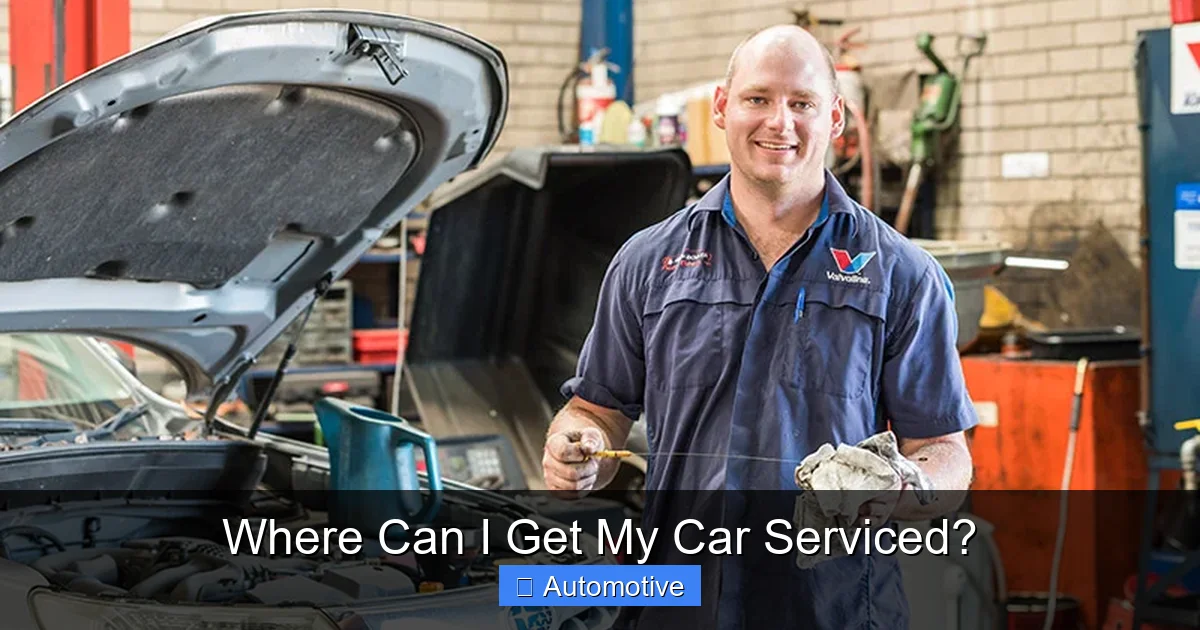
Where Can I Get My Car Serviced?

Contents
- 1 Key Takeaways
- 2 📑 Table of Contents
- 3 Where Can I Get My Car Serviced? A Complete Guide to Your Options
- 4 Option 1: Dealership Service Centers
- 5 Option 2: Independent Mechanics and Local Garages
- 6 Option 3: Chain Service Centers and National Brands
- 7 Option 4: Mobile Mechanics—Service at Your Doorstep
- 8 Option 5: DIY Car Servicing—Do It Yourself
- 9 How to Choose the Right Option for Your Car
- 10 Tips for Getting the Best Service Every Time
- 11 Conclusion
- 12 Frequently Asked Questions

Car Phone Holder

Diesel Fuel Additive

Digital Tire Pressure Gauge

Side Window Sunshade
Choosing where to get your car serviced doesn’t have to be confusing. Whether you prefer a dealership, independent mechanic, or mobile service, each option offers unique benefits. This guide helps you make an informed decision based on cost, convenience, and expertise.
Key Takeaways
- Understanding Where Can I Get My Car Serviced?: Provides essential knowledge
📑 Table of Contents
- Where Can I Get My Car Serviced? A Complete Guide to Your Options
- Option 1: Dealership Service Centers
- Option 2: Independent Mechanics and Local Garages
- Option 3: Chain Service Centers and National Brands
- Option 4: Mobile Mechanics—Service at Your Doorstep
- Option 5: DIY Car Servicing—Do It Yourself
- How to Choose the Right Option for Your Car
- Tips for Getting the Best Service Every Time
- Conclusion
Where Can I Get My Car Serviced? A Complete Guide to Your Options
So your car’s check engine light just came on—or maybe it’s time for your annual oil change. You’re probably wondering: *Where can I get my car serviced?* It’s a common question, and the answer isn’t always straightforward. With so many options available—from high-tech dealerships to neighborhood garages and even mechanics who come to your driveway—it’s easy to feel overwhelmed.
But don’t worry. You’re not alone. Millions of drivers face this decision every year, and the good news is that there’s no one-size-fits-all answer. The best place to service your car depends on your vehicle’s age, your budget, your location, and how much time you have. Some people swear by dealerships for their expertise, while others prefer the affordability and friendliness of local mechanics. And with the rise of mobile car services, you might not even need to leave your home.
In this guide, we’ll walk you through all the major options for car servicing, helping you understand the pros and cons of each. Whether you’re driving a brand-new Tesla or a trusty 10-year-old sedan, you’ll find the right fit. We’ll cover everything from certified dealerships and independent garages to chain service centers, mobile mechanics, and even doing it yourself. By the end, you’ll know exactly where to go—and why.
Option 1: Dealership Service Centers

Visual guide about Where Can I Get My Car Serviced?
Image source: cargeektalk.com
If your car is still under warranty or you drive a luxury or high-performance vehicle, your local dealership might be the first place you think of for servicing. And for good reason—dealerships offer several advantages that make them a top choice for many drivers.
Why Choose a Dealership?
Dealership service centers are staffed by technicians who are factory-trained and certified by the manufacturer. That means they’ve undergone rigorous training specific to your car’s make and model. They know the ins and outs of your vehicle, from its electrical systems to its transmission quirks.
Another big plus? They use genuine OEM (Original Equipment Manufacturer) parts. These are the exact same parts that came with your car when it was new. While aftermarket parts can be cheaper, OEM parts are designed to meet strict quality standards and often come with longer warranties.
For example, if you own a BMW and need a new brake pad, a BMW dealership will install a brake pad that’s been tested and approved by BMW engineers. That gives you peace of mind knowing your car is getting the best possible care.
When Is a Dealership the Best Choice?
Dealerships are ideal if:
– Your car is under warranty (using an independent mechanic could void it).
– You drive a luxury, hybrid, or electric vehicle with complex systems.
– You need software updates or recalls handled—dealerships have direct access to manufacturer databases.
– You want detailed service records for resale value.
However, dealerships aren’t perfect. They tend to be more expensive than other options. Labor rates can be 20–50% higher than independent shops, and parts markup is common. Plus, you might wait longer for an appointment, especially during peak seasons.
Still, if your car is new or high-end, the expertise and quality often justify the cost. Just be sure to ask about service packages or loyalty discounts—many dealerships offer them.
Option 2: Independent Mechanics and Local Garages

Visual guide about Where Can I Get My Car Serviced?
Image source: cargeektalk.com
For many drivers, independent mechanics are the go-to choice for car servicing. These are locally owned shops that aren’t affiliated with any specific brand. They’re often family-run, deeply rooted in the community, and known for their personal touch.
The Benefits of Going Independent
One of the biggest advantages of independent mechanics is cost. Because they don’t have the overhead of a dealership, they can offer lower labor rates and more competitive pricing on parts. You might save 20–40% compared to a dealership for the same job.
They’re also more flexible. Need a quick oil change on a Saturday? Many independent shops offer weekend hours. Want to discuss your car’s quirks in detail? The mechanic might actually sit down with you and explain what’s going on—something that’s rare at a busy dealership.
And don’t assume they’re less skilled. Many independent technicians are ASE-certified (Automotive Service Excellence), meaning they’ve passed rigorous exams and have real-world experience. Some even specialize in certain brands or types of repairs, like transmissions or diesel engines.
How to Find a Trustworthy Independent Mechanic
Not all independent shops are created equal. To find a reliable one:
– Ask for recommendations from friends, family, or coworkers.
– Check online reviews on Google, Yelp, or Facebook.
– Look for certifications like ASE or AAA approval.
– Visit the shop in person—clean, organized spaces often reflect professionalism.
– Get a written estimate before any work begins.
For example, let’s say your Honda Civic needs a timing belt replacement. An independent mechanic might charge $600, while a dealership quotes $900. If the independent shop has great reviews and offers a 12-month warranty on parts and labor, it’s likely a smart choice—especially for an older vehicle.
Option 3: Chain Service Centers and National Brands
Visual guide about Where Can I Get My Car Serviced?
Image source: qph.fs.quoracdn.net
If you’re looking for consistency and convenience, national chain service centers like Jiffy Lube, Midas, Firestone, or Meineke might be worth considering. These franchises operate under strict brand standards, so you know what to expect no matter where you are in the country.
Pros of Chain Service Centers
One major benefit is standardization. Whether you’re in Miami or Seattle, a Jiffy Lube will follow the same procedures for an oil change. That’s helpful if you travel frequently or move often.
Many chains also offer nationwide warranties. If you get your brakes done at a Midas in Chicago and later notice an issue in Denver, you can take your car to any Midas location for free follow-up service. That kind of peace of mind is hard to beat.
They’re also great for routine maintenance. Need a quick oil change, tire rotation, or brake inspection? Chain centers are usually fast, with minimal wait times. Some even offer online scheduling and text updates when your car is ready.
When to Be Cautious
While chain centers are convenient, they’re not always the best for complex repairs. Their technicians may not have the same depth of training as dealership or independent specialists. And because they rely on volume, there’s sometimes pressure to upsell services you don’t need.
For example, a technician might recommend a fuel system cleaning during an oil change—even if your car doesn’t need it. Always ask why a service is recommended and whether it’s urgent.
That said, for basic maintenance like oil changes, tire services, or brake pads, chain centers are a solid, affordable option. Just stick to reputable brands and read the fine print on warranties.
Option 4: Mobile Mechanics—Service at Your Doorstep
Imagine this: You’re at home, sipping coffee, and your mechanic pulls up in a van equipped with tools and parts. They change your oil, check your brakes, and even diagnose a check engine light—all without you leaving your driveway. Welcome to the world of mobile mechanics.
The Rise of Mobile Car Service
Mobile mechanics are one of the fastest-growing trends in automotive care. Companies like YourMechanic, RepairSmith, and local independent mobile techs bring the garage to you. It’s perfect for busy professionals, parents, or anyone who values time and convenience.
The process is simple. You book an appointment online or via an app, choose the services you need, and a certified technician arrives at your home, office, or even your gym parking lot. Most mobile services cover routine maintenance, diagnostics, brake repairs, battery replacements, and more.
Advantages of Mobile Mechanics
– **Convenience:** No waiting rooms, no dropping off your car, no arranging rides.
– **Transparency:** You can watch the work being done and ask questions in real time.
– **Time-saving:** Perfect for people with tight schedules.
– **Competitive pricing:** Often cheaper than dealerships, with no overhead costs.
For instance, if your car won’t start and you suspect a dead battery, a mobile mechanic can test it on the spot and replace it within an hour. No tow truck needed.
Limitations to Consider
Mobile mechanics aren’t equipped for major repairs like engine overhauls or transmission work. They also can’t handle jobs that require lifts or specialized equipment, such as exhaust system repairs.
And while many are licensed and insured, it’s still important to verify their credentials. Check reviews, ask about certifications, and make sure they provide a detailed invoice.
Still, for everyday servicing, mobile mechanics are a game-changer—especially in urban areas where time is precious.
Option 5: DIY Car Servicing—Do It Yourself
For the hands-on driver, doing your own car maintenance can be rewarding—and cost-effective. With the right tools, knowledge, and a little patience, you can handle many common services at home.
What Can You Do Yourself?
Simple tasks like oil changes, air filter replacements, wiper blade swaps, and tire pressure checks are well within reach for most people. Even brake pad inspections or battery testing can be done with basic tools and online tutorials.
YouTube is a goldmine for DIY car repair videos. Channels like ChrisFix or EricTheCarGuy offer step-by-step guides for everything from replacing spark plugs to flushing coolant.
Tools You’ll Need
To get started, you’ll need:
– A basic socket set and wrenches
– Jack and jack stands (never rely on just a jack!)
– Oil filter wrench and drain pan
– Funnel and gloves
– Multimeter for electrical diagnostics
Investing in quality tools pays off in the long run. A $50 socket set might work once, but a $150 set from a reputable brand will last decades.
Pros and Cons of DIY Servicing
**Pros:**
– Save money on labor costs
– Learn more about your car
– Complete control over parts and quality
**Cons:**
– Risk of injury or mistakes
– No warranty on your work
– Time-consuming, especially for beginners
For example, changing your own oil might save you $50 and take 30 minutes. But if you over-tighten the drain plug and strip it, you could end up with a $200 repair bill.
If you’re new to DIY, start small. Change your air filter or wiper blades first. As you gain confidence, move on to oil changes or brake inspections. And always consult your owner’s manual—it’s your best friend.
How to Choose the Right Option for Your Car
Now that you know your options, how do you decide where to get your car serviced? It comes down to a few key factors: your car’s age, your budget, your location, and your personal preferences.
Ask Yourself These Questions
– **Is my car under warranty?** If yes, a dealership is usually required.
– **How old is my car?** Newer cars benefit from dealership expertise; older cars often do fine with independents.
– **What’s my budget?** Independent and mobile mechanics are typically cheaper.
– **Do I need convenience or specialization?** Mobile mechanics win on convenience; dealerships on specialization.
– **Am I comfortable doing it myself?** If you enjoy tinkering, DIY can be fun and rewarding.
Create a Servicing Plan
Instead of choosing one option forever, consider a hybrid approach. For example:
– Use a dealership for warranty work and major repairs.
– Go to an independent mechanic for routine maintenance.
– Call a mobile tech for quick fixes like battery replacements.
– Do simple tasks like oil changes or filter swaps at home.
This way, you get the best of all worlds—quality, cost savings, and convenience.
Tips for Getting the Best Service Every Time
No matter where you go, these tips will help ensure a smooth experience:
– **Keep records:** Save all service receipts and records. They’re essential for warranties and resale value.
– **Ask questions:** Don’t be afraid to ask why a service is needed or what parts will be used.
– **Get a written estimate:** This prevents surprise charges.
– **Check for recalls:** Use the NHTSA website to see if your car has any open recalls.
– **Don’t delay:** Small issues can become big, expensive problems if ignored.
And remember: regular maintenance is cheaper than major repairs. A $50 oil change today can prevent a $2,000 engine failure tomorrow.
Conclusion
So, where can you get your car serviced? The answer is: it depends. But now you have the knowledge to make the right choice for your situation. Whether you choose a dealership for its expertise, an independent mechanic for affordability, a chain center for consistency, a mobile tech for convenience, or your own garage for hands-on satisfaction, the key is to stay informed and proactive.
Your car is more than just a machine—it’s your daily companion, your safety net, and often a significant investment. Taking care of it doesn’t have to be stressful or expensive. With the right service provider and a little planning, you can keep your car running smoothly for years to come.
Don’t wait until the check engine light comes on. Schedule regular maintenance, listen to your car, and choose wisely. Your future self—and your wallet—will thank you.
Frequently Asked Questions
Can I service my car at an independent shop if it’s under warranty?
Yes, you can. The Magnuson-Moss Warranty Act protects your right to use independent mechanics without voiding your warranty, as long as they use proper procedures and parts. Just keep detailed records.
Are mobile mechanics reliable?
Many are highly reliable and certified. Check reviews, ask about licenses and insurance, and ensure they provide a detailed invoice. They’re great for routine maintenance and minor repairs.
How often should I service my car?
Follow your owner’s manual guidelines—typically every 5,000 to 10,000 miles for oil changes and annual inspections. More frequent driving or harsh conditions may require sooner service.
Is it cheaper to service my car at a dealership or independent shop?
Independent shops are usually 20–40% cheaper due to lower overhead. However, dealerships may offer better expertise and OEM parts, which can be worth the extra cost for newer vehicles.
Can I do my own car servicing safely?
Yes, for basic tasks like oil changes or filter replacements—if you have the right tools and follow instructions. Always use jack stands, wear safety gear, and consult your manual.
What should I do if a mechanic recommends expensive repairs?
Ask for a detailed explanation and written estimate. Get a second opinion from another trusted mechanic if you’re unsure. Don’t feel pressured to approve work immediately.