
Where Can I Buy a Second-hand Car?

Buying a second-hand car offers incredible value, but navigating the many purchasing channels is key. You can buy from franchise and independent dealerships, through private party sales, on vast online platforms, at public auctions, or via Certified Pre-Owned programs. Each path has unique advantages, risks, and required due diligence. Thorough research, a vehicle history report, and a professional pre-purchase inspection are non-negotiable steps for any used car buyer to avoid costly mistakes.
Key Takeaways
- Franchise & Independent Dealerships: Offer the most convenience, warranties, and vehicle history reports but often at higher prices.
- Private Party Sales: Typically the cheapest option with more negotiation room, but carry higher risk with no warranty and less consumer protection.
- Online Marketplaces: Provide the largest selection and price comparisons (e.g., Autotrader, Cars.com, Facebook Marketplace), but require extreme caution to avoid scams.
- Public Auctions: Can yield deep discounts on repossessed, rental, or damaged cars, but are buyer-beware environments demanding mechanical expertise.
- Certified Pre-Owned (CPO): A hybrid option from manufacturers offering late-model used cars with extended warranties and rigorous inspections for a premium price.
- Regardless of Source, Always: Obtain a vehicle history report (like CARFAX or AutoCheck), get an independent mechanic’s inspection, and verify the title is clean before any money changes hands.
- Financing Pre-Approval: Secure your own loan financing before shopping to strengthen your negotiating position and avoid overpriced dealer financing.
📑 Table of Contents
- Your Complete Guide to Where to Buy a Second-Hand Car
- 1. Franchise & Independent Dealerships: The Traditional Route
- 2. Private Party Sales: The Direct Approach
- 3. The Online Marketplace Revolution
- 4. Public Auctions: The High-Stakes Game
- 5. Certified Pre-Owned (CPO): The Best of Both Worlds?
- 6. Specialized & Niche Sources
- Conclusion: Your Action Plan for a Smart Purchase
Your Complete Guide to Where to Buy a Second-Hand Car
So, you’ve decided to buy a second-hand car. Fantastic choice! The used car market is vast, offering everything from budget-friendly commuters to nearly-new luxury vehicles at a fraction of the original price. But with great choice comes great confusion: where exactly should you start looking? The “where” is just as important as the “what” when it comes to making a smart purchase. The wrong channel can lead to a stressful, expensive headache. The right one can land you a reliable vehicle that fits your budget perfectly for years to come.
This guide will walk you through every major avenue for purchasing a used car, from the traditional dealership lot to the digital marketplace and the fast-paced auction floor. We’ll break down the pros and cons of each, give you actionable tips, and highlight the critical red flags to watch for. Forget feeling overwhelmed; by the end, you’ll have a clear roadmap to find your perfect pre-owned ride with confidence.
Why Your Buying Source Matters More Than You Think
The platform you choose dictates the entire experience. It affects the price you’ll pay, the paperwork you’ll handle, the protection you’ll have if something goes wrong, and even the types of vehicles available. A car from a certified pre-owned program at a brand dealership comes with a factory-backed warranty and a 150+ point inspection. The same year, make, and model from a private seller on Craigslist might cost $2,000 less but will be sold “as-is” with zero recourse if the transmission fails a week later. Understanding these fundamental differences is your first and most important step.
1. Franchise & Independent Dealerships: The Traditional Route
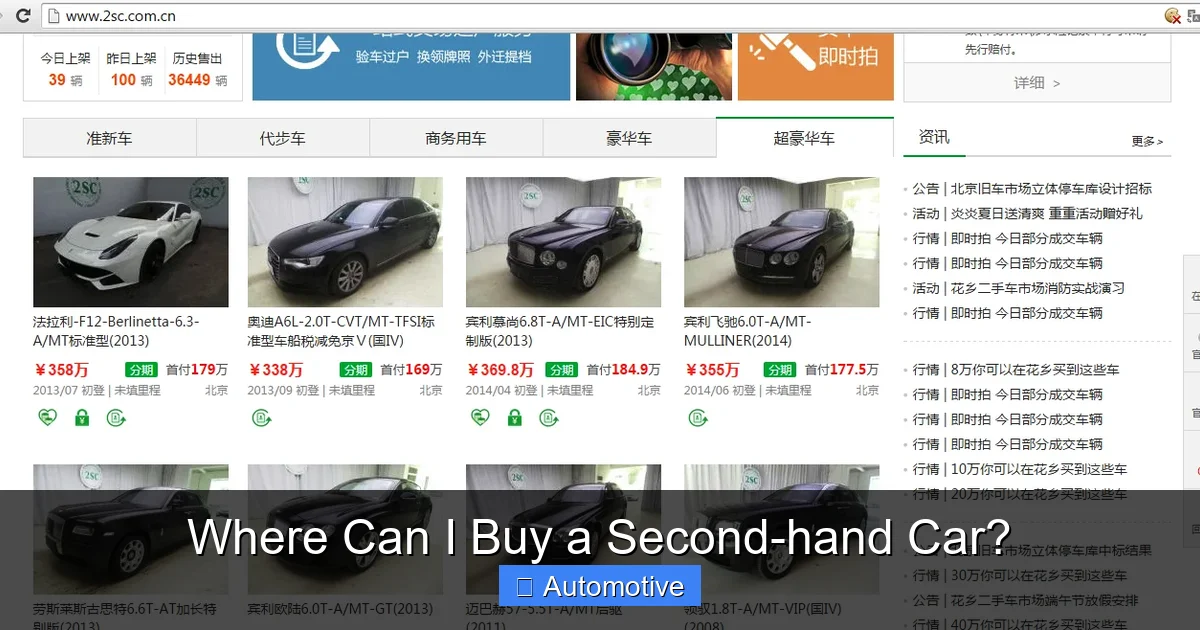
This is the image most people have of car buying: walking a lot, talking to a salesperson in a button-down shirt. Dealerships come in two main flavors. Franchise dealers are authorized sellers for specific brands (e.g., Toyota of San Jose). Independent dealers are not tied to any single manufacturer and sell a mix of makes and models.
Visual guide about Where Can I Buy a Second-hand Car?
Image source: beijingrelocation.com
The Franchise Dealer Experience
Franchise dealers are the go-to for Certified Pre-Owned (CPO) vehicles. These are late-model, typically low-mileage cars that have been reconditioned to the manufacturer’s standards and come with an extended warranty that often backs the original new-car warranty. They are the gold standard for used car peace of mind, but you pay a premium for that certification. Even non-CPO cars from a franchise dealer usually come with a limited warranty (e.g., 30 days/1,000 miles) and a free vehicle history report.
Pros: Wide selection of CPO vehicles, professional detailing and reconditioning, financing available on-site, easier trade-ins, consumer protection laws often apply, vehicles are typically inspected and repaired before sale.
Cons: Highest prices in the market, more pressure to negotiate on the lot, sales tactics can be aggressive, inventory may be limited to the brands they sell.
The Independent Dealer Landscape
Independent dealers can be a treasure trove or a minefield. A reputable independent dealer specializing in a specific type of vehicle (e.g., imports, trucks, sports cars) can offer incredible expertise and value. They often buy cars at wholesale auctions and can sell them for less than a franchise dealer. However, quality varies wildly. Some are excellent, while others may sell problematic cars with minimal reconditioning.
Pros: Often lower prices, can have unique or hard-to-find vehicles, more flexible on pricing and trade-ins, may specialize in a niche you want.
Cons: Quality control is inconsistent, warranties (if any) are usually very limited and short-term, financing may be subprime with high interest rates, less regulatory oversight. Always check online reviews for a specific dealer before visiting.
Tip: When buying from any dealer, always ask for the vehicle history report yourself (don’t rely on their copy) and review the full, itemized warranty terms in writing.
2. Private Party Sales: The Direct Approach
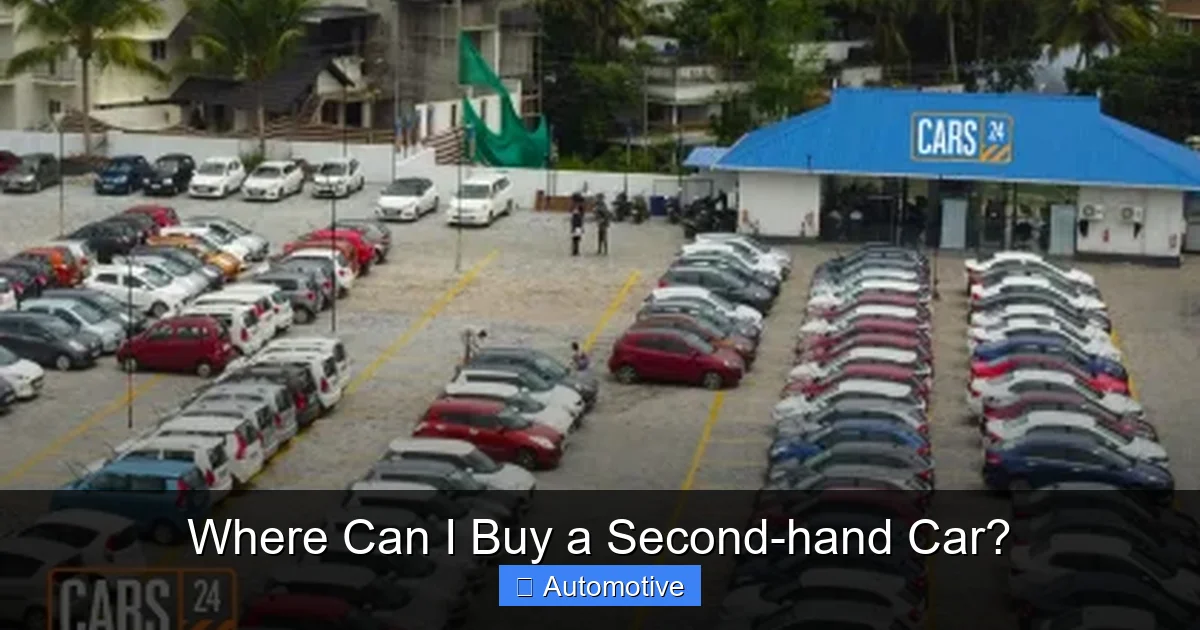
Buying directly from an individual owner is the oldest method in the book. You find a car you like, meet the seller, pay them, and the car is yours. Platforms like Craigslist, Facebook Marketplace, and offer-up apps are filled with private listings. This is where you’ll often find the best raw price, as the seller has no overhead costs like a dealership.
Visual guide about Where Can I Buy a Second-hand Car?
Image source: assets.cars24.com
The Allure and The Risk
The main draw is cost. There’s no dealer markup. You can often negotiate directly and find motivated sellers. It’s also a more personal transaction. However, it’s also the riskiest. The car is sold “as-is.” There is no warranty, no cooling-off period, and no obligation for the seller to disclose problems (beyond basic fraud laws). You are entirely responsible for verifying the car’s condition and history. The seller may not be mechanically knowledgeable and could be unwittingly selling a lemon.
Pros: Potential for lowest purchase price, direct negotiation, no dealer fees, often more flexible on payment methods.
Cons: No warranties or guarantees, high scam risk (especially with wire transfers or shipping), no professional inspection done by the seller, title and paperwork handling is your responsibility, no consumer protection if the car breaks down immediately.
How to Stay Safe in a Private Sale
First, meet in a safe, public, well-lit place during daylight hours, like a police station parking lot (many stations offer this service). Never meet at a private residence. Always bring a friend. Insist on seeing the title in the seller’s name and matching it to their driver’s license. Get a full, paid vehicle history report from a third party (CARFAX/AutoCheck). This is non-negotiable. And most importantly, never buy a car without a pre-purchase inspection (PPI) by a trusted, independent mechanic of your choice. If the seller refuses, walk away. That refusal is a massive red flag. For financing, you’ll need to arrange your own loan beforehand, as private sellers typically want a cashier’s check or cash.
3. The Online Marketplace Revolution
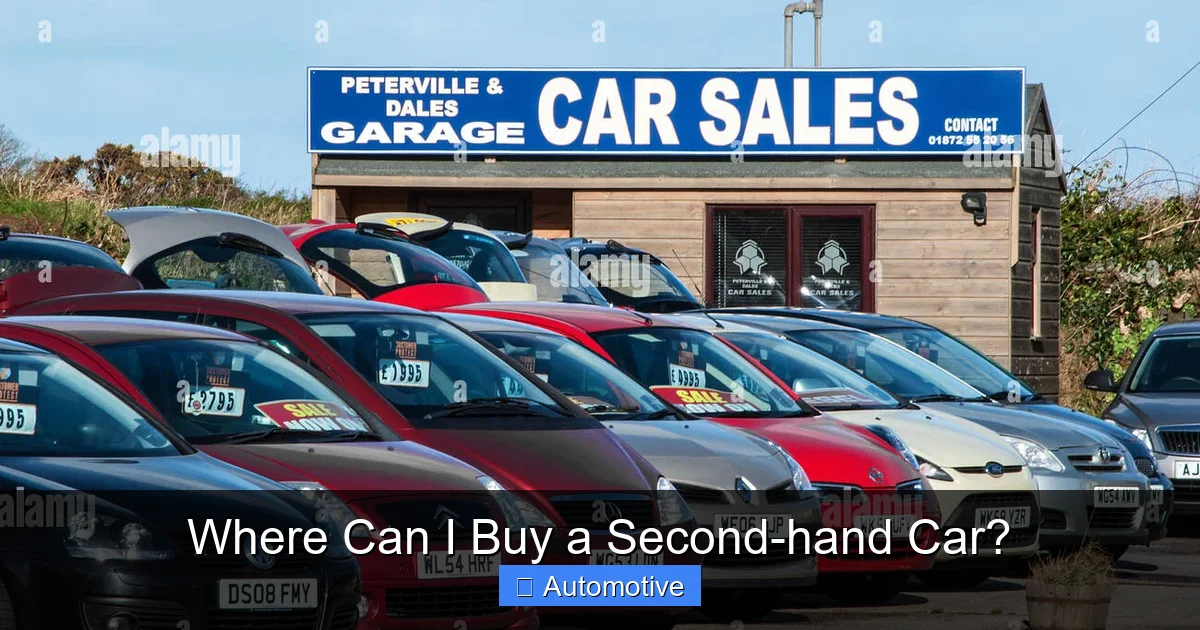
The internet has completely transformed used car buying. Websites and apps like Autotrader, Cars.com, CarGurus, and even eBay Motors aggregate listings from dealers and private sellers nationwide. They offer powerful filtering tools for price, mileage, location, and features. You can shop from your couch, compare dozens of similar vehicles instantly, and often see detailed photo galleries and full vehicle history reports linked right in the ad.
Visual guide about Where Can I Buy a Second-hand Car?
Image source: c8.alamy.com
Dealers vs. Private Sellers Online
These platforms host both. The key is to filter your search. Look for “Private Party” listings to avoid dealer fees and markups. Use the price analysis tools (like CarGurus’ “Instant Market Value”) to see if a listing is over, under, or fairly priced. However, the online space is also the hunting ground for sophisticated scammers. Common scams include:
- The Fake Escrow Service: They send you to a fake website that looks like a legitimate escrow/bill of sale service to “hold” your money.
- The Overpayment Scam: They “accidentally” send a check for too much and ask you to wire back the difference. The check later bounces.
- The Shipping Ploy: They claim the car is in another state/country and insists you pay for shipping to a “trusted carrier” before you’ve seen the car. The car doesn’t exist.
Rule of thumb: If a deal seems too good to be true, it is. Never wire money or use gift cards. Always see the car in person (or have a trusted proxy) and get the PPI before paying anything beyond a small, refundable deposit.
Leveraging Online Tools
Use these platforms to your advantage. Research the fair market value using multiple sources (Kelley Blue Book, Edmunds, NADAguides). Save listings and compare them side-by-side. Message sellers with specific questions about the car’s history, maintenance, and reason for selling. Their answers (or lack thereof) can be very telling. Many sites now integrate with inspection services, allowing you to book a mobile mechanic to inspect the car at the seller’s location—a fantastic tool for long-distance shopping.
4. Public Auctions: The High-Stakes Game
Car auctions are where dealers often get their inventory. Some, like Manheim, are dealer-only. But several types are open to the public, offering the potential for staggering deals. These include:
- Government Auctions: Seized vehicles from law enforcement, IRS, or other agencies.
- Police & Repo Auctions: Cars repossessed by banks or taken by police.
- Insurance/Total Loss Auctions: Cars declared total losses by insurance companies (salvage, rebuilt titles).
- Public Dealer Auctions: Some local auctions allow the public to attend and bid.
The Extreme Buyer-Beware Zone
Auctions are the purest form of “buyer beware.” The motto is “as-is, where-is.” There is no test drive (sometimes you can start the engine), no guarantees, and often no opportunity for a pre-purchase inspection. You are bidding on a car you’ve likely only seen in a listing photo minutes before the gavel falls. Many cars have hidden damage, flood titles, or mechanical issues that are not apparent. You need deep mechanical knowledge or you must bring an expert with you who can quickly assess a car in a crowded auction lane.
Pros: Potentially the absolute lowest prices, especially on older, high-mileage, or salvage vehicles. Huge variety.
Cons: Extremely high risk, no returns, no test drives, title issues common (salvage, rebuilt), must have cash or financing ready on the spot, you are responsible for all fees and removal.
Important Note: If you are new to auctions, go several times just to watch. Understand the process, the fees (buyer’s premium, documentation fees), and the rhythm of bidding. Never get caught up in the excitement and overbid. Set a hard maximum price and stick to it. For salvage vehicles, you must understand the extensive repair and re-inspection process required to make them road-legal again. Our article on should I buy a salvage car dives deep into this specific high-risk category.
5. Certified Pre-Owned (CPO): The Best of Both Worlds?
We briefly touched on CPO, but it deserves its own section. A Certified Pre-Owned program is not a separate place to buy, but rather a specific *type* of used car sold through franchise dealerships. It’s a manufacturer-backed certification program for used vehicles that meet strict age, mileage, and condition criteria.
What Makes a CPO Car “Certified”?
While programs vary by brand, they generally include:
- A rigorous, multi-point inspection (often 150+ points) covering all major systems.
- Replacement of worn parts with genuine OEM (Original Equipment Manufacturer) parts to meet a strict standard.
- A comprehensive vehicle history report confirming no major accidents, clean title, and full maintenance records.
- An extended manufacturer’s warranty that typically covers major powertrain components (engine, transmission) and sometimes bumper-to-bumper, for a set period (e.g., 1 year/unlimited miles) or until the original new-car warranty expiration date is reached.
- Often includes perks like roadside assistance, free maintenance, or special financing rates.
Is CPO Worth the Extra Money?
Yes, if you prioritize peace of mind and plan to keep the car for a long time. The extended warranty is the biggest value, protecting you from catastrophic repair bills. The thorough inspection means the car has been vetted by factory-trained technicians. You are essentially buying a used car with a significant portion of a new-car warranty still intact. The price premium over a similar non-CPO used car can range from $1,000 to $3,000+. For a reliable, late-model car, that premium buys significant protection. However, for an older, higher-mileage car, the CPO program may not be available, and the cost may not be justifiable compared to a well-inspected non-CPO alternative.
6. Specialized & Niche Sources
Beyond the mainstream, there are other avenues for specific needs.
Rental Car Company Sales
Companies like Enterprise, Hertz, and Avis sell off their used rental fleet. These cars are typically well-maintained with detailed service records and are usually 1-3 years old. They often have multiple drivers, which can be a con for some, but they are serviced on a strict schedule. Prices are competitive and often below retail. Look for these sales on the companies’ dedicated websites.
Car Subscription Services
A newer model where you pay a monthly fee for a car, insurance, and maintenance, with the option to swap vehicles. If you decide you love the car you’re subscribed to, some companies offer a path to purchase it at a pre-determined price at the end of the term. This is a less common but emerging path.
Estate & Probate Sales
Cars from estates are sometimes sold through auctioneers or private liquidators. These can be excellent deals on well-cared-for vehicles, as the executor often just wants to settle the estate quickly. Titles can sometimes be more complex, so require extra diligence.
Conclusion: Your Action Plan for a Smart Purchase
Where you buy a second-hand car is a strategic decision based on your budget, risk tolerance, and mechanical know-how. Here is your distilled action plan:
- Define Your Budget: Include not just purchase price, but sales tax, registration, insurance, and a buffer ($500-$1,000) for immediate repairs.
- Research Your Target Vehicle: Know the common problems, fair price, and expected maintenance costs for the specific year/make/model you want.
- Choose Your Channel: Match your risk tolerance to the source. Want maximum peace of mind? Look at CPO. Want the lowest price and have a mechanic on speed-dial? Consider private parties or auctions. Want a balance? A reputable independent dealer may be your sweet spot.
- Never Skip These Steps: 1) Get a vehicle history report. 2) Get a pre-purchase inspection by an independent mechanic. 3) Test drive extensively on various roads. 4) Verify the title is in the seller’s name and is clean (not salvage/rebuilt unless you know what you’re getting).
- Secure Financing First: Get pre-approved for a loan from your credit union or bank. This gives you bargaining power and protects you from high-interest dealer financing.
Buying a used car is a process, not an event. Arm yourself with knowledge, be patient, and don’t let emotion drive the decision. The perfect car at the right price is out there. With this guide, you know exactly where to look and how to evaluate it. Good luck, and happy hunting!
Frequently Asked Questions
Should I buy a second-hand car from a dealership or a private seller?
Dealerships offer warranties, vehicle history reports, and more consumer protection, but at a higher price. Private sellers are cheaper but sold “as-is” with no safety net. Your choice depends on your budget and comfort with risk. Always get an inspection regardless of the source.
How important is a vehicle history report?
Extremely important. A report from CARFAX or AutoCheck reveals title problems (salvage, flood damage), accident history, number of owners, and service records. It’s a crucial first filter to avoid cars with hidden, catastrophic issues. Never buy a used car without reviewing one.
Can I negotiate the price of a used car at a dealership?
Absolutely. Used car prices have more wiggle room than new cars. Do your homework on the fair market value beforehand. Use any flaws found during your test drive or inspection as leverage. Being pre-approved for financing from another lender gives you significant negotiating power against dealer financing markups.
What is a pre-purchase inspection and do I really need one?
A PPI is a comprehensive examination by an independent mechanic you hire. They put the car on a lift, check for hidden damage, wear, and upcoming failures. It typically costs $100-$200 and is the best money you will spend. It can save you from buying a $3,000 problem. Never skip this step.
How do I avoid scams when buying online?
Never wire money or use gift cards. Always see the car in person (or via a trusted proxy) before paying. Be wary of prices far below market value. Verify the seller’s identity matches the title. Use secure payment methods like a bank cashier’s check only after you’ve inspected the car and have a signed bill of sale. If they refuse an in-person inspection or PPI, it’s a scam.
What should I do if I buy a used car and it breaks down immediately?
It depends on where you bought it. From a dealer, you may have a short-term warranty or lemon law (for new cars, but some states extend it to used). From a private party, you have very little legal recourse unless you can prove the seller actively concealed a known defect (fraud), which is hard to prove. This is precisely why the PPI is so critical before purchase. Can I return a car I just bought? is rarely possible in private sales and only under very specific, limited conditions with dealers.
