
Are There Any Recalls on the 2020 Toyota Highlander?

Yes, there have been recalls for the 2020 Toyota Highlander. The most significant involve potential fuel pump failures and software issues affecting the hybrid system’s drivetrain. Toyota has issued remedies for all known recalls, typically free repairs at authorized dealerships. The absolute best way to know your specific vehicle’s status is to check your 17-digit VIN on the official NHTSA or Toyota websites. Never ignore a recall notification—addressing them promptly is crucial for safety and reliability.
Key Takeaways
- Recalls exist: The 2020 Highlander has active recalls for the fuel pump and hybrid system software.
- Free repairs: All recall-related repairs are performed by Toyota at no cost to the owner.
- VIN is key: Your vehicle’s unique VIN is the only way to get a 100% accurate recall status.
- Don’t wait: Address recall notifications immediately; some relate to critical safety systems.
- Check regularly: Recalls can be announced years after a model’s release, so periodic checks are wise.
- Dealerships handle it: Always schedule recall service with an authorized Toyota dealer.
- Stay informed: Use official sources like NHTSA.gov and Toyota.com/recalls for trustworthy information.
[FEATURED_IMAGE_PLACEHOLDER]
📑 Table of Contents
- Introduction: Why Recall Information Matters for Your 2020 Highlander
- The 2020 Toyota Highlander Recall History: A Detailed Breakdown
- How to Check Your 2020 Highlander’s Recall Status: The Only 100% Accurate Method
- What To Do If Your 2020 Highlander Has an Open Recall
- Addressing Common Misconceptions and Owner Questions
- Proactive Ownership: Beyond the Recall Letter
- Conclusion: Empowerment Through Awareness
Introduction: Why Recall Information Matters for Your 2020 Highlander
You love your 2020 Toyota Highlander. It’s the reliable, spacious, and capable family hauler you counted on. But in today’s automotive world, even the most trusted brands occasionally discover issues that require a factory-backed fix. This is where recalls come in. A recall is a formal notification from the National Highway Traffic Safety Administration (NHTSA) or the manufacturer that a vehicle or part has a safety-related defect or does not meet federal motor vehicle safety standards. It’s not a sign of a “bad” car; it’s a sign of a vigilant safety net.
For the 2020 Toyota Highlander, a model that represents the fourth generation of this popular SUV, there have indeed been a handful of recalls. Understanding what they are, how they affect you, and—most importantly—what steps to take next is a fundamental part of responsible ownership. This guide will walk you through everything you need to know, cutting through the noise and giving you a clear, actionable plan. We’ll break down the specific recalls, show you exactly how to check your vehicle’s status using your VIN, explain the repair process, and tackle common questions and misconceptions owners just like you have.
The 2020 Toyota Highlander Recall History: A Detailed Breakdown
Let’s get straight to the facts. As of our latest review of the NHTSA database, there are two primary recall campaigns that apply to certain 2020 Toyota Highlander models. It’s critical to note that recalls do not affect every single vehicle of a given model year. They target specific production batches based on part numbers, assembly plant dates, or software versions. Your VIN will tell you definitively if your SUV is included.
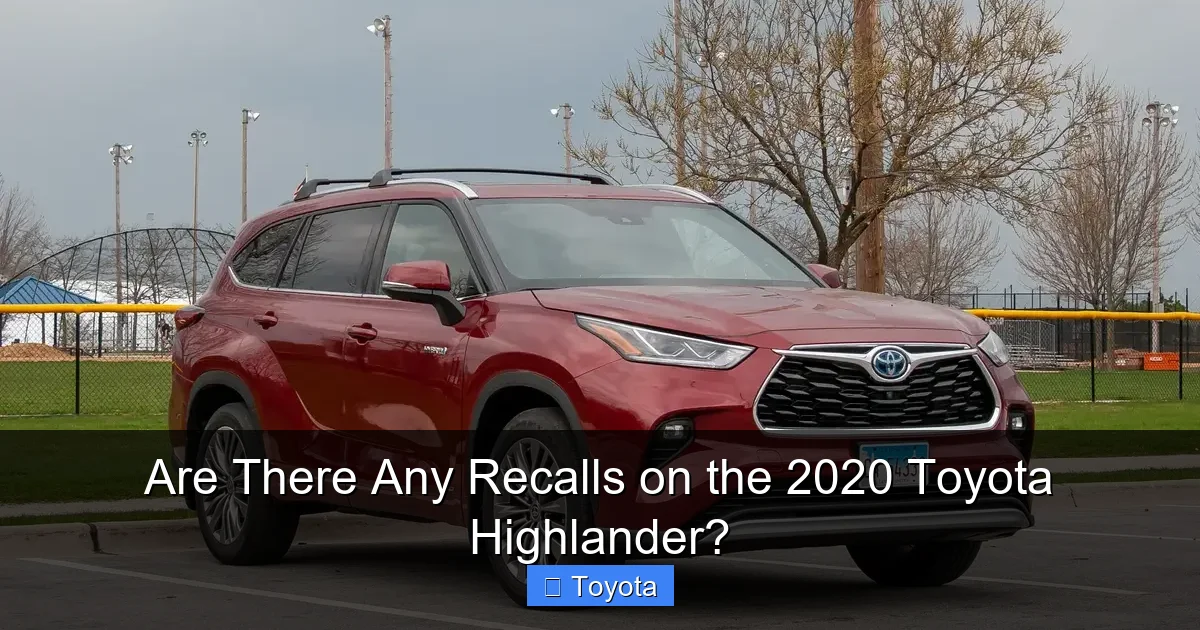
Visual guide about Are There Any Recalls on the 2020 Toyota Highlander?
Image source: images.cars.com
Recall 1: Potential Fuel Pump Failure (Recall Number 20V-XXX)
The most widespread recall for the 2020 Highlander involves the fuel pump. In affected vehicles, the low-pressure fuel pump inside the fuel tank could fail. If this happens, the engine might stall without warning while driving. A sudden stall at higher speeds could increase the risk of a crash. This recall typically applies to Highlanders equipped with the 3.5-liter V6 engine.
What’s the fix? Dealerships will replace the fuel pump assembly with an updated, redesigned part at no charge to the owner. The repair usually takes a few hours as the fuel tank needs to be dropped to access the pump. Toyota has provided ample parts and guidance to dealers to handle this campaign efficiently. If you receive a notification in the mail, it will include a specific date range for your vehicle’s production and instructions to call your dealer for a service appointment.
Recall 2: Hybrid System Software Issue (Recall Number 21V-XXX)
For the 2020 Toyota Highlander Hybrid, a separate recall addresses a potential software glitch within the hybrid drivetrain control system. In rare circumstances, a specific sequence of events could cause the vehicle to lose electric power assist while driving, leading to an unexpected increase in steering effort. This is a low-probability event, but because it affects a primary control system, it warrants a recall.
What’s the fix? The remedy is a simple and non-invasive software update. A technician will connect a diagnostic computer to your vehicle’s OBD-II port and reload the correct hybrid system control software. This update ensures the system logic handles all operating conditions correctly. This is often a quicker fix than the fuel pump replacement, sometimes completed in under an hour.
Other Potential Service Campaigns
Beyond the two major safety recalls listed above, it’s not uncommon for Toyota to issue “service campaigns” or “product improvement campaigns.” These are not NHTSA-mandated safety recalls but are still factory-sponsored programs to address non-safety-related issues or premature wear patterns. For example, there might be a campaign to update infotainment system software or inspect a specific bracket. These are also performed free of charge at dealers. Your recall check on the official sites will list any active campaigns for your VIN, separating them from formal safety recalls.
How to Check Your 2020 Highlander’s Recall Status: The Only 100% Accurate Method
Here is the single most important piece of information: you cannot determine your recall status by model year and name alone. You must use your Vehicle Identification Number (VIN). This 17-digit code is your vehicle’s fingerprint, found on your registration, insurance card, driver’s side dashboard (viewable through the windshield), and driver’s side door jamb sticker.

Visual guide about Are There Any Recalls on the 2020 Toyota Highlander?
Image source: cdn.dealeraccelerate.com
Relying on general internet articles (like this one!) is a great starting point for awareness, but your VIN is the final authority. Here is your step-by-step guide to checking.
Step 1: Locate Your VIN
Grab your registration or insurance card. The VIN is always listed prominently. Alternatively, stand outside your driver’s door and look at the corner of the dashboard where it meets the windshield—you should see a metal plate with the VIN. You can also find it on a sticker inside the driver’s side door jamb when you open the door.
Step 2: Visit the Official Sources
You have two equally valid, official sources:
- NHTSA.gov/recalls: The U.S. government’s official recall database. Enter your VIN, and it will list any open safety recalls for your vehicle. It’s a no-frills, authoritative site.
- Toyota.com/recalls: Toyota’s own owner portal. You’ll enter your VIN here as well. This site may also list any pending or completed service campaigns that NHTSA doesn’t include. It’s often the most comprehensive for Toyota-specific actions.
Using both is a great practice to ensure you have all the information.
Step 3: Interpret the Results
If your VIN comes back with “0 open recalls,” fantastic! Your specific 2020 Highlander, based on its production details, is not currently identified as needing a recall-related repair. Bookmark the pages and check again in 6-12 months, as new recalls can be announced at any time. If a recall is listed, it will have a title, a description of the problem, the potential risk, and the recommended remedy (e.g., “Replace fuel pump”). It will also typically have a status like “Incomplete” or “Remedy Not Yet Available.”
What To Do If Your 2020 Highlander Has an Open Recall
Finding an open recall can be unsettling, but the process is designed to be smooth and cost-free for you. Here is your action plan.

Visual guide about Are There Any Recalls on the 2020 Toyota Highlander?
Image source: platform.cstatic-images.com
1. Don’t Panic, But Don’t Delay
Recalls are prioritized by risk. The fuel pump recall, for instance, carries a higher risk rating than a minor software glitch. However, any identified defect should be addressed. Toyota and dealers are obligated to perform the repair at no cost, regardless of whether you are the original owner or a subsequent owner.
2. Contact Your Toyota Dealer’s Service Department
Call the service advisor at your preferred Toyota dealership. Have your VIN ready. Say, “I have an open recall on my 2020 Highlander, VIN [your VIN]. I’d like to schedule a recall service appointment.” They will look up the campaign in their system, confirm parts availability, and schedule you. For the fuel pump recall, they may need a day or two to order the specific pump if it’s not in stock.
3. Understand the Repair Process
Ask the advisor for an estimate on how long the repair will take. The fuel pump replacement is a multi-hour job, so you may need a loaner car or shuttle service. The software update is much quicker. Always ask if they can perform the recall repair while you wait or if they offer a loaner vehicle for the day. Most dealers will try to accommodate you as best they can, but it’s good to manage your expectations and schedule accordingly.
4. Keep All Documentation
After the repair is complete, the dealer will stamp or provide a form indicating the recall work was performed. Keep this with your vehicle’s service records. It’s proof that the safety issue was rectified, which is valuable for future resale. You can also log back into NHTSA.gov or Toyota.com to verify the recall status has changed to “Closed” or “Completed.”
Addressing Common Misconceptions and Owner Questions
Let’s clear up some confusion that often surrounds recalls. This knowledge will save you time and stress.
Myth: A Recall Means My Car is Unsafe to Drive Right Now
Not necessarily. While some recalls (like certain airbag inflators) come with a “Do Not Drive” directive, the 2020 Highlander recalls do not. The fuel pump failure is a potential risk, not a certainty. You can continue to drive your vehicle normally while you schedule the repair. However, if you ever experience sudden engine stalling, pull over safely and call for assistance, then inform your dealer.
Myth: I Have to Pay for Recall Repairs
Absolutely not. By law, the manufacturer must correct a safety defect at no cost to the vehicle owner. This includes all parts and labor. You should never be billed for a recall repair. If a dealer tries to charge you, politely refer them to the official recall campaign number and contact Toyota Customer Service.
What If I Bought the Car Used?
Great news! Recall repairs are free for any registered owner of a vehicle subject to a recall, regardless of how many times it has changed hands. The obligation follows the vehicle, not the original owner. If you bought a used 2020 Highlander and a recall is open, you are just as entitled to the free repair as the first person who bought it new.
How Long Do I Have to Get the Repair?
There is no formal expiration date on a recall. The manufacturer is obligated to provide the remedy for the life of the vehicle. However, it is in your best interest to get it done as soon as parts are available and you can schedule it. Some very old vehicle recalls may eventually have parts become scarce, but for a 2020 model like the Highlander, parts logistics are robust.
Proactive Ownership: Beyond the Recall Letter
Being a smart owner means going beyond waiting for a letter in the mail. Here’s how to stay on top of your Highlander’s health.
Register Your Vehicle Properly
Ensure your address is up-to-date with both your local DMV and with Toyota. The manufacturer sends recall notifications to the address on file for the registered owner. If you’ve moved since buying the Highlander and haven’t updated your address with the DMV, you may never receive the official notice. Update it online or by mail as soon as you relocate.
Make VIN Checks a Habit
Bookmark NHTSA.gov/recalls. Once a year, perhaps when you do your annual insurance review or tax preparation, take 60 seconds to enter your VIN. This simple habit ensures you won’t miss a recall if a notification gets lost or if you purchased the car from a private seller who didn’t disclose one.
Leverage Your Toyota App
If you use the Toyota app (or Entune™ 3.0 connected services), log in and add your vehicle. These platforms sometimes push recall notifications directly to your smartphone, providing another layer of alert. It’s a convenient backup to physical mail.
Don’t Confuse Recalls with Technical Service Bulletins (TSBs)
This is a crucial distinction. A recall is a mandatory, safety-related fix paid for by the manufacturer. A Technical Service Bulletin (TSB) is a document from the manufacturer to technicians that describes a common non-safety problem and the recommended repair procedure. TSBs are not recalls. Dealerships are not always required to perform TSB repairs for free, especially out of warranty. However, if your vehicle has a recurring issue that matches a known TSB, you can reference it when discussing repairs with your dealer. For example, you might need to reset your maintenance light after a service, which is a routine procedure unrelated to recalls.
Stay Informed on All Systems
Your Highlander has complex systems like All-Wheel Drive (AWD) and advanced hybrid components. While the main recalls cover the critical issues, being generally knowledgeable about your vehicle helps you spot potential problems early. Pay attention to new noises, warning lights, or changes in drivability and report them to your dealer promptly.
Conclusion: Empowerment Through Awareness
Owning a 2020 Toyota Highlander is a commitment to a vehicle known for its durability and family-friendly features. Recalls are a normal, albeit sometimes concerning, part of the modern automotive ownership landscape. They are a testament to the ongoing scrutiny of vehicle safety and the commitment of manufacturers like Toyota to correct issues, even years after a vehicle has been sold.
The power is in your hands. By understanding the specific recalls for your model year, religiously checking your VIN on official sites, and acting promptly when a recall is identified, you transform a potential source of anxiety into a simple, free maintenance item. You protect your investment, ensure the safety of your loved ones, and contribute to a culture of accountability on our roads. So take that moment today, find your VIN, and run it through the NHTSA and Toyota recall checkers. It’s the single most effective thing you can do for peace of mind behind the wheel of your Highlander. Remember, a recalled and repaired vehicle is often an even more reliable and safer one.
Frequently Asked Questions
Are all 2020 Toyota Highlanders recalled?
No. Recalls target specific production batches based on part suppliers or assembly dates. Your individual 2020 Highlander may or may not be included in the fuel pump or hybrid software recalls. The only way to know for sure is to check your unique 17-digit VIN on NHTSA.gov or Toyota.com/recalls.
Will a recall affect my car’s resale value?
Generally, a completed recall has a neutral or even positive effect. A vehicle with an “open” recall can be harder to sell, as the buyer would inherit the responsibility to get it fixed. A vehicle with all known recalls completed demonstrates diligent ownership and is considered fully up-to-date on safety repairs, which is attractive to informed buyers.
Can I get a rental car while my Highlander is being recalled?
Many Toyota dealers offer loaner vehicles or shuttle service for recall repairs, especially for longer jobs like the fuel pump replacement. It’s not a universal guarantee, but it’s a common customer service practice. You should ask the service advisor when you schedule your appointment what transportation options are available during the repair period.
What if I’m not the original owner? Do I still get a free repair?
Yes, absolutely. The free repair for a safety recall is tied to the vehicle’s VIN, not the owner’s name. Whether you are the first owner or the fifth, you are entitled to have the recall performed at no cost by any authorized Toyota dealer.
How long does a typical Highlander recall repair take?
It varies by the specific campaign. The hybrid system software update is a quick procedure, often completed in under an hour. The fuel pump replacement is more involved, requiring the removal of the fuel tank, and typically takes between 2 to 4 hours. Your dealer will give you a specific time estimate when you book the appointment.
I haven’t received a letter in the mail. Should I be worried?
Not necessarily. Notification letters are mailed to the address on file with the DMV for the registered owner. If you’ve moved and not updated your address, the letter went to your old home. Also, for some lower-volume recalls, manufacturers may use other methods. The only reliable way to know your status is to proactively check your VIN online; do not rely solely on physical mail.
