When the Rolls Royce Wraith Made Its Mark

Contents

Tool Roll Bag
Power Steering Fluid

Brake Cleaner Spray

Solar Car Battery Maintainer
The Rolls Royce Wraith made its mark as a daring blend of power, elegance, and innovation in the luxury automotive world. Launched in 2013, it became the most powerful Rolls Royce ever built, offering a dynamic driving experience without sacrificing the brand’s signature refinement.
When the Rolls Royce Wraith made its mark on the automotive world in 2013, it wasn’t just another luxury car launch—it was a statement. For a brand known for quiet elegance and stately presence, the Wraith arrived with a roar, both literally and figuratively. It challenged the perception of what a Rolls Royce could be: not just a chauffeur-driven symbol of wealth, but a driver’s car with soul, speed, and swagger. With its sleek fastback design, thunderous V12 engine, and unparalleled attention to detail, the Wraith redefined luxury for a new generation.
This wasn’t just about adding horsepower or lowering the roofline. The Wraith was born from a desire to attract younger, more dynamic clientele—people who wanted the prestige of Rolls Royce but weren’t ready to give up the thrill of driving. It was bold, it was beautiful, and it was unapologetically powerful. From the moment it rolled onto the stage at the 2013 Geneva Motor Show, the Wraith captured imaginations and set a new benchmark for what a grand touring coupe could achieve.
Key Takeaways
- Unprecedented Power: The Wraith featured a 6.6-liter V12 engine delivering 624 horsepower, making it the most powerful Rolls Royce at launch.
- Bold Design Language: With its fastback silhouette and dramatic styling, the Wraith stood out as a modern, sportier take on classic Rolls Royce elegance.
- Advanced Technology: It introduced cutting-edge features like satellite-aided transmission and a bespoke audio system, setting new standards in luxury tech.
- Bespoke Craftsmanship: Every Wraith could be customized to the owner’s exact tastes, from hand-stitched leather to starlight headliners.
- Cultural Impact: The Wraith became a symbol of success and sophistication, embraced by celebrities, entrepreneurs, and collectors worldwide.
- Legacy and Successor: Though production ended in 2022, the Wraith’s influence lives on in models like the Rolls Royce Ghost and the upcoming electric Spectre.
📑 Table of Contents
The Birth of a Legend: Why the Wraith Was Needed
Rolls Royce has long been synonymous with opulence, refinement, and timeless design. For decades, models like the Phantom and Ghost dominated the ultra-luxury segment, offering serene cabins, whisper-quiet rides, and interiors that felt more like private lounges than car cabins. But by the early 2010s, the brand recognized a shift in its clientele. Younger buyers—entrepreneurs, tech innovators, and creatives—were entering the market. They wanted luxury, yes, but they also wanted performance, presence, and a sense of individuality.
Enter the Wraith. Designed to bridge the gap between traditional Rolls Royce values and modern driving dynamics, the Wraith was engineered to appeal to those who didn’t just want to be driven—they wanted to drive. It was positioned as the most driver-focused Rolls Royce ever built, offering a more engaging experience without compromising on comfort or craftsmanship.
A New Direction for Rolls Royce
The development of the Wraith marked a pivotal moment in Rolls Royce’s history. Under the ownership of BMW, the brand had already modernized with models like the Ghost, but the Wraith took things further. It was based on the same platform as the Ghost but featured a lower, wider stance, a sloping roofline, and a more aggressive front grille. The result was a car that looked like it was moving even when standing still.
What truly set the Wraith apart was its intent. While previous Rolls Royce models emphasized serenity and isolation from the outside world, the Wraith invited the driver to feel more connected to the road. It wasn’t about raw speed—though it had plenty—but about balance. The goal was to deliver a driving experience that was both exhilarating and refined, a rare combination in the luxury segment.
Targeting a New Demographic
Rolls Royce’s marketing strategy for the Wraith was as bold as the car itself. The brand launched a global campaign featuring the tagline “Inspired by Power,” emphasizing the car’s performance credentials. Ads showcased the Wraith on winding mountain roads, not just parked outside five-star hotels. The message was clear: this was a car for people who lived life at full throttle.
This shift in tone resonated. The Wraith attracted a younger, more diverse clientele. Celebrities like Jay-Z, Beyoncé, and Cristiano Ronaldo were spotted behind the wheel, further cementing its status as a symbol of modern success. It wasn’t just a car—it was a lifestyle statement.
Design That Turns Heads
Visual guide about When the Rolls Royce Wraith Made Its Mark
Image source: images.wallpapersden.com
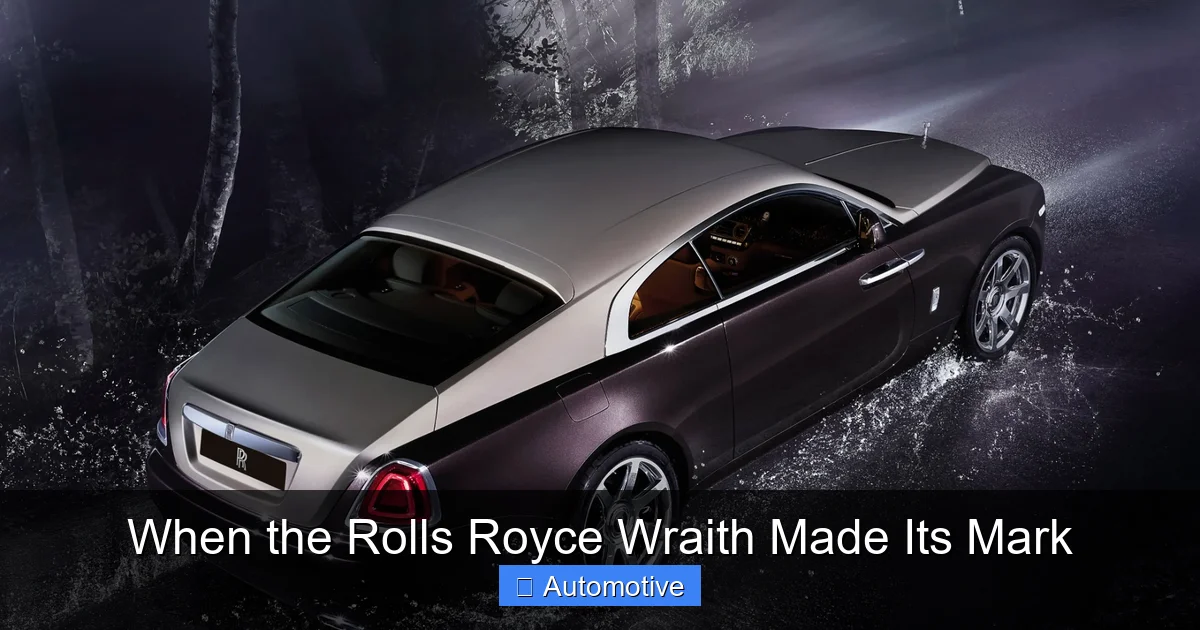
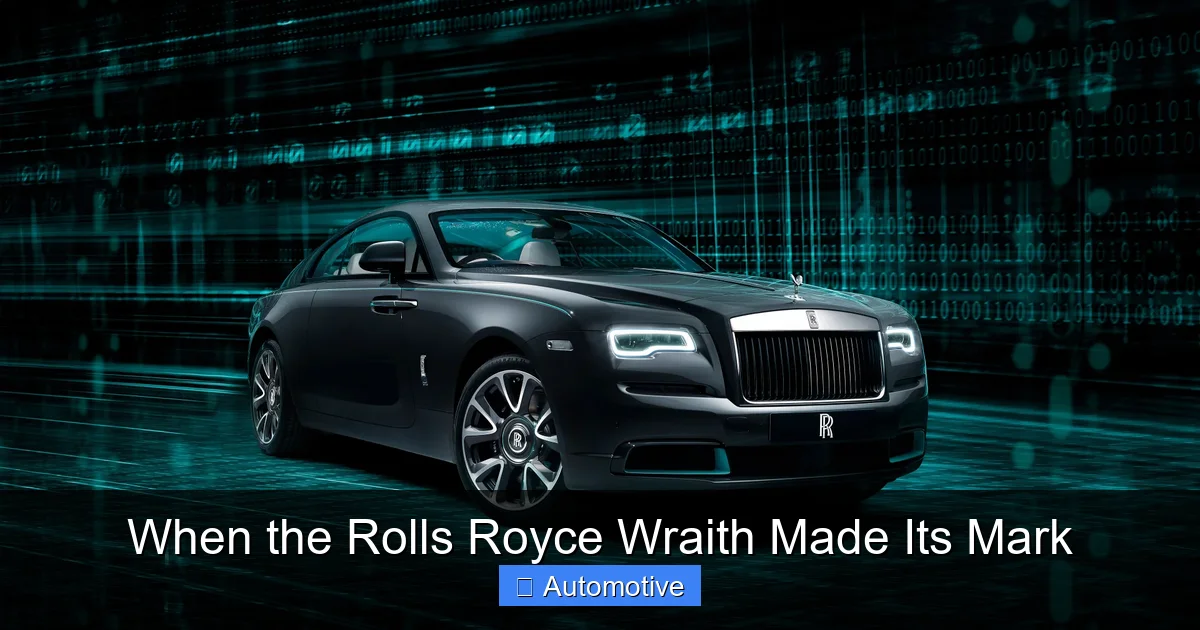
When the Rolls Royce Wraith made its mark, it did so with a design that was both familiar and revolutionary. At first glance, it carried the unmistakable DNA of Rolls Royce: the iconic Pantheon grille, the Spirit of Ecstasy hood ornament, and the commanding presence. But look closer, and you’d see a car that dared to be different.
The Fastback Silhouette
The Wraith’s most defining feature was its fastback roofline—a first for Rolls Royce. Unlike the upright, boxy profiles of the Phantom or the more traditional coupe shape of the Corniche, the Wraith flowed from the front fenders to the rear in a smooth, continuous arc. This not only improved aerodynamics but also gave the car a sense of motion and athleticism.
The roofline sloped gently into a short rear deck, creating a coupe-like profile that was both elegant and aggressive. It was a design choice that sparked debate among purists, but it ultimately won over critics and customers alike. The Wraith didn’t just look fast—it looked like it belonged on a racetrack, even if most owners would never take it there.
Exterior Details That Command Attention
Every inch of the Wraith’s exterior was crafted to impress. The headlights featured LED technology with adaptive high beams, giving the car a futuristic yet timeless look. The wide, low stance was accentuated by flared wheel arches and 21-inch alloy wheels, available in a range of finishes from polished silver to gloss black.
One of the most striking features was the “suicide” rear doors, which opened rearward for easier access to the back seats. This design, reminiscent of classic luxury cars, added a touch of nostalgia while maintaining modern functionality. The doors were also power-operated, closing with a soft, whisper-quiet motion that epitomized Rolls Royce’s attention to detail.
Interior: A Sanctuary of Luxury
Step inside the Wraith, and you’re greeted by a cabin that feels more like a private jet than a car. The interior was a masterclass in craftsmanship, with every surface wrapped in the finest materials. Hand-stitched leather covered the seats, dashboard, and door panels, while real wood veneers—available in options like Piano Black, Santos Palisander, and Elm Cluster—added warmth and sophistication.
One of the most iconic features was the optional Starlight Headliner. This wasn’t just a roof lining—it was a constellation of fiber-optic lights embedded into the headliner, creating a night sky effect. Owners could customize the pattern, color, and even add a shooting star animation. It was a feature that turned every drive into a magical experience.
Performance That Defies Expectations

Visual guide about When the Rolls Royce Wraith Made Its Mark
Image source: s1.cdn.autoevolution.com
When people think of Rolls Royce, they often think of quiet luxury, not raw power. But the Wraith changed that perception. Under the long, sculpted hood lay a 6.6-liter twin-turbocharged V12 engine, producing a staggering 624 horsepower and 605 lb-ft of torque. This made the Wraith the most powerful Rolls Royce ever built at the time of its launch.
Acceleration and Speed
With that kind of power, the Wraith could sprint from 0 to 60 mph in just 4.4 seconds—faster than many sports cars. Top speed was electronically limited to 155 mph, but even at lower speeds, the acceleration was breathtaking. The V12 delivered its torque smoothly and instantly, with no lag or hesitation. It wasn’t just fast—it was effortlessly fast.
What made the Wraith’s performance so impressive was how it was delivered. Unlike traditional sports cars that can feel harsh or jarring, the Wraith maintained its signature ride comfort. The adaptive air suspension absorbed bumps and potholes with ease, while the eight-speed automatic transmission shifted seamlessly, whether you were cruising on the highway or pushing the car through corners.
Handling and Driving Dynamics
The Wraith wasn’t just about straight-line speed. Engineers at Rolls Royce worked hard to improve handling without sacrificing comfort. The car featured a rear-wheel-drive layout with a limited-slip differential, improving traction and cornering ability. The steering was precise and responsive, offering more feedback than previous Rolls Royce models.
One of the standout technologies was the satellite-aided transmission. Using GPS data, the system could anticipate upcoming corners, hills, and road conditions, pre-selecting the optimal gear for maximum efficiency and performance. It was a subtle but brilliant innovation that enhanced the driving experience without the driver even noticing.
Sound and Feel
Despite its power, the Wraith remained true to Rolls Royce’s philosophy of refinement. The V12 engine was tuned to produce a deep, throaty growl under acceleration, but it was never intrusive. At cruising speeds, the cabin was nearly silent, thanks to extensive sound insulation and double-glazed windows.
The driving experience was one of controlled power. You could feel the car’s strength, but it was always smooth, always composed. It was the kind of car that made you feel invincible—not because it was loud or flashy, but because it was so effortlessly capable.
Technology and Innovation
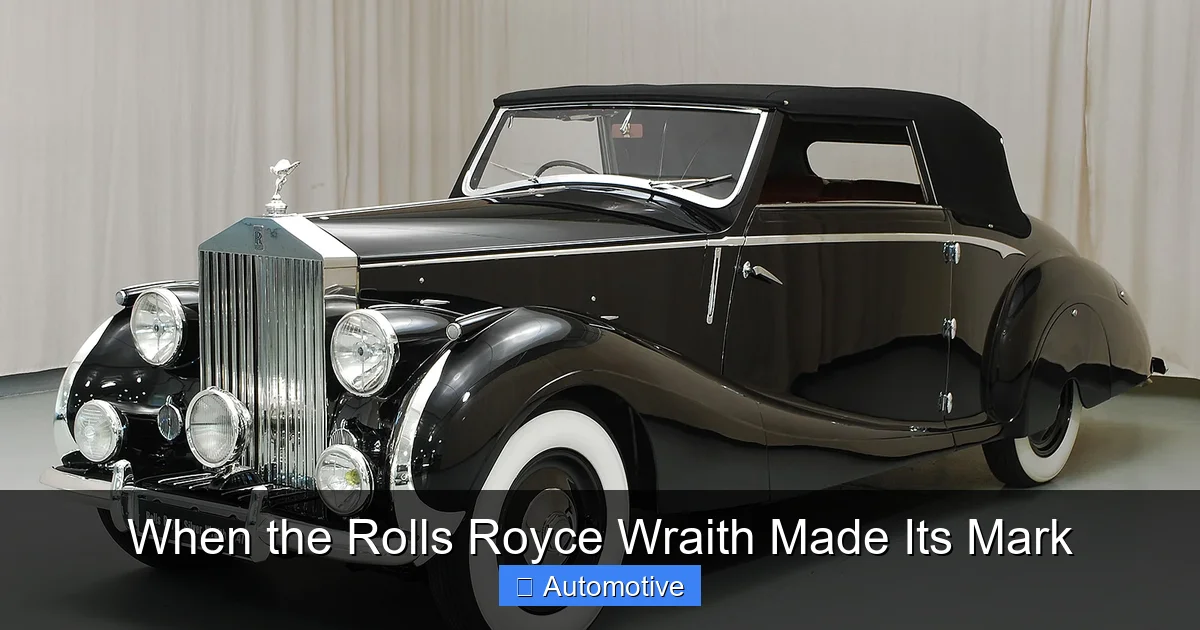
Visual guide about When the Rolls Royce Wraith Made Its Mark
Image source: hymanltd.com
The Rolls Royce Wraith wasn’t just a throwback to classic luxury—it was a showcase of cutting-edge technology. While it retained the brand’s analog charm, it was packed with modern features that enhanced safety, comfort, and convenience.
Infotainment and Connectivity
The Wraith featured a state-of-the-art infotainment system with a large central display controlled by a rotary dial. The system included navigation, Bluetooth, USB connectivity, and a premium audio system. The optional Bespoke Audio system, developed in partnership with Lexicon, delivered concert-hall sound quality with 600 watts of power and 13 speakers strategically placed throughout the cabin.
One of the most innovative features was the Night Vision system, which used infrared cameras to detect pedestrians and animals in low-light conditions. The system displayed warnings on the dashboard, helping drivers avoid potential hazards.
Safety and Driver Assistance
Safety was a top priority, even in a car designed for performance. The Wraith came equipped with adaptive cruise control, lane departure warning, blind-spot monitoring, and a 360-degree camera system. These features made long drives safer and more relaxing, especially on unfamiliar roads.
The car’s structure was built with high-strength steel and aluminum, providing excellent crash protection while keeping weight down. Despite its size, the Wraith was surprisingly agile and easy to maneuver, thanks to its advanced suspension and steering systems.
Bespoke Personalization
Perhaps the most impressive aspect of the Wraith’s technology was its level of customization. Rolls Royce’s Bespoke program allowed owners to personalize nearly every aspect of the car. Want a dashboard inlaid with your family crest? Done. Prefer seats embroidered with your initials? No problem. The only limit was imagination—and budget.
This level of personalization wasn’t just about aesthetics. It was about creating a car that was truly one-of-a-kind, a reflection of the owner’s personality and taste. It was this attention to detail that set Rolls Royce apart from other luxury brands.
Cultural Impact and Legacy
When the Rolls Royce Wraith made its mark, it did more than just sell cars—it influenced culture. It became a symbol of success, ambition, and modern luxury. From music videos to red carpets, the Wraith was everywhere.
Pop Culture Presence
The Wraith’s bold design and powerful image made it a favorite among celebrities. Jay-Z referenced it in his song “Picasso Baby,” and Beyoncé was often seen arriving at events in one. In the world of sports, Cristiano Ronaldo added a Wraith to his collection, while Formula 1 drivers and Hollywood actors embraced it as their ride of choice.
Its appearance in films and TV shows further cemented its status. Whether it was gliding through the streets of Monaco or parked outside a penthouse in New York, the Wraith always made an impression.
Influence on Future Models
The success of the Wraith paved the way for future Rolls Royce models. Its blend of performance and luxury inspired the development of the Cullinan SUV and the upcoming electric Spectre. The Wraith proved that Rolls Royce could evolve without losing its soul.
Even after production ended in 2022, the Wraith’s legacy lives on. It remains a highly sought-after collector’s item, with well-maintained examples commanding premium prices on the used market.
The End of an Era and What’s Next
In 2022, Rolls Royce announced the end of Wraith production. The decision was part of a broader shift toward electrification and a more focused lineup. While fans were sad to see it go, the Wraith’s influence is undeniable.
The Rise of the Spectre
The Wraith’s spiritual successor is the Rolls Royce Spectre, the brand’s first fully electric vehicle. Like the Wraith, the Spectre combines performance, luxury, and innovation. It features a fastback design, advanced technology, and a powerful electric drivetrain capable of over 500 horsepower.
While the Spectre represents the future, it owes a debt to the Wraith. It was the Wraith that proved Rolls Royce could be bold, dynamic, and modern—qualities that will define the brand for years to come.
A Lasting Impression
The Rolls Royce Wraith made its mark not just as a car, but as a cultural icon. It challenged conventions, redefined luxury, and inspired a new generation of drivers. Whether you loved it for its power, its design, or its craftsmanship, there’s no denying its impact.
As we look to the future of luxury mobility, the Wraith will be remembered as a turning point—a moment when Rolls Royce dared to be different, and in doing so, became even more timeless.
Frequently Asked Questions
When was the Rolls Royce Wraith first introduced?
The Rolls Royce Wraith made its debut at the 2013 Geneva Motor Show and went on sale later that year. It was positioned as the most powerful and driver-focused Rolls Royce at the time.
What engine does the Rolls Royce Wraith have?
The Wraith is powered by a 6.6-liter twin-turbocharged V12 engine that produces 624 horsepower and 605 lb-ft of torque. This made it the most powerful Rolls Royce ever built during its production run.
How fast is the Rolls Royce Wraith?
The Wraith can accelerate from 0 to 60 mph in just 4.4 seconds and has a top speed of 155 mph (electronically limited). Its performance rivals many high-end sports cars while maintaining luxury comfort.
What makes the Wraith’s interior special?
The Wraith’s interior features hand-stitched leather, real wood veneers, and an optional Starlight Headliner with fiber-optic lights. It also offers extensive Bespoke customization, allowing owners to personalize nearly every detail.
Is the Rolls Royce Wraith still in production?
No, the Wraith ended production in 2022. It has been succeeded by the Rolls Royce Spectre, the brand’s first fully electric vehicle, which carries forward the Wraith’s spirit of innovation and performance.
What was the price of a Rolls Royce Wraith?
When new, the Wraith started at around $300,000, but with Bespoke options and customizations, prices could easily exceed $400,000. Its value remains strong in the pre-owned market due to its rarity and desirability.